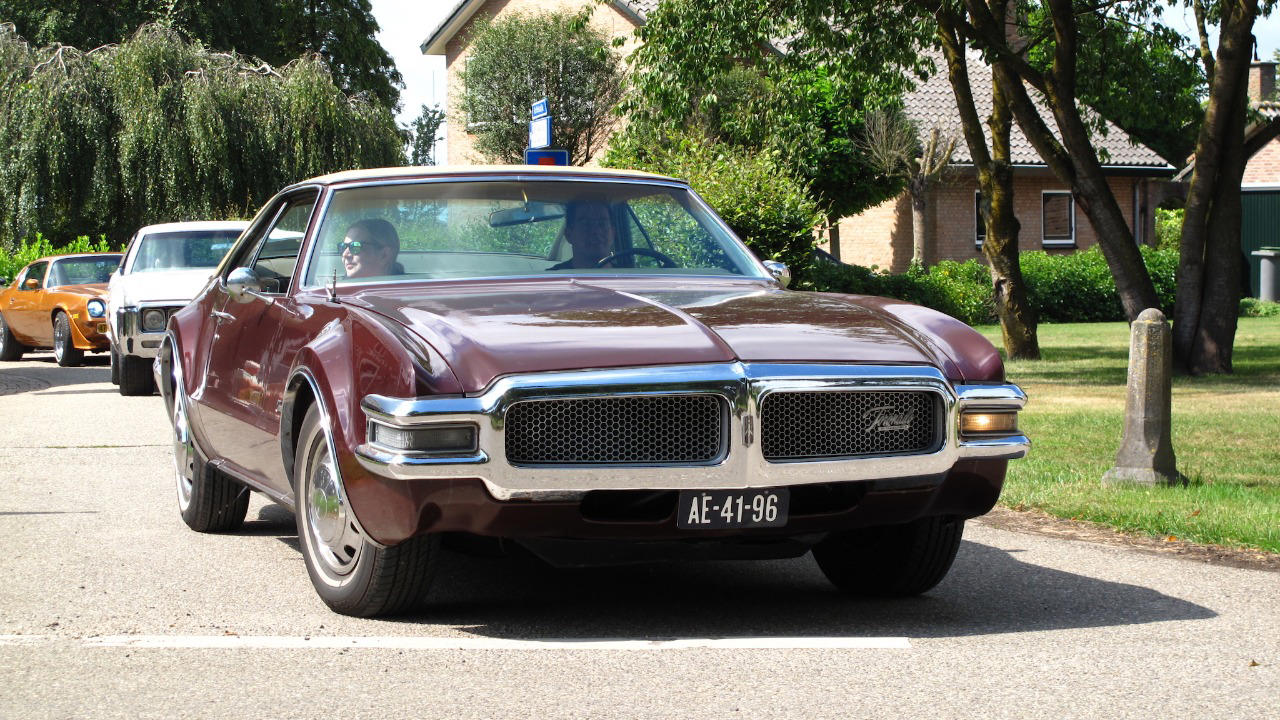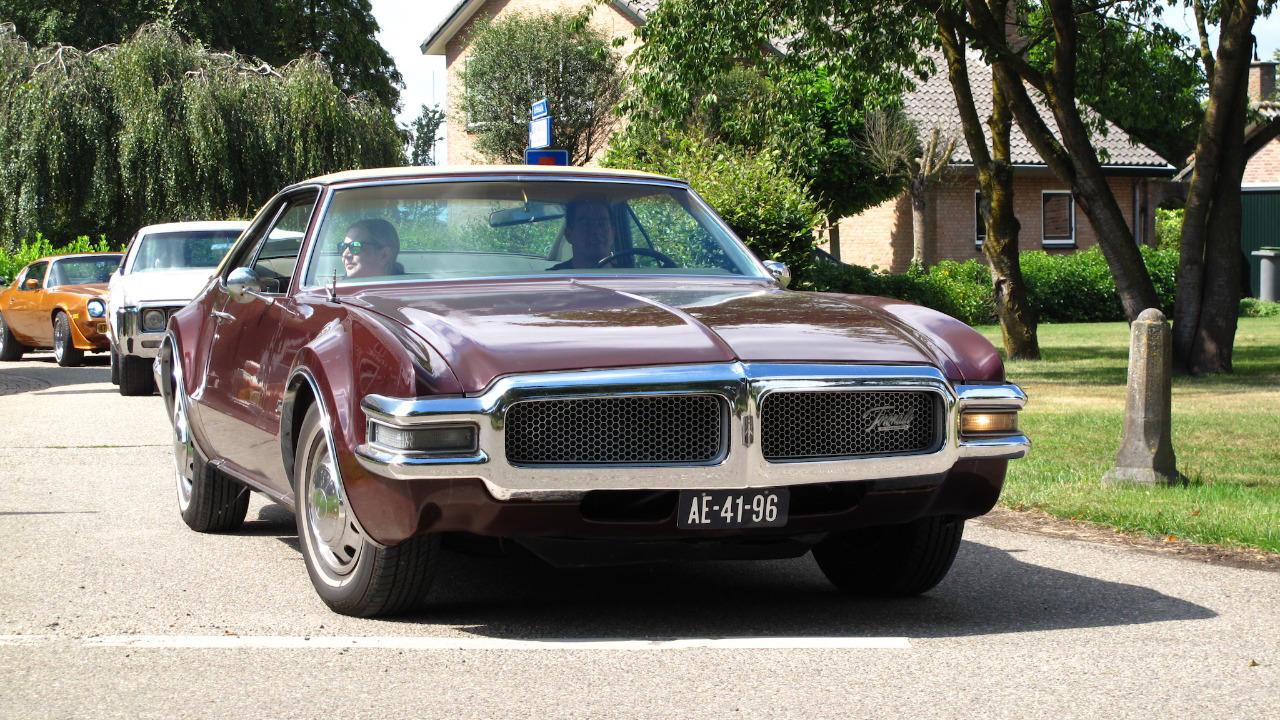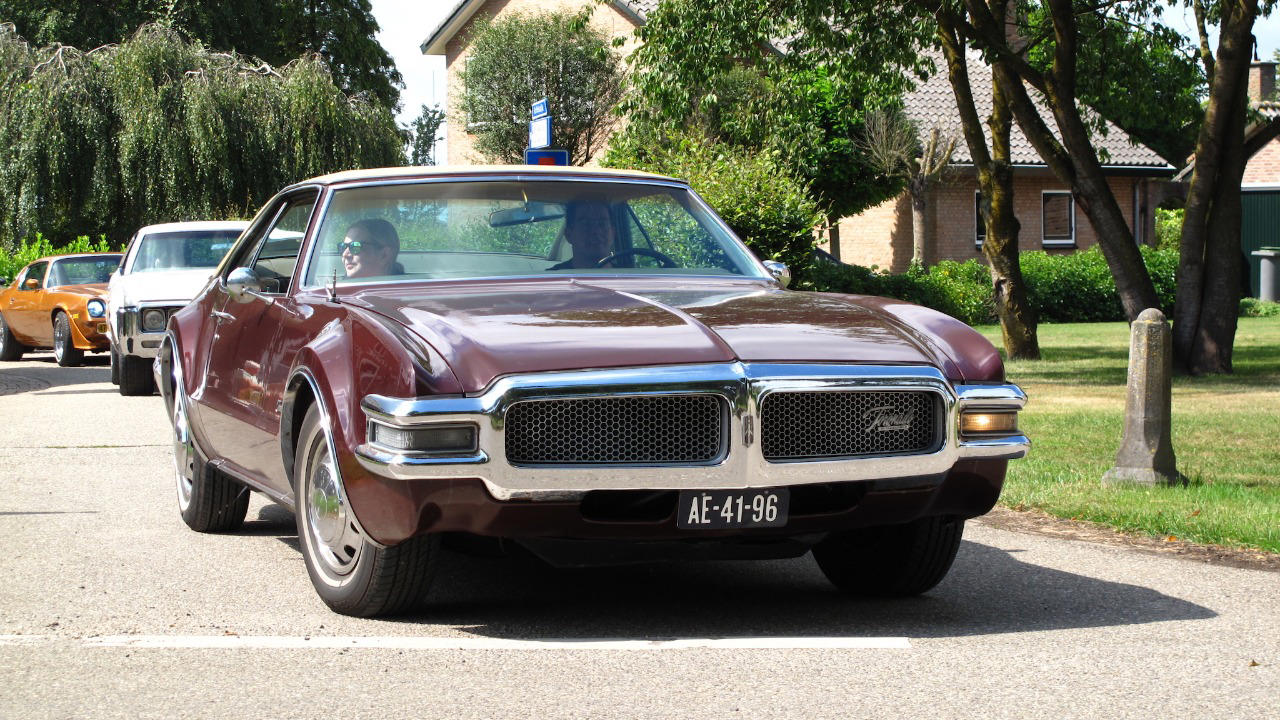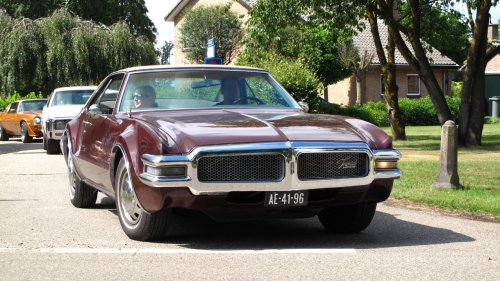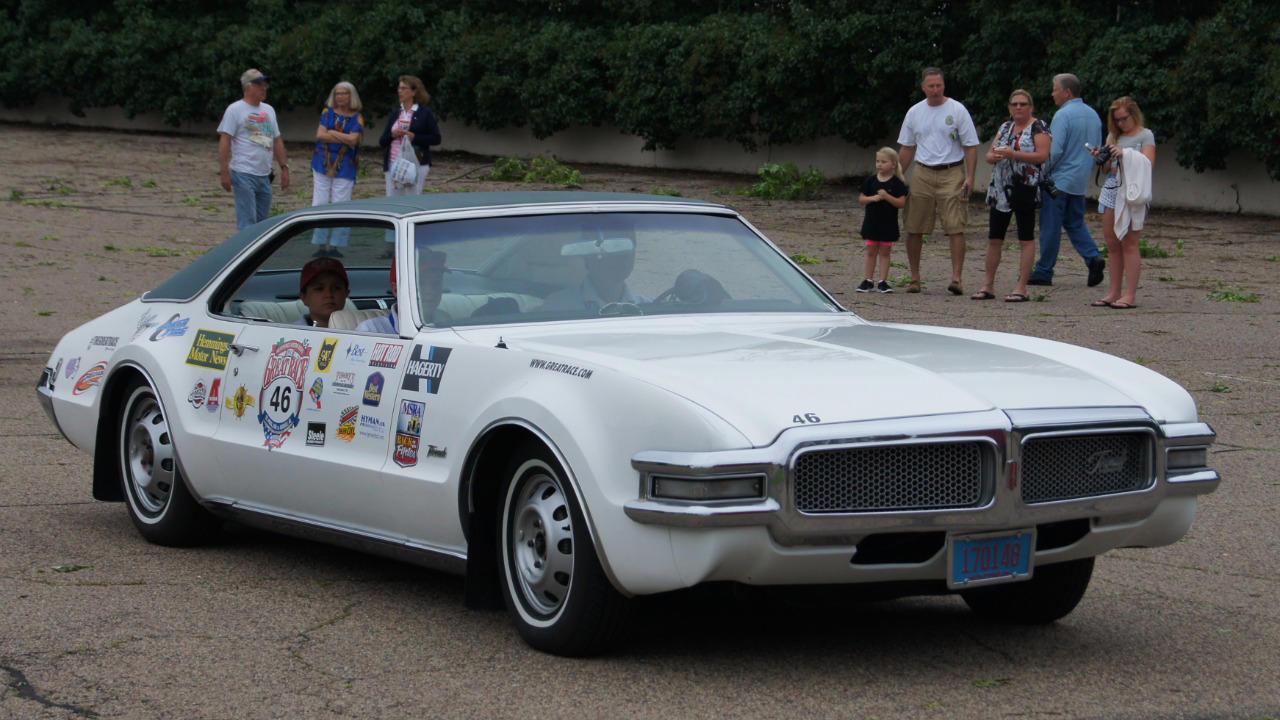



















Mechanics warn the 1968 Toronado’s front-wheel-drive setup made repairs more complexThe 1968 Oldsmobile Toronado looked like a clean-sheet vision of the American future, with hidden headlights, sweeping fenders, and a massive V8 under its long hood. Beneath that styling, however, sat a front-wheel-drive layout that challenged every mechanic who tried to keep one on the road. The same engineering that made the Toronado a technical showpiece also turned routine service into a puzzle, and owners quickly learned that the car’s complexity could be as memorable as its performance. Oldsmobile had already stunned the industry by pairing a 455 cubic inch V8 with front-wheel drive, sending all that power to the front axle in a package that redefined what a big American coupe could do. By 1968, the Toronado had matured, but the basic hardware remained the same: a powerful V8 turned sideways in spirit, with the transmission mounted beside it and power routed forward. That layout delivered traction and packaging advantages, yet it also meant that every job under the hood required a different playbook from the typical rear-drive muscle car. The audacious idea behind the Toronado When Oldsmobile engineers committed to front-wheel drive for a full-size personal luxury coupe, they were not dabbling in a mild variation on existing hardware. They created a compact drivetrain, known as the Unitized Power Package, that allowed a big V8 and automatic transmission to sit ahead of the passenger compartment while still driving the front wheels. The idea was to combine the security of front traction with the effortless thrust of a large displacement engine, something American buyers had never seen at this scale. That engine was no modest powerplant. Oldsmobile dropped a 455 cubic inch V8 into the Toronado and sent all that power to the front wheels, creating what enthusiasts still describe as one of the most powerful front-drive production cars of its era. Owners of the 1968 Oldsmobile Toronado later described the 455 c. i from North America as the “King of front wheelers.. period,” a reminder that the car’s identity was inseparable from that massive engine and its unusual drive layout. The drivetrain’s packaging was considered a marvel. The complete powertrain assembly, again known as the Unitized Power Package, took up only a relatively compact footprint in the nose, which allowed a low floor and a flat cabin without a traditional driveshaft tunnel. That packaging advantage helped the Toronado deliver a blend of comfort and performance that appealed both to daily drivers and to show car regulars, according to period guides that described how the Toronado found its place as both a practical cruiser and a conversation piece. How the front-drive layout complicated basic service What impressed engineers on the drawing board often translated into headaches in the service bay. Mechanics who were used to longitudinal V8s sending power to a rear axle suddenly faced a drivetrain that sat sideways in effect, with the transmission beside the engine and complex half-shafts feeding the front wheels. The decision to keep the powertrain compact and to prevent too much nose weight meant the transmission sat beside the longitudinally mounted V8, a choice that created an unusually dense cluster of components in the engine bay, as contemporary analysis of the Toronado’s design explained. That density made access difficult. Tasks that were straightforward on a conventional rear-drive car, such as replacing a starter or servicing the transmission, could require partial disassembly of surrounding components on the Toronado. The Unitized Power Package tied the engine, transmission, and final drive into one integrated assembly, which was efficient in theory but unforgiving when a single piece failed. Removing or repairing one element often meant disturbing others, adding labor hours and cost. Front-wheel-drive hardware also introduced new wear points. Driveshafts with constant velocity joints and protective boots became critical components rather than peripheral details. One longtime owner who had a 67 Toronado for many years in the 80s recalled that torn driveshaft boots could quickly ruin the assembly, warning fellow enthusiasts on a Toronado forum to watch out for driveshaft boots tearing and ruining the axle. That kind of failure was not just an inconvenience; it could sideline the car and demand specialized parts that were harder to source than a typical rear-drive shaft. Torque steer, traction, and the 400 horsepower problem The Toronado’s front-drive layout was not only a packaging challenge. It was also a dynamic one. Contemporary assessments of the car’s performance often highlighted that the front wheels were asked to handle steering, braking, and the output of a high-compression V8 at the same time. Later retrospectives described the challenge of controlling roughly 400 horsepower through the front axle, noting that even modern hot hatches with around 300 horsepower can struggle to put their power down cleanly. In the Toronado, that power flowed through the Unitized Power Package to the front tires, which had to cope with torque steer and wheelspin if the driver was aggressive with the throttle. While owners praised the car’s straight-line pace and highway stability, the front-drive layout meant that heavy acceleration could tug at the steering wheel and accelerate wear on front suspension and steering components. Those stresses fed back into maintenance demands, as bushings, ball joints, and steering parts faced loads that a comparable rear-drive coupe might distribute more evenly. Mechanics who worked on these cars often describe a learning curve. The combination of a heavy V8, a side-mounted automatic transmission, and complex half-shafts required careful alignment and attention to tolerances. Misdiagnosing a vibration or noise could lead to repeated repairs, since the source might be a worn CV joint, a misaligned engine mount, or a failing transmission bearing hidden deep within the Unitized Power Package. From showroom glamour to shop-floor reality On the showroom floor, the Toronado projected confidence. The Toronado found its place as both a daily driver for those who appreciated its unique blend of attributes and as a show car that regularly drew crowds, according to period catalogs that rated its features and reliability. With proper care, reliability was generally good, but that qualifier carried weight. Proper care often meant a mechanic who understood the intricacies of the front-drive system and who had access to the right parts. Not every shop did. Some mechanics viewed the Toronado as an exotic within the domestic market. A feature on high-maintenance American muscle cars later pointed to the 1966 Toronado as an example of how ambitious engineering could complicate ownership, suggesting that the decision to design such an unusual drivetrain brought a host of issues that might make potential buyers think twice decades later. While that critique focused on the earliest model year, the basic architecture carried through to 1968, so many of the same concerns applied. Owners who stuck with the cars often became specialists by necessity. One enthusiast who documented efforts to revive a neglected 1968 Oldsmobile Tornado on the channel Polebar Garage showed how even simple goals, such as getting the car running and driving again, required patience and a methodical approach. In that project, access to components around the front subframe, steering, and drivetrain demanded careful disassembly that would have been unfamiliar to someone raised on simpler rear-drive coupes. Inside the Unitized Power Package To understand why mechanics warn about the Toronado’s complexity, it helps to look more closely at how the Unitized Power Package worked. Engineers placed the V8 longitudinally, then mounted the automatic transmission beside it, connected through a chain drive that transferred torque sideways. From there, power flowed into a differential that sat near the centerline of the car, feeding half-shafts that ran to each front wheel. Contemporary technical write-ups praised the Unitized Power Package as a marvel of packaging efficiency, pointing out that the complete powertrain assembly took up only a compact volume in the nose while still allowing a low floor and generous interior space. That efficiency, however, meant that components were stacked and intertwined. Servicing the chain drive, for example, required deep access into the assembly, and any issues with the differential or transmission could not be addressed as separate, easily removable units. Later historical reviews of GM’s front-drive program described how the project extended longer than planned and how costs ballooned as engineers wrestled with the challenge of fitting a V8 engine, an automatic transmission, and a front-drive axle into a single integrated package. That development history hints at the compromises that mechanics would later confront: a system that worked impressively when new, but that demanded precision and specialized knowledge when wear and age set in. Real-world wear: boots, bearings, and big bills The Toronado’s front-drive hardware introduced failure modes that traditional muscle car owners rarely faced. The driveshaft boots that protected the constant velocity joints were particularly vulnerable. As the owner who had a 67 Toronado in the 80s explained, once those boots tore, contaminants could enter and quickly ruin the axle assembly. Replacing those parts was not as simple as swapping a rear-drive U-joint; it often required sourcing specific axles and seals that were unique to the Toronado and its corporate cousins. Wheel bearings and front suspension components also carried more of the car’s workload. With the heavy V8 sitting over the front axle and all torque routed through the front hubs, bearings faced high radial and axial loads. Over time, that could lead to noise, play, and eventual failure if not addressed. Again, replacement was more involved than on a lighter, rear-drive compact, and the parts catalog was narrower. Transmission service added another layer of complexity. The side-mounted automatic, integrated with the differential, meant that leaks, slipping, or internal wear could require significant labor to diagnose and repair. Some shops preferred to replace the entire Unitized Power Package with a known good assembly rather than attempt piecemeal fixes, a strategy that made sense when salvage-yard donors were plentiful but that becomes harder as surviving Toronados age. Why enthusiasts still seek out the 1968 Toronado Despite the warnings from mechanics, the 1968 Oldsmobile Toronado continues to attract dedicated fans. Collector market guides have pointed out that the Toronado could outrun many period muscle cars while offering a level of refinement and front-drive traction that was ahead of its time. Values for well-kept examples, tracked through Hagerty Values, show that Concours (#1) cars have been listed at around $34,100, with Excellent (#2) at $24,800 and Good (#3) at $16,300, while Fair (#4) condition cars sit near $10,000. Even with those numbers, the Toronado often remains more affordable than some rear-drive icons, which tempts buyers who are willing to accept higher maintenance demands. Enthusiast reviews from North America that describe the 1968 Oldsmobile Toronado 455 c.I, as the King of front wheelers, emphasize the car’s character more than its complexity. Owners praise the way the big coupe cruises at highway speeds, the distinctive styling, and the sense of piloting a piece of engineering history. For them, the quirks of the front-drive system are part of the appeal, not a deterrent. More from Fast Lane Only Unboxing the WWII Jeep in a Crate 15 rare Chevys collectors are quietly buying 10 underrated V8s still worth hunting down Police notice this before you even roll window down