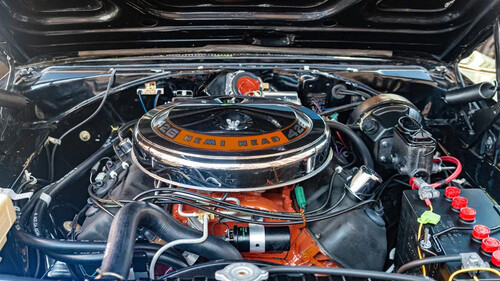
Mechanics warn the 1970 Super Bee required careful maintenance to keep performance strongThe 1970 Dodge Super Bee built its legend on raw power, but that performance never came free. Mechanics who live with these cars today describe a machine that rewards meticulous care and punishes neglect, from its big-block engines to its aging wiring and rust-prone body. Keeping a 1970 Super Bee genuinely quick, safe, and reliable has always meant understanding its quirks and staying ahead of its maintenance curve. More than half a century later, the same traits that made the Super Bee a street and strip favorite now demand even more attention. Age, hard use, and patchy repairs have turned careful upkeep into the dividing line between a sharp, responsive muscle car and a tired relic that only looks fast in photos. Big power, big expectations Mechanics tend to start with the obvious: the engines that defined the Super Bee. Period documentation and enthusiast accounts describe the 383 cubic-inch big-block as the Standard 383 Magn engine, a stout foundation that responded well to tuning but still needed regular valve adjustments, ignition checks, and carburetor attention to stay crisp. Above that sat the optional 440 and the rarer 426 cu in HEMI V8, with the HEMI rated at about 425 hp and known for huge torque and a narrow tuning window that left little room for sloppy maintenance. The Chrysler Six Pack actually was first available as a mid-year option in 1969, but for 70 the 440 six-barrel engines were given a prominent role in the Super Bee lineup. Period pricing shows that the 440 Six Pack package carried a specific added cost over the standard 383, a reminder that the triple-carb setup was a serious step up in complexity as well as output. Mechanics familiar with these cars say that the three two-barrel carburetors on the Six Pack demand synchronized adjustment, careful float level checks, and clean fuel delivery to avoid bogging or lean spots under load. Any lapse in that routine quickly shows up as hesitation on acceleration or fouled plugs. Modern builders who revisit the configuration echo that view. One detailed heritage feature on the 70 model year explains how the Chrysler Six Pack setup transformed the car into a higher-strung machine that simply cannot tolerate clogged jets or vacuum leaks. For mechanics, that means fuel filters, lines, and pump output become routine inspection points, not afterthoughts. From drag strip to road course, maintenance as performance insurance Contemporary owners who drive their cars hard illustrate how vital that diligence remains. One enthusiast profile follows a 1970 Super Bee that has been reimagined as a Daily Driven Road with SRT power. The owner takes the car to the South Bend SCCA at Tire Rack in Indiana, where tight corners and sustained high speeds expose any weakness in cooling, lubrication, or suspension geometry. Mechanics who prep similar cars for autocross and track days stress that repeated high-rpm running magnifies the need for fresh Fluids, accurate timing, and properly torqued fasteners throughout the driveline. On a curved course, the Super Bee’s weight and power combine to punish brakes and tires. Technicians tasked with keeping these cars track-ready talk about upgrading pads and shoes, checking for heat cracks in drums and rotors, and ensuring that suspension bushings and ball joints are not already half-worn before a hard weekend. The move from straight-line drag racing to road course work has not changed the car’s core character, but it has made systematic inspection a non-negotiable part of performance. Rust, bodywork, and the hidden structure Engine output is only part of the story. Mechanics and body specialists routinely warn that structural integrity can make or break a Super Bee’s performance and safety. A detailed owner’s guide on classic Dodge models lists Common Restoration Challenges and highlights Rust in the undercarriage and wheel wells as a recurring threat. In practice, that means floor pans, frame rails, torsion bar crossmembers, and spring perches often need repair before any serious power upgrades. One community discussion focused on the 1970 Dodge Super Bee calls out exactly this problem, describing how Common Restoration Challenges like Rust in the trunk floor and lower quarters can hide under old undercoating or thick repaint jobs. Mechanics who do pre-purchase inspections on these cars now spend as much time with a pick and flashlight under the car as they do under the hood, since a rotten rear frame rail will undo the benefits of fresh suspension parts or a rebuilt engine the first time the driver hits a pothole or launches hard. Television-style shop coverage has reinforced that message. In one episode, the team at Graveyard Cars is unleashed on a highly original 1970 Superb 383 air conditioning car in plum crazy that is described as Super Rusty. The footage shows how a car that looks straight at first glance can conceal extensive corrosion in structural seams, inner wheel wells, and the cowl. For mechanics, the lesson is simple: structural soundness must be confirmed before anyone chases performance, because flex in a weakened shell undermines handling and can even alter alignment under load. Electrical gremlins and aging harnesses Even when the metal is solid, the wiring that feeds lights, ignition, and accessories often needs as much attention as the engine. Shops like Bonez Garage document cases where a Super Bee arrives with electrical issues in the lighting circuit of the wire harness, caused by previous owner modifications and age-related insulation breakdown. According to one case study, this Super Bee required tracing hacked splices, cleaning corroded connectors, and in some areas, replacing sections of the harness to restore reliable operation. Mechanics who specialize in Mopar electrical systems describe a familiar pattern: aftermarket gauges, stereos, and ignition boxes added over decades, often with little regard for load capacity or proper grounds. The result is intermittent charging, dim headlights, and unreliable starting, all of which can mask more serious voltage-drop issues that affect ignition performance at high rpm. For a car expected to run hard, that kind of instability is unacceptable, so many shops now recommend full harness replacements or professionally rebuilt looms as part of any serious restoration. Rebuilding big-blocks the right way When the time comes to refresh the powertrain, mechanics face another set of choices that directly affect how well the car performs. A detailed restoration diary of a 1970 Dodge Super Bee with a 383 big block and 4 speed describes how the project eventually involved a 440 Six pack V code engine. The team behind that work, in a post titled restoration of the Dodge Super Bee, explains that stepping up to a 440 Six configuration required upgraded cooling, a stronger clutch, and careful break-in to manage the extra stress on the driveline. Engine builders who work on these cars today emphasize details that owners in 1970 might have taken for granted. Correct bearing clearances, balanced rotating assemblies, and modern gasket materials all help reduce leaks and extend life, but they cannot substitute for regular oil changes and warm-up routines. Mechanics often coach owners to avoid short trips that never bring oil up to temperature, since fuel dilution and condensation are common in big-blocks with rich carburetor settings. Suspension, steering, and the fight against float Factory Super Bees were designed around bias-ply tires and relatively soft suspension, which means that any car still running original-style components will feel vague compared with modern performance standards. A recent build thread on a 70 Super Bee highlights how a shop has been hard at work transforming the car with a full Speedtech Performance suspension setup. The post, titled Progress on the project, describes revised geometry, stiffer bushings, and improved Front control arms that dramatically sharpen turn-in and reduce body roll. Mechanics who install similar systems stress that upgrades alone are not enough. Regular alignment checks, bushing inspections, and torque verification on critical fasteners are necessary to keep the car tracking straight. They also point out that mixing modern radial tires with worn original steering boxes and idler arms can create a dangerous mismatch, where the grip available at the contact patch overwhelms the precision of the stock steering linkage. Brakes, safety, and the reality of modern traffic Stopping power is another area where mechanics draw a bright line between appearance and true performance. Many 1970 Super Bees left the factory with drum brakes on all four corners. In a period when setup was accepted, but in modern traffic, it can feel marginal, especially on long downhill grades or repeated high-speed stops. Technicians who service these cars recommend frequent inspection of shoe wear, wheel cylinders, and drum roundness, along with fresh brake fluid to reduce the risk of fade from moisture contamination. Some owners choose front disc conversions, which mechanics generally welcome, provided the parts are correctly matched to the master cylinder and proportioning valve. They caution that poorly engineered kits or backyard installations can introduce new problems, such as pull under braking or premature pad wear. For a car that might still see the drag strip or a road course, consistent and predictable braking is as much a performance asset as horsepower. Common mistakes that sabotage performance Shops that see a steady stream of muscle cars describe recurring errors that quietly kill performance. A widely shared guide on Top 12 Muscle Car Restoration Mistakes warns that you are going to need to check the paint and underlying sheet metal for rust, Bondo repair, and thin steel. Mechanics add that failing to do so often leads to chasing rattles, panel misalignment, and wind noise instead of addressing the root cause: compromised structure. Another frequent issue is skipping a full baseline service. In one online exchange, a new owner who said I just bought my dream car, a 1970 Dodge Superbee, was advised that Fluids are a good start, along with inspection of brakes and suspension bushings. The same discussion notes that, fortunately, a lot of replacement-type parts are available, which removes any excuse for driving a car with an unknown maintenance history at high speeds. Mechanics routinely echo that advice, insisting on oil, coolant, transmission, and differential changes before any tuning or track time. Lessons from forgotten and revived cars Video series that follow long-dormant Super Bees back to life have become informal textbooks for enthusiasts and mechanics alike. In one multi-part project titled FORGOTTEN 1970 Dodge Super Bee, the host walks through initial damage assessment, revealing how even a car that appears complete can hide frame kinks, quarter panel rot, and seized suspension hardware. Later episodes show the same Dodge Superb, otherwise known as the Super Bee, undergoing quarter panel replacement and floor repairs, underscoring how much work is required before the car can handle its original power safely. More from Fast Lane Only Unboxing the WWII Jeep in a Crate 15 rare Chevys collectors are quietly buying 10 underrated V8s still worth hunting down Police notice this before you even roll window down