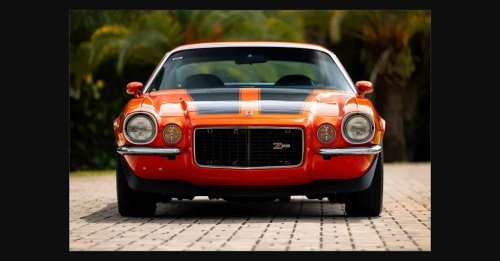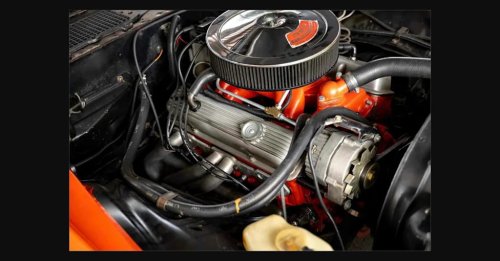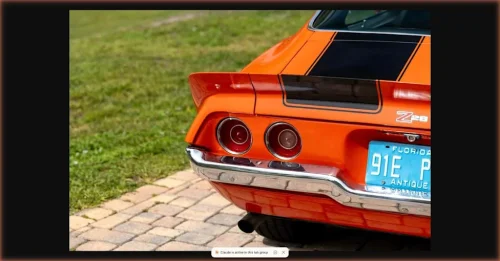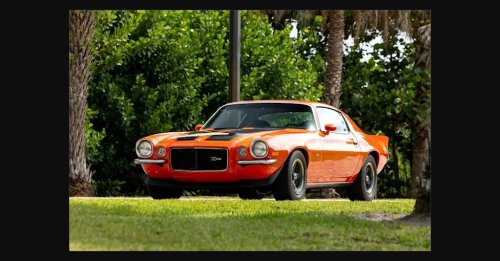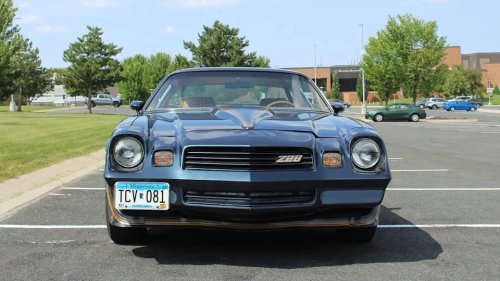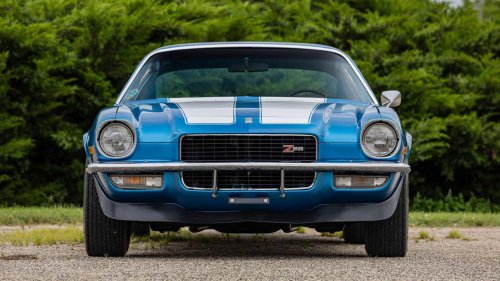
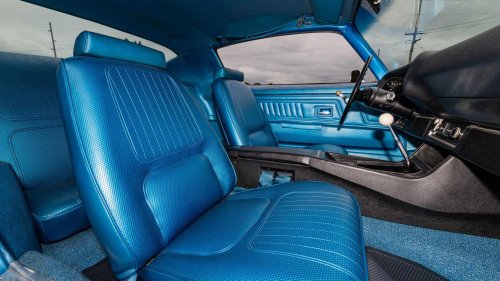
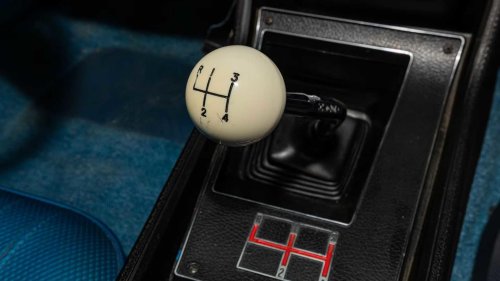
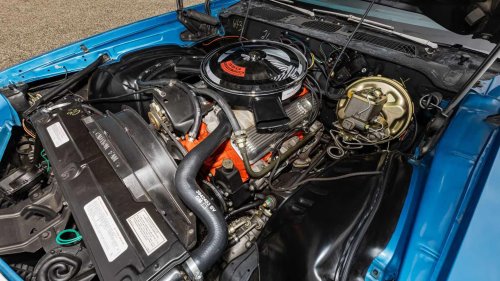
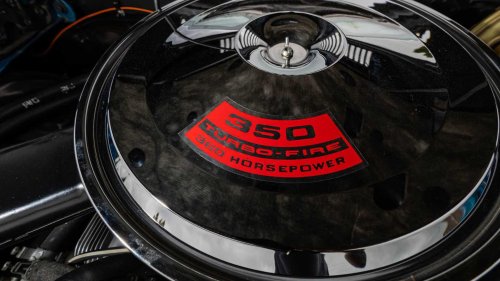

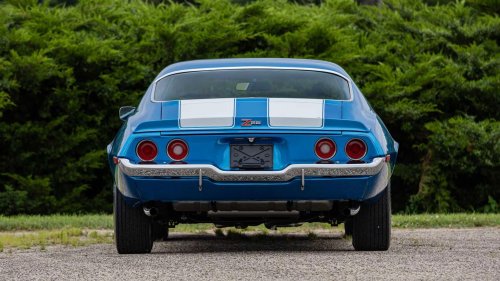
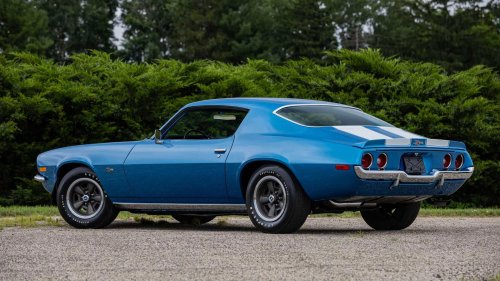



















1970 marked the first year Chevrolet ever put the iconic LT-1 350 small block V8 engine in a Camaro. One of the most powerful small block engines of the golden era, the engine made it only into the Z/28, making it the most powerful small block Chevrolet produced in the '70s.The year also marked the start of the second-generation Camaro. This means that the car doesn't benefit from as much nostalgia as the first iteration — making it cheaper than the first round and offering present-day buyers a chance to get into a car that will only appreciate in value. This pristine example recently popped up on Mecum and is enough for any gearhead to stop scrolling. Here's why it's so exciting. Bold And Blue Mecum The Camaro went through six generations in its roughly 57-year lifespan — models running from 1967 to 2002, then a brief reprise from 2010 to 2024. This one, from the start of the second of those six generations, has that effortless cool that old muscle cars exude. The model was a departure from the first generation, kicking off the second gen with a sleek fastback profile with a large wraparound rear window, replacing the more upright greenhouse of the first generation.MecumThis one is finished in Mulsanne Blue with double white stripes, and it’s not exactly subtle, but it's a combination that turns heads wherever it goes and will never go out of fashion. The colorway continues with the interior, as everything but the dash and center console is the same blue hue. It’s clean, too — the blue vinyl seats don’t show any signs of use, while there’s only some light use of the carpets. The cue ball-esque gear knob does have a couple of small marks, but you’re not looking at that when you’re driving.Once you’re past their condition, another thing you notice about the seats is just how low in the car they are. The top of the steering wheel is actually higher than the top of the driver’s side seat, with the headrest just barely poking above the window. It creates a much more reclined, laid-back driving position.MecumFive-spoke wheels are a classic choice, while at the rear, you’ll find two exhausts — perfect for hearing that Chevrolet V-8 even better — along with a modest spoiler that again marks it as a second-gen.And as is the usual case with these cars, rear passengers had better be short. Sure, it has four seats, but anyone with legs is going to struggle to fit in behind any front passengers. With a curb weight coming in at under 3,550 lbs, though, you wouldn’t want too many heavy passengers — it’ll mess with the performance too much. Race Car Performance For The Road MecumOn the topic of performance, the Z/28 was originally conceived with the track in mind, as Chevrolet targeted the SCCA Trans-Am series in 1967. It won, too, dominating the Over 2-Liter championships in 1968 and 1969 with 18 wins from 25 races, and beating Ford’s Mustang (which had the remaining seven) in the process. With these wins under its belt, Chevrolet took what it learned and put it into the road-going 1970 iteration.MecumThe 360 hp LT-1 V8 puts out 360 hp, and in real-world period testing, it gave the Z/28 a 0-60 mph time just under the six-second mark and a 1/4 mile in 14.2 seconds on a completely factory setup. This is comparable to some of the most iconic small block muscle cars of the era, such as the 1970 Ford Mustang Boss 302 and the Dodge Challenger T/A 340, which sat just beneath the Z/28 with a 340ci engine and hit 60 mph roughly the same time. Keep in mind, the 1970 Z/28's LT-1 was actually one of the most powerful small blocks of the time, and both the Mustang Boss 302 and the Challenger had much less power, sitting at 290 hp compared to the Camaro's 360 hp.Electronics of any kind are something you’ll struggle to find in the car, given that it’s closing in on 60 years old. It’s wonderfully analog, with barely anything between you, the four-speed manual gearbox, and the period-correct Goodyear Polyglas GT tires. The clock is just about the only bit of electronics in the car — even the windows are manual.MecumDriver assists are sparse, essentially limited to power steering, while the bucket seats and limited-slip differential mean you can break it loose if you’re looking to get the back end out around a corner without falling out of the car.The suspension came from Chevrolet’s track experience — a benefit if you’re after performance and handling, with the stiffer springs, new shocks, and larger sway bars making the car more nimble than the non-specialized versions. That will make the ride much bumpier, though, so if you’re after comfort in your classic, this car isn’t the one.If you’re concerned about safety in an old-school muscle car, then A) you’re probably better off looking at another car, but B) you’ll be pleased to know that the car does have seat belts. They’re a bit more primitive than in other cars of the period — there’s lap belts coming out of the center console, with shoulder belts coming down from the roof — but they do exist. How Much Is A 1970 Camaro Z/28 Worth Today? Mecum The Z/28 was the more performance-oriented version of the regular Camaro, so prices are higher. Within the Z/28 models, there was also an RS (“Rally Sport”) option, which had a slightly different front end and styling, and those will go for more due to their rarity.Still, cars like this aren’t going for cheap. You’re looking at almost $60,000 for a 1970 Camaro Z/28 today on average (Classic.com), with prices rising as the quality and condition improve. Non-Z/28 versions are slightly cheaper, but not by much — you're still looking around the $52,000 mark.Later model years are less desirable due to emissions controls that came in around the mid 1970s, which restricted their power and saw stock horsepower drop to under 200hp. Prices reflect this, with the average falling to under $30,000 on average, so the earlier second-gen models — particularly 1970 models like this — are much more sought after.Mecum We found two examples that sold in the last year, with one car going for $57,750 in May 2025 and the other for $60,500 in January 2026 — and with it looking so pristine inside, outside, and under the hood, we can see why. That's still cheap compared to the aforementioned competitors, though. Despite the Z/28 winning in period, the 1970 Ford Mustang Boss 302 will set you back an average of $93,000 today per Classic.com, while the Dodge Challenger T/A goes for even more — a whopping $131,000, making the Z/28 the more budget-friendly of its fellow road-going track-ready muscle cars...for now.It might not be the first choice for everyone, but that doesn’t matter. If we were in the market for a 1970s muscle car, you wouldn’t just see us near this one — you’d see us in it, radio turned up and tires leaving a big 11 behind us, just as the muscle car gods intended.Sources: Mecum, Classic.com, Car and Driver.com