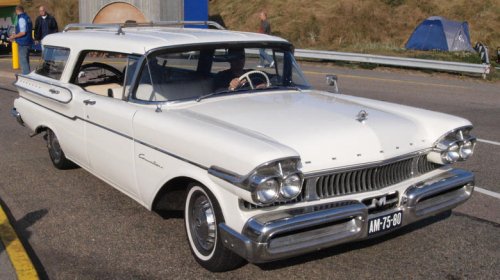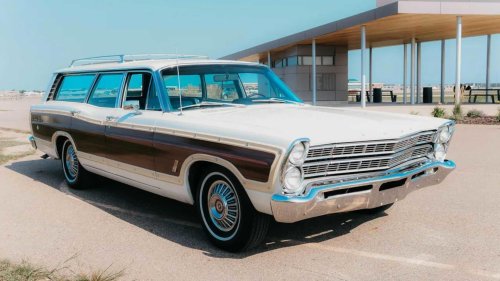
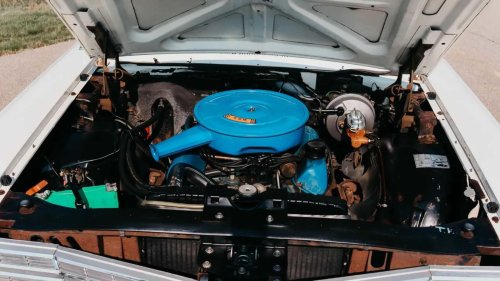
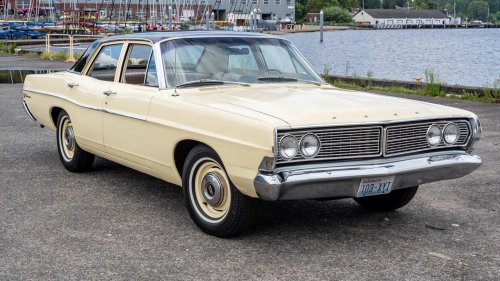
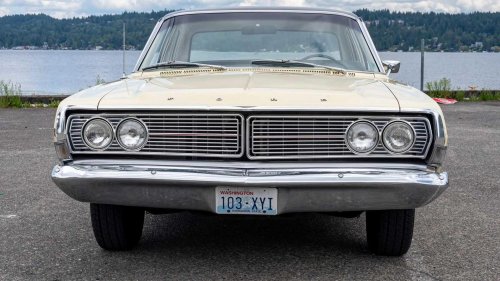
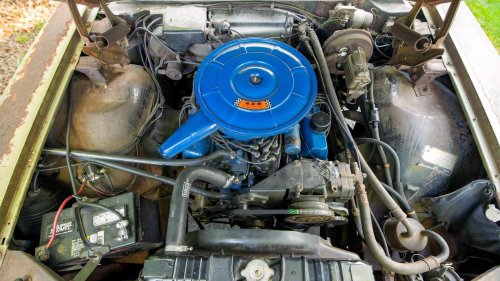
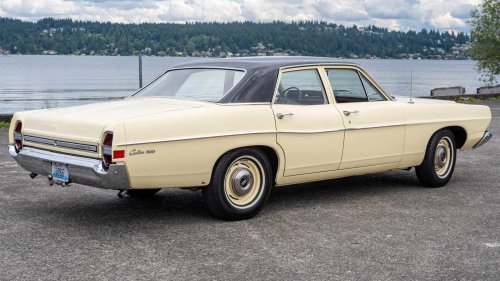
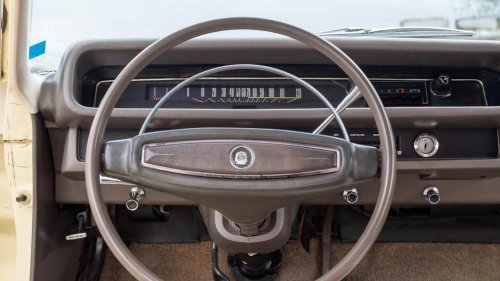
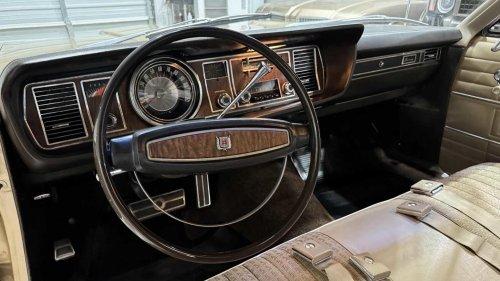

















In 1968, the obvious fast Fords wore the right costume. The XL fastback looked low and eager. The sporty two-doors got the glossy brochure treatment. Big grilles, long hoods, optional GT hardware, and 390 or 428 power made it easy to spot where Ford wanted enthusiasts to look first.But the automaker also hid a very different kind of weapon in plain sight. It came in a full-size four-door body that made far more sense on a school run, in a city motor pool, or parked outside a courthouse than at a drag strip. Under that plain skin, Ford offered real police hardware, including the 428 Police Interceptor package. That mix of family-sedan looks and highway-patrol muscle created one of the smartest sleepers of the era. The Late 1960s Had Some Great Sleepers Bring A Trailer Everyone remembers Detroit’s cars that shouted in the 1960s, because they wore stripes, scoops, buckets, and fastback rooflines. Yet Detroit still sold huge numbers of plain sedans, wagons, and post cars, and some of them carried engines that had no business hiding behind such sensible sheetmetal. That gap between what a car looked like and what it could do is where the sleeper earned its reputation.Full-size sedans made especially good sleepers because they already had one thing most pony cars did not – purpose. They carried families and handled long highway runs, but also gave police departments room, durability, and stability. Ford’s 1968 police material leaned hard into that mission – it bragged about high-speed durability, better brakes, heavy-duty springs, extra-control shocks, stabilizer bars, cooling upgrades, and the ability to run hard for long stretches. That sounds less romantic than a drag-strip ad, but it matters more once the road gets long and the engine gets hot.Bring A Trailer That is what made a late-1960s sleeper so interesting to enthusiasts then and now. It earned attention after the light turned green, or after the highway opened up and the speedometer kept climbing. A flashy coupe promised excitement before the key even turned, but a big sedan had to spring the joke late. That delay is half the fun.Ford also gave this formula room to breathe. Its showed five power-team packages, from a six-cylinder Deputy package all the way up to the 428 Interceptor, and it offered those setups in plain family sedans and wagons. Ford's Family Sedan That Had A 428 Big-Block V8 Under The Hood BaT The car in question was the 1968 Ford Custom 500 sedan, specifically the full-size four-door ordered with the 428 Police Interceptor package. On paper, the Custom 500 sat near the practical end of Ford’s big-car range. The brand positioned the Custom and Custom 500 as budget-minded, family-friendly transportation. Standard power started with the 240-cubic-inch Big Six, and the Custom 500 added enough trim to look respectable without drifting into XL or LTD money. It got cloth-and-vinyl interior choices, color-keyed carpeting, courtesy lights, ashtray and glove-box lights, and Ford’s safety features. It was a normal, sensible sedan.Then Ford let police buyers order the P-code 428 Police Interceptor V8. In 1968 trim, Ford rated it at 340 horsepower at 5,400 rpm and 459 pound-feet at 3,200 rpm, with a 10.5:1 compression ratio. The manufacturer paired it with Cruise-O-Matic only, and the company said the package was built for driving safety and sustained high-speed work, with speeds above 120 mph well within reach. Ford engineered it for pursuit duty, heat, load, and long runs at serious pace. It just happened to look like something that should be parked outside a dentist’s office.That mismatch is why the 1968 Custom 500 is one of the 1960s’ perfect sleepers. Its listed curb weight sat around 3,657 pounds in Custom 500 four-door form, so it was no featherweight, but the 428’s torque gave it the kind of easy shove that makes a heavy car feel much lighter once it starts moving. It looked like the kind of sedan that should carry kids, groceries, and maybe a cranky uncle. Instead, it carried enough torque to rearrange traffic. The Interceptor Package Was More Than Just A Big Engine BaTThe smartest part of the Interceptor package sat around the engine, not just under it. Ford bundled power front disc brakes with self-adjusting heavy-duty rear drums, extra-heavy-duty front and rear springs, extra-control shock absorbers, a heavy-duty front stabilizer bar, a calibrated speedometer with two-mph increments, extra cooling, and either a heavy-duty battery or a 42-amp alternator with dual-belt drive. Those are not glamorous parts, but they separate a strong engine option from a real pursuit package.The details also show what Ford cared about. The Interceptor came only with an automatic, and the police power-team chart listed a 2.80 rear axle ratio with that transmission. That combination suggests serious highway legs. Ford also pointed out the hydraulic lifters, which reduced adjustment needs compared with fussier valvetrain setups, and framed the whole package around reliability, warm-weather manners, and fewer service headaches.via Bring A Trailer Some of the lesser-known bits make the package even better. Ford’s spec sheet called out a temperature-controlled air cleaner that used exhaust heat to improve fuel vaporization, along with a system aimed at reducing carburetor deposits. That sounds tiny next to a 428 badge, but it shows how practical the whole package was. The same brochure also highlighted new rear-suspension details for 1968, including nylon parts in the rear spring setup, all meant to improve durability and control. That is why the Interceptor package deserves respect beyond just the headline number. One Of The Best Performance-Per-Dollar Machines BaT The performance-per-dollar argument starts with where the Custom 500 sat in Ford’s price ladder. A 1968 Custom 500 four-door sedan carried an original MSRP of $2,842, and a Galaxie 500 four-door sedan started at $2,971. A Galaxie 500 XL fastback started at $3,092, and an LTD two-door hardtop came in at $3,153. Those are not perfectly apples-to-apples body styles, but the point is clear – Ford charged real money for looks, trim, and image. The Custom 500, meanwhile, skipped a lot of that polish.The sneaky part is that the Custom 500 did not feel like punishment. Ford gave it carpeting, cloth-and-vinyl trim choices, courtesy lights, and enough basic niceties to keep it from reading like a bare fleet special. Because, you know, a great sleeper has to disappear into traffic, not look like a stripped race-car shell with license plates. The Custom 500 walked that line very well.BaT Then there is the way the 428 delivered its power. With 459 pound-feet arriving at 3,200 rpm, the Interceptor was like a locomotive for the road. In a big full-size sedan, that meant instant midrange shove, easy passing power, and the kind of long-leg surge that suited highways better than high school parking lots. The standard 2.80 gearing only reinforces that character.That whole package explains why the car feels smarter than some better-known muscle machines. A flashy fastback sold fantasy, but the Custom 500 Interceptor sold function, then quietly brought fantasy along for the ride. It could work as a fleet car, a family sedan, or a highway bruiser depending on who held the keys. That versatility gave it a kind of blue-collar cool that polished halo cars often missed. And enthusiasts love that sort of honesty even today. The Corporate Cousin Thankfully, Ford did not keep this big-engine plain-wrapper idea only to itself. Mercury had its own version of the formula in 1968 with the Monterey. The brand’s brochures sold the car with a more upscale pitch, all fine-car touches, luxury cues, and styling that leaned on the division’s Lincoln-flavored image. Even the standard Monterey read richer than a Custom 500. Mercury gave it pleated cloth-and-vinyl trim, deep-loop nylon carpeting, bright moldings, and a 25-gallon fuel tank, while talking up comfort and good looks in the same breath. Same basic mission, different accent.Under that nicer wrapper, the Monterey still offered serious engine choices. Standard Monterey power started with a 265-hp Marauder 390 V8, and the brochure also mentioned an optional 280-hp version plus bigger engines up to 428 cubic inches. Later historical summaries point to the top full-size civilian engine as the 360-hp Super Marauder 428, down from the 365-hp version used the year before. So while Ford’s police-spec Custom 500 represented the hard-edged version of the idea, Mercury proved the same basic point from a more polished angle.BaT That makes the Monterey a useful comparison, because it shows how broad Ford Motor Company’s big-car thinking really was in 1968. On one side sat the Custom 500 Interceptor, plain, purposeful, and openly shaped by police duty. On the other sat the Monterey, dressed for comfort but still open to serious cubic inches. The difference came down to attitude.This not-a-muscle-car duo is a good reminder that the most interesting performance cars of the era were not always the ones on the poster. Sometimes they were the ones parked at the curb, idling quietly, waiting to ruin somebody’s afternoon. Preferably somebody in a louder car.Source: Ford, J.D. Power, Mercury, Hagerty