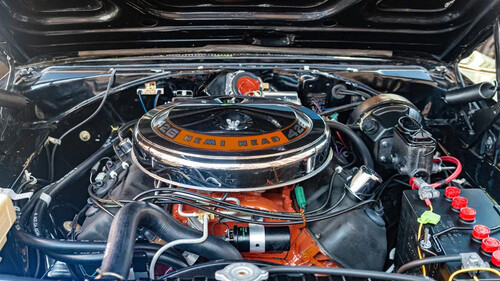
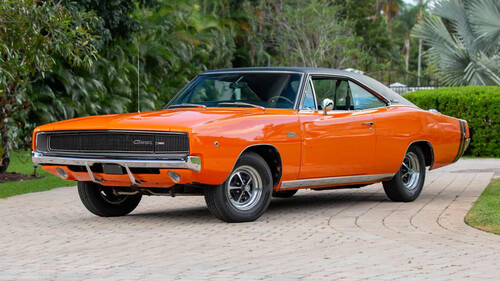
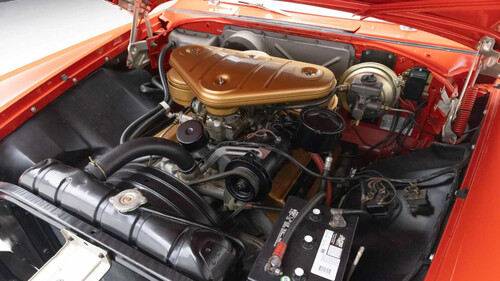
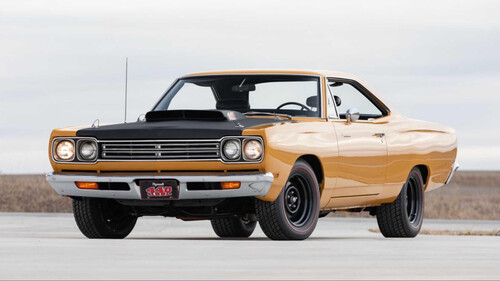
The 1969 Dodge Super Bee Six-Pack arrived at a moment when Detroit was locked in a horsepower race, yet it stood out less for its badge and more for the way it breathed. By pairing Chrysler’s 440 cubic inch big-block with a trio of Holley two-barrel carburetors and carefully tuned airflow hardware, the Six-Pack package turned a budget B-body into one of the era’s most focused street-and-strip tools. I want to look closely at how that high-flow design worked, why it mattered in 1969, and how its engineering choices still shape how enthusiasts think about performance today. From budget bruiser to airflow experiment The Super Bee started life as Dodge’s value-minded answer to the Plymouth Road Runner, a stripped B-body built to deliver quarter-mile speed without luxury frills. By the time the 1969 model year rolled around, the basic formula of a big V8 in a mid-size shell was already familiar, so the Six-Pack option had to do more than add a few extra horsepower on paper. It turned the car into a rolling test bed for how much usable power Chrysler could unlock from the 440 by feeding it more air and fuel through a carefully staged induction system, while still keeping the package affordable enough to sell in meaningful numbers. That balance between cost and capability is what made the Six-Pack configuration so distinctive. Instead of jumping straight to the more exotic 426 Hemi, Dodge offered a package that used the existing RB big-block architecture but rethought how it inhaled and exhaled. The result was a car that could be ordered by a buyer who might otherwise have settled for a single four-barrel 383, yet it delivered performance that pushed deep into Hemi territory once the secondaries opened and the airflow system was fully engaged. The 440 Six-Pack’s triple-carburetor strategy At the heart of the Six-Pack concept was the 440 cubic inch V8 topped with three Holley two-barrel carburetors arranged on a low-rise aluminum intake manifold. The center carburetor handled everyday driving, while the outboard units were vacuum actuated and came online only when the driver demanded more throttle. That layout let the engine behave like a relatively mild single-carb big-block at small throttle openings, then transition into a high-flow setup that could move a far greater volume of air and fuel when the secondaries opened, effectively giving the car two personalities in one package. This staged approach to induction was not just a party trick, it was a deliberate way to keep drivability and fuel consumption within reason while still chasing serious top-end power. By keeping the outer carburetors closed during light cruising, the engine maintained good mixture velocity and throttle response, then, as vacuum dropped under heavy acceleration, the additional barrels swung into play and dramatically increased the available airflow. The result was a broad, muscular torque curve that made the Super Bee feel strong off the line and increasingly urgent as the tachometer climbed, a character that helped cement the Six-Pack’s reputation among street racers and weekend bracket competitors. High-flow hardware: manifolds, heads, and exhaust The carburetors were only part of the Six-Pack story, because the rest of the engine had to be able to use the extra air they supplied. The 440 Six-Pack relied on a specific intake manifold designed to keep runner lengths relatively equal and minimize turbulence as the mixture transitioned from the carburetors into the cylinder heads. That casting was engineered to support higher mixture volume without sacrificing the low-speed velocity that made the big-block responsive in traffic, a compromise that helped the car feel livable on the street while still rewarding a heavy right foot. Downstream of the intake, the cylinder heads and exhaust system also played critical roles in the overall flow equation. The 440’s head design, with its large valves and generous ports, was already known for strong breathing, and the Six-Pack package leaned on that strength by pairing it with a camshaft profile and exhaust routing that could clear spent gases efficiently at higher rpm. The combination of freer-flowing intake charge and relatively unrestrictive exhaust helped the engine maintain volumetric efficiency where a single four-barrel setup would start to run out of breath, which is why the Six-Pack cars punched above their rated output in real-world acceleration tests. Image Credit: Sicnag, via Wikimedia Commons, CC BY 2.0 Air management: scoops, filters, and underhood dynamics Feeding three carburetors effectively also required careful attention to how air entered the engine bay and reached the intake in a consistent, cool stream. The Super Bee Six-Pack used a performance-oriented hood treatment that directed outside air toward the carburetor assembly, reducing the amount of hot underhood air the engine had to ingest. Cooler, denser air carries more oxygen per unit volume, so even modest reductions in inlet temperature could translate into measurable gains in power and repeatability during back-to-back runs. Inside the engine compartment, the air cleaner assembly and ducting were designed to distribute flow evenly across all three carburetors rather than starving the outboard units when demand spiked. That meant shaping the housing and filter area so that pressure drops were minimized and the vacuum signals at each carburetor remained predictable as the engine transitioned from part throttle to wide-open operation. By managing those underhood dynamics, the Six-Pack package reduced the risk of flat spots or mixture imbalances that could otherwise plague multi-carb setups, which helped the car earn a reputation for being more user-friendly than its aggressive appearance suggested. Drivetrain, gearing, and how the Six-Pack put power down The high-flow induction system would have been wasted without a drivetrain tailored to exploit its strengths, so the Super Bee Six-Pack was typically paired with performance-oriented transmissions and rear axle ratios. Buyers could choose between a heavy-duty four-speed manual and a robust automatic, both backed by gearing that let the engine stay in its sweet spot as the car charged through the quarter mile. Shorter final-drive ratios helped the 440 reach the rpm range where the outer carburetors were fully contributing, turning the extra airflow into tangible acceleration rather than theoretical horsepower. Chassis and suspension choices also reflected the car’s dual mission as a street machine and drag-strip regular. The Super Bee’s relatively simple leaf-spring rear suspension and stout driveline components were well suited to hard launches, and the Six-Pack’s torque-rich delivery meant the car could leap off the line even on street tires. By matching the engine’s breathing characteristics with gearing and traction that made full use of that torque, Dodge created a package that felt cohesive rather than like a collection of unrelated performance parts bolted onto a basic sedan shell. Legacy of the Six-Pack’s airflow philosophy Looking back, what stands out about the 1969 Super Bee Six-Pack is not just its period-correct bravado but the clarity of its engineering priorities. Instead of chasing ever larger displacement or relying solely on exotic hardware, Dodge focused on how efficiently the 440 could move air and fuel through its cylinders, then built a package around that insight. The triple-carburetor layout, tuned intake and exhaust, and attention to air management under the hood all reflected a belief that smart airflow design could unlock performance that belied the car’s price tag and humble B-body origins. That philosophy continues to echo in modern performance engineering, even as electronic fuel injection and computer-controlled induction systems have replaced mechanical carburetors and vacuum pods. Contemporary engines use variable intake runners, carefully shaped ports, and sophisticated airflow modeling to achieve the same goal the Six-Pack pursued with analog tools: maximizing the amount of clean, cool air that reaches the combustion chambers while keeping drivability intact. When I look at the 1969 Super Bee Six-Pack today, I see more than a nostalgic muscle car, I see an early, very loud lesson in how thoughtful high-flow design can turn a straightforward platform into something genuinely special. More from Fast Lane OnlyUnboxing the WWII Jeep in a Crate15 rare Chevys collectors are quietly buying10 underrated V8s still worth hunting downPolice notice this before you even roll window down The post 1969 Super Bee Six-Pack tech made it the street sleeper from hell—inside the setup appeared first on FAST LANE ONLY.