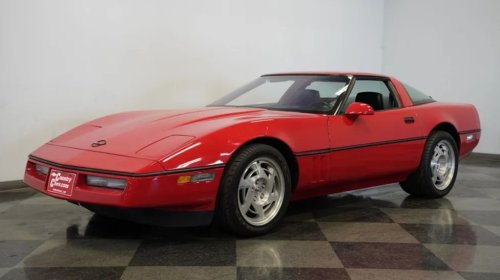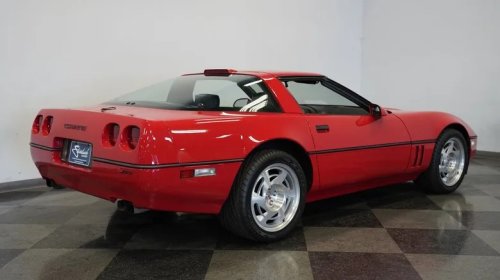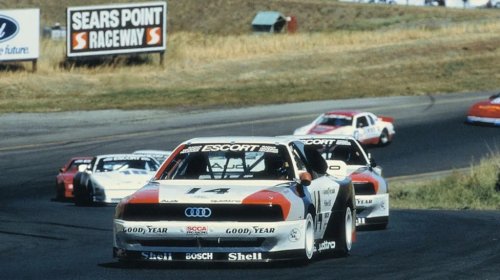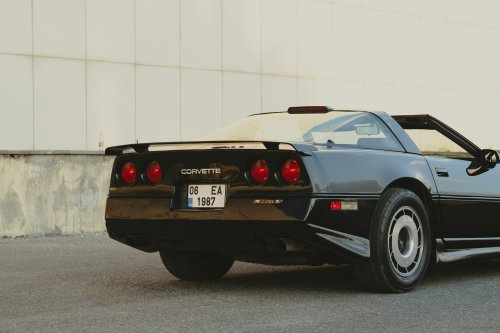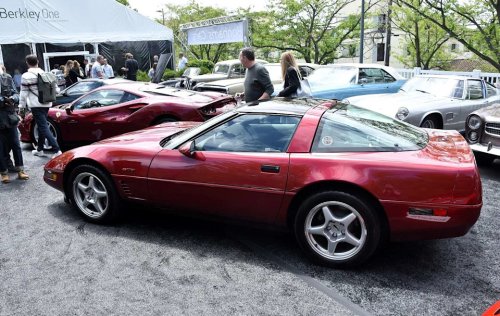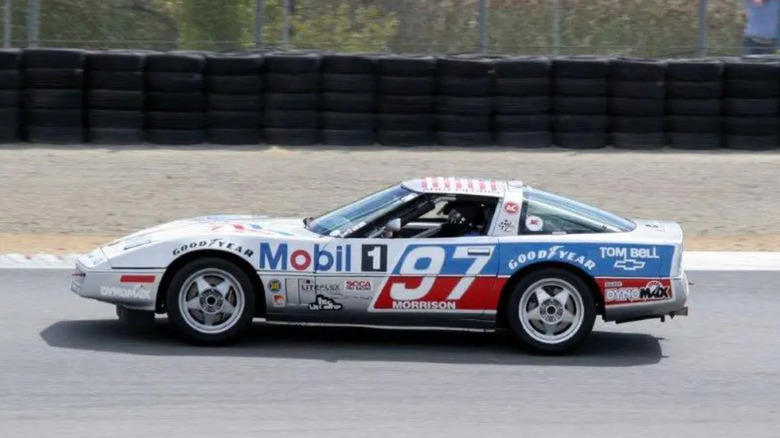
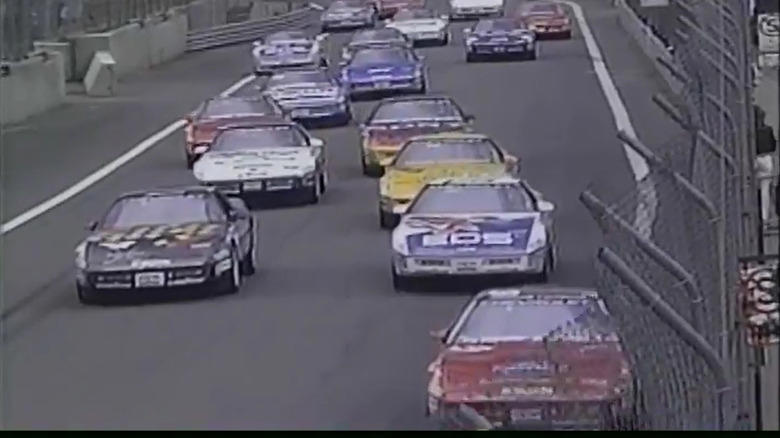











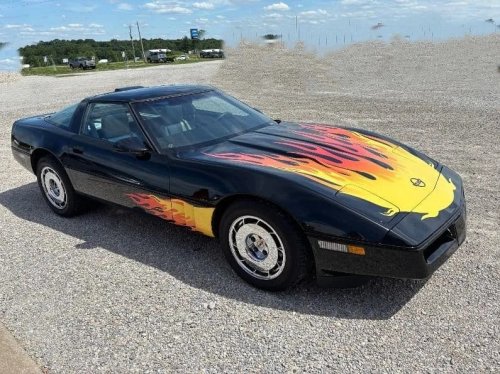
Bring A Trailer When the C4-generation Corvette debuted in 1984, it was perhaps the greatest sports car built in America up to that point. With a healthy small-block V8 up front, an aerodynamic shape, and big, meaty tires, the C4 was both a massive improvement over its C3-generation predecessor. Between 1985 and 1987, the big 'Vette absolutely dominated the SCCA's brand new endurance series in the class for showroom stock vehicles. With rising demand for its endurance events in the Midwest, specifically the Longest Day at Nelson Ledges and the 24 Hours of Mid-Ohio, by spectators and participants alike, the SCCA decided the time was right to kick off an endurance racing sports car championship. With a six-race calendar ranging from four to 24 hours each, the series hit some of the best tracks in the country, including Riverside, Road Atlanta, Sears Point, and Lime Rock. Unlike the wild international endurance races like Daytona, Sebring, and Le Mans, the SCCA didn't create classes for the multi-million dollar Grand Touring Prototype racers or factory-supported GT cars. Even the SCCA's own Trans-Am series cars weren't allowed to race in this series. This was for showroom stock cars from top to bottom. Because these endurance races with showroom stock cars included multiple classes of competition, the Corvettes, Porsches, and the occasional Lotus Esprit Turbo (or similar) needed the ability to work really well passing slower traffic. With nearly one G of lateral acceleration and torquey V8 grunt, the Corvette was exceptional at handling low-speed corners and could jump off the line without waiting for turbos to spool. That alone was a significant advantage over the competition, and likely the one that helped Corvette win three championships in a row. Eventually, the dominance got so bad that the SCCA decided to ban Corvettes from Showroom Stock GT racing. Why Was The Corvette A Better Platform Than The 944 Turbo? Randy's Racing Place/YouTube Before the series changed, Porsche showed up to a few events with factory engineers and drivers, and big dollar Rothmans' sponsorship, but no matter what Porsche threw at this series, the Corvettes just steamrolled everything and constantly found the front of the field. How dominant was the Corvette in the Showroom Stock category racing? The inaugural round of the series, the 1985 Playboy Yokohama Six Hours of Riverside, was not only won by a Corvette, but Corvettes made up nine of the top ten entries, with a single Porsche 944 finishing ninth. Hey, nobody's perfect. Porsche didn't find a single win in the 1986 or 1987 seasons, either; it was Corvettes all the way down. Across the many endurance races that the Showroom Stock Super Sport class ran, Corvette ran the table. At the risk of becoming a big dollar series owned by Chevrolet, the SCCA decided to just boot the high-powered sports cars and decided to make the top class a Mustangs and Camaros affair instead. Chevrolet still won the next five championships in a row, even after the series switched from an endurance to a sprint format. With nowhere left to race, but still wanting to prove its mettle on track, the Corvette team within Chevrolet decided that the best move would be to take a page from Porsche's book and kick off a single-make sprint race series. Thus, the Corvette Challenge was born. The SCCA still sanctioned the events and helped Chevrolet line up a solid ten-race series running as support for major pro racing series like Trans Am and CART. What Happened Next? TPIS, Inc./YouTube With a million dollars on the line in prize money, the series brought a ton of competitors. Chevrolet set about building a run of identically equipped cars for the race series. Malcolm Konner Chevrolet, at the time the world's largest dealer of Corvettes, put in an order for the first 50 race cars. The B9P option code for the race cars packaged the Doug Nash manual transmission, Z51 handling pack, and confusingly a bunch of luxury options like the power driver's seat, Bose stereo, glass roof panel, and mirror defoggers. Only 56 B9P package cars were built, and 48 of them were given the race conversion. Considering how much money was on the line for the series, and sponsors practically fell out of the sky, it was a small price to pay. Big-time pro racers jumped at the opportunity to race in the series, as the grids were frequently packed with the likes of Tommy Kendall, the Archer brothers, Andy Pilgrim, Boris Said, and Johnny Rutherford. "At the time, there were so many top drivers coming in from various series," Pilgrim reminisced to Hagerty. "It was really close racing—the series did a great job of keeping everything the same for each team, so winning wasn't easy." For the 1989 racing season, Chevrolet made racers buy a new car to compete, as the C4 had upgraded to the 6-speed manual transmission and FX3 suspension package. As a result, the entries decreased, and just 27 cars were raced. GM decided against running a third season of the series, but lobbied for the Corvette to be allowed back into the SCCA's World Challenge series. From 1990 to 1992, the C4 Corvette won three more World Challenge titles. It's safe to say this car was beastly on the race track.