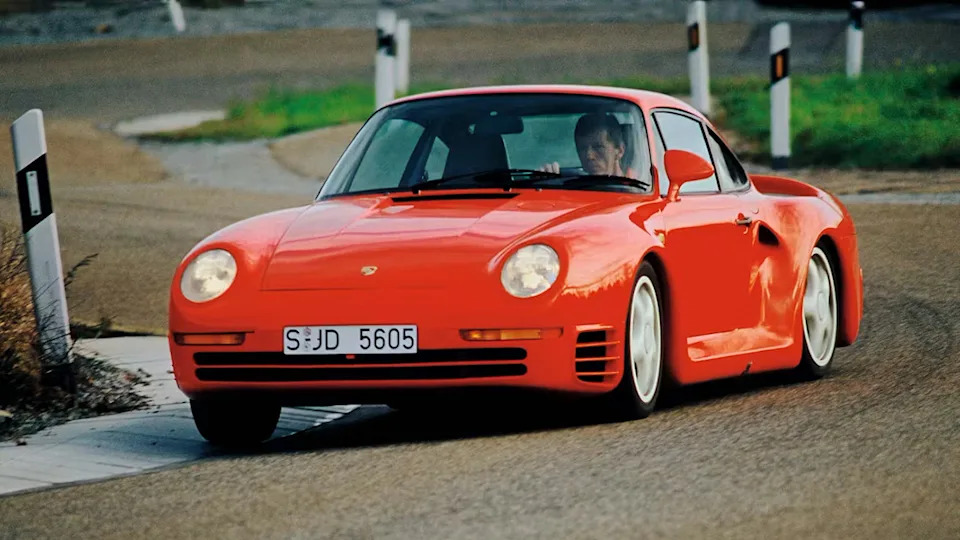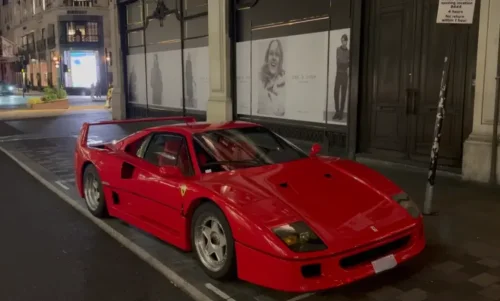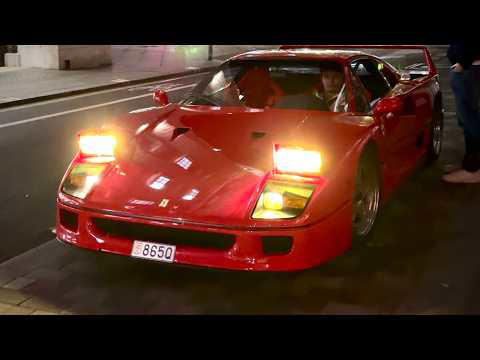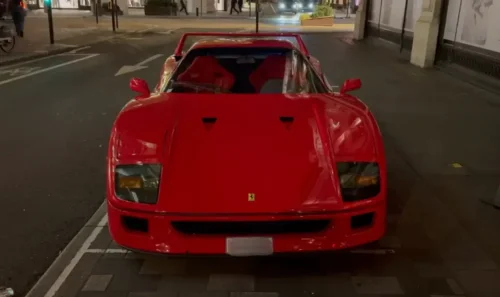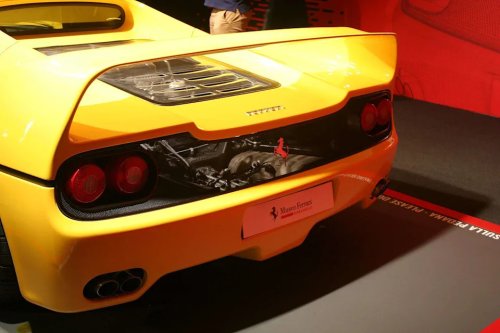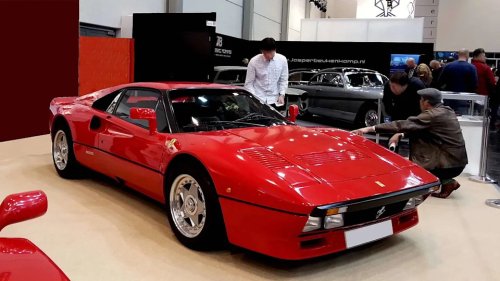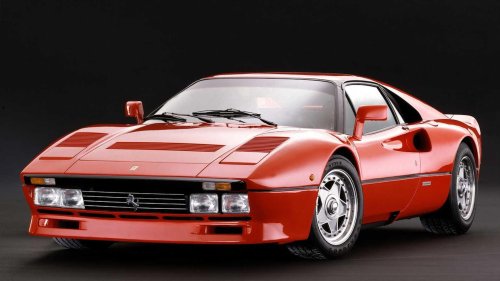
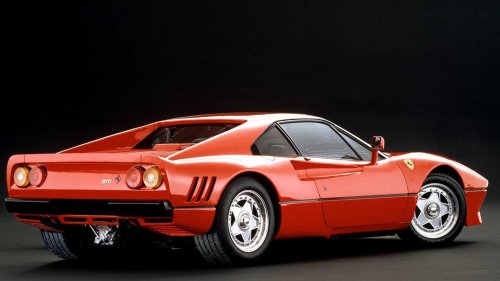
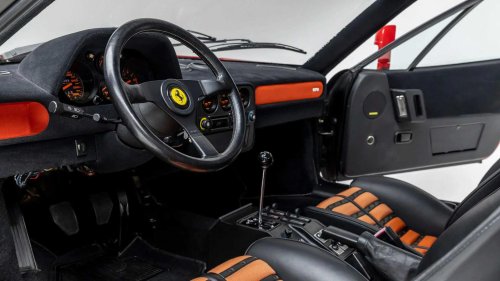
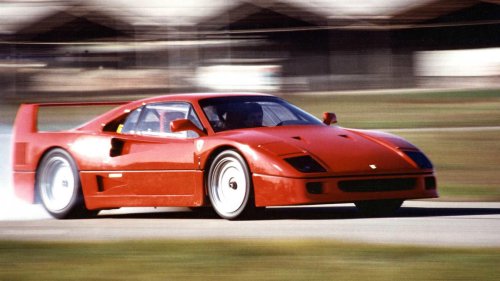
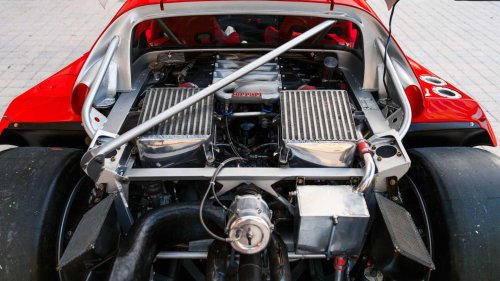
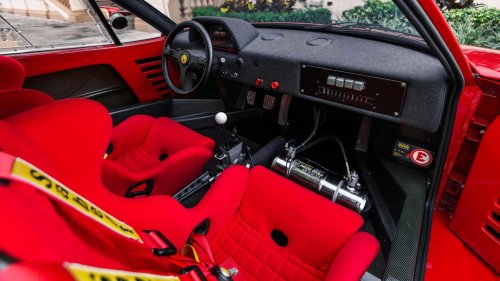

















It's safe to say that a massive chunk of Ferrari's brand value comes directly from motorsport. Obviously, the most famous formula it competes in is Formula 1, but for the masses of fans, while a seat trackside at an F1 race was the stuff of dreams, access to grueling cross-country endurance events like the Mille Miglia was much more realistic.The latter was an epic battle where man and machine tackled real-world roads and, importantly, you didn't need a ticket to spectate. It ties in nicely with our story later on, too.Basically, Ferrari is the ultimate argument for racing on Sunday and selling on Monday. And the hottest racing series of the 1980s (apart from Formula 1) was Group B rallying. Now, explaining regulations can be tedious, so, instead, the basics: The FIA wanted more automakers to join rallying, so it got rid of some rules.Instead of building 2,000 homologation units, Group B only required 200. And to make it as fast and entertaining as possible, there were essentially no rules. An automaker could use any technology at their disposal to make a Group B car as fast as possible, even if it meant building a roll-cage out of cardboard, and boosting a 2.1-liter five-cylinder engine to produce 600 horsepower.We specifically mention the five-cylinder, because Audi sold 11,452 Sport Quattros because of Group B. The world fell in love with this car while it slid sideways through the Alps, making five-cylinder boosty noises. Ferrari noticed the sales success, and wanted a slice of the pie, which takes us one step closer to the greatest supercar of the 1980s.This week, we're celebrating the 1980s on CarBuzz, from the wildest supercars to the coolest daily drivers. Take a trip back in time with us to then the colors were bright, the cars were loud, and EVs weren't even a dream yet. The Ferrari 288 GTO: Where F1 And Group B Meet Ferrari The second half of our story starts with the 288 GTO, which wasn't the first turbocharged Ferrari. We like to think governments only recently started interfering with automotive regulations, but the subject of this feature would not exist if it weren't for the meddlesome Italian lawmakers.Italy introduced a new tax on luxury cars with large engines, so Ferrari equipped the 1982 Ferrari 208 GTB Turbo with a 2.0-liter turbocharged V8 producing 220 hp. And Ferrari only tried turbocharging because its F1 cars had no problem producing 700 horses from a 1.5-liter V6.The 208 was not a massive success, however. This didn't bother Enzo Ferrari too much, but he always had a healthy disdain for his customers. Not that it mattered, as Ferrari has actually split the business in two. Enzo Ferrari did racing, while Eugenio Alzati and Vittorio Ghidella sold road cars to fund Ferrari's racing habit.Seeing what Group B was doing for Audi, Ferrari started developing a car to compete, and that's the car we know as the 288 GTO. In case you don't know Ferrari lingo, GTO stands for Gran Turismo Omologata.The GTO was a gnarly machine given its humble roots. Ferrari mounted the engine longitudinally in the 308's trunk, with the transmission mounted behind the engine. Ferrari also needed the additional space to bolt on two turbochargers and some intercoolers. In race specification, it weighed less than 2,000 lbs, produced 650 hp, and could reach 230 mph with the right gearing. Remember, this thing was still a mid-mounted supercar, but dialed all the way to 11, and meant to be driven on loose gravel.Ferrari Unfortunately, or fortunately for whoever was meant to pilot the GTO in a race, Group B was canceled in 1986. As you can imagine, the "everything goes" formula resulted in some dangerous cars, which led to tragic crashes. The worst was Joaquim Santos losing control of his Ford RS200 (another 80s legend) and veering into some spectators. Three were killed, and more than 30 were injured. Just like the Mille Miglia we mentioned earlier, Group B was banned for being too dangerous.Ferrari had developed this amazing car, but it had nothing to do with it. But not all was lost... Danger Breeds Big Demand Broad Arrow Auctions The GTO never went racing, but it still became a legend. Group B already had a wicked reputation, and there was huge demand for Ferrari's take on the formula that literally killed people. It appealed to that reptilian part of the brain that wants to chase fear. Even though Ferrari only had to make 200, it ended up making 70 more for valuable customers, like F1 drivers.Still, it's not the greatest 80s supercar, because Ferrari took everything it learned from everything we've written so far and poured it into a car that would become the most powerful, fastest, and expensive Ferrari of its era. Ferrari Throws Everything At The F40 Ferrari The 288 GTO worked wonders for Ferrari. It didn't necessarily make money, but it took care of some of the criticisms leveled at the brand. At the time, Ferrari was lambasted a bit for becoming soft. Enzo didn't care about his customers, and the people in charge of the road car division started making cars that tried to be too many things at once. The 288 GTO proved that it could still do old-school Ferrari stuff.A successor was guaranteed, and to make more money, Ferrari was definitely going to build more than 270. This time, Ferrari was also going to design and develop it properly. We didn't mention this earlier, but the bosses only gave Nicola Materazzi permission to work on the 288 GTO over the weekends.When it came to the F40, Materazzi could design it during normal working hours, and he had the backing of the entire factory. Ferrari even paid Pininfarina to do the design. Let's look at all the components that made the F40 great: A Rev-Happy Twin-Turbocharged V8 Engine, And Race-Ready Suspension RM Sotheby's Materazzi increased the 288's engine size to 2,936 cc. This upped the power to 471 hp and 426 lb-ft of torque, sent to the rear wheels via a five-speed manual transmission. Because of this engine, the F40 also became infamous for being a bit of a handful. Without power steering and loads of turbo lag, it was a gnarly machine. Thankfully, the handling was sublime thanks to double wishbones at each corner, a feature carried over straight from the 288 GTO. Loads Of Lightweight Materials RM Sotheby's The F40's sublime engine only had to push around 3,018 lbs thanks to various lightweight materials. These days it's all carbon fiber, but it was extremely expensive and difficult to manufacture back then, even for the likes of Ferrari. Instead, it used a combination of aluminum, kevlar, and carbon fiber where absolutely necessary.To save even more weight, or possibly get away from its soft-core image, Ferrari also didn't bother with the most basic comfort features. Examples include air-conditioning, a glass windshield, a sound system, carpets, door panels, or even windows. The very first cars produced had tiny sliding windows, also known as cat flaps. Ferrari later went all out on luxury and made manual wind-down windows standard. Other Cool Stuff About The F40 The F40 was the Bugatti Veyron of the late 1980s. It was the first series-production car to hit 200 mph, which was an astonishing figure at the time. Pirelli also created a tire specifically for the car, another advancement that was unheard of back then. Finally, the F40 is famously the last Ferrari to get the green light from Enzo himself. Every Ferrari after had to be approved without the founder.More than anything else, the F40 was known for its visceral driving experience. The feel, the feedback from the steering, the unexpected boost, all resulted in an experience nothing else could match. Its main rival was the Porsche 959, which took an entirely different approach to driver enjoyment. The F40 was old-school, while the Porsche was a technological masterpiece. These days, wealthy fans of 80s supercars tend to own both, because you just have to, darling.