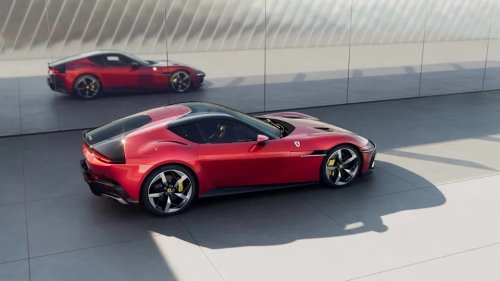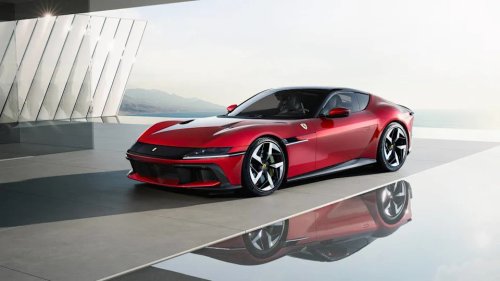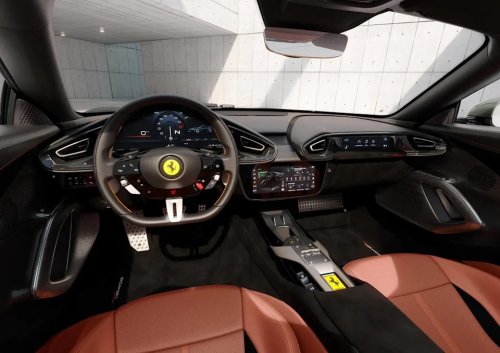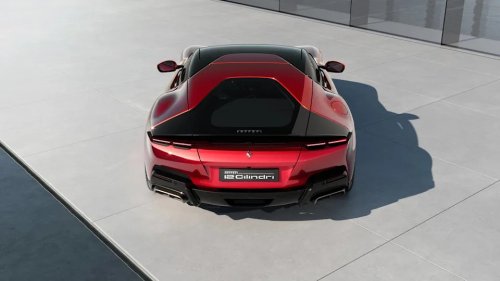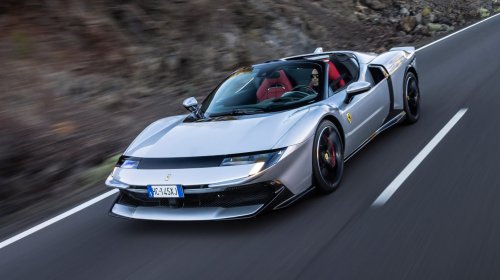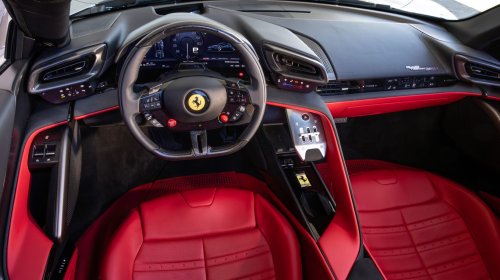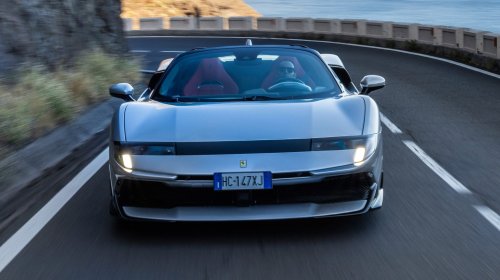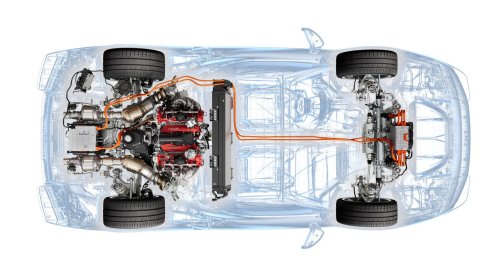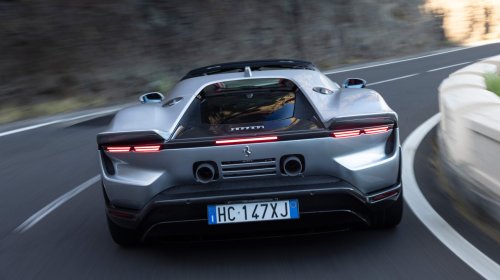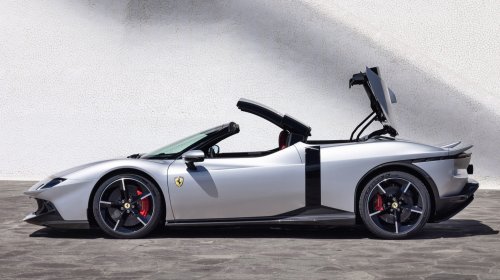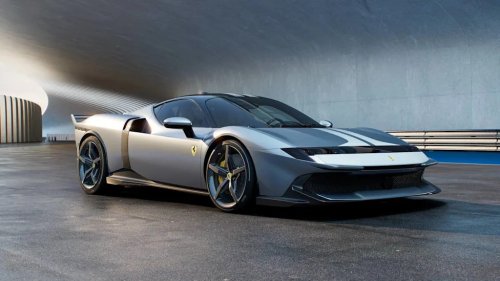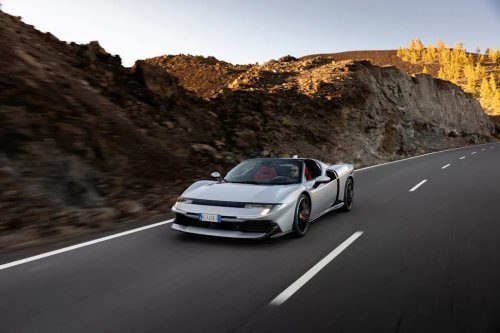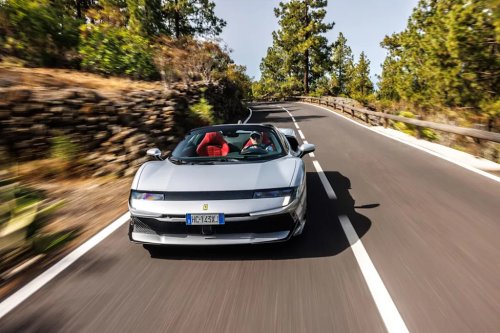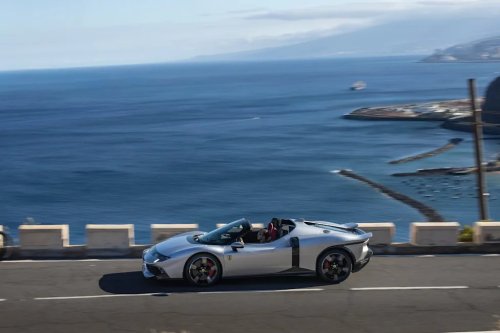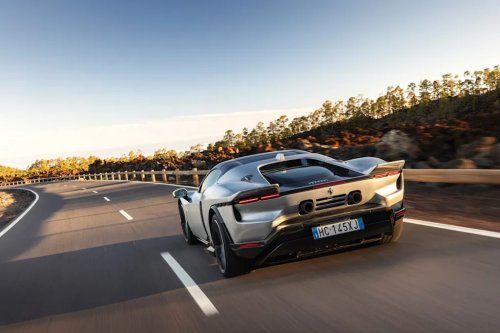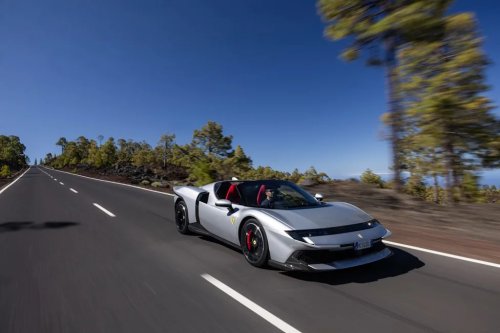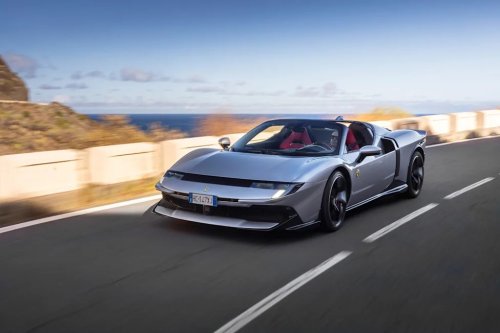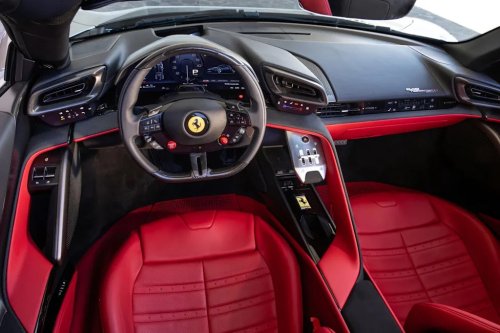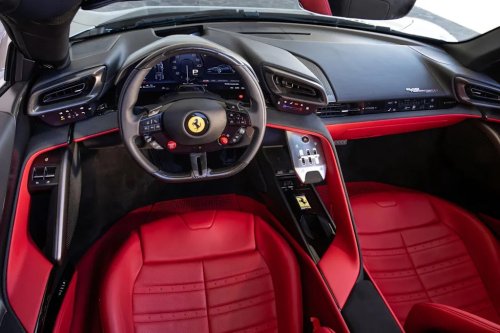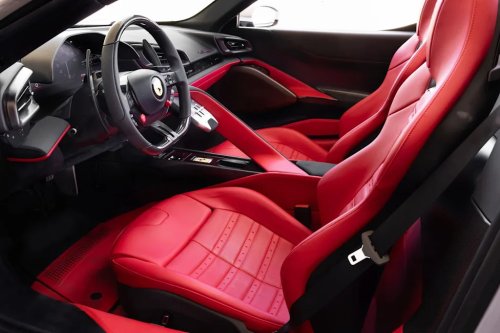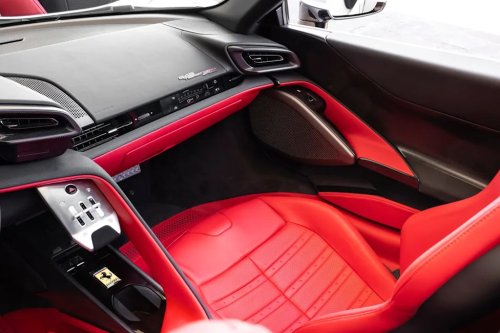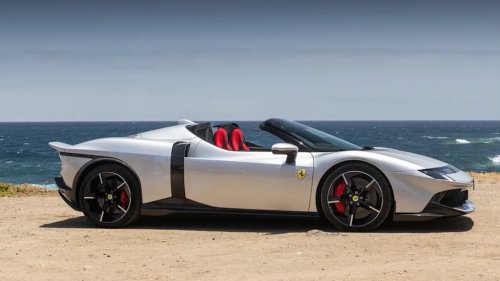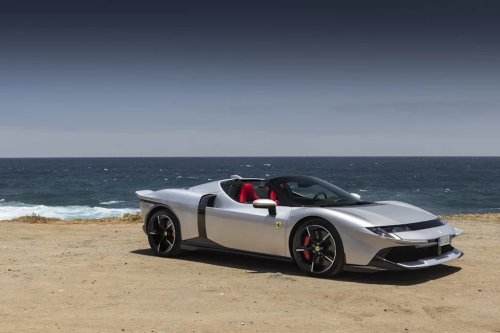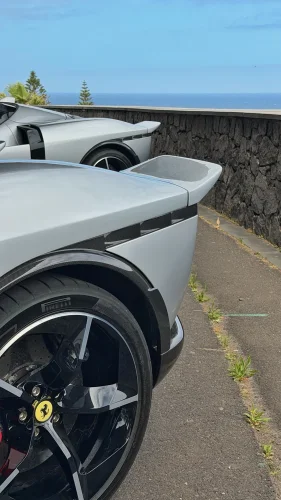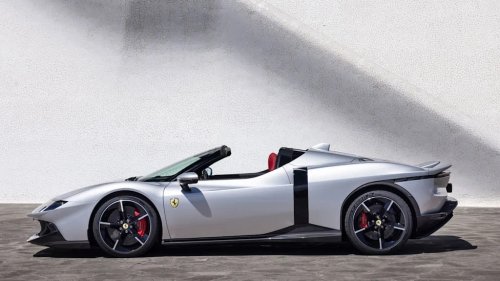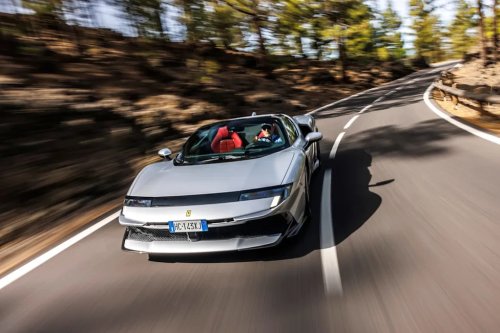
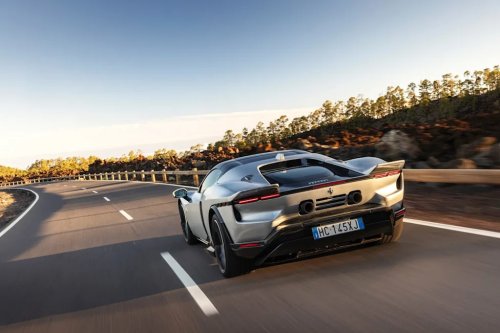
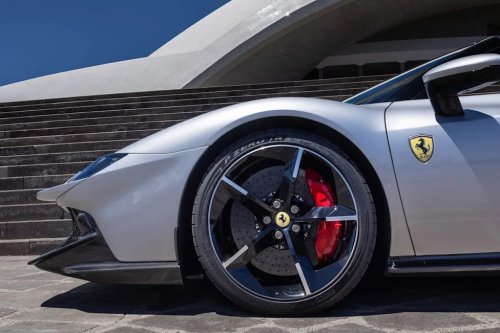
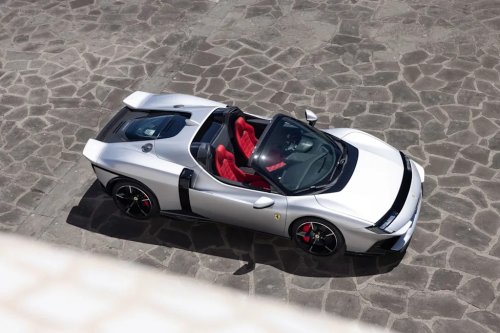
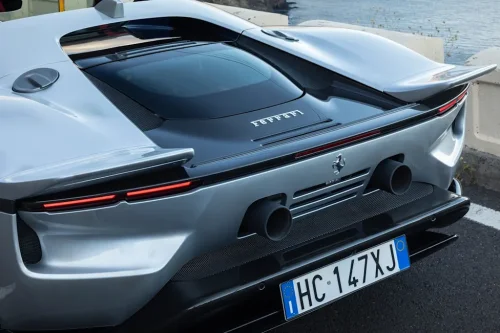
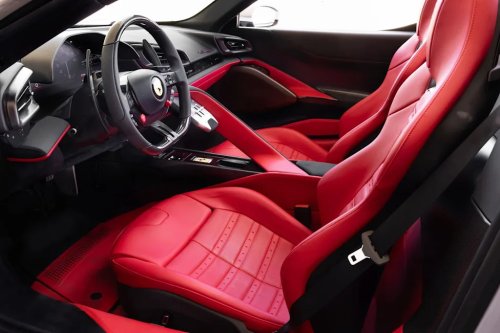
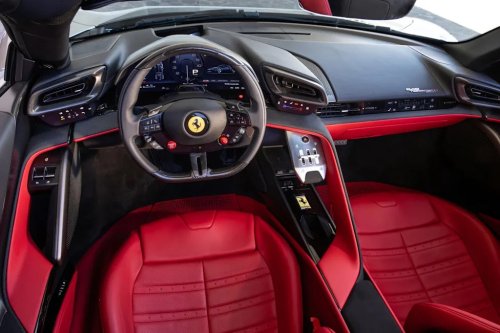
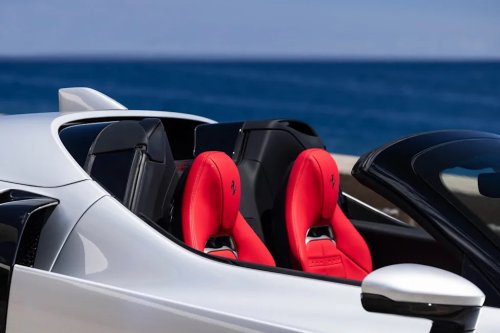
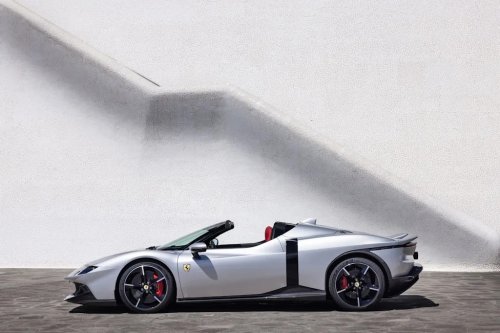



















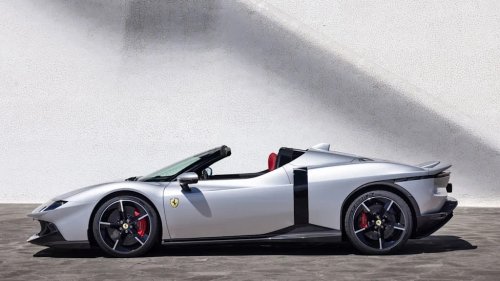
2027 Ferrari 849 Testarossa Spider Pushes FurtherFerrariI had stopped for 10 minutes to wait for our photographer to get ready, and when I restarted the car, the main display showed a warning that "the tires are cold." I've never seen that one before, and more than a mid-engine layout with 1036 horsepower, it convinced me the Ferrari 849 Testarossa Spider was a serious performance car.Ferrari hammers the point home in several other ways. Twist the manettino through its range of positions, and you'll find no Normal or Comfort mode. The selection for normal driving is labeled "Sport." And when you go through the various powertrain mode options using the e-manettino, while there are eDrive and Hybrid selections, there's also one called Qualifying that releases the full thrust of the hybrid powertrain.FerrariThese cues aren't kidding either. That lofty total power comes from an 819-hp twin-turbo 4.0-liter V-8 coupled to three electric motors with a combined 217 hp—in Qualifying mode. In Performance mode, the electric motors are limited to 150 ponies, dropping the total under the magic four-figure threshold, but I can assure you that the car remains a rocket.AdvertisementAdvertisementAs Dave VanderWerp pointed out in his first drive of the 849 Testarossa coupe, this model replaces the SF90 in the lineup, and it's heavily based on that car, though the number of changes is impressive. The SF90, by the way, had a total of 50 fewer horses, but in our 2021 test, the coupe hit 60 mph in 2.0 seconds flat and 150 mph in 9.8 seconds. In the process, it hit the quarter-mile at 9.5 seconds and 148 mph. The 849 Testarossa coupe weighs the same, according to Ferrari, so it should be a bit quicker than that. This Spider, with its additional 198 pounds, should be very close to the SF90 coupe's performance.FerrariTo extract the additional 50 horses from the V-8, the key change was a pair of larger turbochargers developing up to 29 psi of boost. The impeller on the turbo compressor increased from 62 to 68 mm in diameter, while the exhaust turbine grew from 56 to 62 mm. Such increases would suggest more turbo lag at lower rpm, but according to Gabriele Petroni, the 849 Testarossa's engine product manager, changes to the configuration of the turbine blades allow the turbos to capture more exhaust energy and produce a boost curve similar to that of the smaller turbos.Much of this boost increase was motivated by the need to reduce full-power enrichment in order to meet Euro 7 exhaust emissions standards. The reduced enrichment raises combustion temperatures and requires less spark advance, reducing power. More boost is required to make up for the losses in full-power combustion efficiency. We've seen similar measures on the recent Porsche 911 Turbo S, which also required a substantial boost increase. The uprated engine also gets ceramic—rather than metallic—substrate catalysts, because they are more resistant to high temperatures.FerrariAlso key are the electric motors, which can provide instant thrust and fill in any lower-rpm gaps in the engine's torque curve. The result is a remarkably smooth power curve. In fact, while the car can accelerate frighteningly quickly, it is also very easy to drive slowly and smoothly. An average driver could commute in this car at rush hour without any problem.AdvertisementAdvertisementThe bigger turbos and their upsized manifolds, along with larger radiators and intercoolers, and an exhaust system to match the increased power, would have added some pounds to the powertrain, but Ferrari engineers offset the increases with more carefully machined components, downsizing some parts, and switching to titanium fasteners.The suspension design remains unequal-length control arms in front and a multilink arrangement in the rear, but the Testarossa gets upgraded geometry and titanium springs designed to reduce body roll by 10 percent. The tires are also enlarged one size to 265/35-R20s in front and 325/30-R20s in back. The combination is said to improve grip by 3 percent, which should translate to about 1.12 g's. The brakes have also been upsized to match the increased performance.FerrariOf course, with any modern supercar, aerodynamic performance is critical. As such, the Testarossa's new design achieves about 915 pounds of downforce at 155 mph—an increase of 55 pounds. The movable vertical spoiler, between the twin 512S-like tails at each rear corner of the car, is responsible for 220 pounds of downforce when it deploys in less than a second, as required.That determination and others are made by the Testarossa's new FIVE system (Ferrari Integrated Vehicular Estimator). This is essentially an onboard vehicle dynamics simulator that works to monitor what the car is doing and adjust the various systems accordingly, trying to anticipate the driver's needs. It optimizes the behavior of the braking, steering, ABS, and stability-control systems to match the calculated traction at each corner of the car.FerrariDuring very brisk—but hardly track-limit—driving, this system worked seamlessly and unobtrusively. The steering feel is good, with reasonable feedback, though not huge effort buildup with cornering force. Brake feel is great, considering that it's a synthetic system that blends regen from the front motors with the operation of the friction brakes. It's very easy to gently modulate your speed or bring the binders to full attention. The faster you drive the car, the more confident you feel. And the shifting of the eight-speed dual-clutch transmission is flawless—instantaneous and hard in the more extreme driving modes and smooth at lower speeds.AdvertisementAdvertisementOne of Ferrari's goals with the Testarossa was to improve the emotional quality of the engine sound, and we reckon this was successful. While the car is fairly subdued at lower speeds, it veritably screams with a metallic rasp as you wind the engine toward its 8300-rpm redline.FerrariSo what's not to like? While styling is subjective, this editorial eye did not find the Testarossa to be a thing of beauty. In the profile view, the jutting bumpers and prominent splitter make the car look like some sort of serpent about to swallow a goat. The side scoops are also not as clean and integrated as those on previous mid-engined Ferraris. Perhaps the rear-quarter view is most attractive.There's no doubt that the car is striking, and it turned the heads of most pedestrians as it drove by in the sea of compact Fiat sedans and their ilk on Tenerife, where our test drive took place. Perhaps such lines are the result of achieving increased aerodynamic downforce while also improving cooling airflow demanded by ever more powerful engines and brakes. But while the Testarossa seems better in every functional way than the SF90, I can't say it's prettier.FerrariThe cabin is also none too spacious. When I first got into the car, I adjusted the seat to where I liked it and then reclined the seat back, but it hit the rear of the cabin before it was reclined enough. With the 7-kWh battery positioned fairly vertically between the back of the cabin and the engine, space is limited. I'm just under five-11, so I don't know how VanderWerp folded his six-foot-five frame into the coupe for his drive, but he reported being comfortable until donning a helmet. Either way, I would recommend trying the car on for size before plunking down your cash.AdvertisementAdvertisementThen there are some of the complex controls. To be fair, one downside of these press drives is that we get five minutes of cockpit orientation when we need half an hour. And trying to grok the controls while exercising the 1000-plus-hp powertrain doesn't seem like the best idea.FerrariThe Testarossa has no large central screen. Everything is on the 16.0-inch cluster in front of the driver. And, as on all screens, there are menus several levels deep. While there are more physical switches on this model than on the SF90, there's still a bewildering array of controls on the steering wheel, ranging from knobs and buttons to touch switches and four-way toggles. The steering wheel is not as complex as the one in an F1 car, but it's getting close, though perhaps that's yet another conscious sporting touch here.These comments aside, this Testarossa is immensely satisfying to drive. And it's a credit to Ferrari that the company works so hard to make each car better and faster than its predecessor. After all, Ferrari's brand is so strong that when it introduces one of its limited-edition cars with a multimillion-dollar price tag, it can, and does, scrutinize potential buyers to determine if they are good enough for Ferrari to accept their money. A company in that position could easily just mail it in when developing new models, and Ferrari is doing so much more.These Spiders will cost about $600,000—before options—when they come to market later this year. I hope that the lucky buyers actually drive and appreciate their cars, rather than storing them away in the hope of future low-mileage auction profits.➡️ Skip the lot. Let Car and Driver help you find your next car.Shop New Cars Shop Used CarsYou Might Also LikeGift Guide: Best Ride-On Electric Cars for KidsFuture Cars Worth Waiting For: 2025–2029