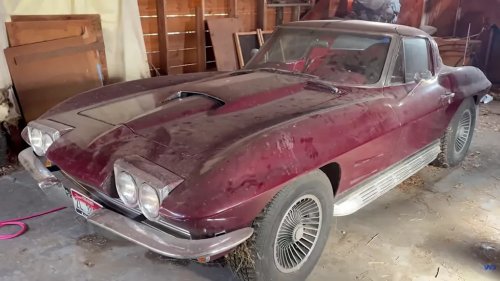
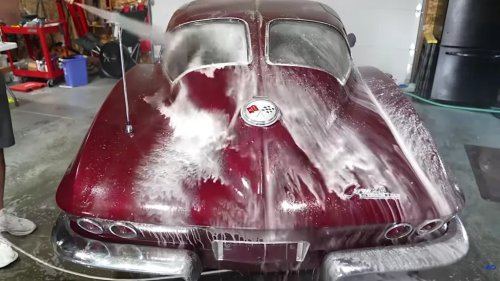
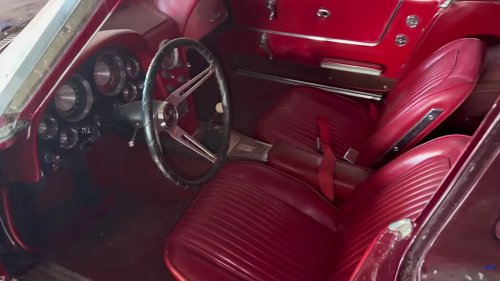
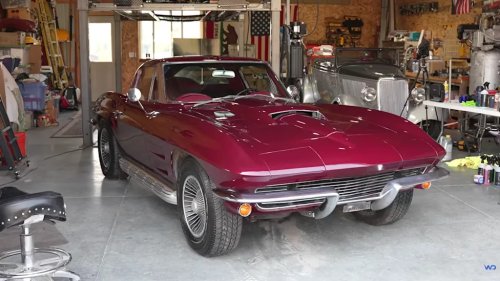
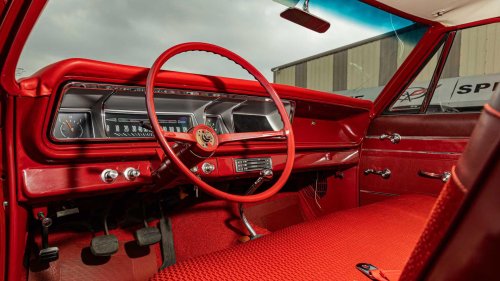
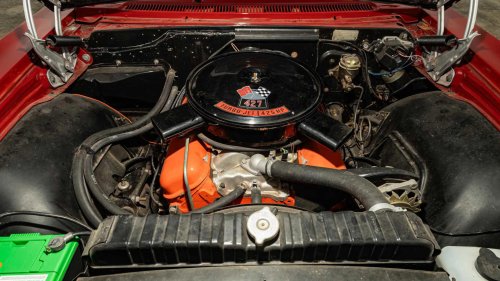
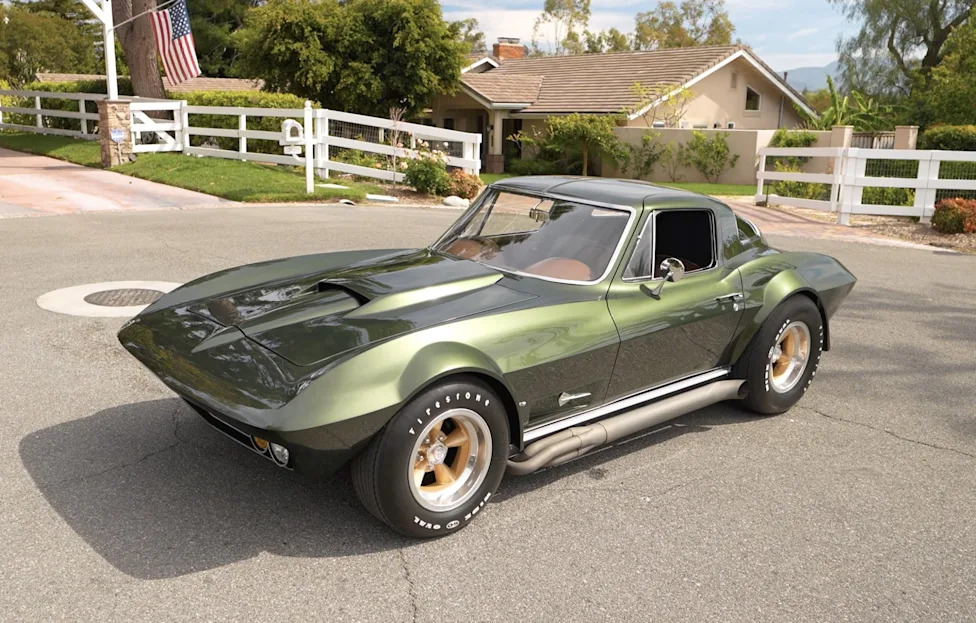
From the Battlefield to the Blacktop: Vietnam Vet's '66 Corvette Gets a Second LifeFred Graves has seen a thing or two. A Vietnam veteran and retired fire captain, he's no stranger to bringing something back from the brink. So when his beloved 1966 Chevrolet Corvette — a car he'd owned for nearly four decades — ended up dinged at both ends and looking every bit its age, he knew exactly what to do: hand it off to someone who could give it a proper resurrection.That someone was Paul Bosserman of Old Anvil Speed Shop in Orange County, California. With 30 years in the custom fabrication business, Bosserman is the kind of craftsman who can sketch an idea, machine the parts, weld the frame, and spray the final coat himself. When Fred's battered 'Vette rolled through the shop's doors, Bosserman saw not a problem but a canvas.Two years later, the result is something that turns heads at 50 feet and raises eyebrows at five.AdvertisementAdvertisementA Color That Defies DescriptionThe build starts — as great builds often do — with the paint. The original green had faded and oxidized over the years, so Bosserman developed a custom hue he calls Donnybrook Green. It's a color that didn't appear in the Corvette catalog until 1970, and it shifts dramatically depending on the light — cycling through gold, bronze, and deep brown as the sun moves across the sky. In a parking lot, it demands attention. On the road, it's almost hypnotic.Bodywork That Blurs the DecadesBeyond the color, virtually every panel on the car has been touched. The hood is a 1967 unit that Bosserman stretched forward all the way to the base of the windshield, eliminating the wiper assembly for a sleeker, uninterrupted roofline. Out back, Fred requested a six-taillight arrangement, a nod to later-era Corvette styling. Stingray badging inspired by the iconic 1959 XP-87 concept car was integrated into the bodywork, bridging six decades of design in a single glance.AdvertisementAdvertisementThe fender flares were removed entirely to accommodate a set of original American Racing 15x8.5-inch wheels wrapped in wide-oval Firestone Coker rubber — a decision that also leaned into a clean, minimalist aesthetic. The overall silhouette reads like a '66 that somehow absorbed the best ideas from 1967 through 1970.The Engine Has a Story of Its OwnUnder that extended hood sits a General Motors 454 cubic-inch big-block crate engine — one that spent years dormant in a neighbor's garage before Fred rescued it. Paired with a Holley Terminator X fuel injection system dressed in retro-style hardware, the V8 puts out around 450 horsepower. In a car that weighs just 3,100 pounds, that's a ratio that makes itself known the moment you press the throttle.The sound alone is enough to clear a lane. On downshifts, it thunders. On acceleration, it spins the rear tires without much encouragement.AdvertisementAdvertisementPower is channeled through a Tremec TKX five-speed manual transmission, shifted via a Hurst unit that Fred specifically requested — both for the precision it offers and for the sheer satisfaction of rowing through gears the old-fashioned way. Wilwood manual brakes keep stopping power in line with the upgraded performance.Suspension and SteeringVan Steel supplied a suite of suspension upgrades — revised control arms, beefier bearings, and new rear shocks — all engineered to sharpen the driving experience without abandoning the character that makes a Corvette feel like a Corvette. A new power steering reservoir and master cylinder were also fitted during the build.A smaller steering wheel is on the short list of upcoming changes, partly to give Fred easier control given some lingering physical effects from old injuries. The current wheel surrounds a set of Dakota Digital gauges; the tachometer redlines at 6,000 rpm and the speedometer climbs to 160 mph — though given the upgrades, those figures may be optimistic on the conservative side.AdvertisementAdvertisementAn Interior That Respects Its RootsInside, the philosophy was restraint. The original seat foam was kept in place, and Apex leather with subtle natural variations was used to retrim the cabin, preserving a period-correct feel. Door panels were finished with leather and accented with chrome strips running their full length. The dashboard is still being refined — Bosserman can hear a rattle somewhere behind the panel that he plans to track down before calling the build truly finished.It's a car that debuted publicly at SEMA, drew a crowd immediately, and has barely stopped turning heads since. For Fred Graves, who spent years serving his country and then his community, it's a fitting reward — a machine with history, muscle, and a whole lot of character, just like its owner.
















 +38 others