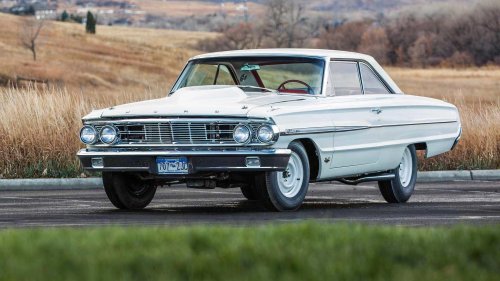
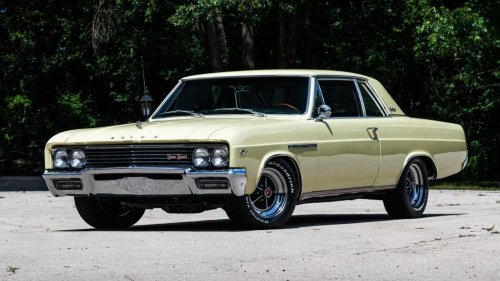
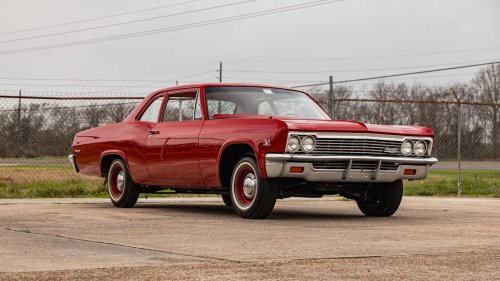
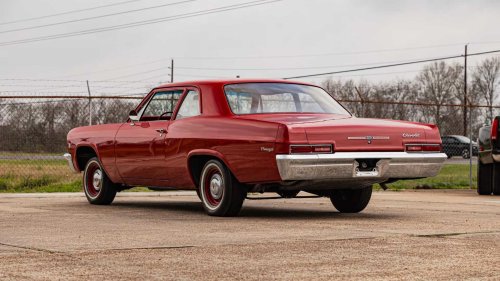
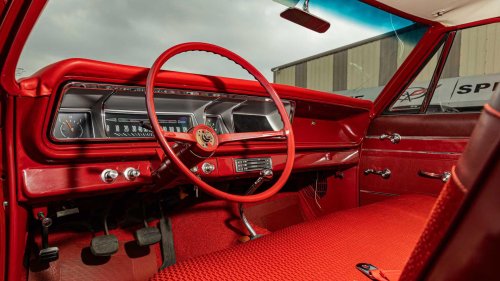
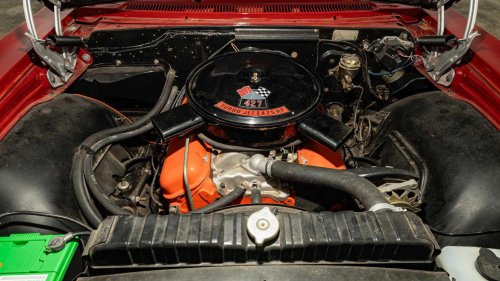
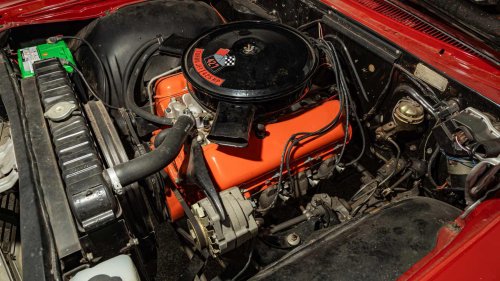
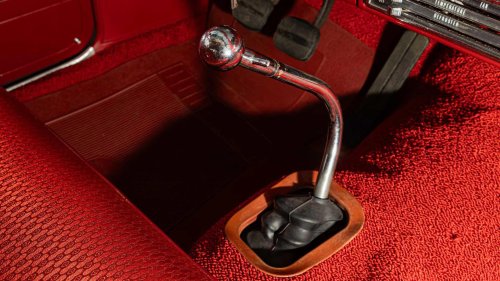
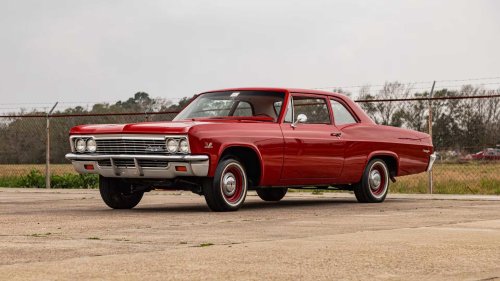
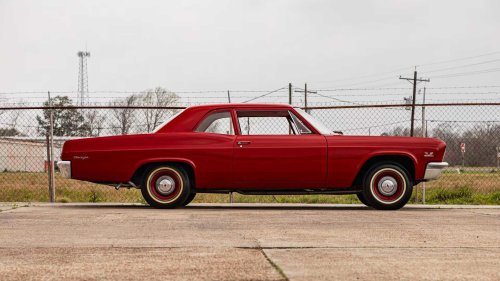
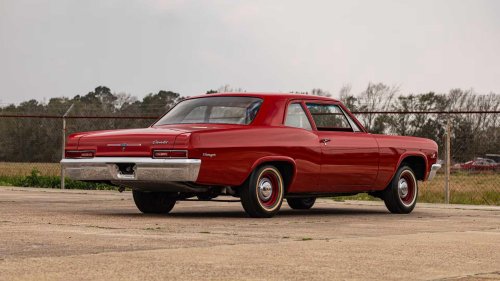



















In 1966, the American horsepower wars reached a boiling point. Manufacturers were obsessed with the GTO formula, trying to cram the biggest engines possible into mid-sized frames. Every brand wanted a piece of the growing muscle car craze.At the same time, the industry began leaning toward luxury and heavy chrome. Most flagship cruisers were becoming heavier and more complex with each passing year. They were built for comfortable boulevard cruising rather than raw speed.However, while muscle car enthusiasts were distracted by flashy racing stripes and premium badges, a different kind of monster was lurking in the shadows. A stripped-down fleet vehicle was quietly preparing to humiliate the world's most expensive supercars. It was an unassuming sleeper that rewrote the rules of physics. The 1966 Family Car Benchmark That No One Dared To Challenge Mecum In 1966, a fast sedan was usually a luxury cruiser with a big engine, not a stripped-out racer. The Ford Galaxie 500 7-litre was a fantastic example. Despite its massive 428 cubic-inch V8, it was bogged down by nearly two tons of luxury trim, resulting in quarter-mile times in the mid-15s.Mopar’s equivalent, the Dodge Coronet with the 383 V8, was a staple of the four-door market. Even in its most aggressive factory tune, it struggled to break out of the high 15-second bracket. These cars were designed for the interstate, not the staging lanes at the local drag strip.Even the most respected Gentleman’s Muscle Car, the Buick Gran Sport, was modest by comparison. While its 401 cubic-inch engine provided plenty of torque, period tests showed it hovering around a 14.9-second quarter mile. At the time, if a car broke into the 14s, it was considered a serious performance machine.Via: Mecum Auctions The general expectation was that sedans were family haulers, while true speed was reserved for the GTOs and SS coupes. No one expected a base-model Chevrolet to challenge the purpose-built muscle cars of the era. A four-door body style was seen as a handicap that guaranteed a loss at the stoplight.However, a specific fleet-spec Chevrolet was quietly rewriting these performance metrics. While the competition was focused on chrome and comfort, this sleeper dipped into the 13-second bracket. This was territory normally reserved for specialized factory experiments or lightened race cars, making it the ultimate anomaly of the 1966 season. How Chevrolet's Cheapest Car Became Its Fastest Via: Mecum AuctionsThe secret to this world-class performance was the 1966 Biscayne equipped with the RPO L72 package. While the Impala was the glamorous star of the Chevrolet lineup, the Biscayne was the bare-bones sibling. It was originally designed for government fleets, police departments, and budget-conscious buyers who prioritized utility over style. As a result, it was offered as a 2-door sedan, 4-door sedan and a 4-door station wagon body styles.Most enthusiasts focus entirely on horsepower numbers when discussing speed, but the Biscayne’s real edge was its lack of mass. It came from the factory without heavy sound insulation, thick undercoating, or plush carpeting. It even lacked the heavy chrome trim, electric clocks, and extra lighting found in the premium Impala or the mid-sized Chevelle SS396.Via: Mecum Auctions This lack of equipment meant the Biscayne was surprisingly light for its physical footprint. When properly spec'd, it often tipped the scales at roughly 3,700 lbs, making it a featherweight among the full-size giants of the era. This power-to-weight advantage turned a simple two-door sedan into a literal rocket ship.Historical tests recorded quarter-mile runs as fast as 13.5 seconds at trap speeds exceeding 105 mph. Achieving these numbers on skinny, period-correct bias-ply tires was nothing short of a mechanical miracle for a car with a bench seat.Via: Mecum Auctions The counterintuitive reality was that the Biscayne outran the Chevelle simply because it was lightweight. By opting for the cheapest model in the catalog, a buyer accidentally stumbled upon the perfect drag racing platform. It was a giant killer that succeeded through the sheer absence of luxury. The 427 Big-Block That Made This Grocery-Getter Terrifying Via: Mecum Auctions To understand how a 7.0-liter engine transformed this humble car, you have to look at the L72 Turbo-Jet V8. One of the rarest Chevy production engines, this big-block was a masterpiece of 1960s mechanical engineering. It featured a massive 427 cubic-inch displacement that was feared on both the street and the professional racing circuit.The engine was officially rated at 425 hp, though many historians believe it was drastically underrated to keep insurance companies from panicking. It also produced a staggering 460 lb-ft of torque at 4,000 RPM. This was enough low-end grunt to pin passengers against the basic vinyl bench seats with violent force.Via: Mecum Auctions Inside the engine block, Chevrolet utilized high-flow rectangular-port cylinder heads and a high 11.0:1 compression ratio. The most important feature, however, was the mechanical solid-lifter camshaft. This aggressive cam allowed the engine to breathe and scream at high RPMs where other standard V8s would simply stop making power.The L72 also benefited from a massive 800-cfm Holley four-barrel carburetor sitting atop an aluminum intake manifold. This setup ensured that the engine never went hungry for air or fuel during a hard launch. It was an uncompromising powerplant designed for high-speed endurance and raw acceleration.Via: Mecum Auctions Managing all that mechanical violence required a serious, heavy-duty drivetrain. Most L72 Biscaynes were paired with a rugged Muncie 4-speed manual transmission, often called the Rock Crusher, which is also the rarest manual gearbox of '60s. A heavy-duty Turbo 400 automatic was eventually available, but the stick shift remained the preferred tool for those looking to maximize the 427’s raw potential. Why This $145,000 Auction Car Once Sold For Pocket Change Via: Mecum Auctions Finding a genuine 1966 L72 Biscayne in the modern era is an incredibly difficult and expensive task. Because it was a base model, very few people thought to pair it with the most expensive engine in the Chevrolet catalog. Most buyers who had the money for a 427 chose the flashy, high-status Impala SS instead.Production records suggest that only a few hundred Biscaynes were ever built with this specific high-output powertrain. Many of these cars were purchased specifically for the track and were eventually crashed, rusted out, or modified beyond recognition. This makes surviving, numbers-matching examples some of the rarest muscle cars in existence.Hagerty's valuations suggest that a 1966 Biscayne L72 4-door sedan with a manual is worth between $22,000-$50,000. While the 2-door sedans are more valuable at $50,000-$120,000. Interestingly, the wagons are more than the 4-door, worth between $30,000-$82,000.In the modern collector market, these cars have become holy grail finds for those who understand the history. Collectors now value the mechanical purity and simplicity of the Biscayne over the chrome-heavy luxury of the Caprice. It represents a specific moment in time when a regular person could order a race-ready car from a standard dealership.The values reflect this newfound respect for the ultimate sleeper. While a standard six-cylinder Biscayne might be an affordable entry-level classic, an authentic L72 version is a different beast entirely. These cars now command massive premiums at high-end automotive auctions across the country.A pristine, documented 2-door example with 50,000 miles recently crossed the auction block for a staggering $145,000. This price tag proves that the market has finally caught up to what drag racers knew in 1966. Speed is always worth the investment, even if it comes in a plain wrapper that looks like a retired police cruiser. The Biscayne L72 Proved Stripping Weight Beats Just Adding Horsepower Via: Mecum Auctions The 1966 Biscayne L72 matters today because it represents the absolute peak of the analog driving era. It arrived just before the industry was hit with restrictive emissions equipment and heavy federal safety mandates. There was no power steering, no power brakes, and absolutely no electronic traction aids to save the driver from a mistake.Taming a car with this much torque required genuine physical strength and a deep respect for the machinery. It was a pure, unadulterated interaction between the driver’s right foot and 427 cubic inches of American steel. It remains a permanent testament to the idea that you don't need complex technology to achieve greatness.Via: Mecum Auctions Modern performance cars rely on sophisticated computers, twin turbochargers, and complex aerodynamics to achieve their speed. The Biscayne, however, relied on a much simpler and more honest formula. It used the basic laws of physics to prove that excess weight is always the ultimate enemy of acceleration.The L72 Biscayne reminds us that what you leave out of a car is often just as important as what you put in. By stripping it down and focusing on the core mechanical components, Chevrolet created a legend. It was a car built for one purpose: to get from point A to point B as fast as humanly possible effortlessly at the time.Ultimately, this rare sedan stands as a tribute to the era of the sleeper. It hid a world-class, race-winning heart under a plain, unassuming skin. It didn't need to shout about its performance with badges or wings because its 13-second time slips did all the talking necessary.Sources: General Motors, Mecum, Hagerty, Hemmings