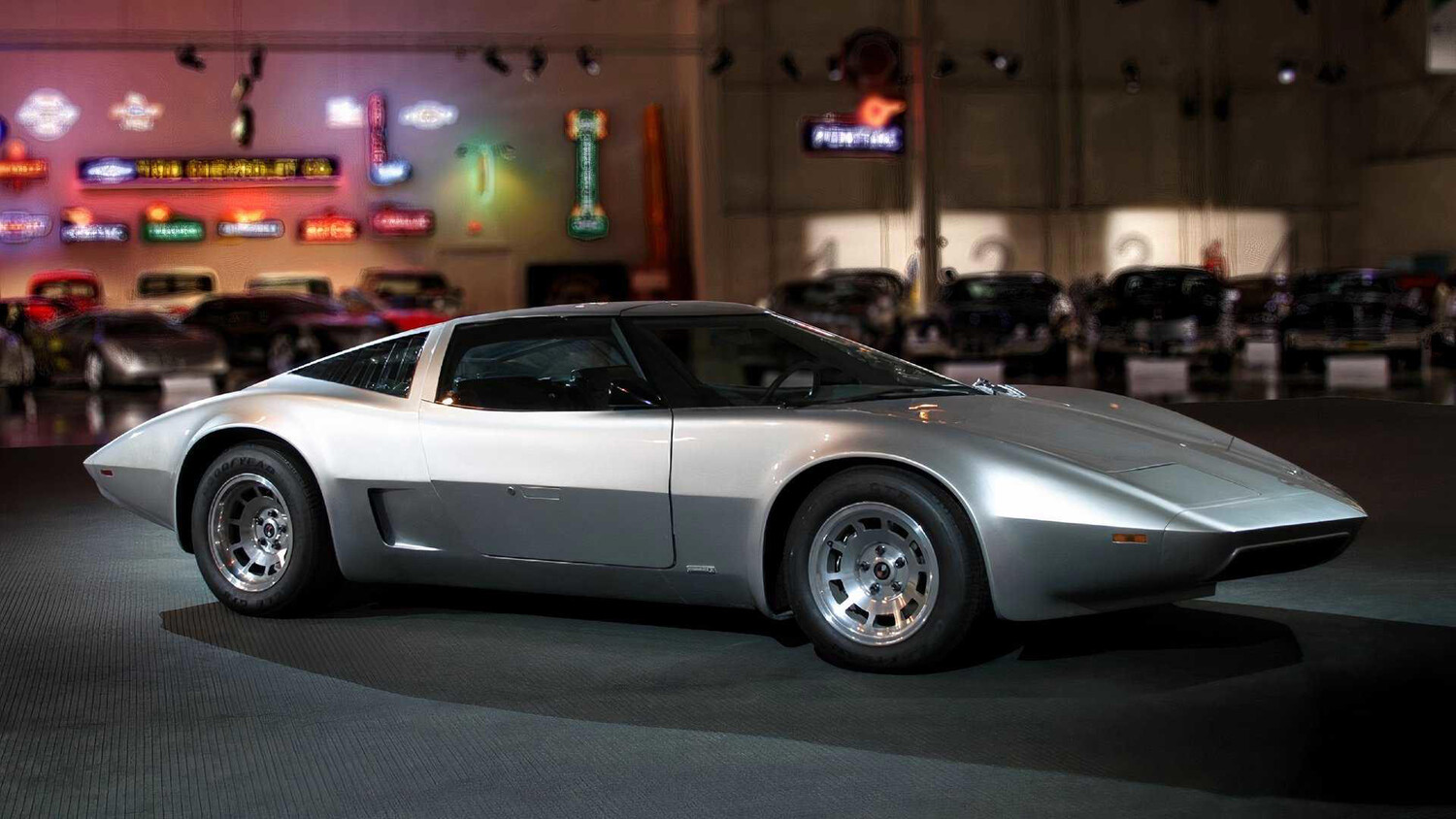
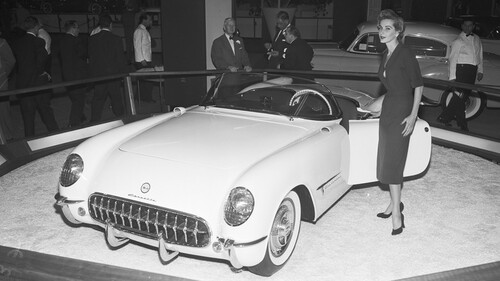
By the early 1970s, the Corvette had a sound. It was the crackle of a big American V8, the long-hood swagger of fiberglass and side pipes, the kind of personality that did not enter a room so much as back into it with tire smoke. Yet inside Chevrolet, a much stranger future was taking shape. Engineers and stylists were studying a small, low sports car with its engine behind the seats and no pistons at all.In a period when the Corvette still wore its front-engine bruiser image proudly, this secret project looked like it had wandered in from Turin after taking a wrong turn near Bowling Green. It was sharp, compact, mid-engined, and powered by a rotary engine, a machine that promised smooth revs and fewer parts. Chevrolet’s Corvette Problem Was Bigger Than Horsepower Mecum AuctionsChevrolet had a Corvette problem, but it was not the fun kind solved by a bigger carburetor and a louder exhaust. Sure, the old formula still sold well: a fiberglass body, a long hood, rear-wheel drive, and enough V8 attitude to make a gas station attendant check the pump twice. The trouble sat outside the showroom. Washington wanted cleaner cars. Buyers started hearing the phrase fuel economy more often. Detroit could no longer treat gasoline like a free side dish. While the muscle car party had not ended yet, somebody had turned on the lights, and the carpet looked rough.The timing could not have felt worse for performance engineers. The 1970 Clean Air Act pushed automakers toward huge cuts in tailpipe emissions for new cars, and the industry had to meet standards for hydrocarbons, carbon monoxide, and nitrogen oxides. Then the 1973 oil crisis turned fuel use from a dull spec-sheet line into a national worry. The price shock hit quickly, and the age of “just add cubic inches” started to look like a mullet at a board meeting. A big engine still made hearts beat faster, but it also made regulators reach for clipboards.Corvette still had image power, and that mattered, but Chevrolet could read the room. If emissions rules tightened, fuel prices climbed, and buyers started caring about miles per gallon, the usual answer of more displacement might not carry the car forever. The next Corvette could not simply shout louder, and it needed a new trick, preferably one that made the car feel advanced instead of merely detuned, softened, and sent home with a sensible haircut. The Engine Detroit Thought Could Change Everything GM That trick, for a while, looked like the Wankel rotary. A rotary engine used a triangular rotor spinning inside a chamber instead of pistons pumping up and down. In theory, that meant fewer moving parts, less bulk, smoother running, and a power plant that could fit where a piston engine would start asking for extra elbow room. It also promised a cleaner package under the skin. A smaller engine bay could mean better proportions, better balance, and more freedom for designers tired of stretching hoods like taffy.For a low sports car, the appeal looked obvious. A compact engine could sit behind the driver without eating the whole chassis. It could help designers lower the roof, tighten the body, and move mass toward the center, and that was catnip for anyone dreaming about sharper handling. The rotary also had a nice futuristic buzz around it. Even the word Wankel sounded like something from a science fair, or maybe a German tool used only once and then lost forever. To engineers, though, the big draw was packaging.GM General Motors took the idea seriously. The company paid heavily for rights to develop its own rotary combustion engine, and GM president Ed Cole pushed the program with real enthusiasm. Cole knew something about culture-changing engines; he had helped shape thesmall-block Chevrolet V8. When a man like that backed a new engine, Chevrolet had to listen. It was a serious powertrain program with production hopes, supplier plans, and showroom ambitions. GM even studied the rotary for mainstream cars.Still, the rotary’s sales pitch came with a messy footnote. The same chamber shape that helped make it compact also made clean burning harder. Rotaries tended to drink fuel, and they could struggle with emissions. Durability also raised questions, especially around seals. Chevrolet wanted a small, smooth, modern sports car engine, but the public expected a Corvette to feel muscular and familiar. The Payoff Was The Chevrolet Corvette XP-897 GT GM The mystery car was the Chevrolet Corvette XP-897 GT, better known to many enthusiasts as the Two-Rotor Corvette. Chevy created it as a compact, mid-engined concept for the 1973 show season. Pininfarina shaped the body in Italy, and GM supplied the heart, a two-rotor Wankel engine developed under its rotary program. Nobody had snuck in a Mazda engine or drawn up a tuner fantasy with the wrong glue. Chevrolet built a real concept with a very non-Corvette idea under the skin. It took the brand’s most famous sports car badge and quietly asked whether the future might spin instead of rumble.Under the pretty body sat a surprise. Chevrolet based the concept on a modified Porsche 914/6 platform. Engineers cut the wheelbase, widened the track, and kept the mid-engine bones that made the Porsche useful for the job. GM then sent the project to Pininfarina, which built the sleek coupe body. The rotary sat transversely and fed an automatic transaxle. Yes, the strangest Corvette concept of the era had some Porsche DNA. Enthusiasts may need a chair. Make it a bucket seat. 180 HP In A Corvette?! The two-rotor engine made about 180 horsepower, and the car weighed roughly 2,600 pounds. That was not laughable, but Corvette buyers of the era still remembered big-block thunder and brochure numbers that made neighbors peek over fences. The XP-897 GT answered with cleverness instead of chest hair. It stood only 43.3 inches high, used energy-absorbing polypropylene bumpers, packed fixed seats with adjustable pedals, and even tried futuristic lighting.GMIts later life became almost as odd as its engineering. After the show circuit, the car lost its original engine and nearly met the crusher before collector Tom Falconer saved it in Britain. Concept cars usually die young, but this one became a survivor with an accent. Why Chevrolet Walked Away From Its Rotary Corvette Future GM Chevrolet walked away because promise could not beat timing. The rotary looked compact, smooth, and modern on paper, but the real world handed it a bad report card. Fuel use hurt its case, and emissions hurt it more. The 1973 oil crisis made every thirsty engine look guilty, and new federal clean-air rules made every dirty engine look doomed. A rotary Corvette in that climate had all the right concept car sparkle and all the wrong production-car headaches.Power did not save it. The XP-897 GT’s 180 hp output might have worked in a light, nimble coupe, but Corvette buyers wanted much more. A rotary could rev smoothly and save space, but it could not replace the emotional punch of a V8 Corvette. In an era when even regular Corvettes had to fight emissions hardware, insurance pressure, and higher fuel anxiety, a new engine type looked less like progress and more like a customer-service phone line waiting to happen.GM That's why the XP-897 GT matters more now than it did then. It shows Chevrolet testing the edges of the Corvette identity decades before the C8 finally put the engine behind the seats. The Aerovette proved the shape and layout still had appeal after the rotary dream died. The XP-897 GT proved Chevrolet had already imagined a smaller, lower, more exotic Corvette future. The company did not dare build it, but the idea kept idling in the background. Nearly 50 years later, it finally pulled away from the curb. The Aerovette Showed Chevrolet Hadn’t Given Up On The Idea Entirely General Motors Chevrolet had already spent years circling the mid-engine Corvette idea. The company had shown and studied multiple experimental layouts, and the rotary program gave that obsession a new engine to play with. The two-rotor car handled the smaller, lighter side of the plan, and the bigger statement came from a related line of thinking. A four-rotor, mid-engined Corvette concept.Chevrolet’s Four-Rotor Corvette used a wild powertrain made from paired two-rotor units. GM later abandoned rotary engines, but the shape and layout had too much drama to throw out with the apex seals. In 1976, Bill Mitchell’s design world pulled the concept back into the spotlight, replaced the rotary setup with a 400-cubic-inch small-block V8, and gave the car a new name: Aerovette. That move spoke volumes. Chevrolet could walk away from the engine, but it could not quite quit the idea of a low, mid-engined American exotic.GM The Aerovette kept much of the original theater. Its low fiberglass body looked like a doorstop from the future, and that counts as praise in concept-car language. It had bi-fold gullwing-style doors, fixed seats, adjustable pedals, a tilt and telescoping steering wheel, and a fully digital instrument panel that moved with the wheel. In the mid-1970s, that last feature felt like Chevrolet had hidden a NASA souvenir shop inside a Corvette. The car also carried exotic proportions without pretending to be European. It still had a Chevy V8, just no front-engine comfort blanket.Source: Chevrolet, GM, MotorTrend