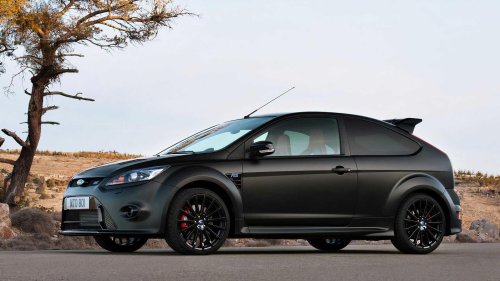
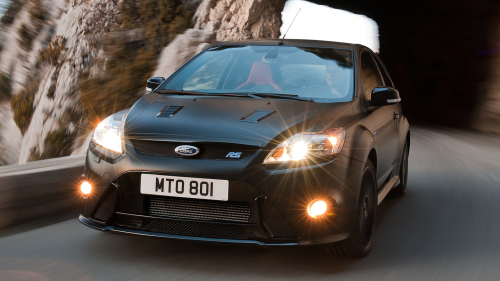
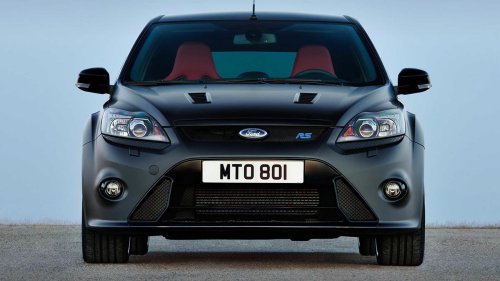
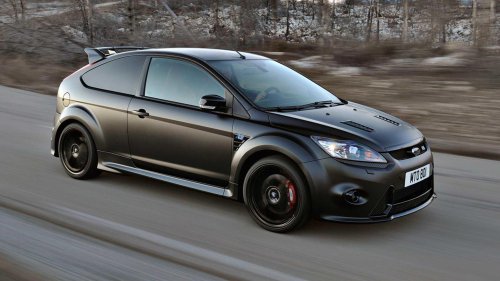
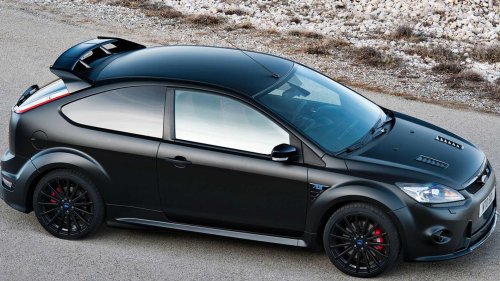
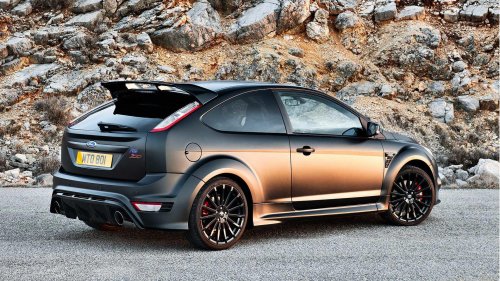
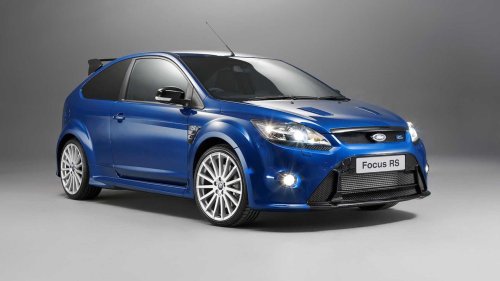
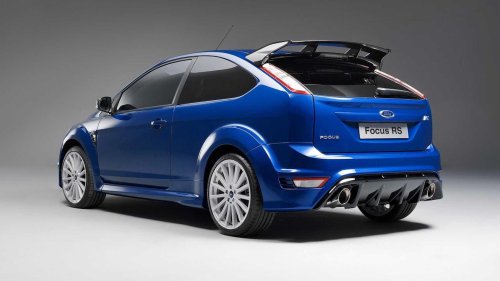
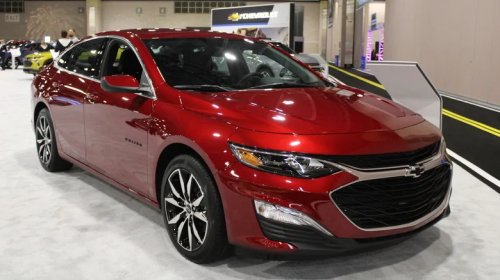
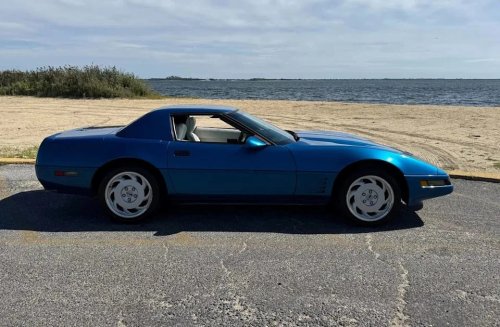
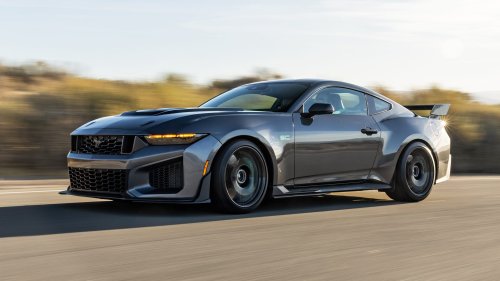
Jump LinksYou'd need more than one hand to count the Ford models that didn't come to the States, and that still applies when focusing on the athletic offerings. We were robbed of gems like the Ford Escort RS Cosworth, which was the first mass-production car to use front and rear aerodynamic elements to produce downforce. Instead, the USA received the third-generation Focus ST and RS, which were good, but not as great as the Volvo-powered hot hatches.Among the coolest cars not earmarked for the United States was the Ford Focus RS 500. This was a send-off for the second generation of Ford's Focus models, and interestingly, this hardcore Ford is worth more than a brand-new Chevrolet Corvette Stingray today. A Hardcore Sendoff Of The Mk2 Ford Focus Ford Production of Ford's second-generation model began in 2004, and by the end of the '00s, it had ceased. Roughly a year after production began, Ford introduced a sportier version of the plucky hatchback, dubbed the ST. This was powered by a turbocharged five-cylinder engine borrowed from Volvo, which offered a near 100 hp increase in comparison to the lesser models in the lineup.A few years later, Ford introduced the Ford Focus RS, which was a high-performance version of the Mk2 Focus that employed a hopped-up version of the Duratec five-cylinder engine that was more potent than the ST in every performance metric and, up until the tail-end of the Mk2 Ford Focus' production, was uncontested in the model lineup.However, this would change when Ford unveiled the Ford Focus RS 500 at the 2010 Leipzig Motor Show, which was a new member of Ford's ranks featuring the RS badge, with only 500 examples planned for production. This was an exclusive offering, earmarked for twenty European markets, but not for the USA, which is a shame because this was a thoroughbred hot hatch.Ford"We were determined to mark the end of production for the current and acclaimed Focus RS with something even more special. This vehicle joins a long line of iconic RS Fords and is a worthy recipient of the RS500 name, which became synonymous with success on the road and track with the legendary Sierra RS500 Cosworth that dominated saloon car racing during the late 1980s." - Joe Bakaj, Ford of Europe Vice President for Product Development. Built By Enthusiasts For Enthusiasts FordThe first change, and arguably the most notable, was the improvement of the RS500's five-cylinder beating heart. From the RS model, Ford extracted an additional 45 horsepower and a slight increase in torque output. Still, the way it offered power to the front axle was a revision of its power, and with the improvements made to its power band, characterized by greater top-end and mid-range power, all while maintaining responsiveness at lower rpm.The changes that allowed this significant performance improvement were the result of a new, larger air-to-air intercooler, a larger air filter box to improve airflow, a larger exhaust downpipe, and an upgraded fuel pump. These were just the accompanying components. Ford also tweaked its engine software, which was accompanied by improvements to most of its internal components, including an upgraded cylinder head, metal-sprayed cylinder bores, revised pistons, and new connecting rods to accommodate the increased power.Beyond its beating heart, the RS500 was founded on an advanced front-wheel-drive chassis that utilized its wide track with Ford's bespoke RevoKnuckle front suspension system. The Quaife helical limited-slip differential also contributed to the car's responsiveness, traction, and resistance to torque steer. The result of Ford's efforts was the most powerful front-wheel-drive production car equipped with a manual transmission, and one of the coolest five-cylinder-powered cars ever. Today, this car commands a substantial price on the used market.Ford"We wanted to be sure that serious enthusiasts could drive the Ford Focus RS500 to the limit on track, without any concerns about the car's stamina. This meant going beyond our standard test routines, and pushing the car to the edge of its performance envelope. After 500 non-stop laps of the Nürburgring, we are very confident of its durability and delighted at the way it performed, with an 8-minute lap time within reach". - Matthias Tonn, Ford Focus RS500 Programme Engineer. An Eye-Watering Pricetag Ford When it debuted, the Ford Focus RS500, as one would expect, was no bargain bin special. The original Ford Focus had an MSRP of £35,750, which, adjusted for inflation, would be roughly £55,551 today, equivalent to approximately $75,000 today. However, its value is far greater than that on the used market. Its value has nearly doubled since its introduction, with Classic.com's resources stating that the average value of the Ford Focus RS500 is roughly $85,612. The highest sale price recorded was $130,104.Over the last few years, its value on the Classic.com website has remained somewhat within $10,000 of the current average value. Currently, only a single example of the RS500 is listed for sale on Classic.com's website, priced at roughly $80,000 for a vehicle with only 2,000 miles recorded and in near-perfect condition. Earlier this year, a handful of examples were sold. One example, with only 81 miles and in original condition, sold for roughly $90,000, while another example, with 6,000 miles and slightly more wear, sold for approximately $55,650. The $130K car only had 16 miles on the clock.FordAs you'd expect, because only 500 examples were planned for production, they are not often found on the used market, but when they are, it is usually accompanied by a significant asking price. It's not just the rarity, however. The RS500 represents a hot hatch era that will never be repeated, not to mention a driving experience that just isn't available anymore.That's why people are willing to pay more than the new price of a Chevrolet Corvette, which starts at $70,000 for a base Stingray. The person who purchased that $130,000 could have purchased a Z06, which starts at $120,000. Both versions of the Corvette are easily quicker and faster, but likely won't increase in value as much as this car. Its Less Potent Sibling Is More Affordable FordThe Ford Focus RS500 demands a substantial sum, especially considering its value on the used market is sufficient to cover the cost of some exciting sports cars, such as the Chevrolet Corvette Stingray or the Ford Mustang Dark Horse. However, for those seeking a similar platform at half the cost, the Ford Focus RS is your next best bet. As we said previously, this model was the de facto ruler of the second-generation Ford Focus model range until the RS500 arrived.FordWhile based on the same chassis as the Ford Focus ST, the two models differ significantly from one another, both in terms of performance and hardware. Initially, Ford wanted to tune the ST engine to make more power. Still, after some deliberation, the decision was made to introduce a revised cylinder head, metal-sprayed cylinder bores, a unique camshaft profile, and upgraded connecting rods, along with a few other engine internals. Paired with this souped-up five-cylinder engine was a six-speed manual transmission that allowed the aggressively styled hot hatch to reach 60 mph in just under six seconds.Just like the Ford Focus RS500, this lesser-powered variant was not available in the United States during its production, but unlike the RS500, the Ford Focus RS doesn't carry the same eye-watering price tag on the used market. According to Classic.com, the average value of this five-cylinder-powered car is $39,527, while the average selling price is set a bit higher at $41,493.A few examples have been sold, with some fetching as low as $27,000, while others have sold for close to $50,000 due to their exceptional condition. While we didn't see another RS 500 in the Mk3 Ford Focus, we did see the renewal of the Ford Focus RS, albeit underpinned by an all-wheel-drive drivetrain and a four-cylinder beating heart that matched the RS500's horsepower output.Sources: Ford