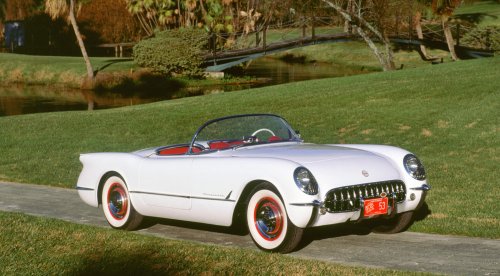
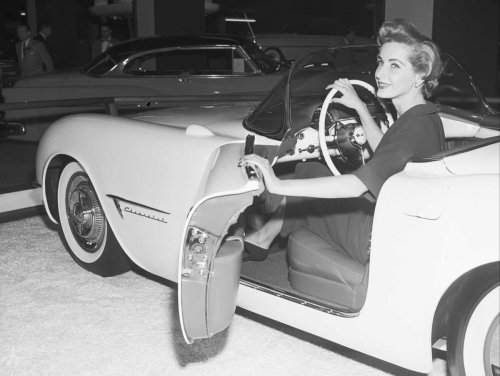
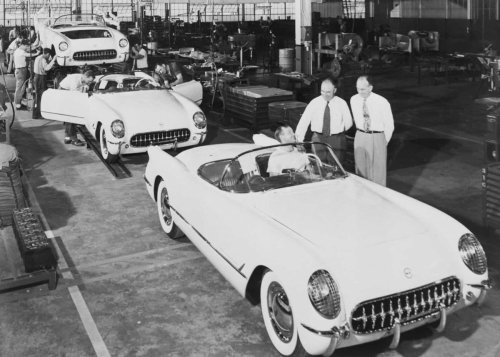
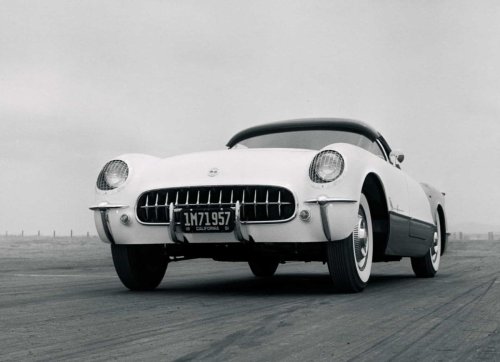
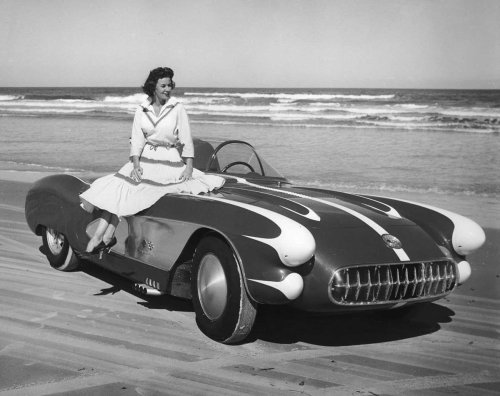
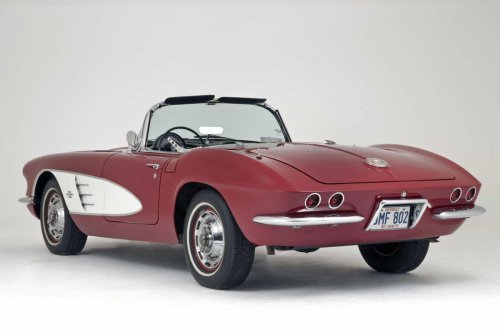
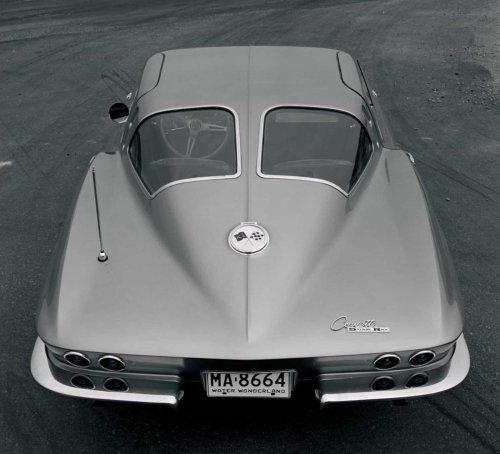
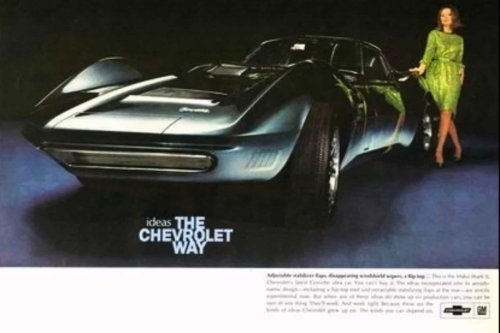
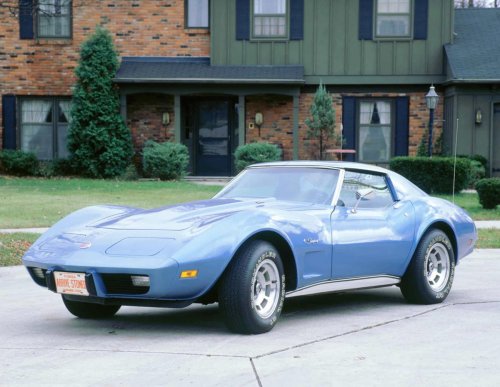
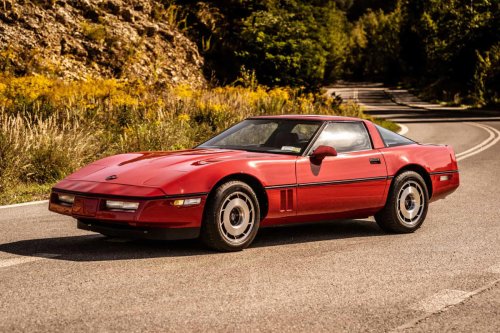
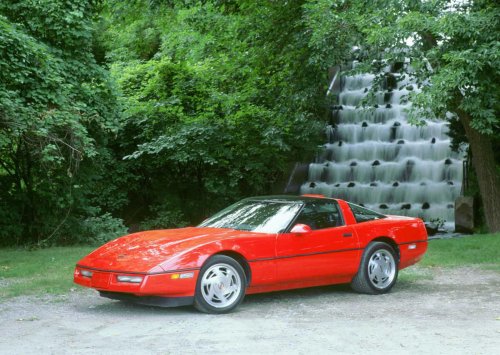
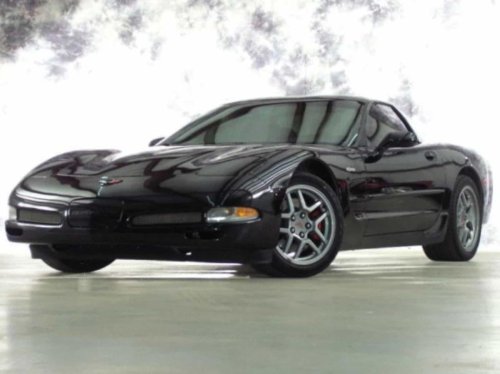
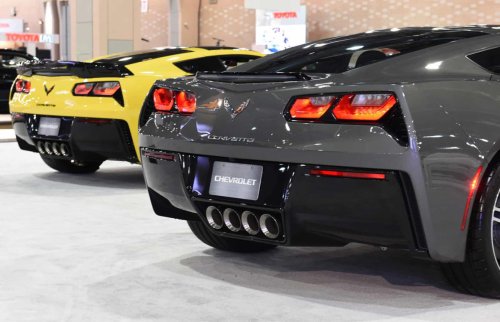
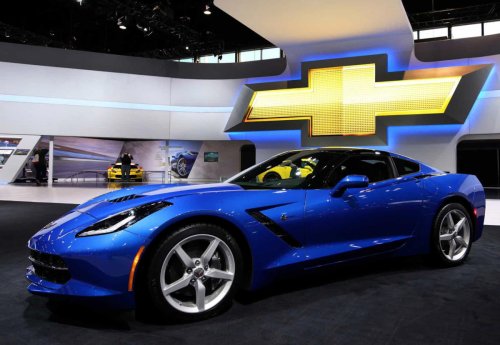
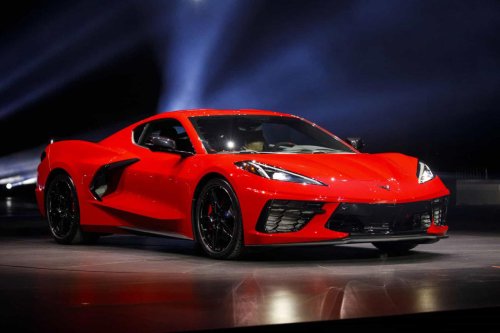



















The Chevrolet Corvette is one of the most iconic automobiles ever manufactured. Introduced in the United States in 1953, this two-door luxury sports car is now in its eighth design generation, with each model building on the innovative engineering and cosmetic features that have made the "Vette" one of the most cherished of American vehicles. Fancy buckling up and taking a spin through its manufacturing history?Gear up, click through the gallery, and motor along the key events in the story of the Chevy Corvette. First generationThe first-generation (C1) Chevrolet Corvette was introduced late in the 1953 model year. Three hundred hand-built 1953 Corvette convertibles were produced, all Polo White. Flint, MichiganThe very first Corvettes were assembled at the Chevrolet car plant in Flint, Michigan. The Corvette was the first consumer automobile with an all-fiberglass body, originally selling for US$3,250, equal to US$33,937 in 2022. Sports car performanceThe 1955 model offered a 4.8 liter V8 engine as an option. An available three-speed manual transmission served as further enticement. Despite the poor sales of the Corvette at the time, the brand new V8-engined vehicle was an overwhelmingly popular purchase, and offered drivers proper sports car performance. Betty Skelton (1926–2011)One of the most recognized Corvette drivers of the 1950s was Betty Skelton. An aerobatics pilot who also raced cars, Skelton set numerous land speed records while working with Chevrolet, and owned a total of 10 models. She's pictured taking time out in 1956 on Daytona Beach. New decade, new lookIn 1961 Chevrolet went back to the drawing board to completely rethink the Corvette's rear end, which saw the introduction of the sports car's now famous quad-tail light design. The makeover heralded the second generation (C2) of the already iconic-looking sports car. A sting in its tailThe split-rear window design was unique to the first-year coupés. Mako Shark II 1966The Mako Shark I had been introduced in 1961 as a concept vehicle. In 1965 it was redesigned as the Mako Shark II. Only two were made, with one advertised in 1966 as a show car (pictured). Its design influenced the third-generation of Chevrolet Corvettes (C3). The Corvette in the 1970sThe Corvette's power began to fall in 1973 as octane requirements were reduced in preparation for the move to unleaded fuel. Accordingly, engine compression ratios were lowered which resulted in reduced power ratings. Similarly, to meet new federal safety standards, the 1973 Corvette's chrome front bumper was changed to withstand impacts of 8 km/h (5 mph) so as to protect lights and other safety features. Fourth generationIn 1981 Chevrolet relocated to a new production facility in Bowling Green, Kentucky, as the old Saint Louis, Missouri, plant was formally brought offline. Chevrolet marked 1982 as the third-generation Corvette's final year. Opting to skip model year 1983, the new fourth-generation (C4) Corvette was introduced as a 1984 model (pictured)—the first complete redesign of the Corvette since 1963.Corvette ZR 1 and the 1990sIn 1990, the ZR1 option Corvette (pictured) was introduced. In July 1991 the one-millionth Corvette rolled off the assembly line at Bowling Green. A special 40th Anniversary Edition was released in 1993, but in 1995 production of the ZR 1 ended. The following year, 1996, was the final year of C4 production. Corvette Z06Chevy's Z06 model, which made its debut in 2001, replaced the fixed-roof coupé model as the highest performance C5 Corvette. Image: Frank Williams.The Z06 re-emergesThe new Z06 arrived as a 2006 model in the third quarter of 2005. Sporting a design based on the fastback coupé, this model was powered by the latest LS-series V8 engine: the Z06 could reach 95.5 km/h (60 mph) in just 3.4 seconds! The latter half of the 2000s also saw the return of the ZR1. What's in a name?The last C6 Corvette was manufactured in February 2013, to make way for the seventh-generation (C7) Corvette, once again christened Stingray. A convertible version was also introduced. New beginningsThe eighth-generation (C8) 2020 Corvette is the first production Corvette to have a rear mid-engine configuration. Other firsts include being offered without a traditional manual transmission, while the convertible version is the first Corvette with a retractable hardtop.