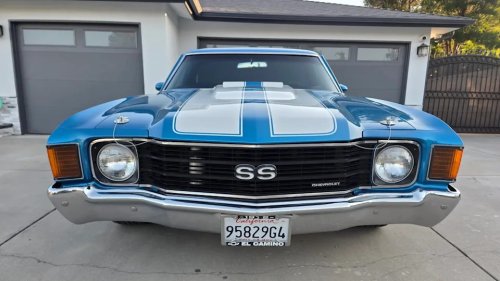
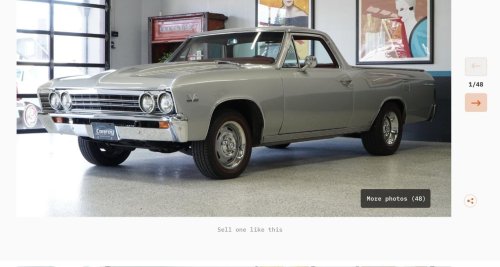
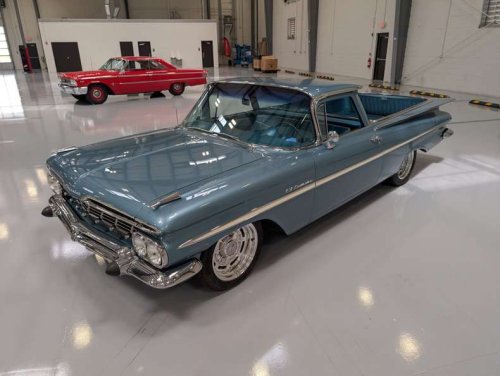
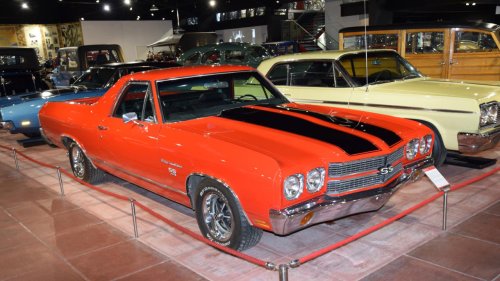
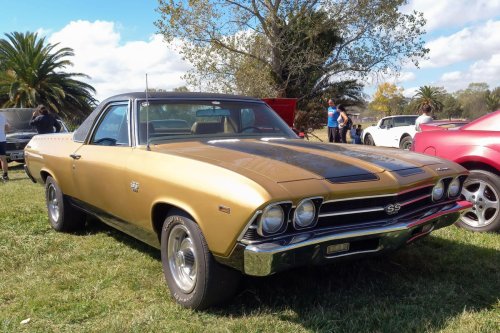
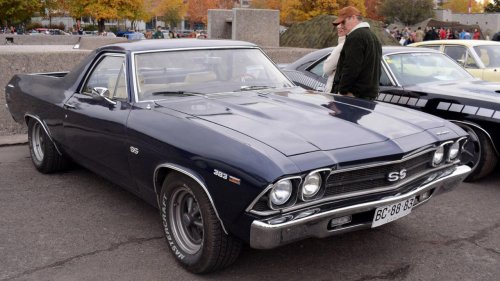
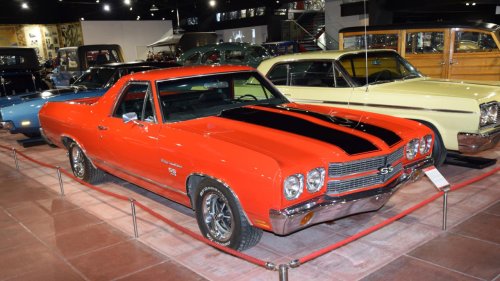
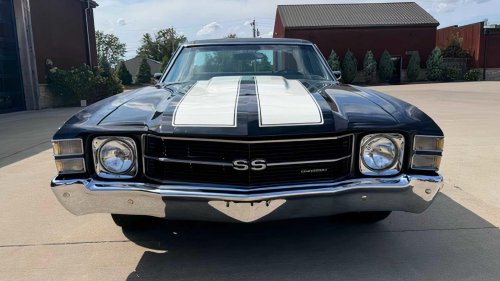
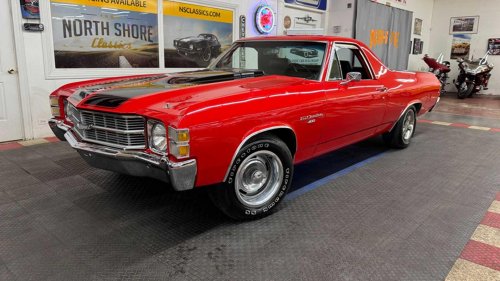
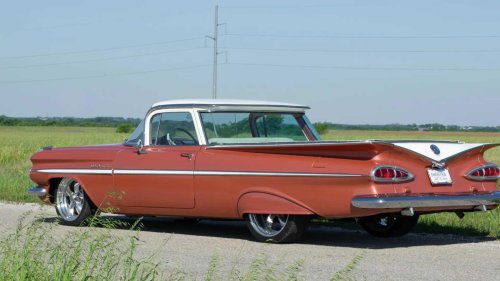
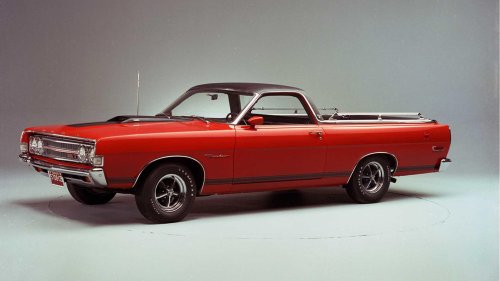
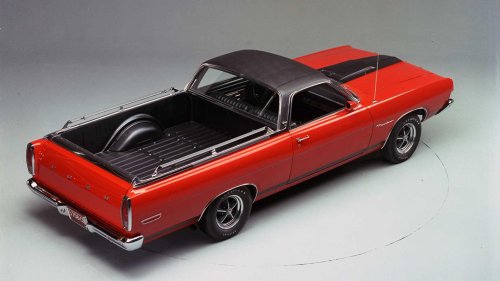
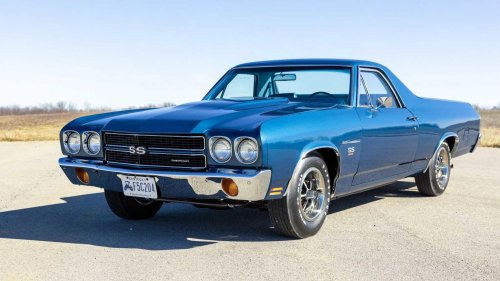
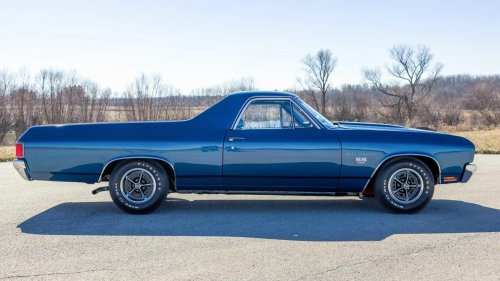
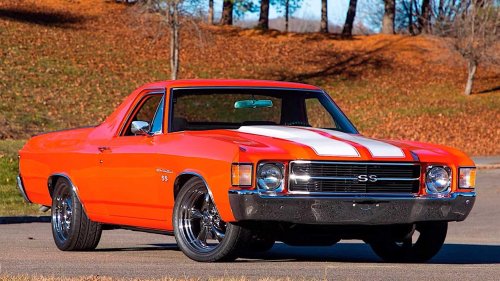
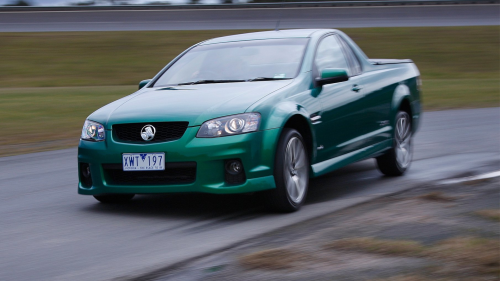
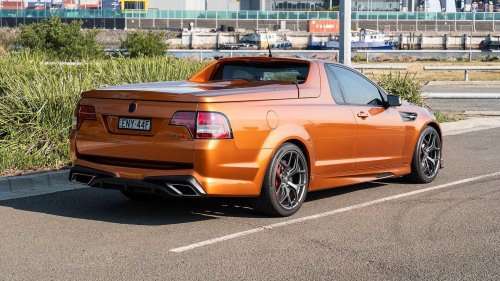
Today’s automotive world is all about merging different vehicles’ designs and purposes. Cars and SUVs are merged to form the hugely popular crossover, while pickup trucks are loaded with comfort features to be used as a family's daily driver. Rugged off-roaders are used as suburban commuters during the week, then taken off the beaten track at the weekends.Mecum Auctions The trend of blending multiple vehicles into one started a lot earlier than most might think. In the late 1950s, Chevrolet released a model that stood out from anything else on the road due to its unique body: the El Camino, essentially a car with a pickup truck-esque bed.The El Camino was built on platforms also used by Chevrolet's standard car models, but was equipped with a cargo bed instead of the rear half of the cabin you would expect to find in a car. The car used to source the El Camino’s platform varied through the years: the model’s initial run was based on the Brookwood, while later versions of the El Camino were based on the Chevelle and the GM G-body platform.North Shore Classics Despite the fact that the El Camino’s body style was an infrequent sight on the American car market, with only a handful of similar models being released over the years, it is precisely its uniqueness that made it so iconic. Let’s take a closer look at the El Camino’s history, along with some of its relatives and competitors. Where It All Began: The Chevrolet El Camino's Early Generations RM Sotheby's The El Camino’s origins lie in the “roadster utility” vehicle, a type of car-pickup hybrid first produced in the US in the 1920s, but which encountered the most popularity in Australia, eventually evolving into the “ute” or “coupe utility”. Ford was a pioneer of this body style: the work done by Ford Australia eventually resulted in a similar model being released on the American market, the Ford Ranchero. In response to the Ranchero – which had been released in 1957 – Chevrolet decided to produce a car-truck hybrid of its own: the El Camino, which arrived two years later.The first generation of the El Camino lasted just two model years. It was based on the same platform as the Brookwood, a two-door station wagon which was released that same year. Many of its exterior and interior components were also borrowed from existing Chevrolet models: the exterior trim was taken from the Bel Air, while the interior came from the Biscayne. Power came from a selection of three engines: a 3.9-liter inline-six, a 4.6-liter V8, or a 5.7-liter V8 (a less common option). The transmission lineup included a three-speed manual or a two-speed automatic.In 1964 – four years after the first-gen El Camino had gone out of production – Chevrolet decided to bring the model back with a second generation. This version was based on the Chevelle and was fitted with Chevelle badges as well as El Camino ones, but did not offer the full engine lineup available in the Chevelle. Three inline-six engines and two V8s were available, ranging from 3.2 to 5.4 liters; the transmission lineup remained unchanged. The Ford Ranchero: The El Camino's Biggest Rival Ford Although Chevrolet had plans to build a car-pickup hybrid model since the early 1950s, the El Camino was also released in response to a Ford model that had come out a few years earlier: the Ranchero. This model was released in 1957 and was based on the newly released full-sized Ford platform, used in several other models of the era such as the Custom and the Ranch Wagon. The Ranchero adapted the platform into a vehicle with two seats and a cargo bed.It was offered in a range of trims, with some versions being marketed as more “rugged” thanks to dedicated advertising campaigns and the Longhorn symbol. These versions were advertised as being suitable for outdoor activities, with the slogan “More Than A Car! More Than A Truck!” At the time of its release, the concept of the “light pickup truck as a daily driver” was not commonplace, and the Ranchero offered something brand new to consumers who wanted a mix of comfort and practicality.In the model's first generation, power came from a selection of three engines: one 3.7-liter inline-six unit, and two V8s (4.8 and 5.8 liters). The transmission lineup included a three-speed manual, three-speed automatic, and two-speed automatic.Ford Although the first generation only lasted three years, the Ranchero was a highly successful model overall, with six further generations following the initial one. The seventh and last generation of the Ranchero ended in 1979. There was also a parallel model of the same name sold in Argentina; this Ranchero was based on the Falcon and produced between 1973 and 1991. The El Camino's Later Generations Bring A Trailer The third generation of the El Camino arrived in 1968. This vehicle was, once again, based on the Chevelle, although parts of the exterior and interior trim were borrowed from the Malibu. The engine lineup was expanded and changed to be more oriented towards V8s; just two inline-six options (3.8 and 4.1 liters) were available against five V8s, ranging from 5.0 to 7.4 liters. This generation had a sportier, sharper look with more angular lines.Bring A Trailer The one that followed, on the other hand, was larger and blockier, in line with the restyling undergone by the Chevelle. It was also heavier, thanks to the presence of energy-absorbing hydraulic front bumper systems. The fourth generation was also the last to feature an inline-six engine as part of its lineup, a 4.1-liter unit. The other options available were all V8 engines, ranging from 5.0 to 7.4 liters. In 1976, the fourth-gen El Camino underwent a restyle, sporting the quad rectangular headlights also seen on other high-end GM models.In 1978, the fourth-gen model was replaced by the El Camino’s fifth generation, which was also the longest lasting with a lifespan of 10 model years. This El Camino was slightly sleeker than its bulky predecessor, with design cues inspired by the Malibu. The model’s final generation skipped inline-six engines altogether, instead opting for a lineup that consisted of four V6s and four V8 engines, varying in size from 3.3 to 5.7 liters.Chevrolet The El Camino’s appearance received a final update in 1982, and was discontinued five years later in 1987. Over the decades that followed, a few El Camino concept cars were built and GM occasionally floated the possibility of a return, but no successor to the legendary model ever appeared. The Ute: The El Camino's Australian Relative Holden The El Camino was the product of a chain of ideas which started in the US but found fertile ground in Australia. The “roadster utility”, one of the earliest examples of a vehicle halfway between a car and a truck, originated in the States in the 1920s. However, the region where this type of vehicle encountered the most success was Australia, where models similar to the El Camino are known as “utes” (short for “utility vehicle” or "coupe utility").Collecting CarsFord Australia was responsible for the production of the first ute. The vehicle was built in response to a letter to the company from a local farmer’s wife, who asked for "a vehicle to go to church in on a Sunday and which can carry our pigs to market on Mondays".Australian car designer Lewis Thornet “Lew” Bandt, who was working for Ford at the time, began to work on a new design in response. The vehicle he came up with was based on the Ford Model A chassis, and combined a two-door car body with a cargo bed at the rear. It was given the moniker of “coupe utility”, later shortened to “ute”.Over the following decades, several Australian, American, and European brands built and sold ute models, and the body style is still popular today. The world of utes has also been represented in motorsport, with races and championships dedicated to this unique type of vehicle.



















 +27 others