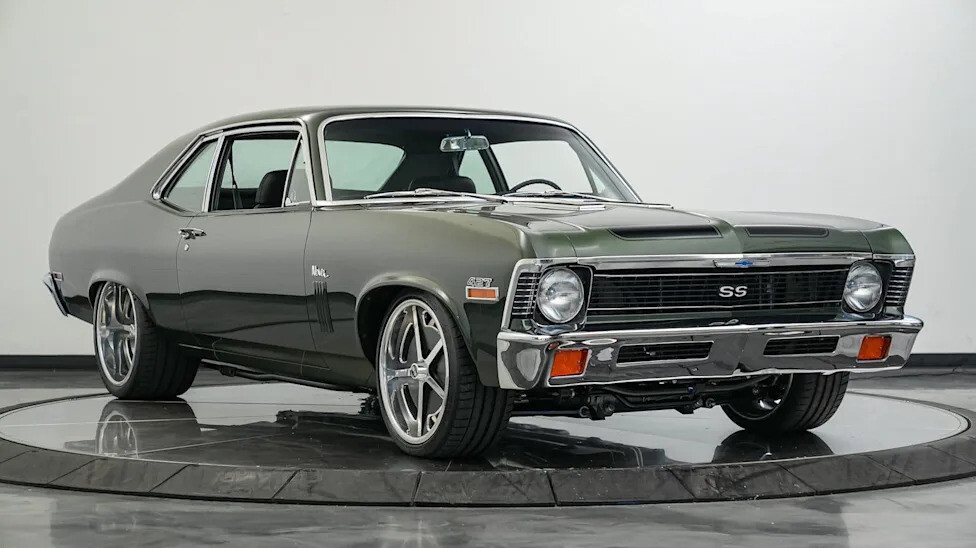
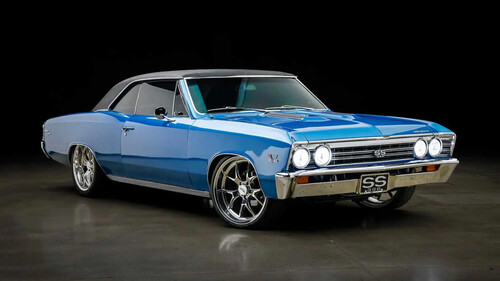
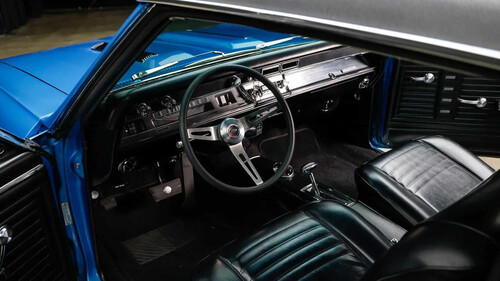
The 1969 Chevrolet El Camino SS blurred categories and confused some buyersThe 1969 Chevrolet El Camino SS 396 sat in a strange sweet spot. It looked like a Chevelle muscle car from the doors forward, carried a 396-cubic-inch V8 and Super Sport badging, yet hauled mulch and motorcycles in an open bed. That mix of show and utility thrilled some buyers and left others wondering whether they were looking at a truck, a car, or something in between. Half a century later, that same identity crisis is part of the appeal. The 1969 Chevrolet El Camino SS blurred categories in ways that modern crossovers only hint at, and the confusion it created in showrooms still shapes how enthusiasts, regulators, and even online commenters argue about what, exactly, this machine really is. The car that thought it was a truck To understand why the 1969 Chevrolet El Camino SS puzzled buyers, it helps to start with what the Chevrolet El Camino actually was. The nameplate, introduced by Chevrolet in the late 1950s, combined a passenger-car front with a pickup-style cargo box, a format that sources describe simply as an open-bed pickup truck produced by the American manufacturer. A later overview of the Chevrolet El Camino describes the Chevrolet El Camino as an American hybrid that never fit cleanly into existing categories. That basic concept carried through multiple production runs. One summary of The Chevrolet El Camino notes that The Chevrolet El Camino was produced by Chevrolet between 1959 and 1960 and 1964 and 1987, and it adds that the name El Camino comes from Spanish and that in North America it is classified as a truck. By the late 1960s, the format was familiar, yet the 1969 model sharpened the conflict between its car and truck sides. On paper, the platform leaned heavily toward the car side. The 1969 El Camino shared an all-welded perimeter steel frame with the Chevelle, and one period analysis put it bluntly: Sheetmetal and minor trim differences aside, Chevelles and El Caminos rode on identical all-welded perimeter steel frames. The front clip, interior layout and driving position all felt like a mid-size Chevrolet coupe, not a workhorse pickup. Styling that shouted muscle car, not work truck Visually, the 1969 El Camino marked a significant update in design, reflecting the bold styling trends of the late 1960s. Multiple enthusiast write-ups describe the 1969 El Camino as adopting more aggressive lines, a wider stance and a front end that mirrored contemporary Chevelles. One group of owners notes that the 1969 El Camino marked a significant update in design, reflecting the bold styling trends of the late 1960s, with an aggressive front fascia that clearly aligned it with Chevrolet’s muscle car family. Dealers leaned into that look. A Smoky Mountain seller promoting a 1969 El Camino described the car as Muy Caliente and highlighted its stunning and classic color combination and aggressive stance. That sales pitch, captured in a post titled This 1969 El Camino is Muy Caliente!!, shows how the El Camino was often presented more as a hot street machine than a contractor’s tool. The same post reinforces that the 1969 El Camino marked a significant update in design, reflecting the bold styling trends of the late 1960s, and the phrase Muy Caliente became shorthand for the car’s visual heat. A later listing, discovered via a link labeled Muy Caliente, underscores how dealers framed the model as a collectible muscle machine. Even small details reinforced that impression. Enthusiasts still point out that a 1969 Chevy El Camino kept traditional vent windows after many cars lost them, a touch that connected the cabin to earlier Chevelles and made the El Camino feel more like a car than a bare-bones pickup. One owner reminisced that “We had a 68,” linking the 1969 Chevy El Camino to a personal history of Chevelle-based models. SS 396: The First Muscle Truck The Super Sport package pushed the El Camino even further into muscle territory. Performance fans often describe the 1969 SS 396 as The First Muscle Truck, a label attached to an example whose original owner opted for the SS 396 with its 325-horsepower, 396-cubic V8. That combination of 325-horsepower and a 396-cubic engine gave the El Camino straight-line performance that matched or exceeded many coupes. Contemporary and modern commentary alike fixate on the 396 figure. One enthusiast group describes how the 1969 Chevrolet El Camino SS 396 blurred the lines between muscle car and pickup truck, with a 396-cubic-inch V8 under the hood and full Super Sport trim. Another comparison notes that The Chevelle SS is a true muscle car icon, known for its bold design and powerful performance, especially with the 396 V8, which helps explain why transplanting that same 396 into a bed-equipped body created such a classification headache. Dealers and collectors still showcase SS 396 examples as halo vehicles. A feature on a bench seat model of the 1969 Chevrolet El Camino SS 396 explains that this is a bench seat model, which pretty much negates the utility value of the middle seating position, and adds that El Caminos could be ordered with a range of options that mirrored Chevelle equipment. That write-up, which appears under a profile of a 1969 Chevrolet El Camino SS 396, captures how the SS trim made the cabin feel like a well-equipped car, not a sparse truck interior. The same piece notes that El Caminos could be ordered with performance engines, power accessories, and upscale trim that further distanced them from basic pickups. A later reader can find that perspective in a feature that invites buyers to dare to be different with a 1969 Chevrolet El Camino SS 396, available through Dec El Caminos. Shared bones with Chevelle, different mission Underneath, the 1969 El Camino SS was essentially a Chevelle with a bed. As one technical overview explains, Sheetmetal and minor trim differences aside, Chevelles and El Caminos rode on identical all-welded perimeter steel frames. That meant similar suspension geometry, wheelbase and ride quality, and it allowed Chevrolet to share engines, transmissions and many interior components across Chevelles and El Caminos. This shared architecture created a strange duality. On a test drive, a 1969 El Camino SS 396 feels like a mid-size muscle car from behind the wheel. A video walkaround from Lefontaine Classic Cars in Milford, Michigan, shows a factory 396-cubic-inch V8 El Camino accelerating, idling, and cruising with the same character as a Chevelle SS. In that clip, the presenter at Lefontaine Classic Cars in Milford, Michigan, notes that the car is a classic car dealer example and invites viewers to experience the sound and feel of the big-block engine. The clip is accessible through a YouTube link that introduces viewers with the line “that was me, what, hey welcome over here, this is Lefontaine Classic Cars YouTube,” and it can be found at Oct Lefontaine Classic. Yet the rear half of the vehicle told a different story. The open bed, tailgate, and load floor clearly signaled truck duty. A broader history of the Chevrolet El Camino notes that the vehicle was marketed as a utility coupe, a format that sat between sedan and pickup. The main encyclopedia entry for Chevrolet El Camino explains that the model combined passenger-car comfort with pickup-style cargo capacity, and it even includes a request that says Please help improve this article by adding citations, a reminder that the El Camino’s story is still being refined. Bench seats, vent windows, and daily usability The interior layout of the 1969 Chevrolet El Camino SS added to the ambiguity. The bench seat example profiled in the Dec feature shows how Chevrolet tried to serve both work and family roles. That story notes that this is a bench seat model, which pretty much negates the utility value of the middle seating position, since the transmission tunnel and limited legroom make the center spot awkward. Yet the presence of a three-person bench, rather than bucket seats, signaled a nod toward pickup-style practicality. At the same time, enthusiasts still celebrate car-like touches. A Facebook group post about a 1969 Chevy El Camino highlights that these still had vent windows after the cars lost them, a small but telling detail. Vent windows were disappearing from many late-1960s coupes, yet the Chevy El Camino kept them, perhaps because owners were expected to spend long days in the cab with the windows cracked open while hauling loads. These mixed signals could confuse buyers walking into a showroom. Someone expecting a full-size pickup might find the El Camino’s cab too tight and its payload limited. A muscle car shopper, on the other hand, might balk at the exposed cargo bed and the idea of driving what some peers dismissed as a “truck.” Truck on paper, car in the culture The debate over how to classify the El Camino has never really faded. A recent discussion about Chevy El Camino classification in Toronto shows how modern regulators and owners still wrestle with the question. One commenter notes, “I guess it’s classified as a truck given it has a commercial license plate,” and another, Donna Tomlinson-Stuart, replies, “Yes, it is. They make you get the commercial designation. That exchange, involving Donna Tomlinson and Stuart, reflects how licensing authorities in some regions still treat the El Camino as a truck for registration and fee purposes. Elsewhere, enthusiasts emphasize the model’s hybrid nature. A post summarizing inconsistencies in car classifications reminds readers that the Chevrolet El Camino was produced by Chevrolet between 1959 and 1960 and 1964 and 1987 and that the name El Camino comes from Spanish for “the road.” That same summary notes that in North America, it is classified as a truck, yet the cultural conversation around the car often places it among muscle coupes and hot rods rather than work pickups. The broader historical overview of The Chevrolet El Camino on multiple language versions of Wikipedia, including entries discovered at af.wikipedia.org, de.wikipedia.org, el.wikipedia.org, and es.wikipedia.org, repeats the same tension. Each describes Chevrolet El Camino as a unique model that combined car and truck attributes, and the English entry is supported by a donation appeal at donate.wikimedia.org that encourages readers to support Wikipedia’s coverage of Chevrolet El Camino. “The First Muscle Truck” and collector confusion The phrase The First Muscle Truck captures both the appeal and the confusion around the 1969 Chevrolet El Camino SS 396. The eBay feature that uses that label describes a specific El Camino whose original owner chose the SS 396 with its 325-horsepower, 396-cubic V8, positioning the vehicle as a performance machine with real hauling capability. That same piece notes that the El Camino featured there is ready to go or show, a nod to its dual-purpose nature. More from Fast Lane Only Unboxing the WWII Jeep in a Crate 15 rare Chevys collectors are quietly buying 10 underrated V8s still worth hunting down Police notice this before you even roll window down