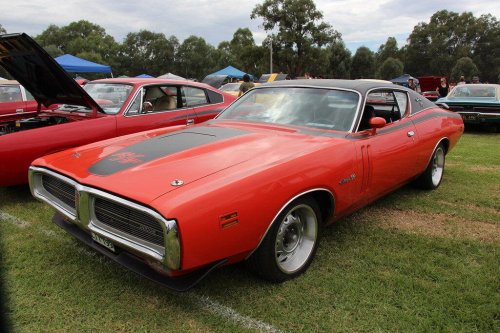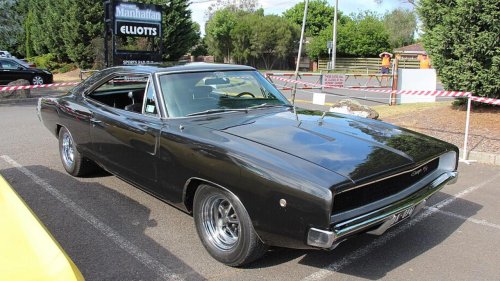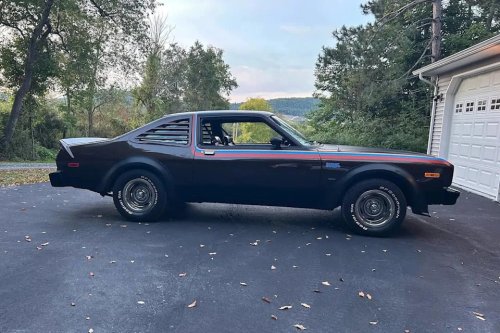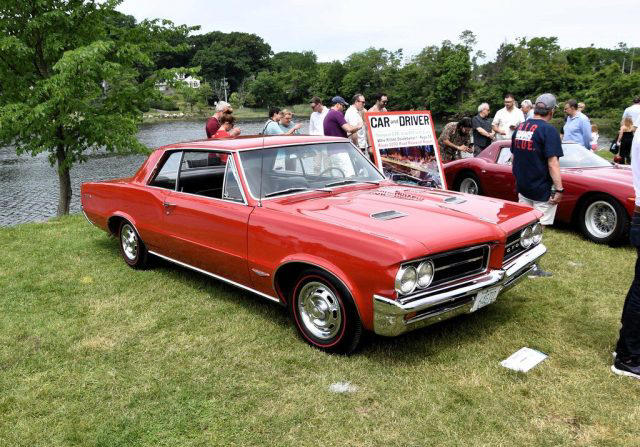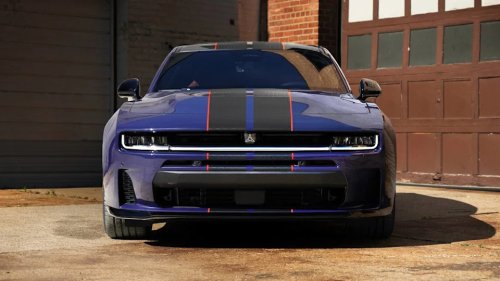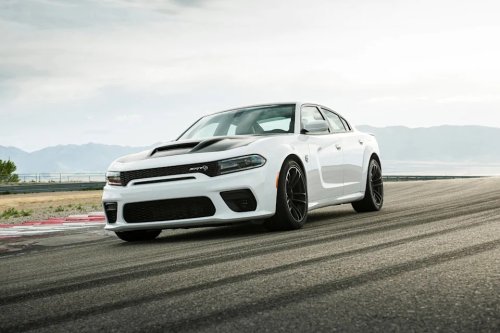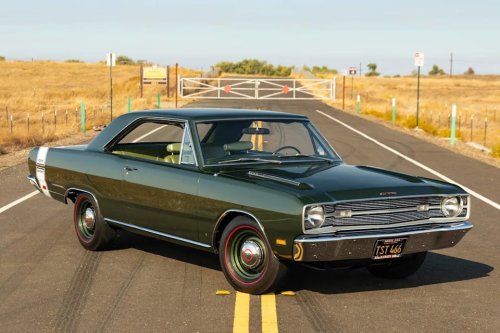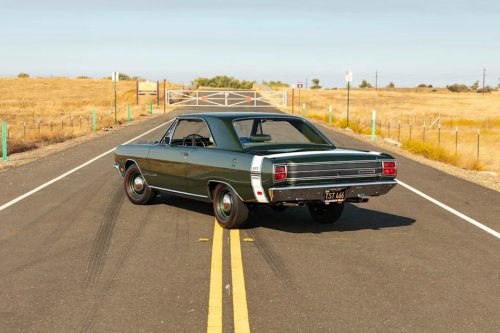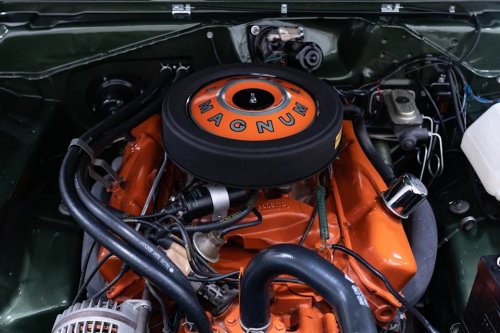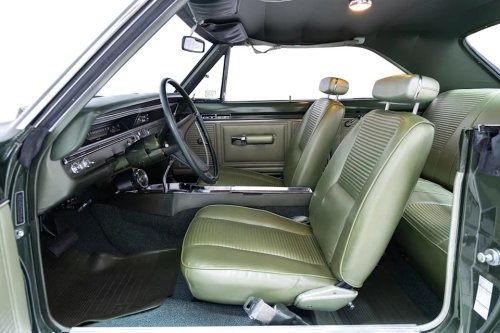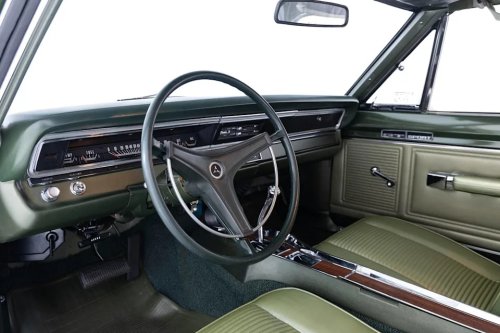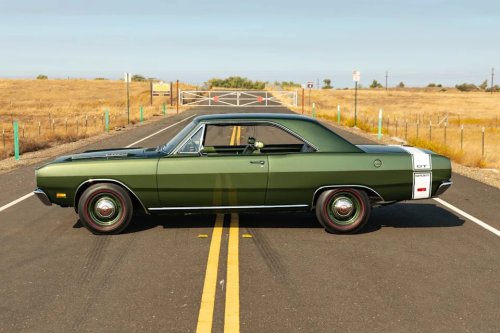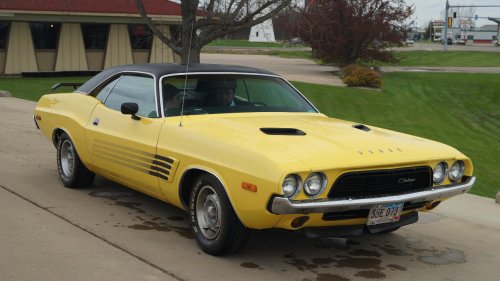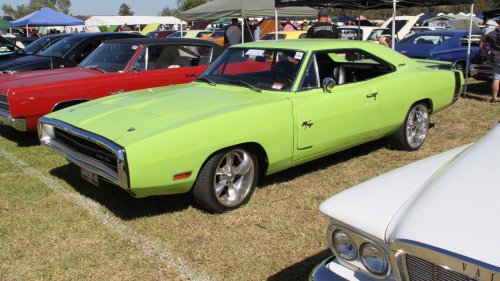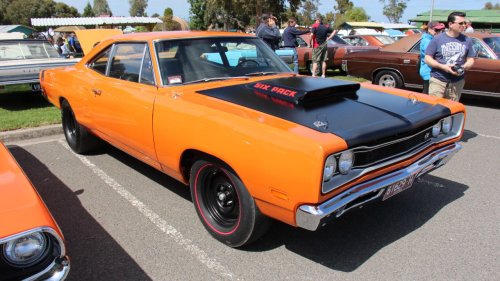




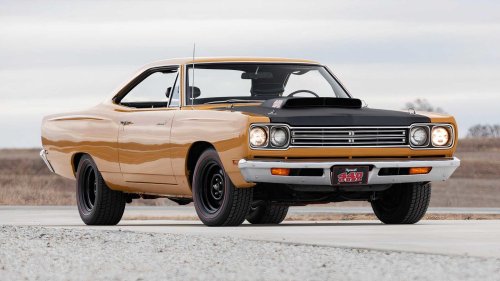























There's a popular misconception that prior to the 1964 Pontiac GTO, there were no powerful intermediate American cars, but that's simply not true. The reason why the GTO is credited with kicking off the Golden Age of American muscle is because it was the first fast set of wheels that was geared towards a younger demographic. A major part of the GTO's success was that it was an affordable ride that looked cool and kicked ass. Of all the parameters for a muscle car (American-made, two-doors, big V-8, etc), a reasonable price is the most important.As the classic era moved on, muscle cars were becoming increasingly more luxe, and that meant bigger numbers on the window stickers, which kind of priced the target audience right out of the segment. In 1968, Dodge rolled out the back-to-basics Super Bee that ditched the foo-foo luxury and established a great price-to-performance ratio. The next year, Dodge unleashed the '69 Super Bee A12, which featured the legendary 440 Six Pack V-8 that offered Hemi-like performance for half the price. This was the ultimate Golden Age muscle car that hit all the right chords, from affordability to ferocity.In order to give you the most up-to-date and accurate information possible, the data used to compile this article was sourced from various manufacturers websites and other authoritative sources, including Mecum, and Classic.com. The Super Bad 1969 Dodge Super A12 Mecum We'll get to the Super Bee's superhero origin story in a bit, because this is all about the mightiest Mopar League muscle car ever. In mid-model year 1969, Chrysler came out with a radical new version of the 440ci V-8 that featured three two-barrel carburetors, known as the Six Pack at Dodge and the 6BBL over at Plymouth. This engine was much cheaper to produce than the 426 Street Hemi and offered similar performance, which made it the perfect powerplant for the budget bruiser Super Bee. The option code for this wondermill was A12, and the 1969½ Super Bee with the Six Pack was a special order. It was much more than just an engine, with upgrades from the suspension to appearance, making for a truly awesome ride that was still wallet-friendly. 1969 Super Bee A12 Power and Performance Besides the cool rear stripe and Super Bee decals, the biggest exterior component was the blackout "lift-off" hood with a big honkin' scoop emblazoned with "Six Pack." The Super Bee A12 also had a beefier suspension, heavy-duty 11-inch drum brakes, and a Dana 60 axle with a 4:10 gear ratio. It could be ordered with either a three-speed Torqueflite automatic transmission or the way more fun four-speed manual, which, unfortunately, didn't come with the Pistol-Grip shifter. The package was rounded out, literally, with a set of black steel wheels that gave the Super Bee a moonshine runner or early NASCAR kind of vibe. This was a car that was all about getting numbers at the track, not cruising the strip on a Saturday night. Crack Open A 440 Six Pack Mecum The star of the A12 package was obviously the 440ci Six Pack V-8. Fitted with three two-barrel Holley carburetors and an Edelbrock aluminum intake manifold, this was a car that could eat as much gas as you could give it. The ability to gobble gas is one of the things that gives a car amazing performance, and the '69 Super Bee A12 was a 13-second car all the way, which was the gold standard in the classic era. While the 440 Six Pack's 390 horsepower wasn't quite as impressive as the 425 ponies cranked out by the 426 Hemi, it did produce the same 490 pound-feet of torque, which is where launching power comes from. Super Cheap Super Bee Mecum Top-performance '69 muscle cars like the Pontiac GTO Judge Ram Air IV or the 375-horsepower version of Chevrolet Chevelle SS 396 were well over $4,000, and the Charger Hemi R/T was $4,223 before any options were added. The base price of a '69 Super Bee was just $3.059, and the A12 package only added $463 for a total of $3,522. These price differences don't seem too extreme nowadays, but they were a big deal back then. The 440 Six Pack was a bargain V-8 that didn't sacrifice too much power and cost around half as much as the 426 Hemi engine option. Flight Of The Super Bee Mecum In the late 1960s, Plymouth was planning a stripped-down muscle car with oodles of power that wouldn't break the bank, which we now know as the Road Runner. Dodge thought that was a great idea, so they put together the Super Bee, based on the Coronet, to match the Plymouth offering. An in-house contest was held to name this cheap thrill-maker, and senior designer, Harvey J. Winn, scored with "Super Bee" based on the Scat Pack performance package's bumblebee mascot, and the fact that it was built on the Chrysler B-Body platform. In retrospect, this name was a no-brainer, as was a guy named "Winn" winning the contest. 1968 Super Bee Production Numbers Total: 7,844 units 383: 7,719 426 Hemi: 125 units 1969 Super Bee Production Numbers Total: 27,800 units 383: 25,727 units 440 Six Pack: 1,907 units 426 Hemi: 166 units 1970 Super Bee Production Numbers Total: 15,506 units 383: 14,212 units 440 Six Pack: 1,268 units 426 Hemi: 36 units Initially, the Super Bee was only available with the base 383ci V-8 and the 426 Street Hemi option, as the 440 was reserved exclusively for the Coronet R/T. Making this car a little more fun, it came with rear fender Super Bee logo decals as well as die-cast chrome-plated motorized bee medallions in the front and back. The Super Bee could be as no-frills as the buyer wanted, eliminating things like the back seats, carpet, radio, and A/C to save a few more bucks. The car also came standard with body-color or plain black steel wheels, which added to its frugal persona. With a front bench seat, a 330-horsepower V-8, and a four-speed Hurst Competition-Plus shifter, the base '68 Super Bee was the cheapest, coolest thing Detroit ever produced. Super Fancy Super Bee Mecum While the original mission statement of the Super Bee was to be an affordable nuthin' fancy ride, by 1970, it was pretty ornate. Part of the charm of the '68 Super Bee was its complete lack of styling, so the sexy curves of the '70, which rivaled the Coke bottle shape of the second-gen Charger, were a stark contrast. The 1970 Super Bee also got a split grille that was supposed to emulate bumblebee wings and a wicked pair of hood scoops that made it look like a top-shelf luxury muscle car. There ain't nothing wrong with a 1970 Super Bee, and in fact, it's one of the sharpest cars of the Golden Age, but it almost felt like a betrayal of what the car was supposed to be. 1969 Plymouth Road Runner A12 Mecum As B-Body cars, the Dodge Coronet, Super Bee, Plymouth Belvedere, and Road Runner are all pretty much the same thing. There are some subtle sheet metal and grille differences, but the two-door coupes are eerily similar. The biggest difference between the '69 Super Bee and Road Runner is that the Dodge had a 117-inch wheelbase while the Plymouth was an inch shorter. As for the A12, of which there was a Road Runner version with the 440 6BBL V-8, the cars were almost identical. The Dodge had larger rear wheel openings and the Plymouth had a "meep meep" Road Runner horn, but besides that, they were both evenly matched Mopar ass-kickers. The Scat Pack Attack Mecum The 426 Street Hemi became an option in 1966 and was available for all Dodge mid-size rides. This meant it was conceivable for someone to order a Coronet station wagon with a 425-horsepower beast under the hood, though there is no evidence that ever happened. A handful of four-door dorky Coronets did leave the factory packing Hemis, which remains one of the most bizarrely equipped cars of all time. In 1968, Dodge put an end to the Hemi free-for-all and decided the 426 V-8 could only go into designated muscle car trims, which, for the most part, meant R/T cars. Classic Scat Pack Lineup 1967-1971 Dodge Dart 1968-1971 Dodge Charger 1968-1970 Dodge Coronet 1968-1970 Dodge Super Bee 1970-1971 Dodge Challenger As part of that muscle car designation, Dodge created the Scat Pack package that denoted a car that was ready to rock straight from the factory. Scat Pack cars were guaranteed to run a quarter-mile in the 14s or less, and were branded with an awesome bumblebee on wheels insignia. The cars also came with a rear bumblebee stripe that could be removed by the dealer, though anyone who exercised this free option had to be insane, as it looked amazing. The Super Bee derived its name from the Scat Pack mascot, but actually came to personify it, or whatever the vehicular version of personification is. Vehicularization? Charger Super Bee Mecum 1970 was the last year for the Super Bee as a nameplate, and the Coronet on which it was based would be relegated to four-door family car status, losing all muscle car trims. That, however, didn't mean the Super Bee was exterminated, as it became the budget performance trim of the third-gen Charger. The 1971 Charger Super Bee carried on the car's original purpose as a lower-priced ride with terrifying V-8 engine options. The standard engine was the 383, which, sadly, was detuned from 330 horsepower to 300, and an even weaker 340 was optional. The 440 Six Pack and 426 Hemi were still in play; great as ever, but ordered in sparing numbers, making for some of the rarest Mopars of the classic era. Mexican Super Bee Misael/Wikimedia Commons After 1971, the Super Bee flew south for the winter and liked it so much, it stayed until 1976. Actually, Mexico got its own version of the Super Bee with a Valiant-based Plymouth Duster that had a Dodge Demon front fascia and stripes, complete with a bumblebee decal. It was only available with a 270-horsepower 318ci V-8 and a three-speed manual, so it wasn't quite the stinger as the '69 A12. It was, however, kind of cool-looking and probably would have done well in the States if it came equipped with at least a 383. Mexico had much less stringent pollution laws than the U.S., so these babies could have been rocking some non-detuned Mopar V-8s, but that never happened. The '69 Super Bee is Super Collectible Mecum When it comes to classic Mopar, the 426 Street Hemi is king, with the right cars fetching millions at auction. The 440 Six Pack, on the other hand, rules the 1969 Super Bee collector's market as the top dog (queen bee?) auction seller. That Bright Green Poly car pictured above sold for nearly a quarter of a million dollars at Mecum Kissimmee 2024, beating the highest-selling Hemi Bee by $61,800. The fact that it pulled that feat off with a floral top (yeah, that was a weird thing Dodge offered) is a testament to the A12's inherent awesomeness. Top Recent 1969 Super Bee Auction Sales 1969 Dodge Super Bee A12 - $240,000 1969 Dodge Hemi Super Bee - $178,200 1969 Dodge Hemi Super Bee - $165,000 1969 Dodge Super Bee A12 - $154,000 1969 Dodge Super Bee A12 - $148,500 It's probably not ironic that the super-cheap Super Bee A12 is now a super-collectible, but it is a victory for a car that never really got the respect it deserved in its time. In 1969, cars like the Chevelle, Firebird, and Mustang got all the attention, with the Super Bee viewed as kind of a dufusmobile for people who couldn't afford a hot-looking ride. That smug indignation went away every time a muscle snob lined up against an A12 at a red light, but it took decades for the Super Bee to gain widespread acceptance as the crushing classic it has always been. Given the rarity and amazing performance of the '69 Super Bee A12, this is a car that is going to climb the charts of collectible muscle cars.