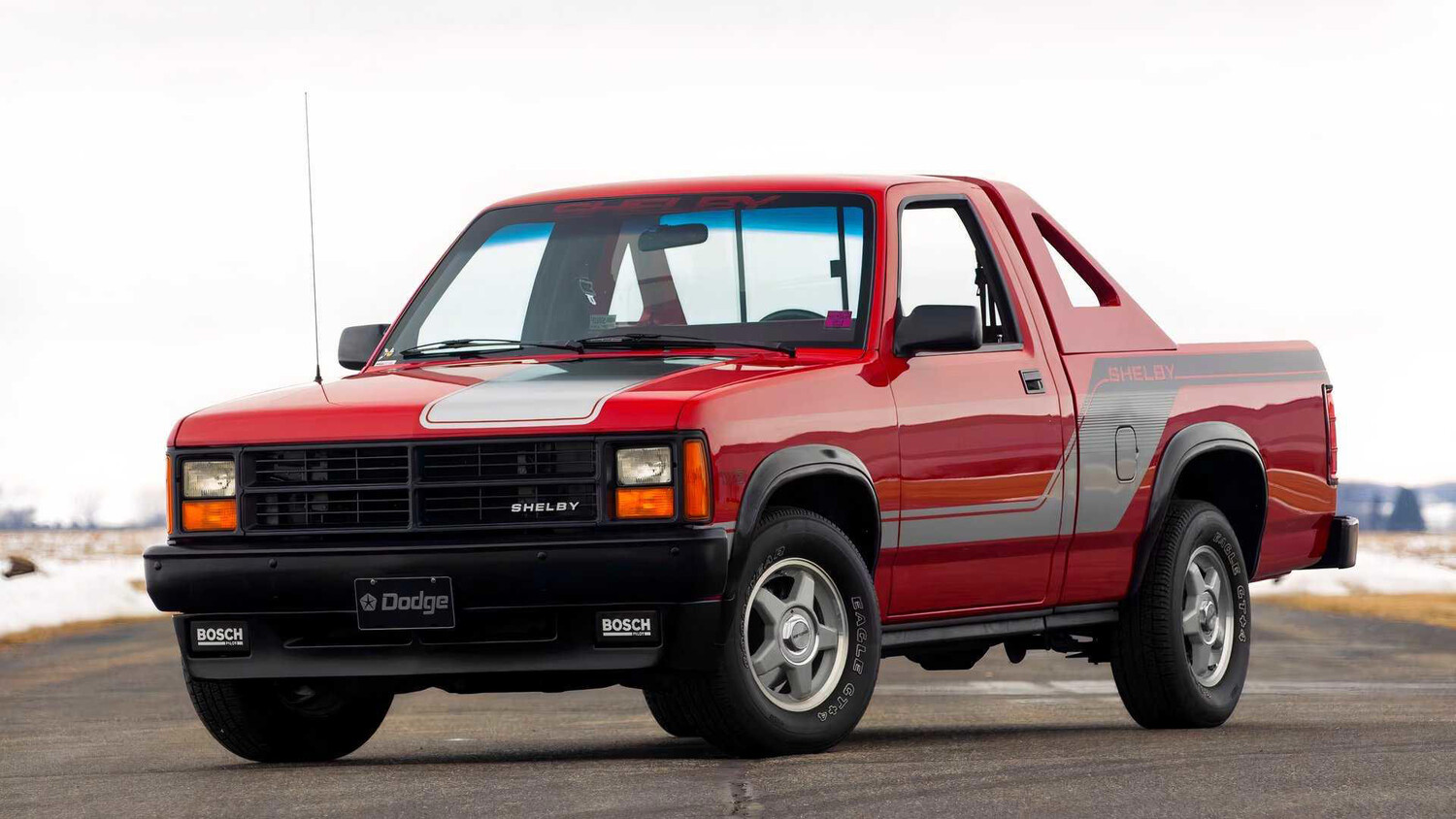
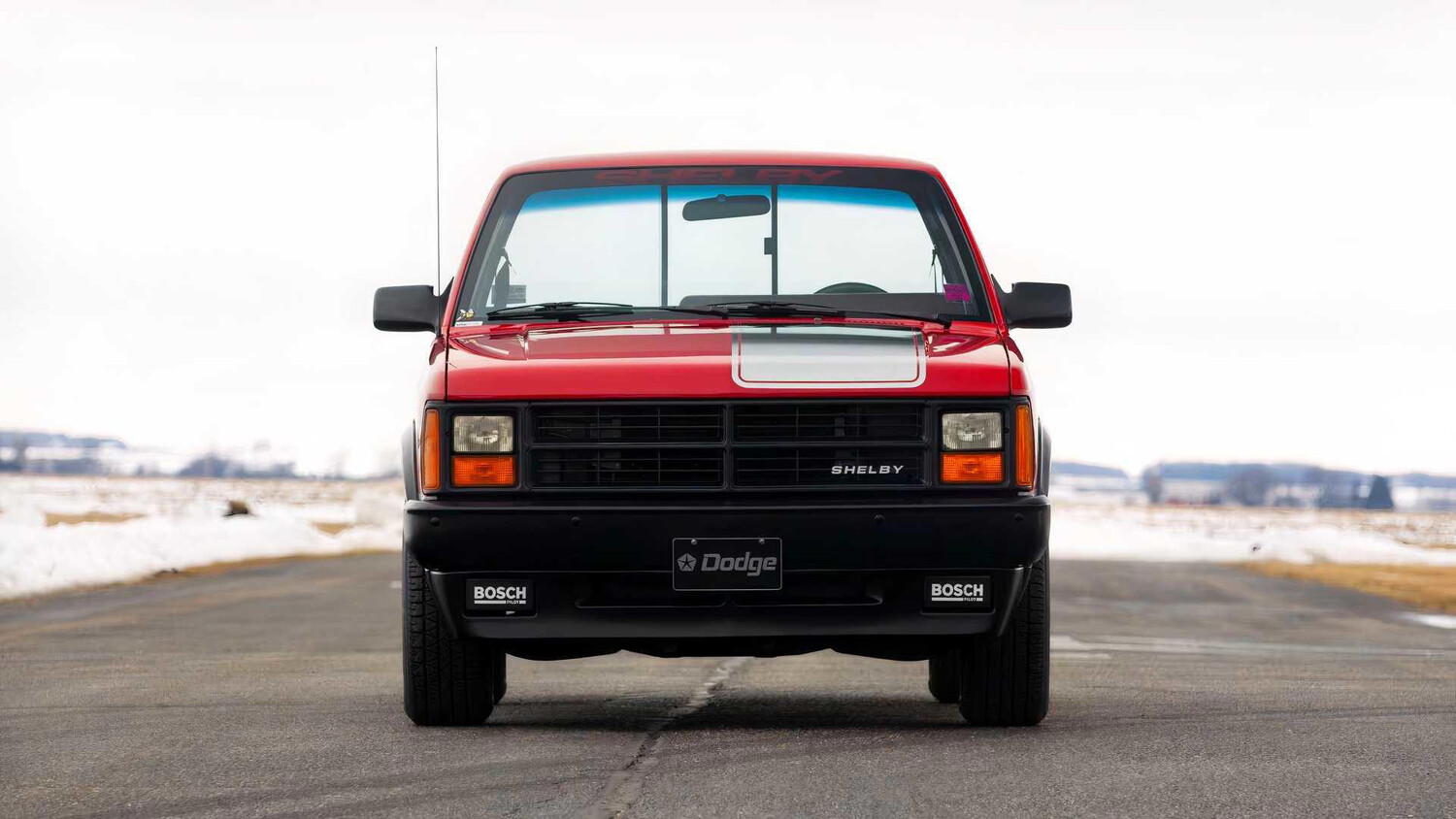
By 1988, the American pickup truck market ran at two speeds. You bought compact and cheap, with a four-cylinder or a small V6 and zero performance ambition. Or you bought full-size and paid for more truck than most buyers actually needed. Nobody was building anything in between that could genuinely move. There were few factory-built midsize pickups that genuinely prioritized performance. The gap was real, it was obvious, and it had been sitting there for years. What wasn't obvious was who, from the mainstream, was about to fill it, or what they were going to put under the hood. Why A Small Pickup Needed A Bigger Idea GM One leading brand saw that gap and decided to take it seriously. In a segment defined by payload ratings, fuel economy, and bed length, performance was an afterthought nobody was even considering. Buyers shopping compact trucks weren't looking for speed. They wanted better fuel efficiency, a useful bed, and a price tag that didn't sting. Nobody had worked out yet that they might want something that moved too. The Engines That Said No To Speed Aston Martin The engines on offer reflected exactly what the segment prioritized. Even the V6 options were tuned for economy and low running costs, not output. The four-cylinders were the sensible choice for hardware-store runs and not much else, and everyone in Detroit seemed fine with that. What buyers actually wanted—and hadn't been offered—was something under $20,000 that could genuinely move and still handle the work a truck was expected to do. That combination didn't exist from any manufacturer in any configuration. The segment had agreed, without much discussion, that performance wasn't part of the deal. But one American tuner was already watching this gap, and he had a very different idea about what belonged under the hood of a compact truck. The Tuner Who Needed A V8 And Rear Wheels Jaguar At the same time, one American tuner with a long track record of building quick, affordable machines was actively looking for a rear-drive project. His recent work had landed on front-wheel-drive, four-cylinder compact platforms, genuinely capable machines for what they were, but a long way from what his reputation was built on. He had spent years squeezing performance out of economy platforms because that was what was available. A V8 and rear-wheel drive were what he actually wanted, and that combination had been missing from his lineup for nearly two decades. The compact truck segment wasn't where anyone expected him to show up next. That made it exactly the right place. The Package Had To Solve A Space Problem First Via: Bring A Trailer The brand was Dodge and the man was Carroll Shelby. Two of the most recognizable names in American performance, finally working on a rear-drive V8 platform together. Dodge had brought Shelby in as a performance consultant in the early to mid 1980s, a relationship brokered by Chrysler chairman Lee Iacocca. Their history stretched back to Ford, where Iacocca had backed the original Cobra and Mustang programs. By 1988, Shelby was ready to go back to a V8, and Dodge had a midsize pickup platform waiting for a punch. Dodge And Carroll Shelby Make Their Move Mecum The engineering challenge was immediate. The truck's engine bay was sized around a V6, and sliding in Chrysler's 318-cubic-inch (5.2-liter) V8, the same unit already running in full-size Dodge trucks, looked reasonable on paper. Both engines shared the same basic architecture, so the swap had a clear logic to it. In practice, the extra length of the V8 made a factory-line installation extremely difficult and would likely have created crash-test compliance problems that Dodge had no interest in dealing with. The fix was to supply bare-bones trucks to Shelby's facility in Whittier, California, and handle the conversion off the factory floor entirely. The engineering challenge would require an unconventional approach that no other manufacturer had attempted. The V8 That Almost Didn't Fit via AutotopiaLA (YT) The tightest engineering problem was cooling. There was no room for a belt-driven mechanical fan with the 318 sitting where the V6 had been, so Shelby's team swapped in an electric unit. That change recovered around 5 hp by cutting the parasitic drag from the belt-driven system, pushing rated output to 175 hp at 4,000 rpm and 270 lb-ft of torque at 2,000 rpm. The 1989 Shelby Automobiles catalog documents the engine as an OHV-90 V8 with roller rocker arms, hydraulic valve lifters, and electronic dual-throat throttle-body injection. The suspension was specifically calibrated for handling, upper and lower wishbone up front with coil springs and a stabilizer bar, semi-elliptical two-stage leaf springs at the rear, and gas-charged shocks at both ends. The 1989 Shelby Dakota Became The Answer Via Mecum Shelby Industries started with the same configuration every time. Two-wheel-drive Dodge Dakota Sport, standard cab, 112-inch wheelbase, 6.5-foot bed. The Dakota had arrived for the 1987 model year as Dodge's deliberate gap-filler between the compact pickups and the full-size trucks, offered with a 2.5-liter four-cylinder or a 3.9-liter V6. Neither engine gave anyone a reason to get excited. The Shelby Dakota would be the first Dakota to receive a V8 of any kind. Starting With A Blank Slate Dakota Sport Via Mecum Before Shelby's team touched it, the Dakota Sport was a decent, practical midsize truck with nothing under the hood worth getting worked up about. The 3.9-liter V6 was the strongest engine option in the standard lineup, built for light work and everyday efficiency and nothing beyond that. But the platform had real potential nobody had bothered to explore. Rear-wheel drive, proper body-on-frame construction, and a suspension layout that had never been pushed hard because nobody had ever given it anything serious to work with. Shelby recognized that foundation immediately. What came out of Whittier was going to prove it. Everything Shelby Changed, And Why It Mattered Via Mecum The 3.9-liter V6 came out and the 318-cubic-inch V8 went in, backed by a V8-rated 4-speed automatic with electronic overdrive, a high-stall converter, an auxiliary cooler, and a limited-slip rear axle at 3.90:1. The exterior got a deep front air dam with integrated driving lights, blacked-out bumpers and grille, fender extensions, a fiberglass lightbar, 15-inch Shelby hollow-spoke aluminum wheels, and Goodyear Eagle GT+4 radials in P225/70R15. Inside: Shelby charcoal sport cloth throughout, a full gauge cluster with a tachometer, a leather-wrapped Shelby Signature steering wheel, and a numbered nameplate marking each truck's individual place in the production run. The front vented disc brakes were a genuine upgrade over the standard drum setup. The 1989 Shelby Automobiles catalog stated it plainly. This was Carroll Shelby's first rear-wheel-drive V8 production vehicle in years. The Numbers Explain The Truck's Appeal Via MecumThe performance figures need 1989 context to land correctly. The 318-cubic-inch V8 made175 hp and 270 lb-ft of torque. The truck ran 0-60 in 8.5 seconds, with a quarter-mile of 15.6 seconds.Against a sports car those numbers are unremarkable. Against every other compact or midsize pickup on sale in 1989, they were in a different league entirely. Running Numbers That Made Other Trucks Look Slow Via Mecum Those numbers don't need inflation to make the story work. In 1989, no mainstream compact or midsize pickup came close to that pace. Most trucks in that class were still working up to 60 mph rather than charging it. The Shelby Automobiles catalog went further, describing the Dakota as capable of embarrassing sports car pretenders costing significantly more, and that wasn't marketing copy. The parts-bin approach was what made it commercially viable. The 318 V8 was already running in full-size Dodge trucks, which simplified emissions and compliance work. The A500 automatic and the Sure-Grip differential were known Mopar components. Shelby's team selected and assembled from what Chrysler already had, and that kept costs down and reliability predictable at a $15,813 price point. One Year, Two Colors, 1,475 Trucks Via Mecum The catalog confirmed two color choices, Exotic Red and Bright White, each with the same bold graphics package. Total production came to 1,500 trucks for the 1989 model year, split 860 in red and 540 in white. Each carried a Shelby serial number plate on the dash confirming its individual place in the run. The red trucks are the common ones, which means a clean white example carries extra weight with collectors who know the numbers. No second year, no continuation model, no follow-up. One year, two colors, 1,475 trucks, done. Why the Shelby Dakota Still Matters Now Via Mecum The Shelby Dakota predates every truck that usually gets the credit for starting the performance pickup segment. The GMC Syclone arrived in 1991. The Ford SVT Lightning debuted in 1993. Both get the historical recognition. The Shelby Dakota, which was running a factory-backed V8, a limited-slip differential, and a performance suspension in 1989 for $15,813, gets a footnote at best. That is the wrong order. The Truck That Beat The Syclone And Lightning To The Punch Via Mecum The Syclone was quicker. The Lightning was louder. But the Shelby Dakota was first, and it proved something neither of those trucks had to prove by the time they arrived. There was a real market for a factory performance pickup at an everyday price. Buyers came. All 1,475 of them, in a single model year, before the segment even had a name. The performance truck era did not start with the trucks most people credit it to. It started with a 318-powered Dodge on a midsize platform that barely anyone remembers. What Collectors Pay For One Today Via MecumRecent auction data from Classic.com shows a market range from around $2,500 for high-mileage or rough examples up to $22,000 for a clean truck, with the average sitting at around $12,530. The 995-to-480 production split means red trucks are the common ones, and well-preserved white examples tend to attract more collector attention. Recent sales suggest values have been broadly stable rather than climbing sharply, which means the window to find a genuine Shelby-built performance pioneer at a fair price is still open. The trucks that followed it got the magazine covers and the legacy. The Shelby Dakota got there first.