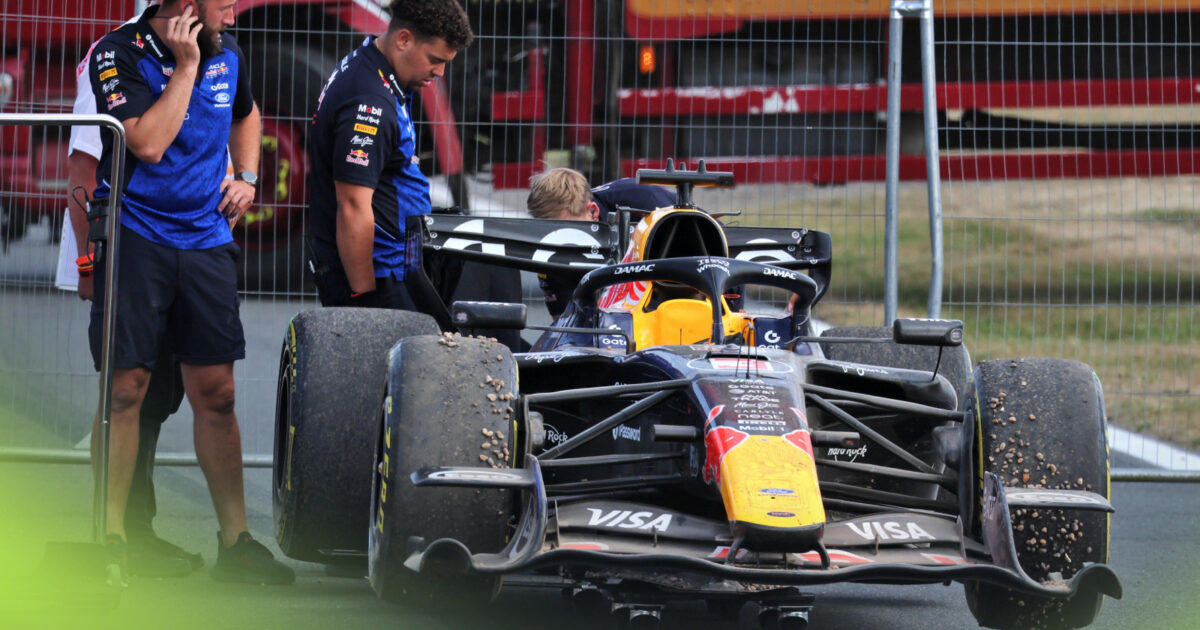
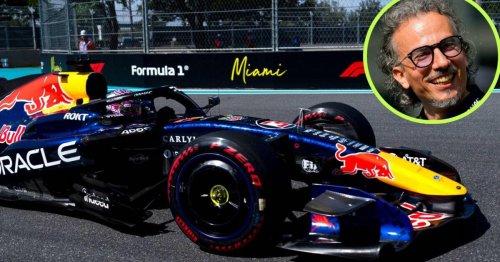
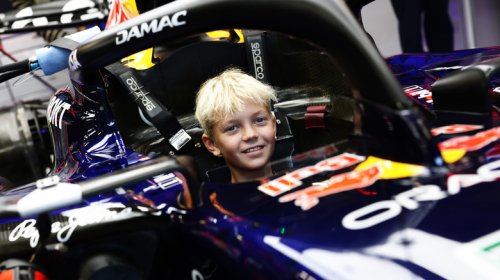
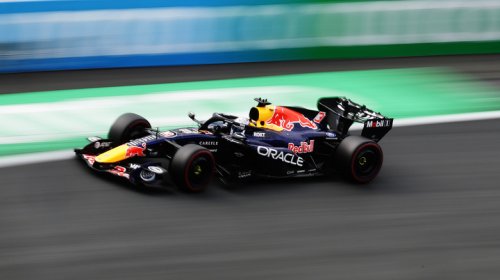
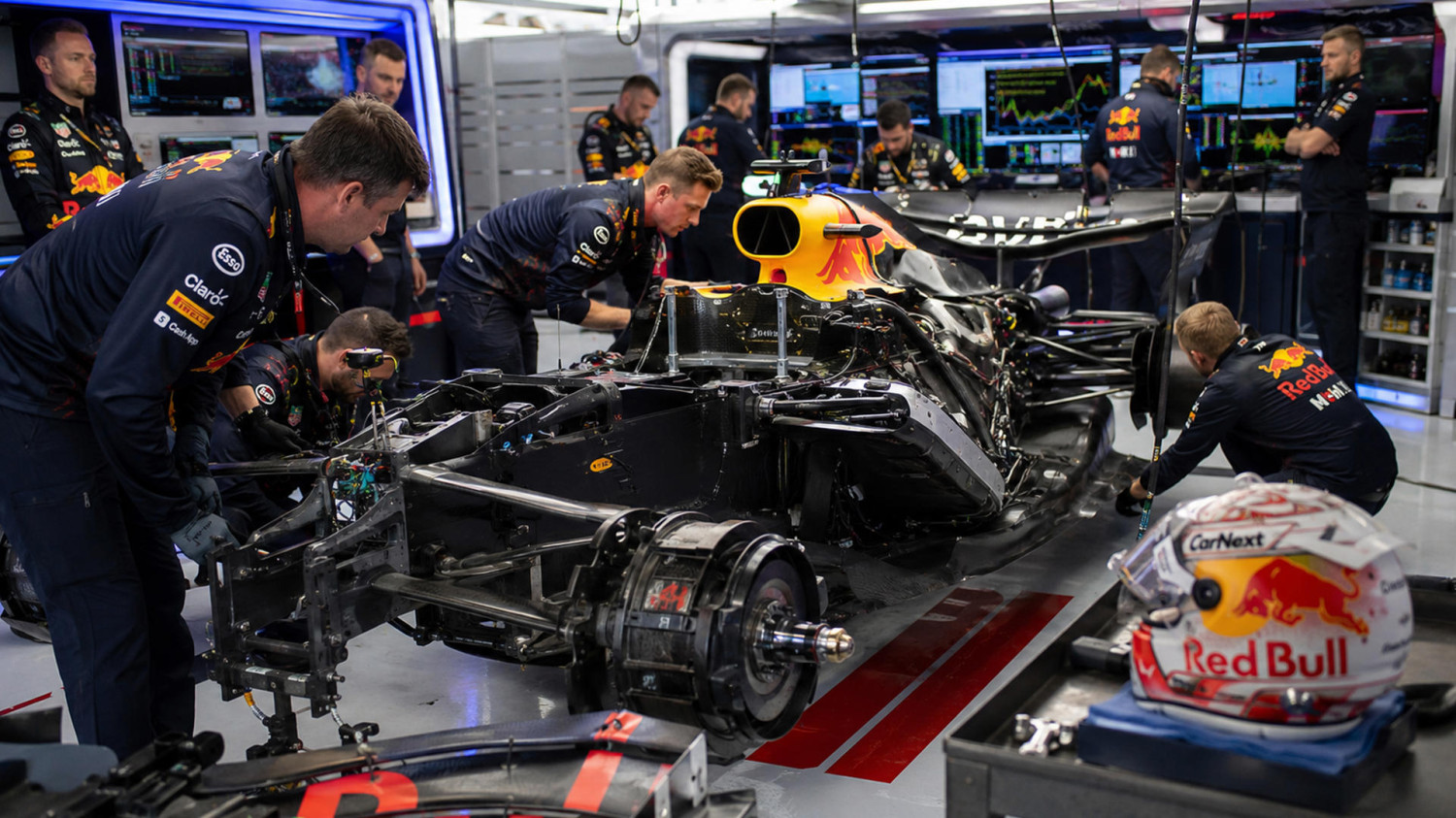
How Red Bull’s Huge Miami Upgrade Package Brought Verstappen Back to the Front RowRed Bull’s Miami Turnaround Was Built in the DetailsRed Bull’s sudden improvement in Miami looked dramatic because it changed the tone of the team’s season almost overnight.Before the upgrade, the RB22 had looked difficult to trust. Max Verstappen could still extract lap time, but the car lacked the stability and predictability that usually define a front-running Red Bull. In Miami, that changed enough for Verstappen to qualify on the front row ahead of McLaren, Ferrari, and George Russell’s Mercedes. Formula 1’s technical analysis noted that the turnaround coincided with one of Red Bull’s biggest upgrade projects of the season.The important point is that this was not a single magic part. Red Bull changed the front wing, brake ducts, floor, sidepods, engine cover, diffuser, and rear wing. It also made cockpit changes and modified the steering rack to give Verstappen a better feeling of control.That combination suggests Red Bull was not simply chasing more downforce. It was trying to make the car behave like a complete package again.The RB22 Needed More Than Raw SpeedRed Bull’s early problem was not just that the car was slow in a straight line or weak in one corner type.The deeper issue was balance. A Formula 1 car can have strong aerodynamic numbers in simulation but still be difficult to drive if those forces arrive unpredictably. If the front end bites at one moment and washes out the next, or if the rear becomes unstable at the wrong point in a corner, the driver loses confidence.That is especially damaging for Verstappen, whose speed often comes from attacking corner entry and trusting the car to respond immediately. A nervous or inconsistent car forces him to leave margin, and that margin becomes lap time.The Miami package appeared designed to address that. Updates across the floor, sidepods, diffuser, wings, and cooling areas point to an attempt to improve airflow consistency through the whole car, not just add peak load in one place.The Floor Was Central to the UpgradeModern F1 performance begins underneath the car.The floor and diffuser generate a large share of the car’s downforce, but they are also highly sensitive to ride height, airflow quality, and how the car behaves through pitch, roll, and yaw. Red Bull’s Miami package included a revised floor and diffuser, and other reports from the weekend described significant changes to the forward floor structure and sidepod integration.That matters because the floor does not work alone.The front wing, brake ducts, sidepods, engine cover, rear suspension area, and diffuser all influence how air reaches and leaves the underfloor. If the flow becomes unstable, the driver feels it as a car that changes character from one phase of the corner to the next.Red Bull’s broad upgrade list suggests it was trying to clean up that chain from front to rear.The Sidepods and Engine Cover Changed the Car’s Aerodynamic MapThe sidepod and engine cover changes were especially important because they help shape the airflow that feeds the rear of the car.A Formula 1 sidepod is not just a cooling inlet. It controls how air travels around the car’s body, how the floor edge is protected, and how cleanly flow reaches the diffuser and rear wing. In Miami, Red Bull’s sidepods were visibly changed, and technical coverage noted that the revised bodywork worked together with the new floor and engine cover.This is where modern F1 upgrades become difficult to judge from the outside.A new sidepod may look like a bodywork change, but its real value may be in how it improves the behavior of the floor or stabilizes the rear. If that gives the driver more confidence at corner entry and mid-corner, the lap-time gain can be larger than the visual change suggests.That appears to be the kind of problem Red Bull was trying to solve.The Rear Wing Added Another LayerThe rear wing also attracted attention in Miami.Red Bull introduced a new rear wing concept that drew comparison with Ferrari-style ideas, including a rotating top element used for straight-line efficiency. Technical reports described Red Bull bringing new front and rear wings to Miami, with the rear wing including a Ferrari-style rotating top element.This matters because Miami rewards a balance between cornering performance and straight-line speed.A more efficient rear wing can help a car carry enough downforce for the corners without paying too much drag penalty on the straights. That is especially valuable under the 2026 rules, where energy deployment and straight-line performance have become central to lap time.Red Bull’s rear-wing work was therefore not separate from the wider upgrade. It was part of making the car more usable across the whole lap.The Steering Rack Change May Have Been Just as ImportantThe most revealing detail may not have been aerodynamic at all.Red Bull also modified the steering rack to improve Verstappen’s feeling of control. Formula 1’s technical analysis specifically noted that this was added to the aerodynamic package along with cockpit changes.That tells a lot about the team’s problem.If a driver does not trust what the steering is telling him, he cannot confidently place the car. That is not only about comfort. It affects braking, turn-in, correction, tire loading, and how close a driver can get to the limit.For Verstappen, steering feel is critical. He needs to know exactly how much front grip is available and how the rear is responding behind him. If the steering rack helped make the car feel more connected, it may have unlocked more confidence than a purely aerodynamic gain would have done on its own.The Upgrade Was Also About ConfidenceFormula 1 upgrades are often discussed as numbers: points of downforce, drag reduction, balance shift, and lap-time gain.But Red Bull’s Miami step was also about confidence.A car that is technically faster but unpredictable may still underperform because the driver cannot commit. A car that is slightly more stable can unlock more lap time because the driver is willing to brake later, turn in harder, and get back to throttle earlier.That is why the Miami result mattered. Verstappen did not suddenly have a dominant car, but he had a car that looked more like something he could attack with.That is a major difference for Red Bull.One Race Does Not Prove the Recovery Is CompleteThe danger is reading too much into one weekend.Miami may have suited the revised RB22 better than other tracks will. Temperature, surface, corner profile, energy demands, and setup windows all shape how a package performs. A car that looks transformed at one circuit still has to prove itself at places with different demands.Red Bull’s upgrade was extensive, but the team will need to confirm whether the improved balance carries to circuits with more high-speed load, heavier braking, or different curb demands. The next races will show whether Miami was the start of a sustained recovery or a strong weekend helped by track characteristics.Even so, the scale of the upgrade suggests Red Bull has at least found a development direction.Red Bull’s Real Win Was Finding a Direction AgainThe Miami package mattered because it gave Red Bull more than a better result.It gave the team a clearer path. The RB22’s earlier weakness was that it did not appear to offer Verstappen a stable enough platform. By attacking the car across so many areas at once, Red Bull showed it understood the problem as a system rather than a single faulty component.The front wing, brake ducts, floor, sidepods, engine cover, diffuser, rear wing, cockpit, and steering changes all pointed toward the same goal: make the RB22 more coherent.That is why Verstappen’s front-row qualifying mattered. It was not proof that Red Bull had solved everything. It was proof that the team’s technical response had moved the car back toward the front fight.In Formula 1, a turnaround rarely comes from one part.In Miami, Red Bull’s came from rebuilding the way the whole car worked together.



















 +15 others