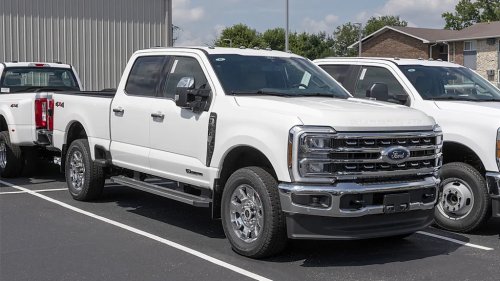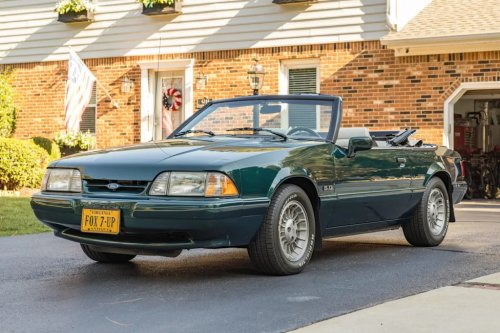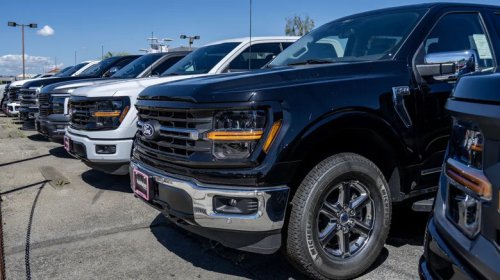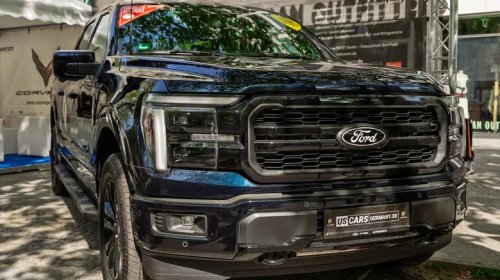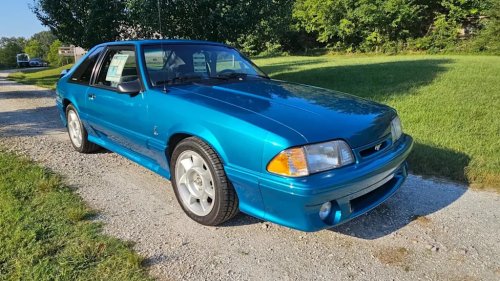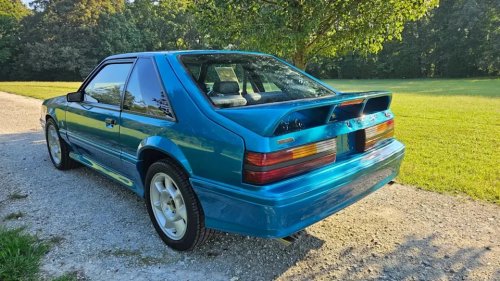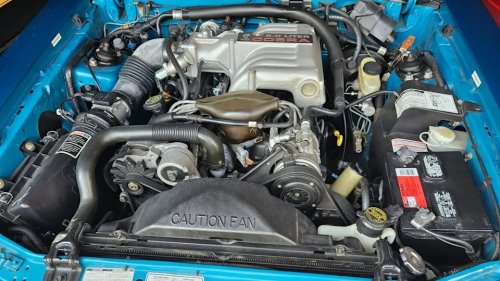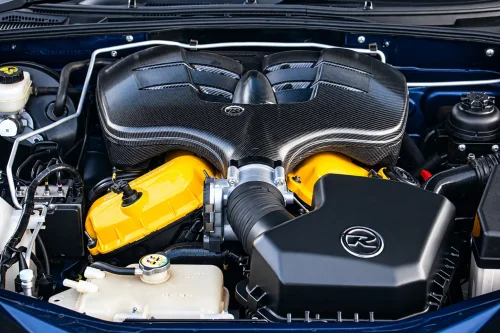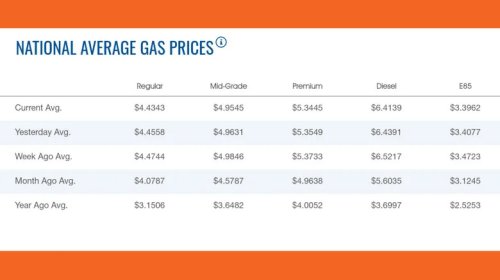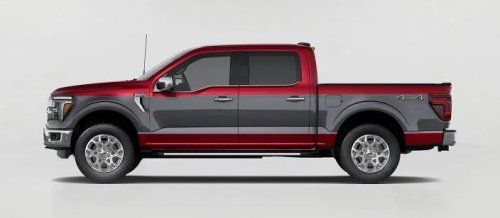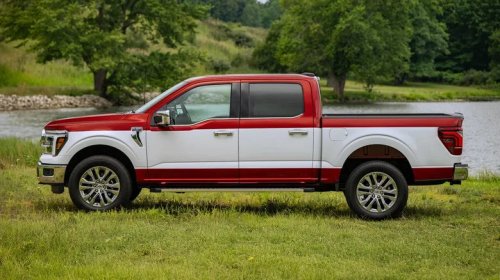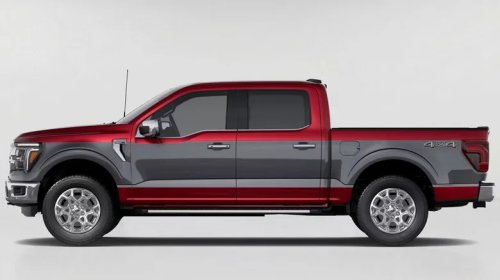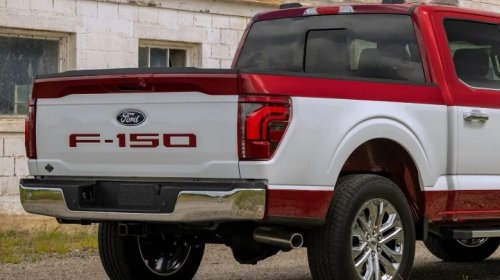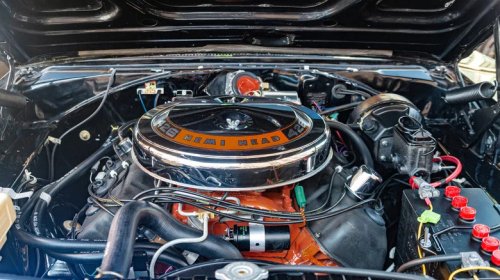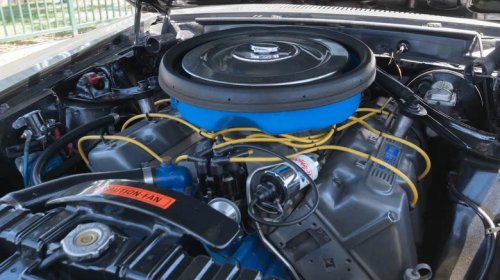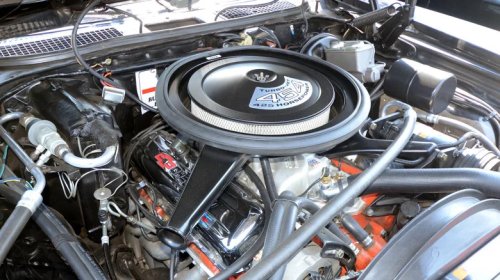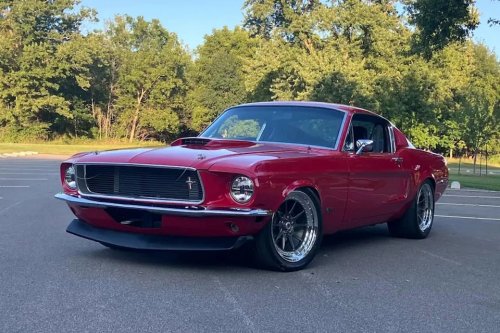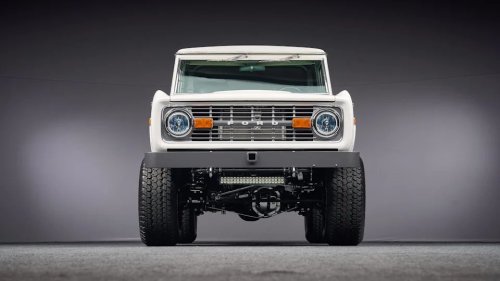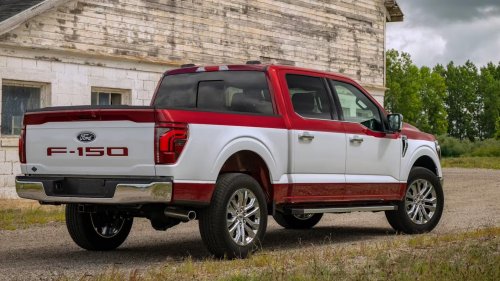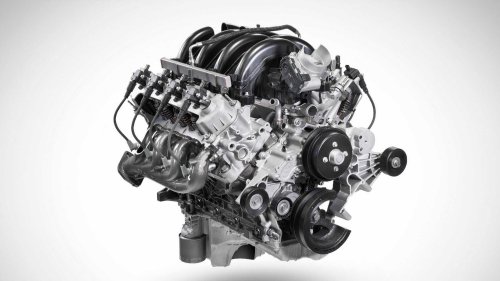
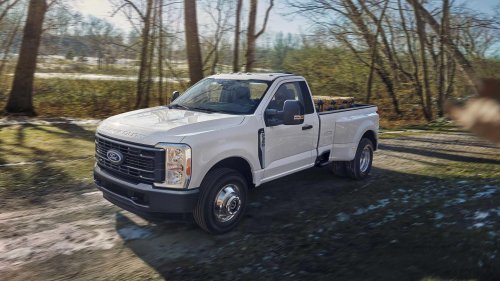
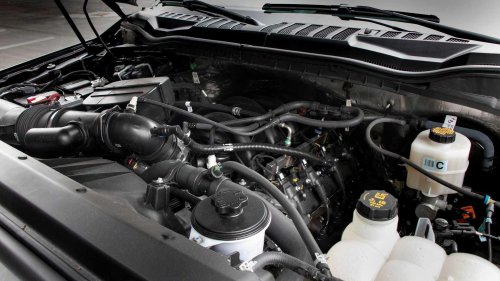
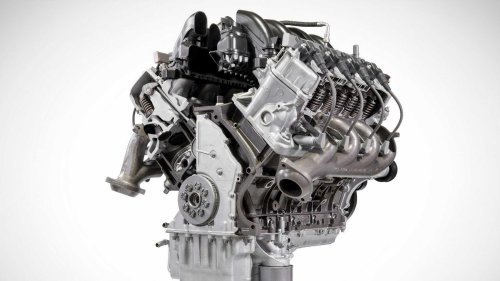
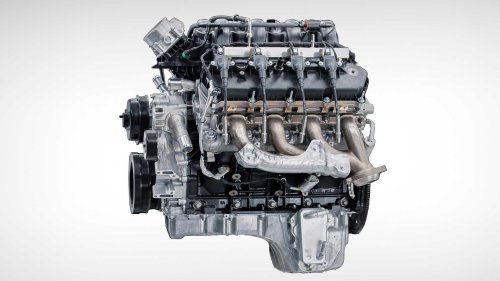
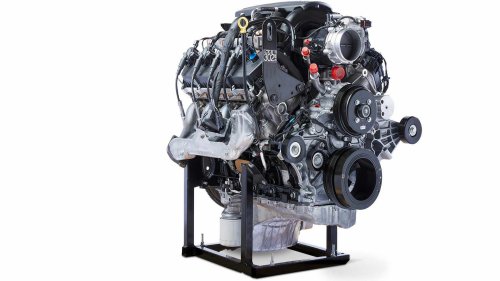
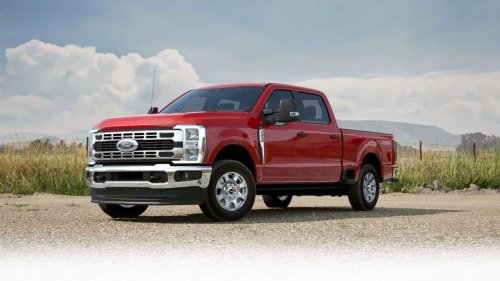
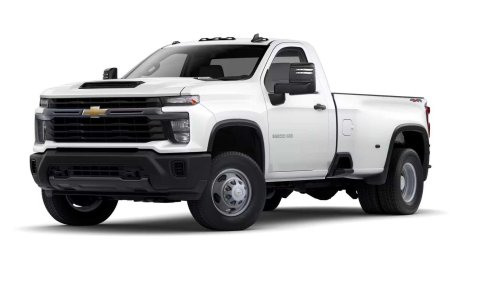
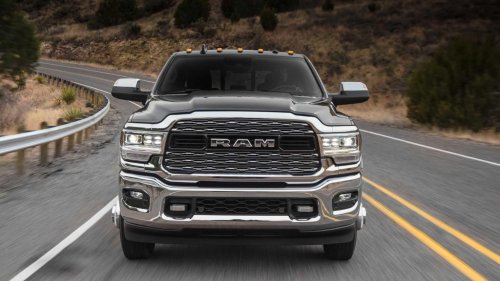
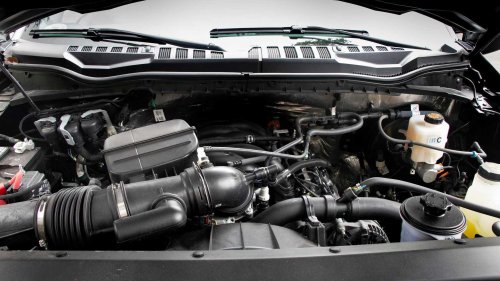



















When it comes to engines made these days, things differ greatly from engines built, say, 30 years ago. Mills now tend to boast a slew of cutting-edge tech, like Nissan's new variable compression ratio system and Hyundai's Continuous Variable Valve Duration (CVVD), the latter of which can alter how long the engine's intake valve can stay open, increasing engine efficiency. There's even Artificial Intelligence-powered tech being implemented in engine design these days.While the automotive world is largely moving forward, one Ford engine decided the past is just a bit better. It's Ford's Godzilla V8, a gigantic motor designed for use in the brand's heavy-duty pickup trucks and vans. Unlike most engines these days, the Godzilla favors a more classic approach to producing power, implementing one of the oldest adages in its R&D, that being "There's No Replacement for Displacement." A Pair Of Old-Timers FordIn the late 2010s, Ford developed a keen interest in phasing out some of its aging mills. More specifically, both the 6.2-liter Boss V8 and the 6.8-liter Modular V10 were in need of replacement, especially when it came to the latter. The former was a lesser-known mill, having entered the fold in 2010 as the F-Series Super Duty's base-spec powerplant. However, instead of trying to produce an all-new mill (to replace the two old ones) that's destined for hard work by using myriad tech, Ford decided to keep things old-school.During the Godzilla's preliminary design phase, gasoline prices were low in the States. In 2019, the average cost-per-gallon of fuel was $2.60, and 2020's prices were even lower, with averages ranging from $2.17 per gallon and $2.24 per gallon. This meant the market was ripe for an all-new, gigantic, V8 because, with such low fuel prices, its thirst wouldn't bankrupt its owners. Not to mention, a hard-working V8 needs to be big, even in this day-in-age.Ford The first Godzilla engine debuted in 2020 as an optional mill in the F-Series Super Duty lineup. Below it sat the 6.2-liter Boss V8, which the Godzilla family would, of course, eventually replace. Come 2021, the 7.3-liter Godzilla added the Ford E-Series to its repertoire. Shortly after, a 6.8-liter iteration of the Godzilla entered the fold, meant to act as the Boss V8's direct replacement. In order to broaden the Godzilla's horizons, Ford has offered several variations of the mill over the last couple of years. The Godzilla's Old Soul CarBuzz/ValnetOne of the hallmarks of the Godzilla engine is its lack of technological marvels. For example, it takes advantage of a pushrod valvetrain, wherein the camshaft is mounted below the valvetrain, rather than on top of it like virtually all modern engines. The pushrod-equipped, overhead-valve V8 engine dates back well over 100 years to the 1917 Chevrolet Series D mill. Because of its extremely extensive and long-standing use, the Godzilla's pushrod-actuated valvetrain is likely to be completely bulletproof, and is actually already proving itself to be.One large advantage of a pushrod engine folks typically forget about is engine size. Overhead-cam engines are usually taller than pushrod mills, limiting their use in smaller vehicles. However, because the Godzilla sports the pushrod design, both the 6.8 and 7.3-liter Godzilla engines can be shoehorned into smaller models. For example, it can fit snugly in a Fox Body Ford Mustang, which boasted a 5.0-liter V8 as its largest, stock engine option.Ford However, seeing as it is, currently, 2026, the Godzilla engines do come with at least some tech to fit the times. Variable valve timing is present, along with cracked powdered metal connecting rods, which help to increase overall strength, along with providing a superior cap-to-rod alignment due to the actual act of cracking the connecting rods apart during the casting process. Its crankshaft, on the other hand, is forged steel. The mill borrows a couple of things from the Boss V8, such as its knock sensors, and it also comes standard with a variable-flow oil pump, and hypereutectic aluminum-alloy pistons.There are several different iterations of the 7.3-liter Godzilla, all of which serve a specific purpose, and all variations simply have to do with power output. The least-powerful, 300-horsepower variation called the "7.3 Economy" saw use in select E-350 and E-450 vans, but was axed following the 2024 model year likely due to low consumer interest.The van series also offers a "7.3 Premium" version, which produces 325 ponies. A 335 and 350-horsepower variation exists for use in the F-Series Super Duties, and a 430-hp flavor is also available. 6.8L & Megazilla Variants FordThe smaller, 6.8-liter variation of the Godzilla engine first hit the market in 2022, replacing the Boss V8 entirely. At that point, it was offered alongside its larger, 7.3-liter sibling, and served as the base-spec mill for the F-Series Super Duty lineup. Unlike its big brother, it does not sport several different power output configurations. Rather, it produces 405 hp solely. In creating the engine, Ford took the 7.3-liter Godzilla, shortened its piston stroke to 3.68 inches, and upped its compression ratio to 10.8:1.Ford Unlike the 6.8 and standard 7.3-liter versions, the Megazilla is not destined for a life of work. Instead, it's meant for white-knuckle performance. It's only offered as a crate engine, and comes standard with up to 612 hp right out of the gate.It's designed to run exclusively on premium fuel, and carries upgrades over the standard engines like CNC-designed aluminum cylinder heads, a huge, 92-millimeter throttle body, forged pistons courtesy of Mahle, and a hotter camshaft. The Megazilla is a popular engine swap for models like the Ford Bronco, Mustang, and even older F-100 pickups. How The 7.3-Liter Godzilla Stacks Up FordThe world of pickup trucks is a volatile one. The three largest full-size pickup truck manufacturers – Ford, GM, and Ram – are constantly trying to out-do one another when it comes to towing capacities, power output, and overall dependability. After all, pickup trucks are typically tasked with hard work, and those who use them for that purpose need a truck they can depend on the most. Bearing that in mind, if a truck doesn't live up to snuff, it will likely be replaced by one from a different brand. GM 6.6L L8T V8 ChevroletAt base-level for both the Chevrolet 2500HD/3500HD and the GMC Sierra 2500HD/3500HD sits a 6.6-liter V8. It belongs to GM's long-standing LS V8 engine family, and carries the three-character code name of "L8T." The mill, like the Godzilla, features a cast iron block and aluminum cylinder heads, along with both forged connecting rods and a forged crankshaft. However, despite these upgrades and its large size, it still can't hold up to the 7.3-liter Godzilla: Ram 6.4L Hemi V8 RamThe other heavy-duty V8 engine that the 7.3-liter Godzilla mill needs to contend with is Ram's 6.4-liter Hemi. Ram has stuck with Hemi engines for decades, and the most recent heavy-duty example, found in the Ram Heavy-Duty truck lineup, carries the name "BGE 6.4L", with BGE standing for "Big Gas Engine." It differs from the more pedestrian version of the mill by prioritizing low-end torque and utilizing an engine block shared with the 6.2-liter Hellcat Hemi V8. It also sports dished pistons. However, like GM's L8T, the BGE 6.4L also can't beat the Godzilla in terms of horsepower, torque, or towing capacity: The Crown Jewel Of Heavy-Duty Gas Engines CarBuzz/ValnetAfter reviewing the evidence, it seems the old-soul Godzilla engine trumps both of its main competitors' gas engine offerings with flying colors. Despite its two competitors also sporting pushrod designs, the Godzilla motor's huge displacement helps it eke out a lead regarding power output and towing capability. In the age of turbocharging, dual-overhead cams and variable compression ratios, it seems there really is no replacement for displacement for big, heavy-duty gas engines.At least, not yet.