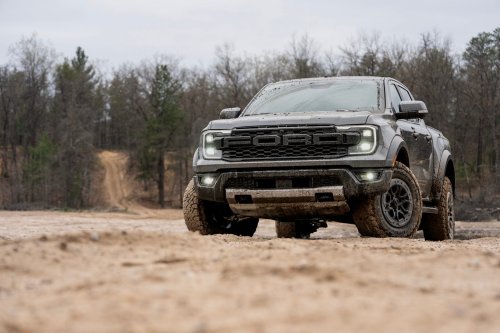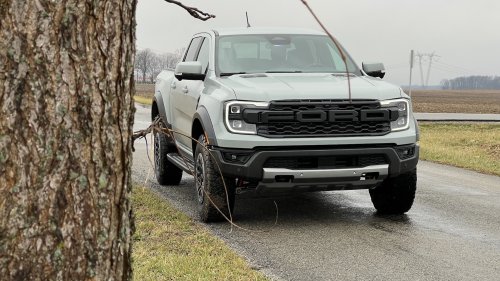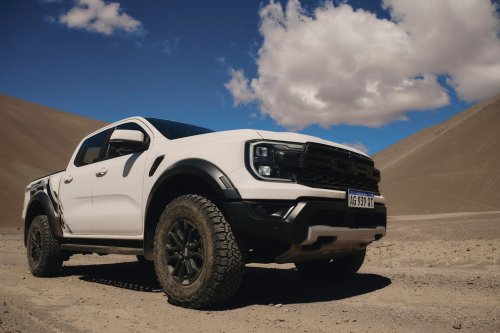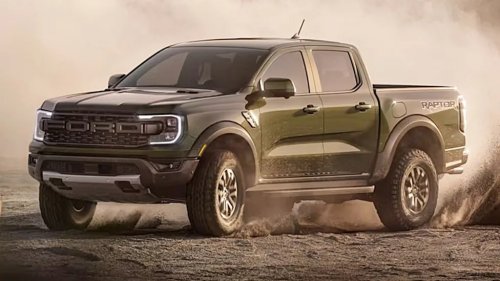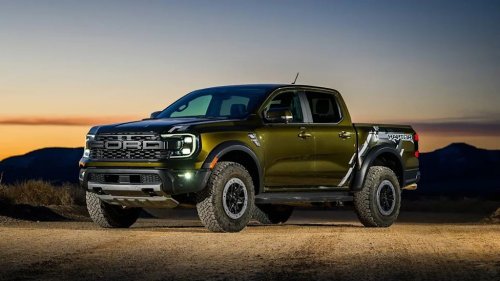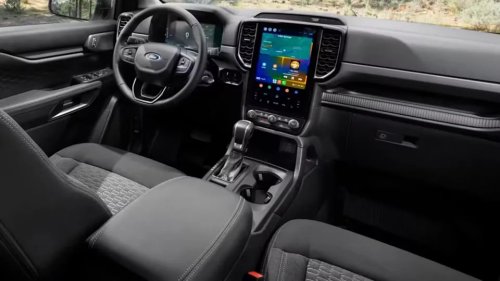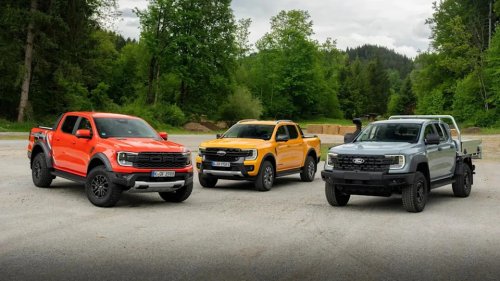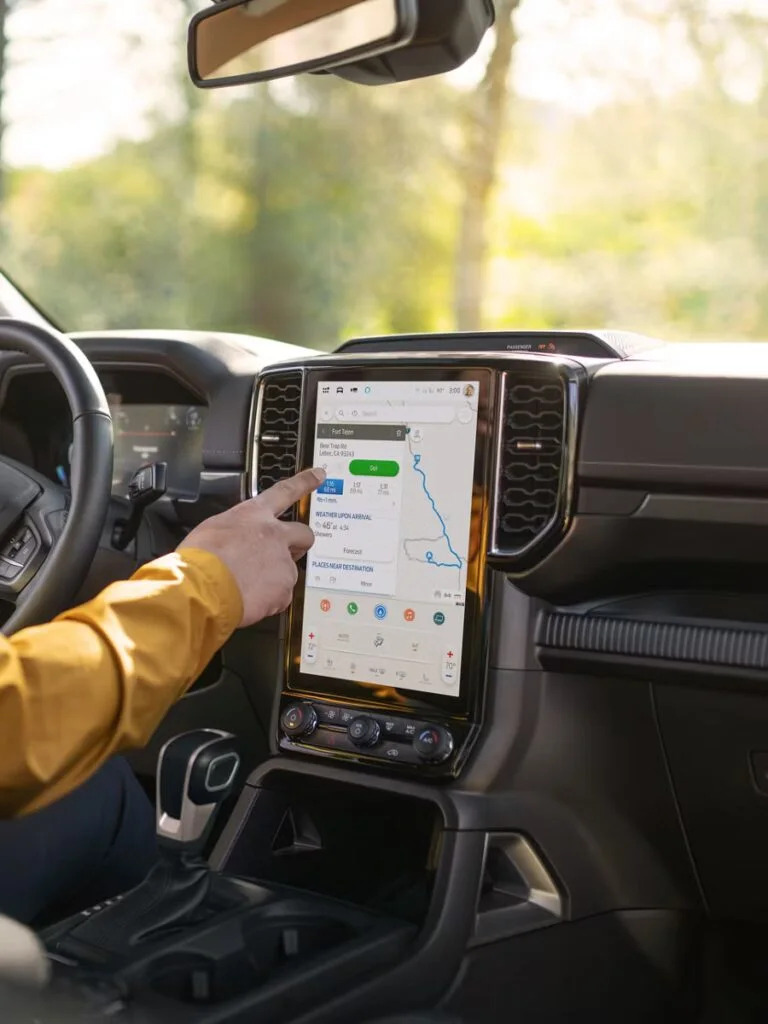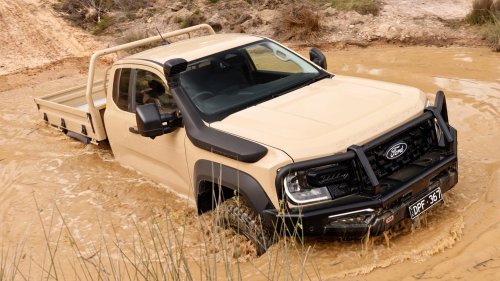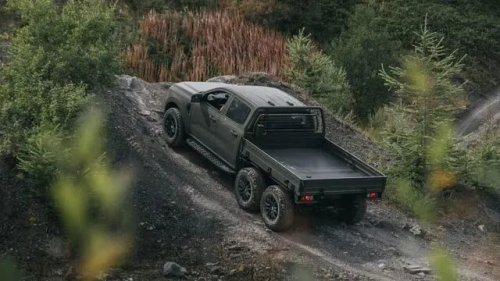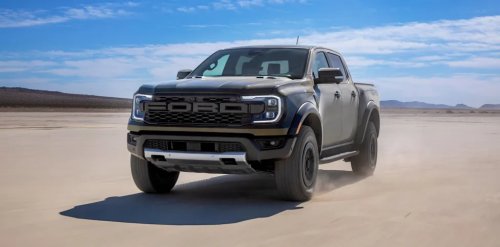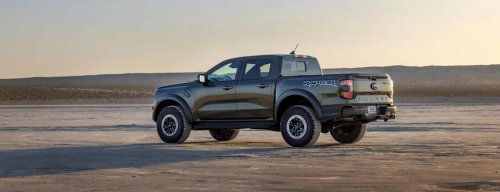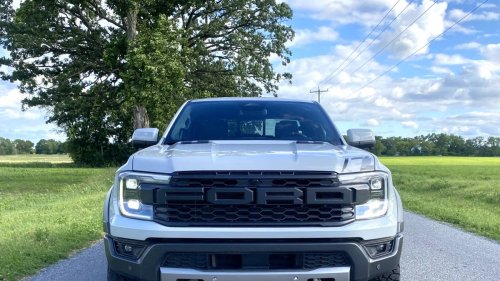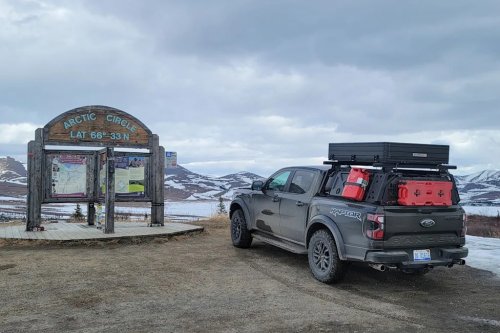
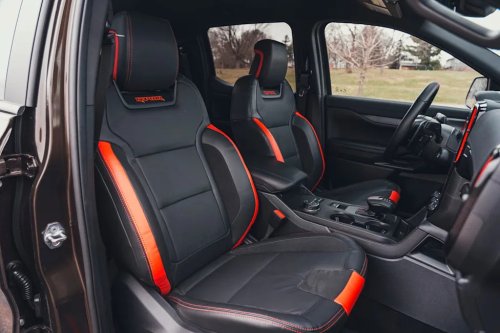
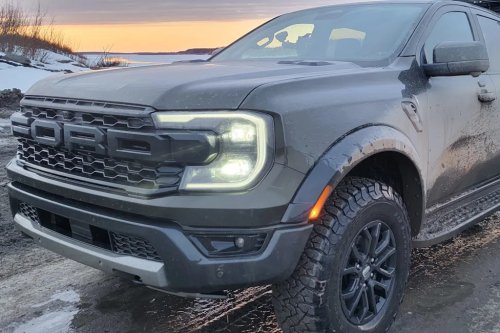
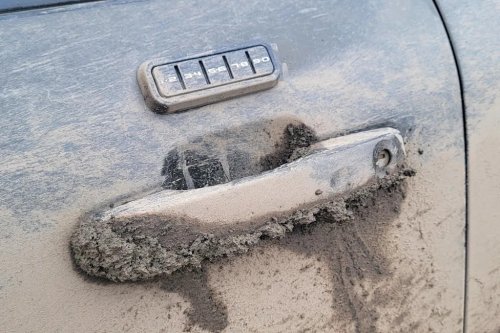
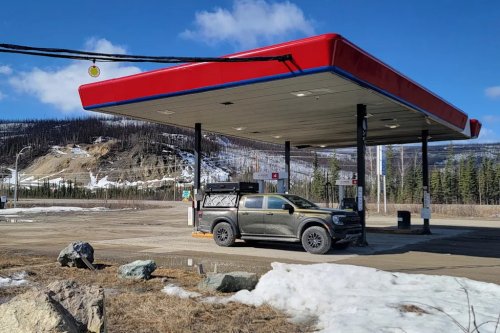
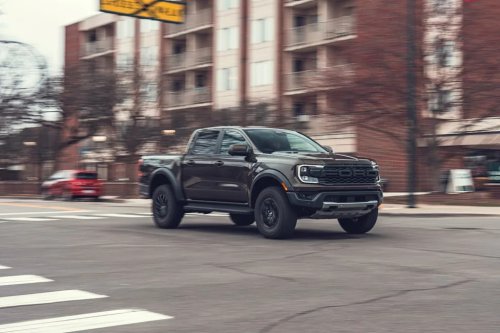
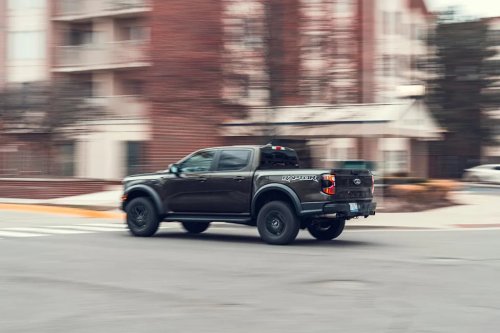
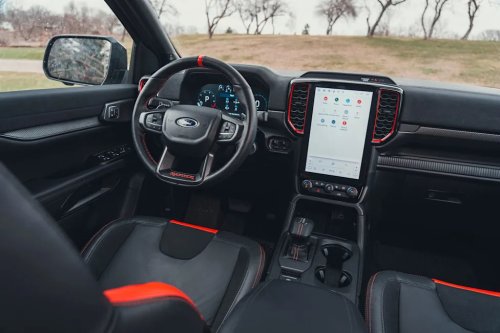
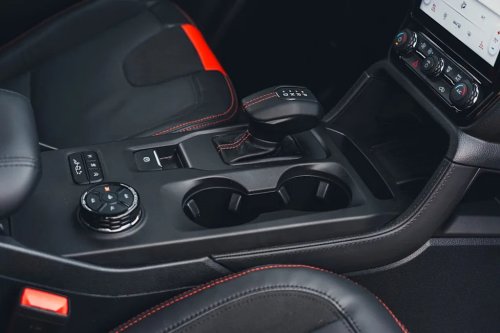

















2026 Ford Ranger Raptor 10,000-Mile UpdateJonathan Ramsey - Car and Driver (Jonathan Ramsey - Car and Driver)10,000-Mile UpdateOur baby Raptor spent a few thousand miles around the office and earned mostly praise. Online production assistant Andrew Berry tipped his hat to "a really comfortable ride." "It's as if speed bumps no longer exist," added senior news editor Caleb Miller, and deputy video editor Carlos Lago applauded the entire package with "What a great truck!"Quibbles mainly focused on technical choices. Executive editor K.C. Colwell questioned the need for digital and physical HVAC controls, and he judged the default steering effort (of four available choices) "insanely heavy for a truck." The shifter struck nerves on both ends of the spectrum: Lago criticized it as dumb, whereas senior editor Greg Fink thought the Ranger Raptor's gear selector "should be the norm for console-mounted options."That easy life was the bait. Then came the switch: With a little more than 5000 miles on the odometer, contributor Jonathon Ramsey prepped the pickup for a trek from the Car and Driver offices in Ann Arbor, Michigan, to Tuktoyaktuk, some 4000 miles away on Canada's northwest Arctic coast.Jonathan Ramsey - Car and Driver (Jonathan Ramsey - Car and Driver)The brief called for five weeks of road living over the roughly 8000 round-trip miles, so the Ranger Raptor got a bed rack and an underground bunker's worth of gear for living anywhere between the Midwest and the Northwest Territories. That included a rooftop tent, gear pods and water bolted to the rack, a bedful of tools, outdoor equipment, bedding, and electronics, plus an in-cabin refrigerator and a portable power supply.AdvertisementAdvertisementThree fuel cans strapped to the periphery held 13.0 gallons of gas, a necessary precaution due to the Ranger Raptor's thirst, its small gas tank, and the distance between service stations on Canada's loneliest highways. The EPA rates the Ranger Raptor at 16 mpg in the city, 18 on the highway, and 17 combined. We haven't hit those marks–the outfitted bed surely playing a role—averaging just 14 mpg in these early days. Underneath there's a much-welcomed full-size spare, and a 20.3-gallon fuel tank limits maximum range to 280 miles based on observed economy. Fill-ups at anywhere from 200 to 250 miles were the norm.Jonathan Ramsey - Car and Driver (Jonathan Ramsey - Car and Driver)The provisions larded weight onto a rig built for high jumps and controlled landings, like repurposing a Westphalian dressage horse to serve as a miner's mule. The load reversed the Ranger Raptor's natural rake, leading us to wonder how much its lauded reflexes might suffer.At the halfway mark on the journey, we can't speak for jumping, but the Ranger Raptor has performed flawlessly as a ground-pounding freighter. Delays of every kind and some sinus misery attributed to Canada's snow mold left us eight days to make the journey. Despite the sagging bed, the truck's suspension retained enough suppleness to swallow the worst of any highway we traveled.The seats and the rest of the cabin earned the transcontinental seal of approval; we emerged from the truck tired but fine after driving stints lasting anywhere from nine to 15 hours. The enforced breaks of three or four fill-ups per day undoubtedly helped, but during daily marathons, tea breaks won't blunt pain points, especially in the extremities.Marc Urbano - Car and Driver (Marc Urbano - Car and Driver)Canada's Dempster Highway would be the Ranger Raptor's boss fight. A ragged, 460-mile dirt and gravel conduit through the tundra, the Dempster blooms in springtime with jagged lumpiness caused by shifting earth below, grenade-blast potholes, shards of volcanic rock, and snowmelt runoff that literally saws through the road. The speed limit is generally 90 km/h (56 mph), and there are long stretches where maintaining that clip feels like pre-running the Baja 500. The general cadence is: accelerate to 90 km/h, slam on the brakes to tiptoe across some nastiness, then throttle back up to 90.AdvertisementAdvertisementAgain, the Ranger Raptor and the put-upon BFGoodrich All-Terrain T/A KO3 tires were unfazed by the crossing. We took a few accidental big hits, the suspension proving its deep reserves even with compromised rebound.The water line on the fender after the Peel River crossing.Jonathan Ramsey - Car and Driver (Jonathan Ramsey - Car and Driver)We tested the pickup's fording capability too when the Peel River ice road began turning to water sooner than anyone expected. Given the choice of being stuck in the Arctic for six weeks until the ferry arrived or crossing a waterway that rose to the Ranger Raptor's headlights, we chose the latter and slowly scrabbled through.This adventure has uncovered additional gripes that are technical in nature. The data screen in the gauge cluster is navigated with unintuitive menus. We couldn't find the tire-pressure display screen and landed on it only later while trying to find the menu to restore the km/h speedometer readout that an OTA software update dismissed.The blind-spot and cross-traffic sensor has gone out intermittently. This didn't occur on the Dempster, where unrelenting filth would have made the response understandable; it only failed on paved highways.AdvertisementAdvertisementWe turned off the speed-limit sign reader. It's a fine idea that works better in the European Union, with its standardized infrastructure and more cohesive driving patterns. In the U.S., on the highway with the cruise set at 80 mph and signage indicating a new limit of 65 mph, the Ranger Raptor will apply the brakes to slow down. The sign-recognition system can be adjusted, but the base setting isn't how American drivers react, and leaving it that way spooks the herd.Jonathan Ramsey - Car and Driver (Jonathan Ramsey - Car and Driver)We also turned off lane-keeping assist. No matter which portion of the lane the system decided on, it would eventually display a feline curiosity about some other portion of the lane and apply gentle torque to the wheel until we allowed it to wander. Once satisfied, the system is so good at maintaining its line that it doesn't need input unless road markings change. However, the system demands regular driver attention for legal reasons, so we had to jiggle the wheel for no good reason just to keep the chime from going off.Our only maintenance note so far has been adding coolant at 9111 miles after discovering the reservoir level just below the minimum line. We purchased a gallon of antifreeze for $27 in U.S currency at Whitehorse Motors in the Yukon and added a quart, taking the coolant level to just above the max line.Jonathan Ramsey - Car and Driver (Jonathan Ramsey - Car and Driver)Halfway through the journey, the Ranger Raptor has proved to be a fine ride, bringing an easy aplomb to a life it wasn't built for—that of the everyday, do-what-you-gotta-do, go-anywhere pickup. Now it just has to make it back home.AdvertisementAdvertisementMonths in Fleet: 3 months Current Mileage: 10,108 milesAverage Fuel Economy: 14 mpgFuel-Tank Size: 20.3 gallons Observed Fuel Range: 280 milesService: $7 Normal Wear: $0 Repair: $0Damage and Destruction: $0Marc Urbano - Car and Driver (Marc Urbano - Car and Driver)IntroductionFord's Raptor recipe has hardly changed in the years since the original F-150 version literally launched its way onto the scene for 2010—initial press photos of an SVT Raptor taking flight looked straight out of a Dukes of Hazzard episode. The Blue Oval's street-legal desert racer would go on to become a huge hit, spawning Raptors across multiple F-150 generations and eventually birthing similarly buff variants of both the Bronco and the Ranger.The F-150 Raptor and the Ranger Raptor have the same core ingredients—widened waistlines, long-travel suspensions, and high-horsepower twin-turbo V-6s—but the Ranger Raptor is less inclined to break the bank. Its terrific value among its ilk helped it win back-to-back 10Best awards, and our office is stoked to spend 40,000 miles with the mid-size pickup truck we've lovingly dubbed the Michigan Miata.Marc Urbano - Car and Driver (Marc Urbano - Car and Driver)The first-gen Ranger Raptor was forbidden fruit reserved for overseas markets, but Ford smartly decided to give Americans a bite of the apple for its second generation, which debuted for the 2024 model year. Think of this truck as a Bronco Raptor minus the 37-inch tires, convertible top, and easily removable doors. If you can live without those admittedly desirable features, you'll save about $23,000. The 2026 Ranger Raptor's $58,965 base price also undercuts direct rivals like the Toyota Tacoma TRD Pro, which starts over $66,000. Sure, you can get a new Chevy Colorado ZR2 for under $53K, but then you're stuck with a 310-hp turbo four (even on the vastly more expensive ZR2 Bison). And let's not forget that the Ranger Raptor already beat both the TRD Pro and ZR2 Bison in our off-road battle.AdvertisementAdvertisementWe ordered our long-term truck with the best color available for this model year: Shelter Green Metallic, a $395 option that looks classy without being too flashy. We avoided the racy rear-body decals ($750), since nobody at the office mainlines Monster Energy drinks or has a tribal tattoo. We also stuck with the standard 17-inch wheels versus the $1495 forged beadlock-capable rollers, as we plan to sample a set of aftermarket wheels during the truck's tenure. After choosing the spray-in bed liner ($525), dealer-installed keyless entry pad ($230), and three-year SiriusXM satellite radio subscription ($300), our baby Raptor totaled $60,415. That's still more than $20,000 less than the F-150 Raptor's admission fee.Marc Urbano - Car and Driver (Marc Urbano - Car and Driver)Along with being way more affordable than its bigger brother, the Ranger Raptor's smaller footprint makes it much easier to maneuver around crowded parking lots and tight trails. Plus, it's more likely to fit in garages designed for lower-profile sedans. While the Raptor shares its 128.7-inch wheelbase and five-foot cargo bed with the regular Ford Ranger, its front and rear tracks are 3.5 inches wider to accommodate the standard 33-inch BFGoodrich All-Terrain T/A KO3 tires. But since the Ranger's bulging bodywork isn't over 80 inches wide, it's not legally required to have three central amber running lights like its larger, lane-swallowing siblings.Don't think of the Ranger as a half-baked Raptor, because it isn't. Its steel bumpers bookend a fully boxed ladder frame, and copious underbody armor protects vital hardware like the electronically locking front and rear differentials. Its heavily fortified suspension is built to take a beating too. The Ranger Raptor's front wheels are buoyed by 2.5-inch Fox Live Valve adaptive dampers that pair with longer forged aluminum control arms. The rear Fox shocks feature piggyback-style reservoirs that better dissipate heat when the solid rear axle really starts gettin' jiggy with it. Ford also replaced the regular Ranger's rear leaf springs and Panhard rod with coils and a more sophisticated Watt's linkage with trailing arms, which improves the truck's roll stiffness.Marc Urbano - Car and Driver (Marc Urbano - Car and Driver)Despite that added stiffness, it's clear from our initial track test that the Raptor's peak performance takes place off-road. The Ranger's blocky BFG tires peaked at 0.68 g of lateral grip on our skidpad and allowed a lengthy 223-foot stop from 70 mph. However, those numbers betray the truck's delightful daily-driving behavior. Its impact-absorbing ride lets us ignore Michigan's manifold potholes. Ford also lets you personalize the Raptor's personality, allowing independent changes to damping force, steering effort, powertrain attitude, and exhaust volume via buttons on the contoured steering wheel. The "R" mode lets you quickly access a saved profile, and the prominent paddle shifters help you instantly manage the 10-speed automatic transmission—a feature the Raptor's competitors are (somehow) lacking.AdvertisementAdvertisementThis mid-size Raptor is no slouch, matching the 450-hp F-150 Raptor in the race to 60 mph. During our initial test, the all-wheel-drive Ranger hit the mile-per-minute mark in a speedy 5.2 seconds, though its 405-hp twin-turbo 3.0-liter V-6 was less responsive with a 5-to-60-mph rolling start (5.8 seconds). The quarter-mile passed in a respectable 13.9 seconds at 98 mph. No matter how light your touch may be, the baby Raptor is thirsty. The EPA rates combined fuel economy at a bleak 17 mpg, one measly mpg better than the heavier V-6-powered F-150 Raptor. At least the Ranger Raptor met the government's expectations on our 75-mph real-world fuel-economy test, with a previously tested model netting a (slightly) less depressing 18 mpg highway.Marc Urbano - Car and Driver (Marc Urbano - Car and Driver)Our long-term 2026 Ford Ranger Raptor arrived at Car and Driver Ann Arbor headquarters just before spring had sprung. We're barely two months in, and already it has racked up over 4000 miles. Besides some mixed opinions about its gruff exhaust note, our staff seems smitten with Ford's junior Raptor pickup. The Ranger's right-size proportions make it more desirable for daily duties than our current long-term Ram 1500, and its cargo bed comes in handy for quick and dirty chores.There's a lot more in store for our new Raptor beyond sitting in school drop-off lines and moving mulch. Ford's "Assault School" is on our radar, and we want to buy the Ford Performance tuner that'll put the baby Raptor's power output essentially on par with its papa. Plus, with the Silver Lake Sand Dunes only a few hours away, we're leaping at the opportunity to get this thing off the ground.Months in Fleet: 2 months Current Mileage: 4398 milesAverage Fuel Economy: 14 mpgFuel-Tank Size: 20.3 gallons Observed Fuel Range: 280 milesService: $0 Normal Wear: $0 Repair: $0Damage and Destruction: $0You Might Also LikeGift Guide: Best Ride-On Electric Cars for KidsFuture Cars Worth Waiting For: 2025–2029