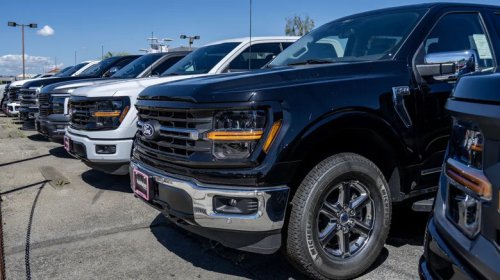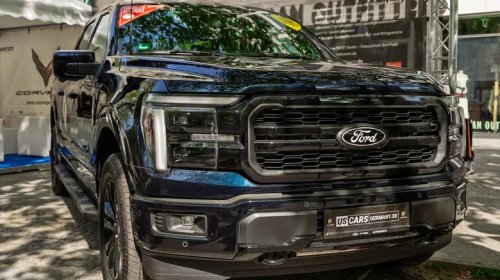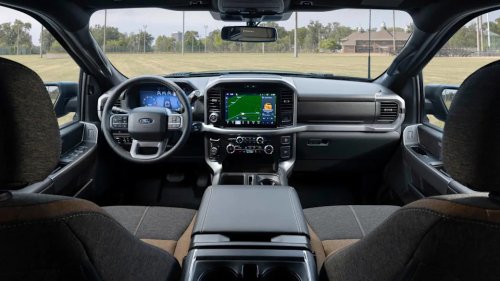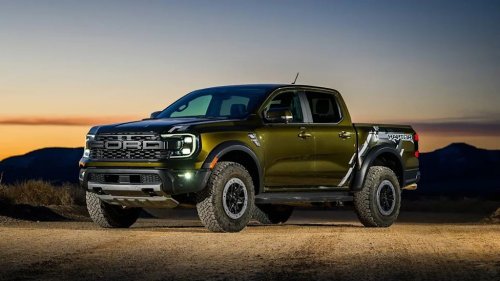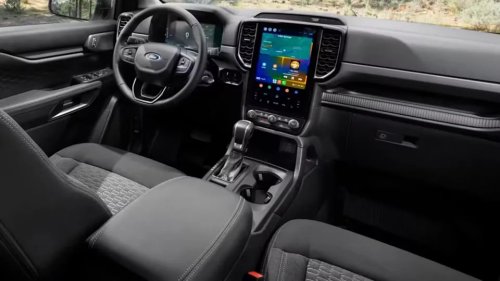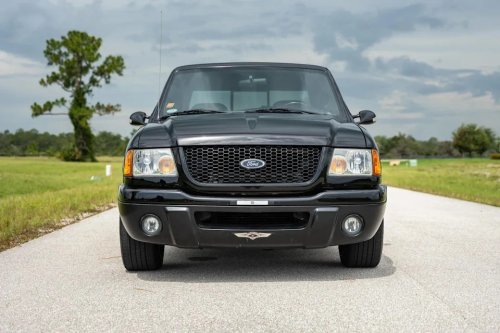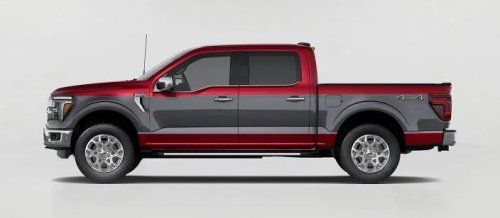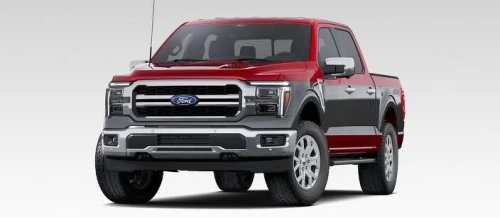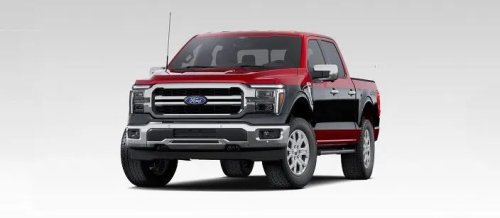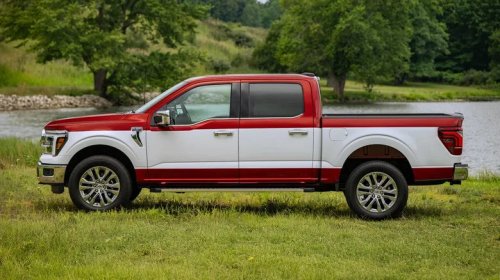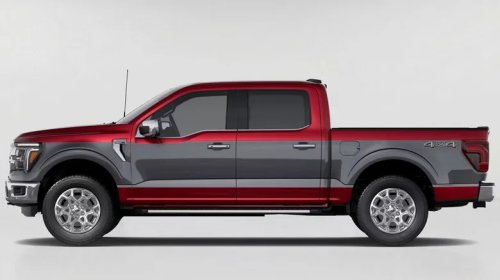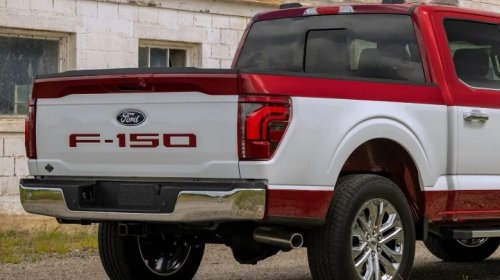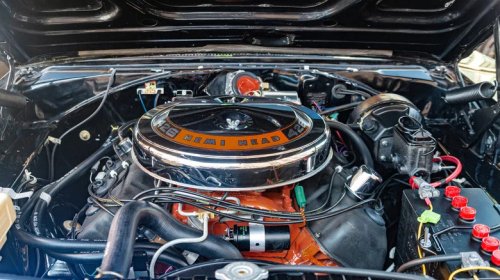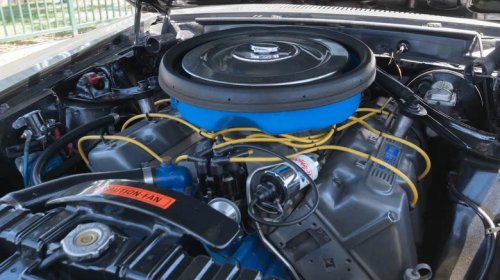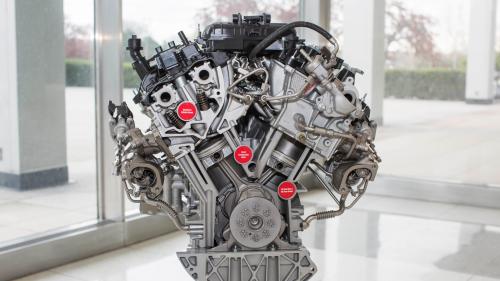
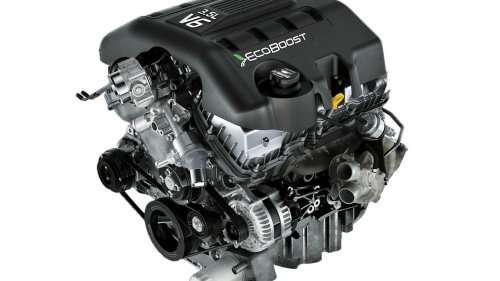
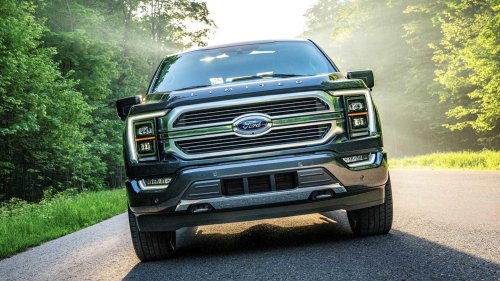



















It's true that longevity can be compromised by turbocharging an engine, but, as the EcoBoost family has proven time and again, that compromise is usually fairly marginal. By the time a turbocharger is cutting into a well-built powerplant's potential lifespan, you've likely been around the planet a dozen times, rebuilt the transmission, and replaced a few shocks and struts.Ford's 3.5-liter EcoBoost, the V6 that's powered F-150 pickups, Ford Explorers, and Ford Expeditions since the 2010s, is living proof that a turbo-six can match naturally-aspirated V8s like the 5.0 Coyote. The 3.5 EcoBoost typically hits the same mileage range as its eight-cylinder cousin before it needs replacing. Here's what makes this engine such a trooper. The 3.5 Can Do A Quarter-Million Miles, Easy Ford Checking in with some longtime EcoBoost owners via the r/F150 subreddit, and the F-150 EcoBoost forum, we find the following mileage claims. A 2012 F-150 owner claims 187,000 miles. A 2015 Platinum owner claims 185,000 miles and still "running like a champ." A 2011 XLT owner bought their truck at 243,000, with a mileage of 249,000 at last update, and the extra 6,000 miles being comprised of heavy-duty work, involving the hauling of "2,200 pounds of gravel, and she doesn't miss a beat!" A 2012 owner claims 205,000 miles, stating "I'm not even gonna think about replacing it until the first time it causes me a problem." A 2012 owner claims 225,000 miles "and betting I easily get another 50,000 out of the 3.5 EcoBoost," even though "the transmission was a different story, and was rebuilt at 215,000." These stories are typical of 3.5 EcoBoost owners. One driver notes that "I didn't think this engine would make it this far," but that they, like many Ford owners, have been pleasantly surprised by the turbo-six's dependability.250,000 miles is kind of a baseline for longevity, but what sets the 3.5-liter EcoBoost apart is the fact that none of these drivers are reporting maintenance horror stories. Any engine can last a quarter million miles or longer if you baby it, if you spend thousands of dollars in repairs over the years. The 3.5 goes the distance with little more than basic upkeep. 400,000 Miles And More Isn't Out Of The Question Ford A user on the r/F150 subreddit asks for advice on buying a 430,000-mile 2015 truck with a 3.5 EcoBoost. The consensus in the comments is that "if you buy a truck with 430,000 miles on it, you deserve whatever headaches you get." We wouldn't advise buying any truck that already has that many miles on it unless you're salvaging parts. But, the point is that the EcoBoost can pack on Toyota miles with proper care.The highest verified mileage we can find is a 457,211-mile pickup showcased by @appleautos, said to be "better than most vehicles that are rolling off the lot nowadays. A bunch of F-150 owners are sounding off about their 250,000+ EcoBoosts in the comments, too.If you look at high-mileage Coyote engines, you'll usually find numbers in roughly the same range. The Ford Truck Enthusiasts website reported a while back on a 326,000-mile F-150 with a 5.0 V8 under the hood, and this was considered a potential record-holder for the engine in 2020.A year after this story was shared, the owner reported 343,000 miles on their F-150 in the site's forums, asking if this was still the highest mileage Coyote on record, with other users reporting odometers in the quarter-million range. The owner of the 343,000-mile Coyote hasn't updated the forum on the journey since 2021.Until we hear that he's hit 457,212 miles on the odometer, we're gonna go ahead and say that the 3.5 EcoBoost holds the lead between these two engines at a mileage of 457,211. Ford Clearly Has A Lot Of Faith In This Engine Ford The EcoBoost 3.5 has been in production for two generations, and it's still finding its way into Ford F-150s, over 16 years since it first hit the market. To go over the timeline of major applications across both generations.2007: The 3.5-liter EcoBoost debuts in the Lincoln MKR concept car, under the name "TwinForce." 2009: The first production vehicle with a 3.5 EcoBoost, the 2010 Ford Taurus SHO, hits the market with 365 horsepower. 2010: The 2011 Ford F-150 becomes the first F-Series to pack a 3.5 EcoBoost, at 365 hp. 2009-2019: The first-gen EcoBoost finds its way into various Ford and Lincoln vehicles, including the 2015 Ford Expedition and Lincoln Navigator, and the 2013 Lincoln MKT. 2016: The second-gen 3.5 EcoBoost launches in the 2017 Ford GT, adding port fuel injection and achieving an incredible 647 hp. The new engine is 4 lbs. lighter than the first-gen 3.5 2016: The second-gen 3.5 EcoBoost becomes the go-to V6 for the Ford F-150, powering the pickup to 375 hp from the 2017 to 2020 model years, and 430 hp from 2021 on (450 hp in the 2021+ F-150 Raptor). 2017: The second-gen 3.5 EcoBoost becomes the go-to V6 for the Expedition and the Navigator. It's been longer than 16 years since the Ford Taurus SHO first launched, and almost 20 years since the engine debuted in the MKR concept car. In times of rapid technological development and increasingly restrictive fuel emissions guidelines, that shows a tremendous amount of faith in this engine on Ford's part.The 3.5's longevity can be attributed to a number of factors. It's built with high-durability parts on a high-strength aluminum block, and it's received a number of updates over the years to correct known reliability issues. For instance, a problematic variable camshaft timing phaser was totally redesigned after the 2020 3.5 proved unreliable, and the second-gen engine uses port fuel injection in order to address the carbon build-up issue faced by earlier powerplants. If You Want To Join The High-Mileage Club, Buy The Right Truck Ford The 3.5 EcoBoost has powered millions of Fords over the years. If you've always wanted to see your odometer hit half a million miles, or more, the first step is to buy the right vehicle for the job. Any car, truck, or SUV can make it to 500,000+ miles, but when that journey involves three engine rebuilds and a transmission swap, who cares? Timing Chain Issues Keep The 2020 EcoBoost Models Off The Recommended List Ford 2020 is the model year best avoided for any nameplate, with some 2020 EcoBoosts failing to make 100,000 miles. Four reports on CarComplaints claim engine knock at just 37,850 miles, with two of these drivers requiring a whole new motor (thankfully covered under warranty at the time, but that was six years ago). The Newer The EcoBoost, The More Reliable It's Likely To Be Ford Second-gen engines (2017 model year and later) are generally considered more dependable than first-gen powerplants. In particular, early 3.5s had a common issue with the timing chain. Reports on CarComplaints claim "grinding noise from timing chain on start up," with some drivers replacing the engine before hitting 100,000 miles, averaging $7,500 a swap. Ford redesigned the entire timing system for the second generation, making it far easier to hit 250,000 miles or more with basic maintenance alone.The 3.5 EcoBoost is one of the most common engines in America, and the Ford F-150 is the most common pickup in the world. This means that it's a buyer's market out there, so if the truck doesn't pass the test-drive with flying colors, or if the seller won't budge on the price, you're not stuck in a "take what you can get" situation. Just take your business elsewhere.Our recommendation would be to shop for something from the 2021 model year. These EcoBoosts enjoy a decade of iterative updates across two generations, and, at five years old, they hit the sweet spot of affordability and low mileage.Our price tracking tool shows 2021 F-150s typically selling for anywhere from half their original MSRP to a few thousand dollars below sticker price, depending on trim and options. A 97,386-mile 2021 XL is selling for $24,000 in Ohio. An 84,037-mile 2021 XLT is selling for $31,998 in North Carolina. A 45,926-mile 2023 XL is selling for $35,777 in New York. A 49,433-mile 2023 XLT is selling for $36,197 in New York. A 36,680-mile 2024 XLT is selling for $37,907 in Florida. These listings are only provided to give you an idea of what's out there, since there's no telling what will be available when you're ready to buy.If these prices are higher than you care to spend on a used pickup, the fact is that the 2020 EcoBoost is the only one we'd really recommend against. If you're looking at a 2015 F-150 with 150,000 miles on the odometer, who's to say it can't do 150,000 more?