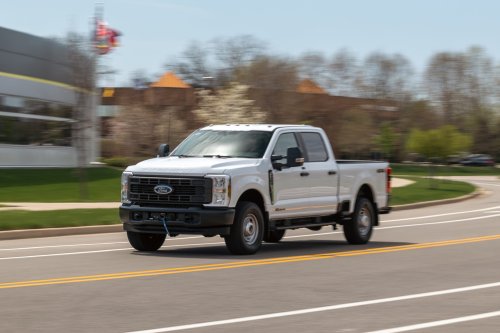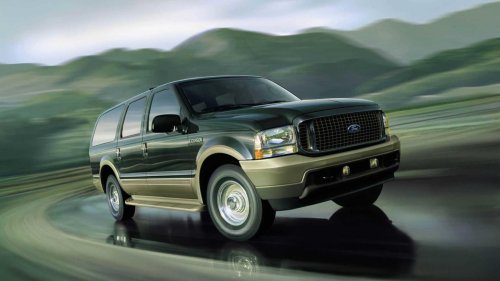
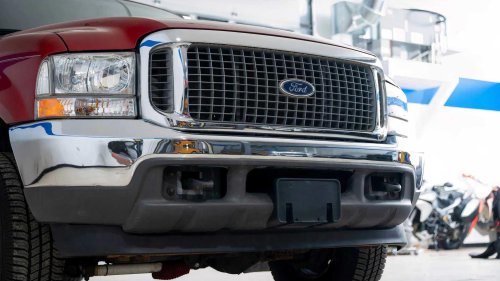
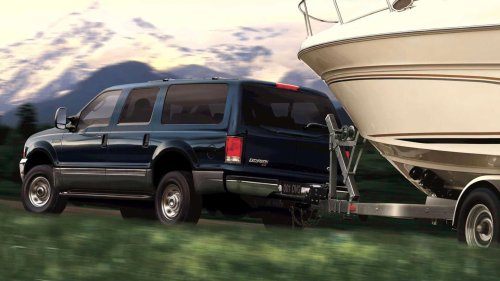
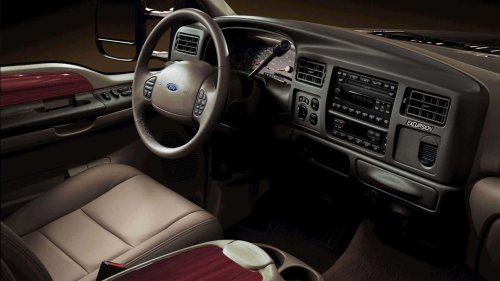
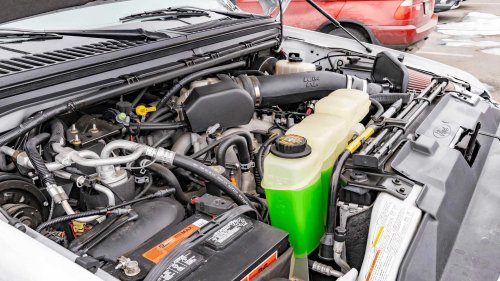
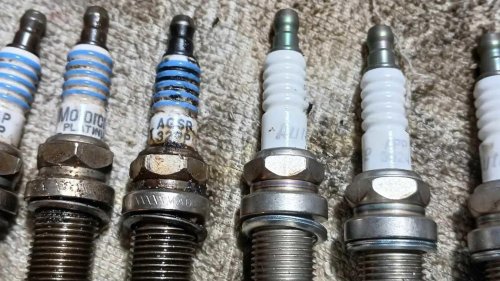
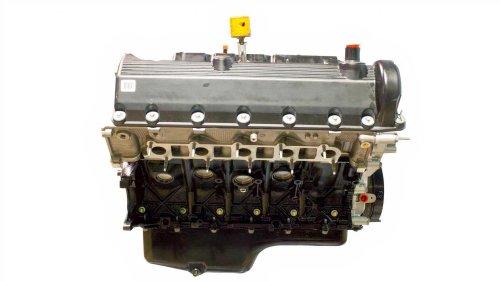
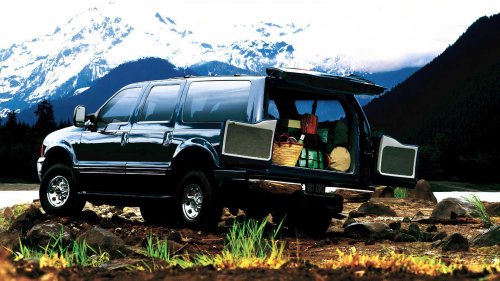
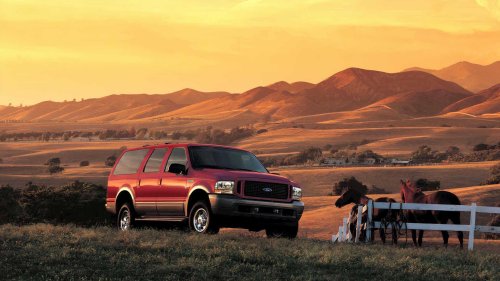



















The word of the day is "sweet spot," and one particular engine available in the Ford Excursion and Ford Super Duty pickup has become a bit of a sweet spot in the second-hand market, decades after its 1997 launch. Since then, it has become an interesting case study in how sticking to simple tech in a rapidly advancing world can actually be a financial power move, especially if you’re making decisions for a fleet of hard-working vehicles.Two decades after leaving showrooms, as the fuel price spike crushed demand for big-displacement engines, the second-hand Excursion market shows three paths defined by its three engines. Ford Was The Last Survivor Of The American V10 Era Ford By the end of the 2010s, the V10 engine had had its day, but Ford kept selling them in the F-650 and F-750 Super Duty models through 2019. These were highly specialized applications positioned far from the mainstream, though they locked Ford in as the manufacturer of the last American V10 production engine.Ford’s V10 engine didn’t make a lot of headlines while it was on showroom floors. The unit never earned Ford the instant recognition of being a "V10 brand" like Dodge. That’s because Ford’s V10 had much less glamorous applications. It never appeared in a performance halo car like the Viper, which even starred in its own TV show at the time.The Ford Triton V10 was a 6.8-liter response to Ram's 8.0-liter unit, which was available in its heavy-duty trucks. The Ram's large displacement tended to make the most dramatic headlines while the Triton V10 lived quietly in the shadows. Selected Triton V10 Applications Over The Years Bring A Trailer 2005-2019 Ford E-Series Vans 2000-2005 Ford Excursion 1997-2004 Ford F53 Motorhome 2005-2010 Ford Super Duty 2011-2021 Blue Bird Vision (school bus) 2012-2019 Ford F-650 F-750 Super Duty 2005-2019 Ford F-450 / F-550 chassis cabs F53 and F59 stripped-chassis trucks (used as the basis for work trucks, cranes, RVs, etc.) Over the years, Ford V10 owners have come to realize that this is a pretty solid engine. After some early issues, the powerplant eventually gained a strong reputation for durability that has remained impressive to the present day. Owners Were Catching On FordEngines have to fill a sweet spot among factors such as cost, fuel consumption, and complexity, during their technological era. American pickup truck V10 engines are an intriguing example. The big, naturally aspirated V10s offered a power boost over their respective V8 options, and pricey turbodiesel engines of the era were also fairly noisy, with lots of vibration and harshness.In this way, the V10 gas engine was a sweet spot. It gave drivers a major boost in torque without the added cost and maintenance requirements of a diesel engine, and a smoother, quieter overall drive, perfect for long-distance towing. This was big-block torque without the diesel price tag: a win-win for the shopper. This became more apparent as the vehicles running Ford’s Triton V10 aged a little.Ford Though it wasn’t a trouble-free engine, the V10 was relatively cheap to service. It also used commonly available parts and was engineered from the ground up as a modular engine family with simplicity baked in for durability’s sake.Unlike the evolving diesels of the day, the Ford Triton V10 was just an upsized V8 built from a well-proven platform made with well-proven parts. Plus, since it was available in a wide range of Ford’s hardest-working models, it became a perfect solution for drivers who needed to tow heavy trailers over long distances in areas where diesel fuel was scarce.Today, in my circle, I know at least one racing driver who has owned her Ford Excursion V10 for years. It can tow her race car and parts, provides a built-in sleeping space during race weekends, and is DIY-maintenance-friendly with little to worry about. The Spark Plug Migraine Era Bring A Trailer If the Triton engine family somehow reminds you of spark-plug-related migraines, you’re a completely normal human being. Triton engines from 1997 to 2002 were fairly prone to spark plug ejection, which was very bad news. The initial spark plug thread design and specifications didn’t form a strong enough seal in some situations, which could cause the spark plug to blow out of the cylinder head with force.By 2002, enough owners had reported problems with spark plug blowouts that Ford created revised cylinder heads with stronger threads to hold the spark plugs in place. These cylinder heads are backward-compatible and can be used as a fix for older engines.Things were fine until a 2005 update introduced an all-new cylinder head with 3 valves per cylinder, instead of the earlier two per cylinder.The company had to come up with a new spark plug design again. The earlier blowout problems were gone, but the new 3-valve Triton cylinder head’s updated spark plug was now prone to the exact opposite problem. Instead of leaving the engine, the new plugs could seize in place and snap off when a technician tried to extract them for a spark plug change.Christopher Smith/CarBuzz/ValnetFord initially offered poor solutions, such as revised service procedures and various special tools to aid in extracting broken or defective plugs. A new spark plug design came along in 2008 to save the day once and for all. From this point, the Triton’s spark plug hassles were over.Today, the spark plug drama with earlier engines is well understood and well documented within the owner’s community, as are various fixes and solutions. Many owners of older Triton-powered models have updated their engines with revised parts to help ensure long-term dependability. Since this is a modular engine family, the required retrofit parts are widely available and relatively simple to install for those qualified.The Triton V10 eventually became a highly desirable engine despite its early issues. Once the engine started to benefit from real-world experience in virtually every duty cycle imaginable, aftermarket enhancements and updates allowed that engineered-in durability to shine. The Quiet Underdog Finds A Second Life Ford From owners of work trucks to RVs to fleets of school buses, the Triton V10 became an engine many owners swore by. And that’s how the least-glamorous V10 engine on the market quietly became a favorite with Super Duty veterans. The underdog powerplant that proved superior to pricier alternatives in its day. On the IRV2.com forums, pages and pages of owners discuss the merits of the Ford V10 engine, with many confirming a largely trouble-free experience with proper maintenance, even on higher-mileage units.Triton experts advise new drivers to use ‘Tow/Haul’ mode at all times for added control and confidence on hilly terrain with your RV. They also remind drivers not to be shy with the throttle, as this engine builds power with revs and doesn’t mind spinning at 4,000 RPM for extended periods (but watch your fuel bill). Add in the smoothness and relatively good fuel economy, and it’s no wonder the Triton V10 was so appealing to RV owners and fleet operators alike.Ford Some Forum members at 460Ford.com even build up their Triton V10 engines with mild intake and cam work to bump performance. With the Triton V10’s most commonly reported issues behind it, many owners simply drive their machines as is, though many prefer an aftermarket "5 Star Tune" for the transmission to improve shift points and drivability.In one forum discussion from IRV2.com, owners reported anything from 40,000 to 400,000 miles of trouble-free operation. One member even mentions that the Tritons are excellent engines, even with "half-ass" maintenance. It’s refreshing to see so few posts or forum sub-sections addressing widespread major issues beyond the spark plug problem.The experience is similar on dieseliq.com, which reports that the Triton V10 is well-built and highly reliable overall. Aside from potential spark plug issues early on, it’s not known for any widespread or costly problems. New owners can fix potential spark plug headaches for a few hundred bucks with a fix kit, and the other known problems are simple and cheap to handle. Turns Out, The V10 Is Still The Ford Excursion Sweet Spot Today Ford Various factors are affecting demand for Ford’s V10 Triton engine in the off-road and heavy-duty markets, even as supply remains limited. We’ve seen Ford Excursion prices climb for a few years now, as second-hand shoppers are catching on that old-school tech can be a solid financial decision, especially if you work your vehicle hard.Today, nationwide listings of Ford Excursions with the Triton V10 engine show sub-100,000-mile units in the premium tier of the second-hand space, usually offered for $17,000 to $25,000, with some edge examples pushing $30,000. The core of the used market on V10-powered Expeditions tends to be examples with around 130,000 miles and asking prices from $10,000 to $15,000. From about $11,000 to $16,000, there are V10 Excursions with around 170,000 miles of former use, and there’s even a high-mileage club with a selection of sub-$6,000 units on offer with 200,000 to 300,000 miles or more.That’s how it looks for models with the Triton V10, but what about models with the Triton V8? These are the cheapest, typically coming in at two-thirds the cost of a similar V10, or half to even a third the cost of an Excursion with diesel power. Said diesel power is skyrocketing in price these days, as collectors show interest in the 7.3-liter engine for its heavy-towing ability, long-distance reliability, and tunability.For additional context, in our nationwide search, there were no V10s above $31,000 and no V8s above $21,000. There were multiple diesel offerings above $40,000. The situation makes the V10 the more realistic ceiling for most buyers who need above-average towing power. Diesel listings routinely exceed 300,000 miles, while V10s populate the mid‑200,000‑mile range and V8s taper off around 250,000 miles.By the numbers, the ‘average’ diesel in our research was a $17,500 unit with 200,000 miles on the clock, while the average V10 Excursion was an $11,500 affair with the same roughly 200,000 miles of former use. The average V8-powered Excursion is $7,500 with 170,000 miles. Diesel trucks show a price-per-mile ratio double that of the V10 and triple that of the V8, even with similar odometer readings.If you’re counting, that’s the V8 as the cheap, entry option, the diesel as the premium power play, and the V10 right in the middle-ground sweet-spot once again, just like in 2003.Sources: Ford, IRV2.com, 460Ford.com, Reddit,