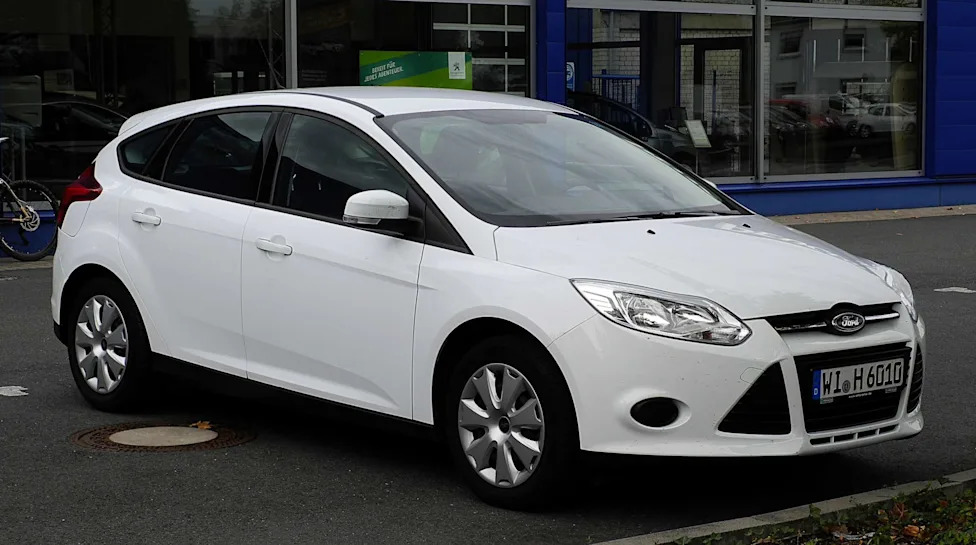
Ford Buried a Timing Belt in Motor Oil to Save Gas — Now the Feds Say 135,000 Cars Are a Safety RiskOn a highway in Wilmington, Delaware, a Ford Focus driver watched an oil pressure warning light blink on. Within an eighth of a mile — less distance than it takes to read this paragraph aloud — the engine gave out entirely. The driver later told investigators the car "lost all power and the engine began to sound like a tank," according to a complaint detailed in a federal investigation file reported by Reuters.That one sentence explains this story better than anything Ford has said publicly. On August 3, the National Highway Traffic Safety Administration escalated its investigation into roughly 135,000 Ford Fiesta, Focus, and EcoSport vehicles built between 2014 and 2021, all sharing Ford's 1.0-liter, three-cylinder EcoBoost engine. NHTSA has logged 355 complaints describing the same sequence: an oil pressure warning light, then a near-immediate loss of power or a seized engine. The agency's conclusion, in its own words, is that these vehicles present an unreasonable risk to safety, language that exists in NHTSA's vocabulary for one reason: it is the required step before a compelled recall.Here is the part almost nobody outside a Ford service bay understood until this week. The timing belt inside this engine does not run dry, and it is not a chain. It runs submerged in the same oil that lubricates the crankshaft and bearings. Engineers call this a belt-in-oil, or "wet belt," design, and Ford was not the only manufacturer to try it. The logic was simple: a belt running in oil creates dramatically less friction than a timing chain, and less friction inside a small, turbocharged engine translates directly into better fuel economy numbers on the window sticker. It was an elegant answer to a real regulatory problem, how to keep shrinking displacement and chasing fuel economy targets without redesigning an entire engine architecture.AdvertisementAdvertisementThe flaw is that rubber and hot motor oil were never designed to coexist for 150,000 miles. As the belt material breaks down, NHTSA's own teardown analysis found, it sheds fragments that migrate into the oil pump's intake and clog the mesh pickup screen. Oil pressure collapses. Because the failure starves the engine of lubrication rather than announcing itself with a leak or a noise, drivers get almost no warning before the engine is finished.Sit with this number for a second. NHTSA's data shows the average failure occurred at roughly 70,000 miles. Ford's own maintenance schedule called for timing belt replacement at 150,000 miles. Ninety-eight percent of the reported failures happened before that mark, meaning the part failed, on average, at less than half the mileage Ford told owners it was good for. This was not a story about deferred maintenance. NHTSA specifically found that failures occurred even when owners followed the recommended oil service exactly. The maintenance schedule itself was the defect.Then there is the timeline, which is the real story here. Back in June, Ford told regulators it was rolling out what it labeled a customer satisfaction program, cutting the recommended replacement interval for this belt nearly in half, down to 100,000 miles or six years, and reimbursing some owners who had already paid for engine repairs. Notice what that program is not called. Not a recall. A recall requires a public campaign number and a formal admission that a safety defect exists. A customer satisfaction program requires neither. Ford adjusted its own maintenance advice months before NHTSA's finding went public, and it never has to explain why unless a recall eventually forces the issue. It is a pattern this publication has flagged before, whether it involved a manufacturer managing a defect through a quiet campaign rather than a recall, or a manufacturer telling regulators a fix worked when the complaints kept arriving anyway.Consider who actually owns these cars today. Ford discontinued the Fiesta, the Focus, and the EcoSport in the United States years ago. Nobody is cross-shopping a new one at a dealership right now. Every vehicle in this investigation is a used car, and cheap used compact cars like these tend to end up with first-time buyers, students, and people who bought inexpensive transportation specifically because they cannot absorb a large repair bill. A replacement long-block on this engine can cost thousands of dollars, on a vehicle that might not be worth that much to begin with. For an insurer, a healthy car with a seized engine and a low market value is a fast route to a total-loss settlement, on a vehicle that never hit anything.AdvertisementAdvertisementIt is also worth noting that this is not Ford's only rough stretch with federal regulators this year. Wet-belt architecture, meanwhile, was not unique to Ford. Multiple manufacturers experimented with the same friction-reduction math on small turbocharged engines in the early-to-mid 2010s, chasing the same regulatory targets. Several of those programs have since quietly reverted to conventional timing chains in later redesigns, Ford's own newer engines among them. That reversal, made without a press release explaining it, tells you what you need to know about how the first version performed.An engineering analysis is not a recall. It is the stage where NHTSA builds the case that eventually forces one, and the agency does not usually get this specific, with this much teardown data, unless it expects to arrive there. If a recall follows, do not expect an engineering fix for the belt-in-oil design itself. There is not one. The realistic remedy is inspection or replacement on a shortened schedule, because you cannot un-submerge a timing belt.The engine at the center of this investigation is already gone from Ford's lineup. The reimbursements are already being processed. In practice, Ford settled this case with itself months before the government said a word about it publicly. That is the actual story: not a defective part, but a company managing the exit costs of an engineering bet it had quietly decided never to make again.Join our Newsletter, follow our Instagram page, and connect with us on Facebook.