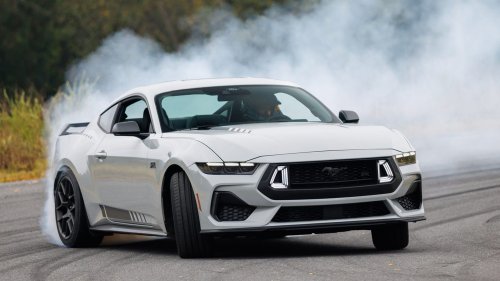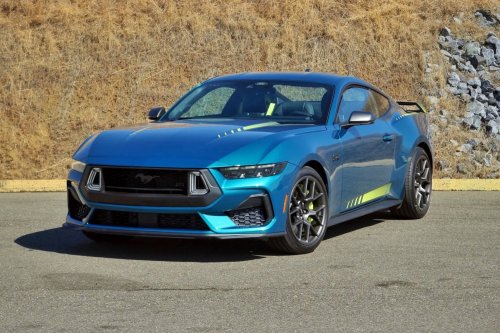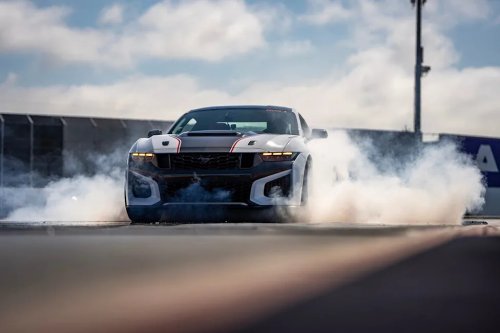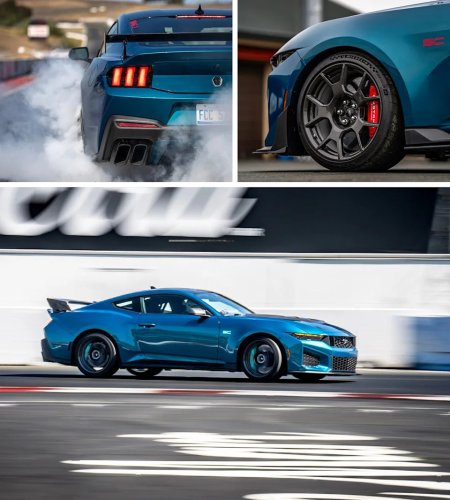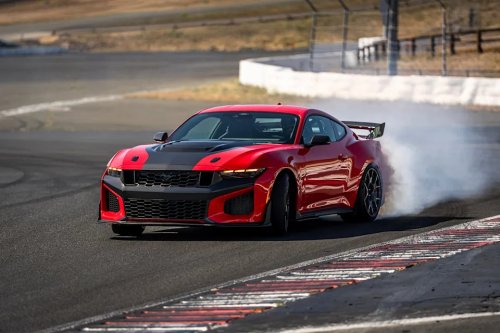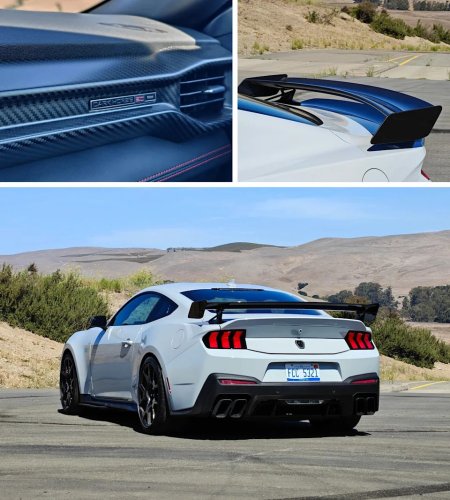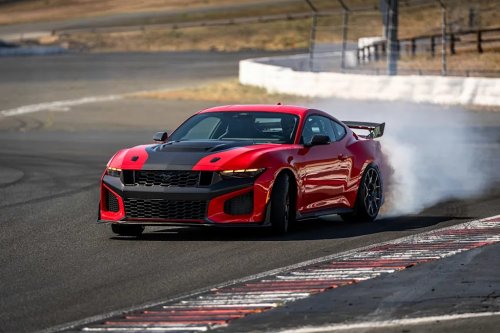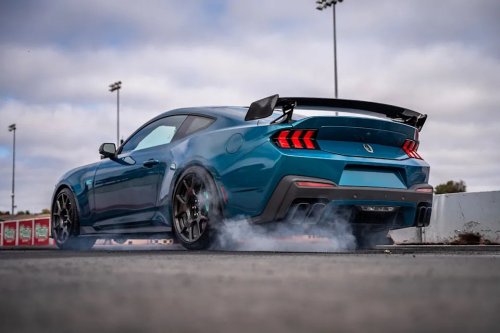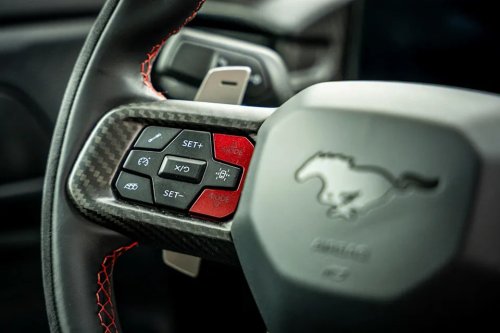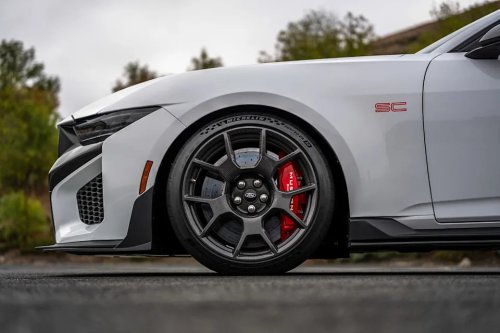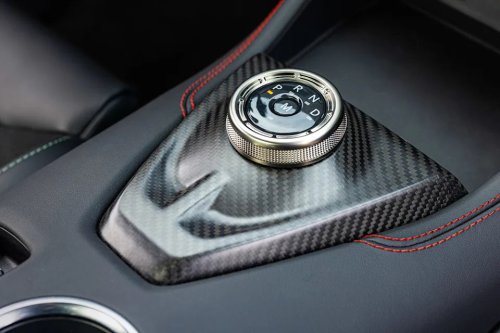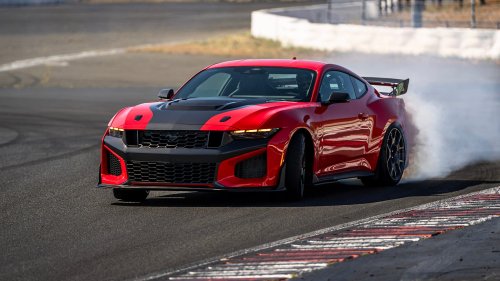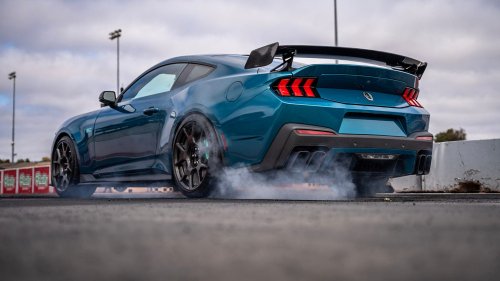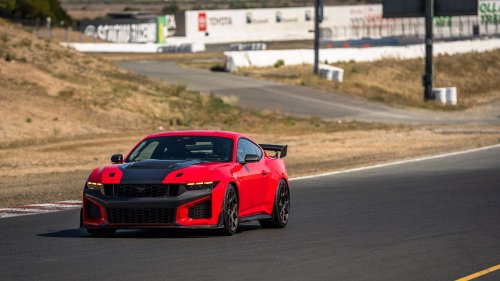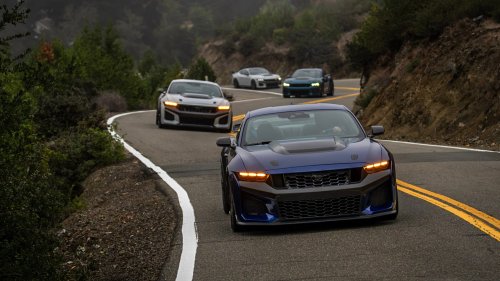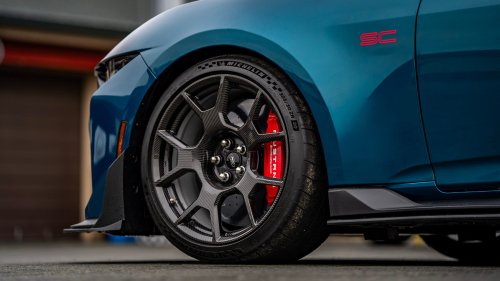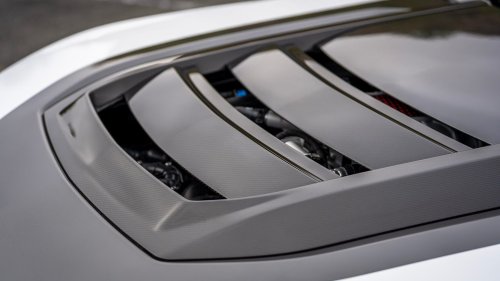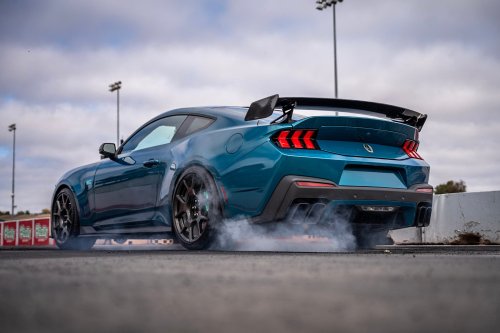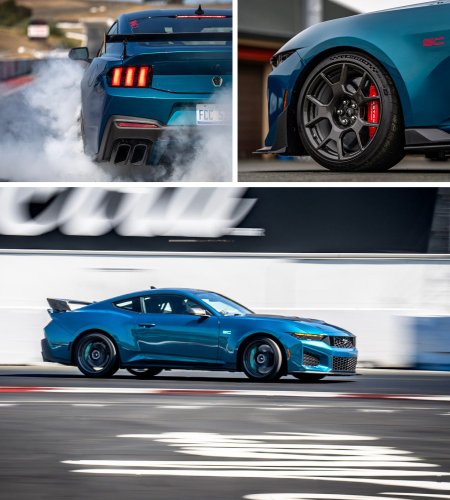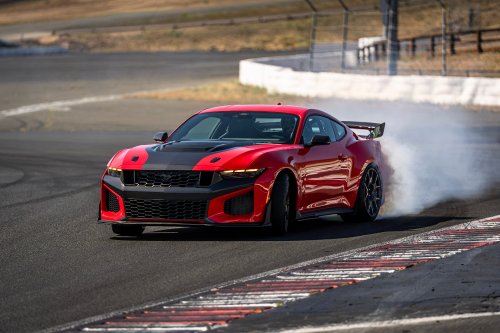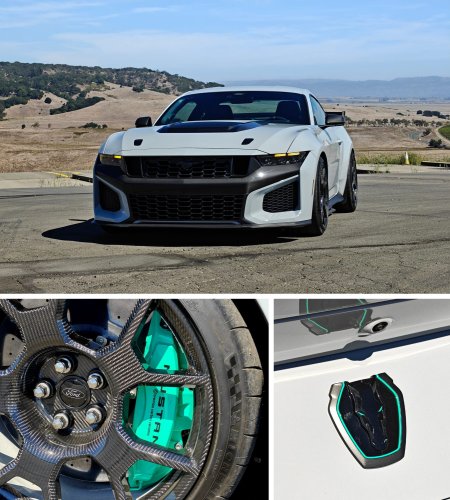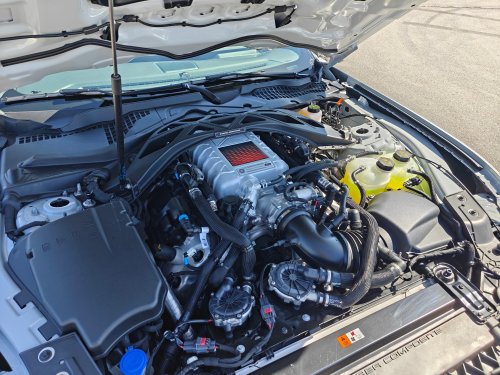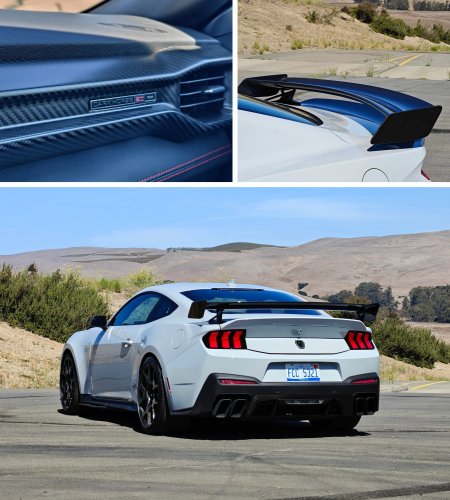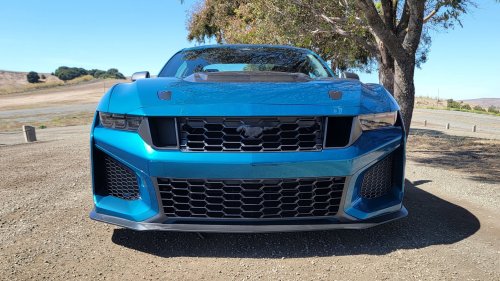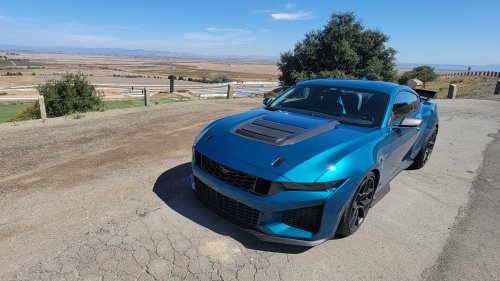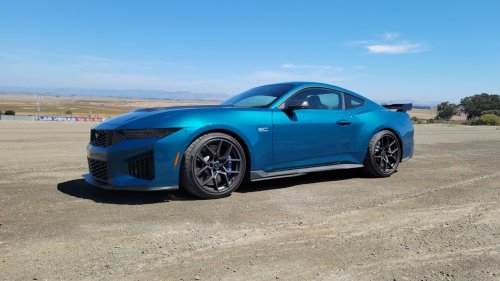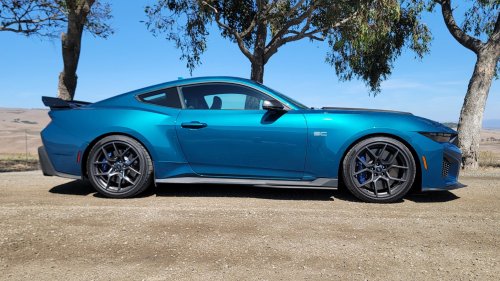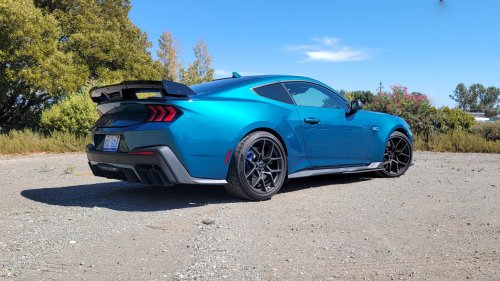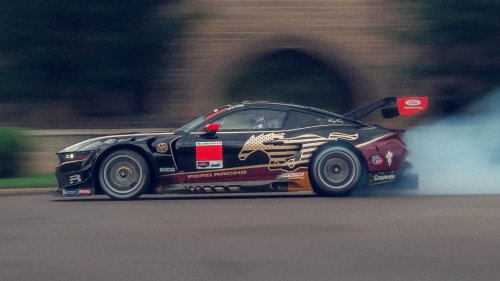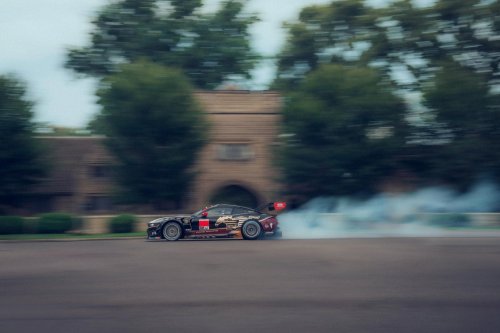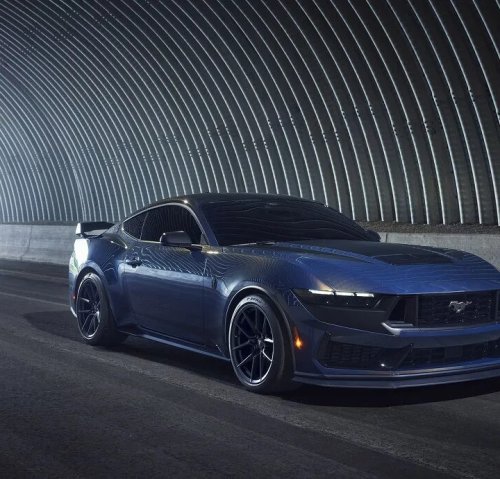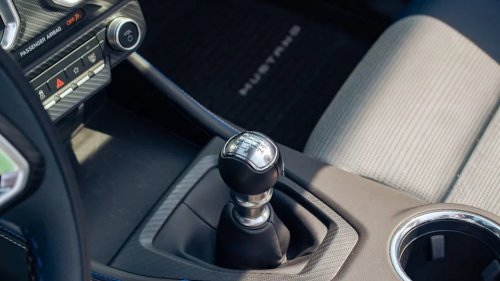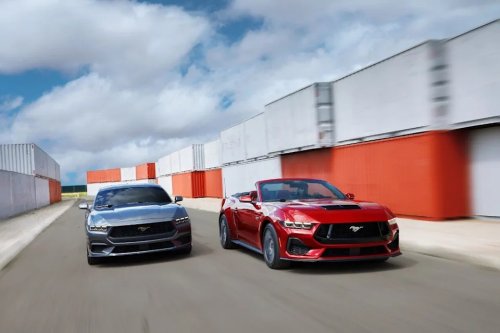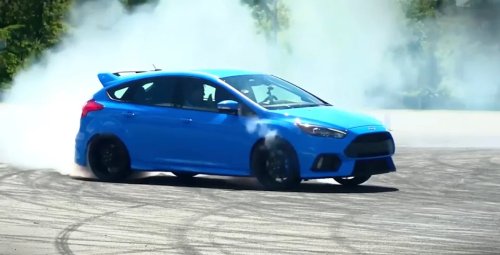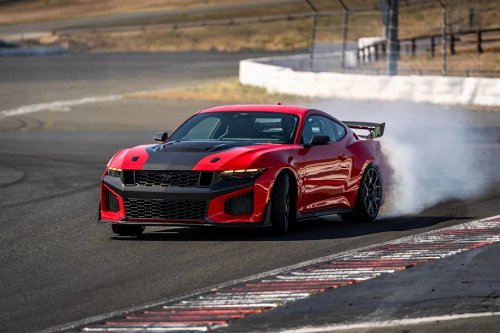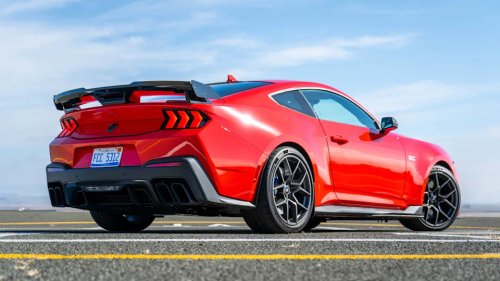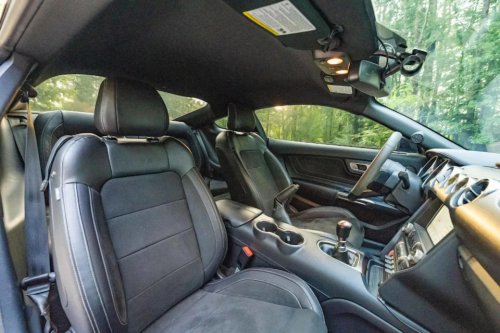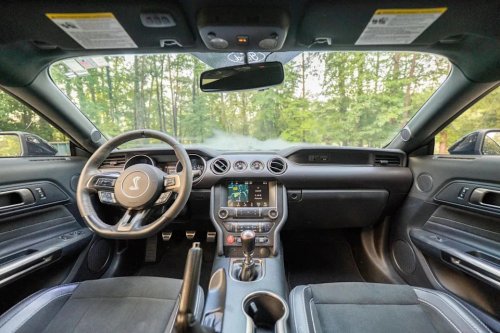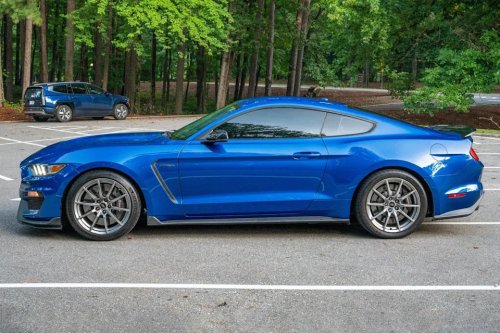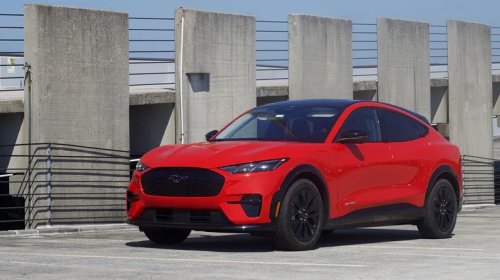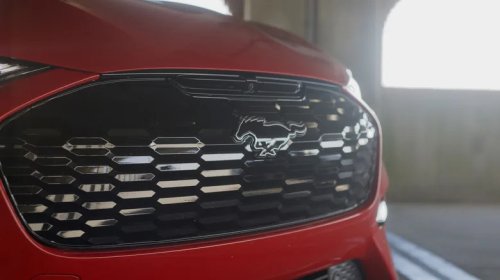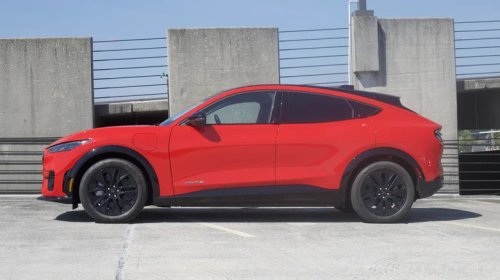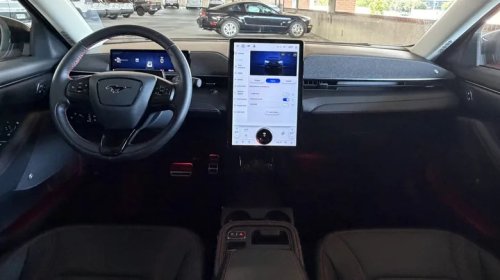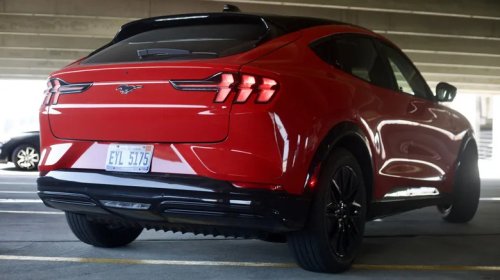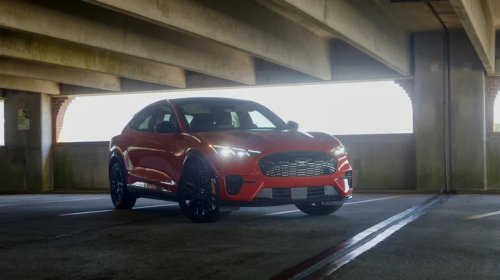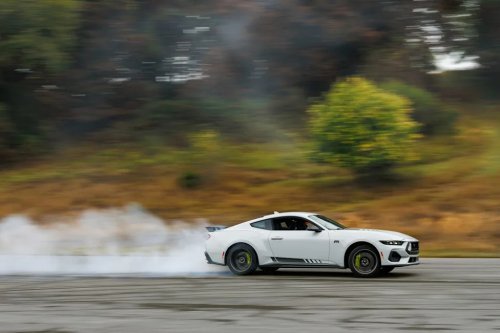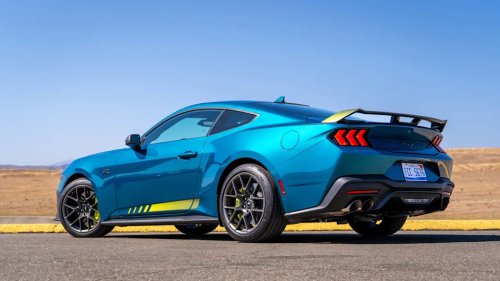
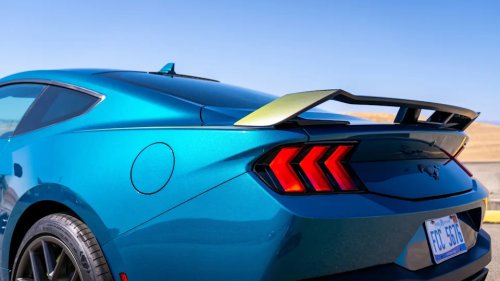
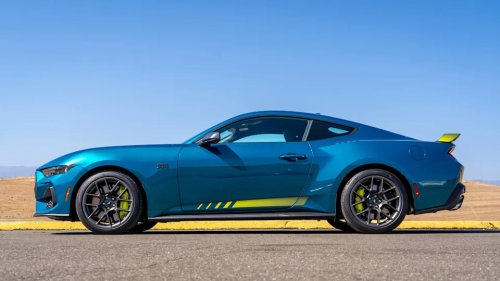
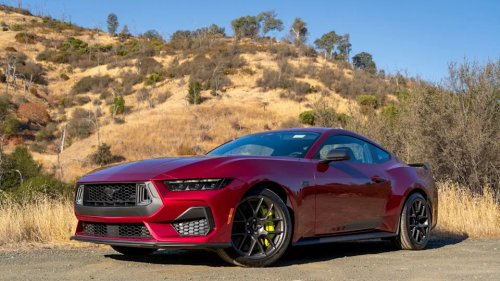
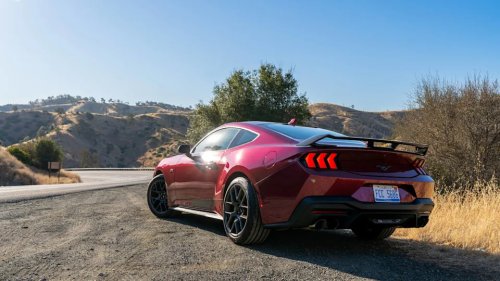
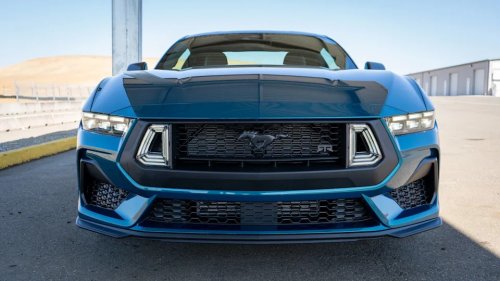
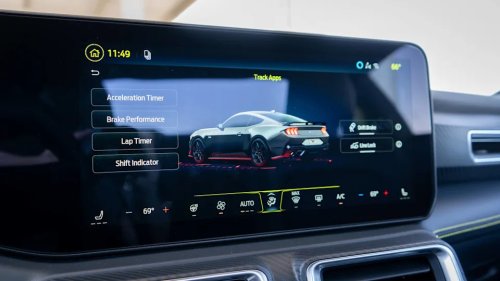
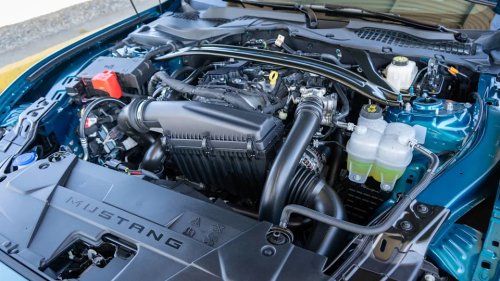
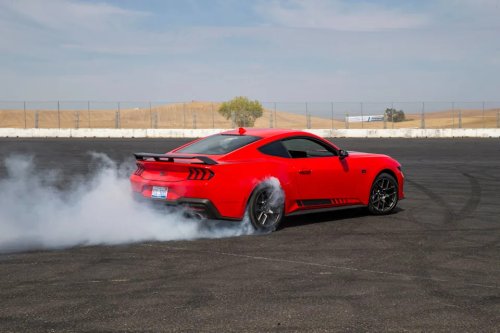
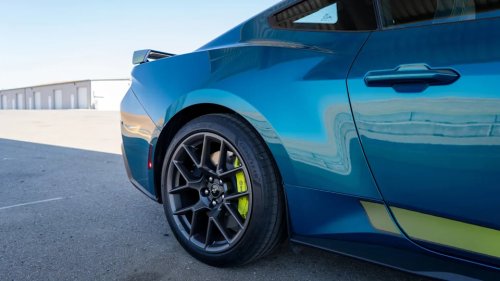
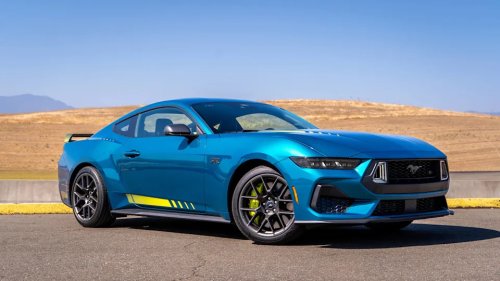

















I knew I was making some progress when the instructors turned off all my electronic assists. At Thunderhill Raceway Park, Ford began my drift lesson with the 2026 Mustang RTR's clever traction and stability systems still watching over me. I then completed two J-turns and two donuts cleanly, after which the instructors completely disabled the remaining safety nets and let me have a go at the full three-corner course. Eventually, I was able to link the first two turns before repeatedly spinning at the third, which at least made for a great smoke show. The RTR had flattered me almost immediately, and I'd like to think Vaughn Gittin Jr.—a professional drifter, racing driver, and founder of RTR, who observed from the sidelines—felt proud of me in ways even my own family never could. A guy can dream, can't he?Dreaming seems to be the ultimate point of this truly unusual Mustang. Ford and Vaughn Gittin Jr.'s RTR Vehicles have turned the four-cylinder EcoBoost into one of the most overtly drift-focused production cars on the market—a "dream car" for young drifting enthusiasts by design. It has extra steering angle, a dedicated drift-brake lever, a Torsen limited-slip differential, anti-lag, and chassis hardware borrowed from the GT and Dark Horse. And somehow it's still comfortable enough to drive to work. The biggest contradiction, however, was discovered on the window sticker. Two representative configurations supplied for the program totaled $53,440 and $55,850 delivered, respectively. For that money, the RTR still has just 315 horsepower, a 10-speed automatic, and a four-cylinder engine, whereas a base Mustang GT costs less and includes a 480-hp V8 and six-speed manual. So while Ford has created an excellent toy for younger drivers to thrash about in, I'm less convinced those younger drivers can—or will want to—pay for it.2026 Ford Mustang RTRCole Attisha2026 Ford Mustang RTR Specifications And PricingSpecification2026 Ford Mustang RTREngine2.3-liter turbocharged four-cylinderOutput315 hp and 350 lb-ft of torqueTransmission10-speed automaticDrivetrainRear-wheel drive; 3.55:1 Torsen limited-slip differentialCurb weight3,783 poundsEPA fuel economy21 mpg city, 30 highway, and 25 combinedRTR package$6,520Mustang RTR starting price$42,205 before destination; $44,200 including destinationRepresentative as-tested totals$53,440 and $55,850, including destination2026 Mustang GT starting price$47,795 before destination; $49,790 including destinationThinking about selling your car? Get an instant cash offer online now. Click here to get started.2026 Ford Mustang RTRCole Attisha2026 Ford Mustang RTRCole AttishaWhat Makes The Mustang RTR Different?The RTR is much more than an EcoBoost wearing luminous accents. Its $6,520 core package adds the electronic drift brake, active-valve exhaust, a 3.55:1 Torsen rear differential, 19-inch wheels with 255/40 summer tires, and the GT Performance Package's six-piston front and four-piston rear Brembo brakes. Ford also installs the Dark Horse's rear subframe and stabilizer bars, adjustable strut mounts, a GT steering rack with 72.5 millimeters of additional travel, an RTR-specific Track-mode stability-control calibration, and a larger cooling fan. The optional MagneRide dampers receive their own RTR tune.The engine retains the standard EcoBoost's 315 hp and 350 lb-ft of torque, but adds Ford-patented anti-lag technology derived from the Le Mans-winning Ford GT race car. It doesn't spit flames, but it does keep the turbocharger ready for when the driver lifts and quickly returns to the throttle, which I noticed most during drift transitions, because I am, of course, a drifting God with a signed certificate to prove it. The result isn't so much a power package as it is a control package for a specific use case—that is, sliding its bright green dumper around corners in excessively dramatic fashion. Ford has engineered the car around specific moments inherent to drifting, like when initiating a slide, catching it, changing direction, and repeating the process without destroying the car.2026 Ford Mustang RTRCole AttishaCole AttishaSurprisingly Civilized On The RoadBefore I got to produce any tire smoke, my drive partner and I spent roughly two hours taking a dark-red RTR from our Napa Valley hotel to Thunderhill. We split the driving over highways and windy canyon roads, then repeated the trip back to the hotel after the track sessions. The RTR was far friendlier than its graphics suggested; its optional MagneRide suspension controlled the body without making broken pavement feel like a personal failure, road noise remained reasonable, and the 10-speed behaved unobtrusively in ordinary traffic. Critically, its additional steering travel didn't make it feel awkward on the road. This is fundamentally a daily driver that can drift, and not the other way around.Shopping for a new car? Click here to get a great deal on your next vehicle. Powered by Carvana: no-haggle pricing, 100% online.2026 Ford Mustang RTRCole AttishaIt really looks the business, too. It steals its front fascia from the GT, gets those signature illuminated RTR grille nostrils that look so good it's as if every Mustang should have them, as well as dark-finished wheels, a raised rear spoiler, and available Hyper Lime graphics and brake calipers, which make it appear more provocative than a regular EcoBoost. Parked beside the Dark Horse SCs we would drive the following day, however, it was clearly the less beastly Mustang. So it's proud of what it is, but it still knows its place within the family hierarchy.2026 Ford Mustang RTRCole Attisha2026 Ford Mustang RTRCole Attisha2026 Ford Mustang RTRCole AttishaThe cabin tries just as hard to establish an identity distinct from other Mustangs. Hyper Lime stitching, seatbelts, screen graphics, and a matching drift-brake lever separate it from lesser EcoBoost models. At times, the effort resembles an older corporation's interpretation of what younger enthusiasts find cool. At one point, my drive partner and I changed the ambient lighting from green to red, only to discover that someone from Ford had changed it back while we were on track—a gesture we found quite cheeky and therefore loved. Also, the virtual Mustang displayed while selecting drive modes wore a GT badge. Material quality also remains a bit of a question mark. Some panels creaked, and the sun visor would swing away from the side window during turns, striking me in the head, though it thankfully wasn't very heavy. This kind of stuff is easier to tolerate in a Mustang with a legitimate value proposition than in one approaching $56,000.2026 Ford Mustang RTRCole Attisha2026 Ford Mustang RTRCole Attisha2026 Ford Mustang RTRCole AttishaA Lighter Nose Makes A Better MustangThunderhill's tight road-course configuration gave the EcoBoost enough room to demonstrate its abilities without exposing its power deficit. Across three independently paced laps, 315 hp felt adequate, the Brembos stayed consistent, and the chassis encouraged me to use more of the car. The real highlight was balance. Without a Coyote V8 over the front axle, the RTR changes direction with far less effort than a GT. Ford cites a 54/46 weight distribution, and that lighter nose might ultimately be the strongest reason to choose the EcoBoost foundation. The steering was direct, the MagneRide suspension kept the car disciplined, and the throttle encouraged the rear axle to rotate. It even overrotated unexpectedly once on my first hot lap—I was clearly bred for drifting—but the correction came quite naturally.2026 Ford Mustang RTRFordFord Built A Drift Lesson Into The CarAfter our circuit laps, one of Ford's professional drivers took us through the upcoming drift course as passengers. Her demonstration revealed how much capability the RTR had when moving sideways, and my next exercise was a drift class led by Gittin and his team, which meant I would have to see just how much of that capability I could squeeze out of the car myself. The electronic drift brake works less like a conventional handbrake and more like a digital command that triggers hydraulic action. In Drift mode, initiation depends more on how quickly the lever is pulled than how long it is held. Pull it sharply, the rear wheels lock, and releasing the lever disengages it—no secondary button or switch required. Outside Drift mode, the same lever functions as an on/off parking brake control.The simplicity of it all allowed me to just focus on weight transfer and steering—I could jump straight into working on my technique, rather than spending so much time feeling out the car. The car didn't hold my hand through the process, as my repeated spins at the third corner proved, but it removed enough friction to make learning approachable. A novice could use the assists to explore the first stages, while an experienced driver can turn everything off and receive absolute freedom to shed rubber. So this is much more than just a gimmicky drive mode that produces one canned slide at a time. The extra steering angle becomes tangible as the car rotates; the lighter front end gives the driver time to work, and the automatic transmission means you don't have to think about what to do with your left foot. The RTR makes drifting easier without making the accomplishment feel unearned.2026 Ford Mustang RTRCole AttishaHow Does A Four-Cylinder Mustang Reach $55,850?Although the most basic Mustang RTR can be had for $42,205 before destination, a representative Orange Fury example present at the event program carried, in addition to the RTR package, the $1,330 RTR Appearance Package, the $1,750 MagneRide suspension, the $3,000 Equipment Group 201A, a $1,160 B&O audio system, $1,995 for Recaros, $750 for Hyper-Lume calipers, and $995 for paint, bringing the total to $55,850. Meanwhile, Ford currently lists the base 2026 Mustang GT at $47,795 before the same $1,995 destination charge, and the GT Premium starts at $52,075 before destination. So the comparison practically writes itself: Do you want the most extreme version of the EcoBoost Mustang, or the most basic version of the V8 Mustang?Personally, I would probably opt for the GT and add the drift brake, additional steering angle, and other hardware later if I really, desperately wanted that stuff. That route would surrender the RTR's integrated calibration, full factory execution, lighter front end, Dark Horse chassis hardware, and serialized identity. It would also provide the manual gearbox and V8 that remain central to the Mustang experience for many buyers, including me. The intended audience that Ford claims it's after here makes the price feel even more awkward. Ford acknowledged that RTR's large following among 18- to 35-year-olds was part of the partnership's appeal, yet the finished product can, at times, feel like older executives assuming young enthusiasts will gladly accept a long-term finance contract for a heavily optioned, automatic four-cylinder Mustang. The actual buyer for the RTR may care less about the Mustang mythology than the mechanical proposition: a turbocharged, rear-wheel-drive coupe that can commute all week and destroy its rear tires on the weekend. Alternatively, it may be an EcoBoost buyer who is unusually easy to upsell.2026 Ford Mustang RTRCole AttishaVerdict: An Excellent Toy With A Difficult AudienceThe 2026 Ford Mustang RTR succeeds at the difficult part. It feels distinct from the regular EcoBoost I previously reviewed, behaves naturally on the road, remains balanced on a circuit, and makes genuine drift technique easier to access. It's fun, useful, and engineered far beyond its graphics. My experience with it actually made me appreciate the regular EcoBoost more—mainly because of its price. The RTR's engineering is most persuasive while the car is sideways, but its window sticker follows it everywhere. Once the total passes a base GT and approaches a GT Premium, the absence of both a V8 and a manual can no longer be treated as a mere footnote. The Mustang RTR is ultimately an expensive toy designed for kids to thrash about in, and while it is very good at being that toy, the difficult question is how many of those kids can responsibly justify buying it.