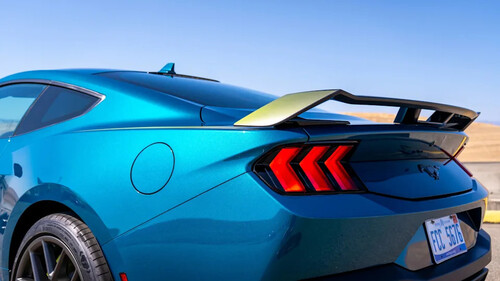
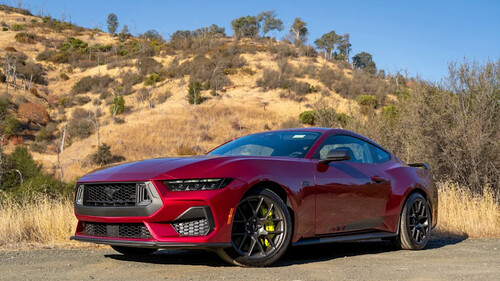
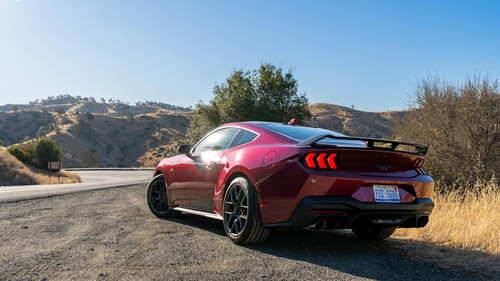
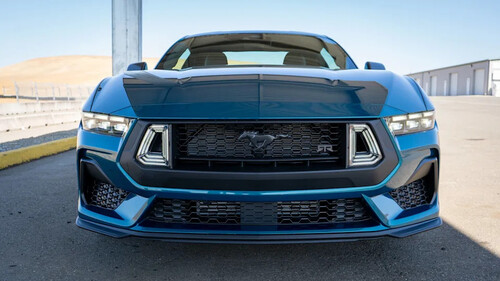
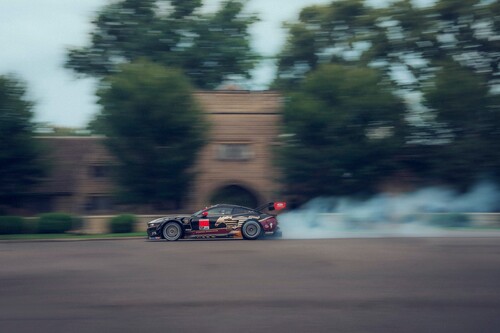
Ford Mustang RTR Driven: The Base Car Cops an AttitudeFordWe recently drove the new Mustang Dark Horse SC, which provides all kinds of motorized excitement—at prices that start in the low six figures and escalate from there. This new Mustang RTR, on the other hand, was conceived to provide fun and performance at a much more attainable price point.The RTR is based on the entry-level Mustang, which is powered by a turbocharged 2.3-liter four-cylinder engine making 315 horsepower. RTR Vehicles is a drifting and off-road aftermarket company—with RTR an acronym for Ready to Rock—founded by drifter Vaughn Gittin Jr. and specializing in Mustangs and Broncos, which has partnered with Ford to create this model.FordThere's nothing off-road about this RTR Mustang, but there is a nod to drifting, a competitive discipline in which RTR has won multiple championships. The package includes Ford's Electronic Drift Brake (also included in the V-8 Mustang GT's optional Performance package), a MagneRide adaptive suspension calibrated for easier sideways action, and a steering rack with greater travel, allowing more steering lock.At the introduction, a few of RTR's professional drifters were on hand to coach us on how to slide this Mustang around a simple cone course. For an old road racer like me, it went totally against my instincts to drive a car in the obligatory sideways, tire-shredding mode. But after a few minutes of conditioning myself to yank the drift brake to get the car sideways and then simultaneously drop the brake and step hard into the throttle, I started to get the hang of it. I even managed two full sideways circles around a cone and steered out of it—more or less controllably.FordIt was fun, especially as I wasn't on the hook for the tire bill, but I was particularly impressed that this drifting calibration did not compromise the RTR's handling on Thunderhill Raceway Park's compact West road course. In part, that's due to the use of several high-performance chassis parts borrowed from the Mustang Dark Horse, such as adjustable strut mounts, stiffer front and rear anti-roll bars, and a rear subframe with stiffer bushings. Other enhancements include the Mustang GT's more powerful cooling fan and its Performance package's upgraded Brembo brakes with 15.4-inch front rotors and six-piston calipers.As a result, the Mustang RTR handles beautifully on a road course, with excellent grip and great stability. And with the light EcoBoost 2.3-liter four-cylinder under the hood, it changed direction eagerly. The suspension calibration promoted this agility on the track, and the multilevel stability control made it easy to slide the car while maintaining an electronic safety net.FordThe EcoBoost engine doesn't get any power improvements, retaining the stock 315 ponies at 5500 rpm and 350 pound-feet of torque at 3000 rpm. But it does benefit from an anti-lag system that Ford says was derived from its GT race car.This system is very simple: When you lift off the accelerator, the engine control computer cuts the fuel to the engine but leaves the electronic throttle open. That allows more airflow through the turbocharger and helps maintain the turbocharger's rpm. Then when you press into the accelerator, the fuel is turned back on, and the throttle goes to your commanded position. But the turbo develops boost more quickly because it is starting from a higher rpm.FordAt the rpm we were using on the racetrack, turbo lag was never apparent. Helping achieve this was Ford's 10-speed automatic, which, in Track mode, does an excellent job of keeping the engine in its powerband and downshifting to lower gears while braking for corners.As you'd expect, the RTR is also visually enhanced compared to the base Mustang. In front, it gets the Mustang GT fascia, with illuminated nostrils and RTR badges. There are also Tarnished Dark Anodized mirror caps, hood, rocker, and rear quarter graphics, as well as the Mustang GT Performance pack's rear spoiler, plus 19-inch wheels with a greater offset. Optionally, you can also select Hyper Lime–colored brake calipers and graphics.Inside, the drift brake lever is trimmed in Hyper Lime, as are the seatbelts and stitching. RTR sill plates and a dash plaque complete the look. If the Hyper Lime theme strikes you as a bit much, you can select black seatbelts and gray stitching instead.Despite its performance orientation, on the road, the RTR is smooth and comfortable. In Normal mode, the adaptive shocks are well tuned for the Northern California pavement we drove. With the quietest setting for the active exhaust selected, the cockpit is reasonably subdued. However, the 10-speed automatic likes to upshift as early as possible, no doubt to help fuel economy, and that can result in noticeable four-cylinder droning when you accelerate just below the kick-down level.FordThat raises the question of where the RTR fits into the lineup. At $43,705 to start, it costs $8715 more than a base Mustang. That might seem uncomfortably close to the Mustang GT starting price of $48,795, with that model's powerful and refined Coyote V-8. However, the RTR's equipment and chassis are closer to a GT with the High package equipment group, Performance package, and Bronze Appearance package, which tallies closer to 60 grand.From that perspective, the RTR package slots into the Mustang lineup pretty neatly and delivers an excellent driving experience at a useful discount compared with the GT. Not to mention a 26-mpg combined estimate from the EPA, compared with 19 for the thriftiest V-8. With today's gas prices, even Mustang owners might take notice. Moreover, it is nice to see an attractive special version of a good car that is priced below the average new car transaction price, rather than two or three times higher.➡️ Skip the lot. Let Car and Driver help you find your next car.Shop New Cars Shop Used CarsGift Guide: Best Ride-On Electric Cars for KidsFuture Cars Worth Waiting For: 2025–2029