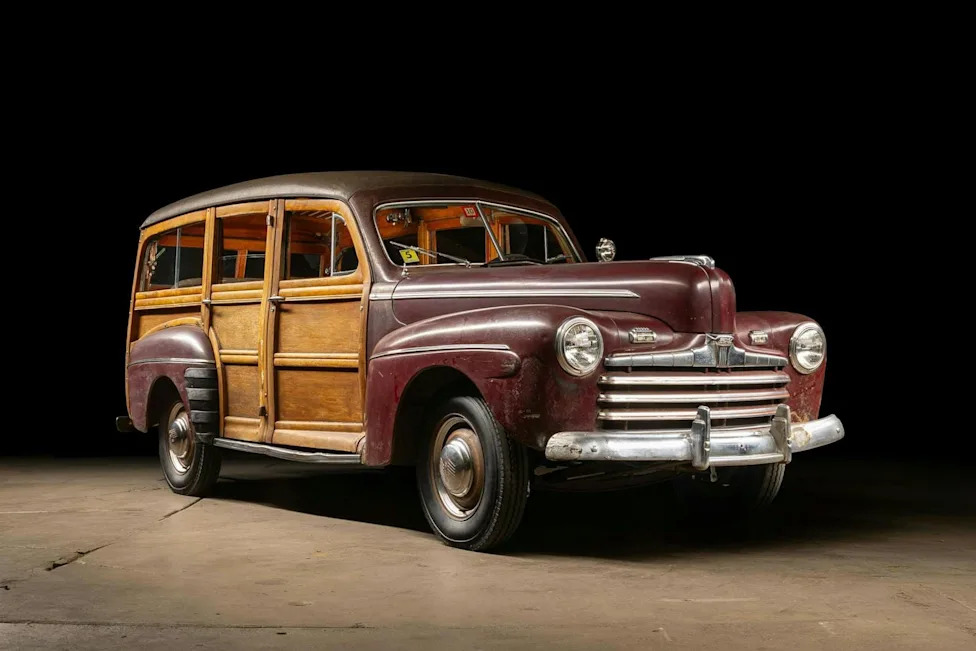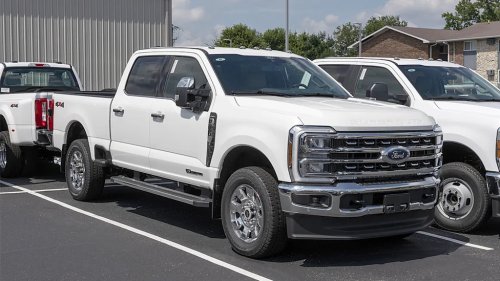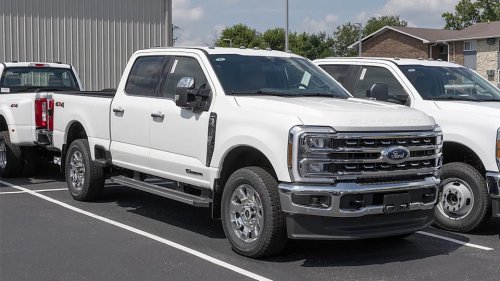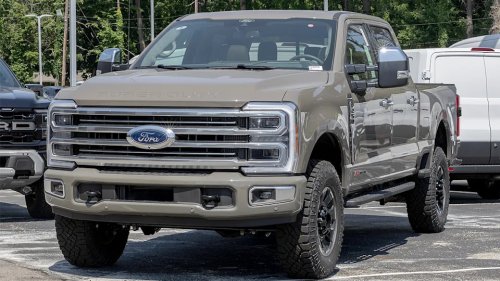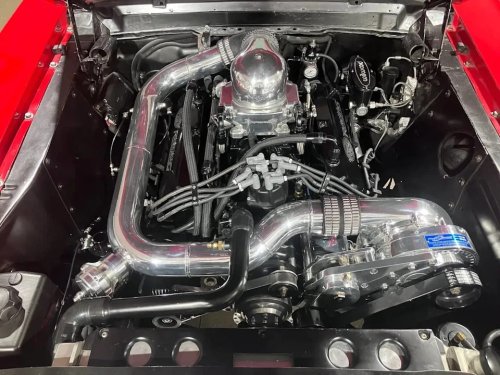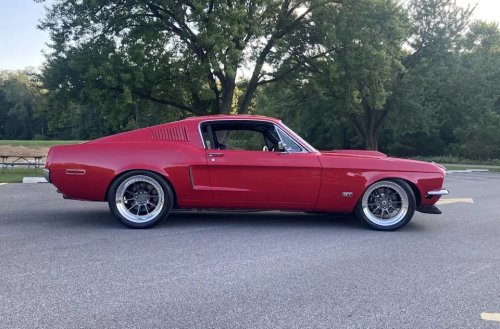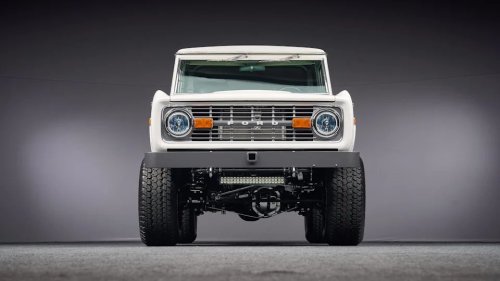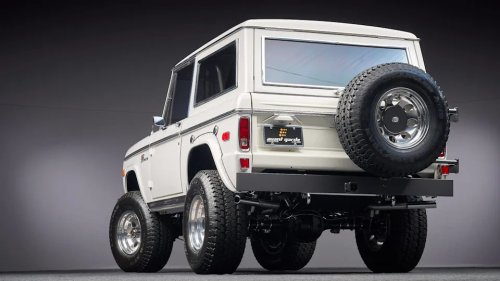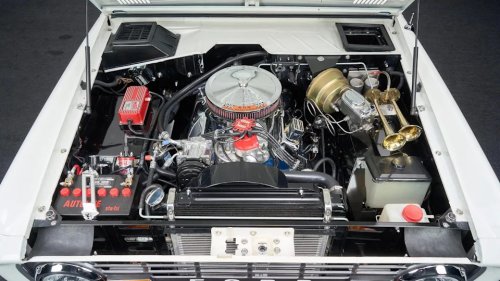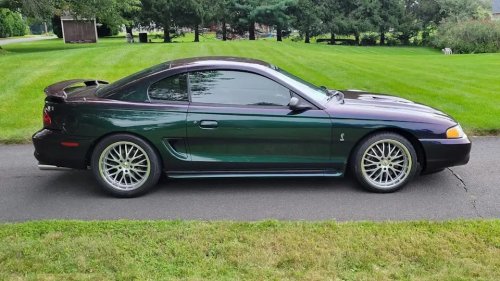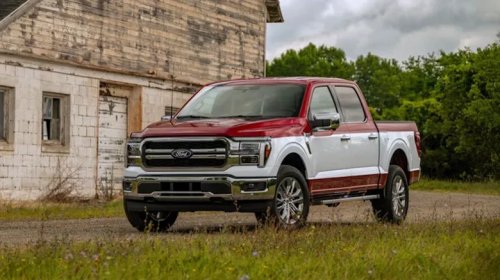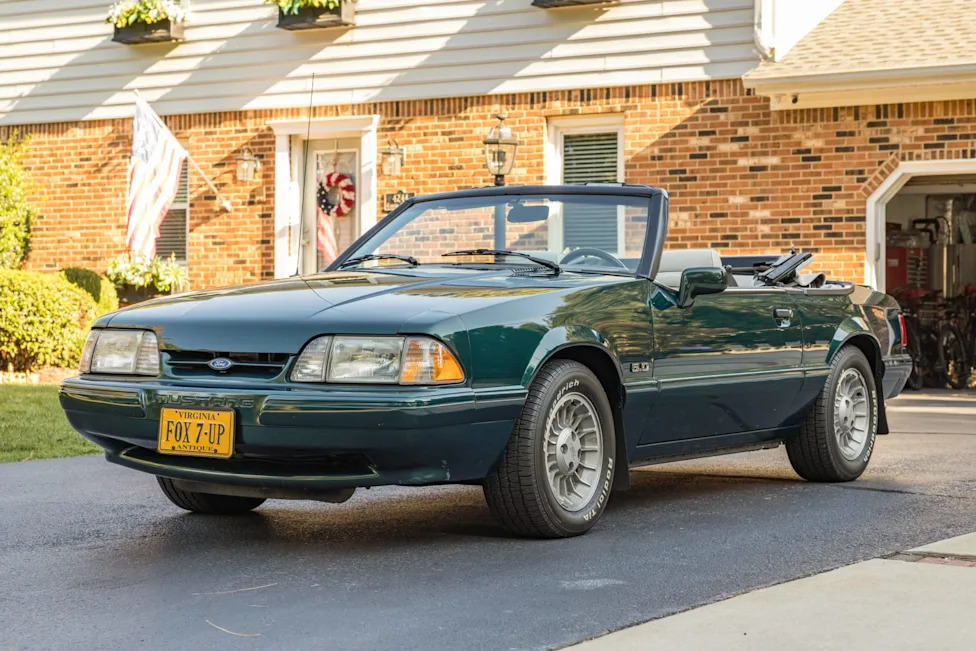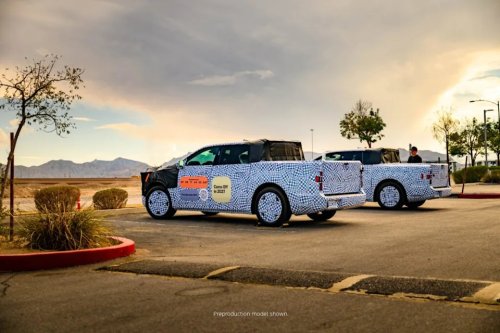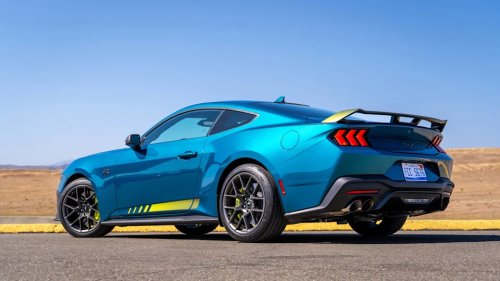
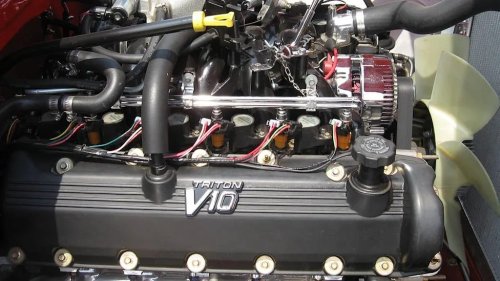
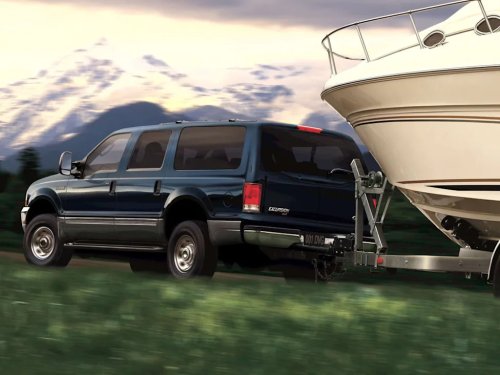
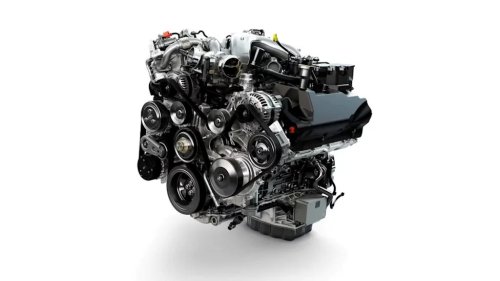
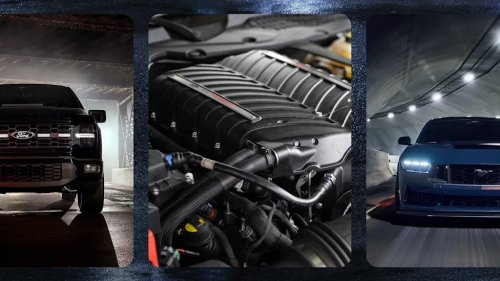



















Autoblog and Yahoo may earn commission from links in this article.From modest inline-fours to modern twin-turbocharged V6s and compact inline-threes, the Ford Motor Company has engineered almost every internal combustion configuration imaginable over its century-long heritage. For much of this time, the V8 models have been at the center of it all, but for a while, Ford's Triton V10 powerplants were the engine of choice for heavy-duty trucks and commercial applications. We compare these impressive engines to their V8 counterparts.The Ford V8Bring A TrailerView the 3 images of this gallery on the original articleAdvertisementAdvertisementFord didn't invent the V8 engine, it wasn't even the first to sell one in the US, that honor goes to Cadillac, but it has certainly done its part to make this engine configuration as iconic as it has become. It got off to a flying start when it introduced the world's first mass-produced single-piece (monoblock) V8. Over the past 94 years, this robust and basic design was updated and eventually replaced with increasingly advanced architecture, including overhead valves, overhead cams, modular layouts, cutting-edge fuel supply designs and even high-revving racing tech.YearEngineSignificance1932Flathead V8First mass-market monobloc V8. Made V8 power accessible to everyday drivers.1954Y-Block OHV V8Introduced overhead-valve (OHV) technology to replace the Flathead, delivering improved breathing and higher compression.1962Windsor Small-Block V8Compact OHV design that powered iconic performance cars like the early Mustang, Fairlane, and Shelby Cobra.1968385-Series Big-Block V8Heavy-duty big-block displacement from 429 to 460 cubic inch (7.0 to 7.5-liters) built for massive low-end torque in full-size cars and heavy trucks.1991Modular Overhead Cam (OHC) V8Shifted Ford from pushrod OHV to single/dual overhead camshafts (SOHC/DOHC) in a 4.6L architecture.Notable models included the Crown Victoria, '90s Mustangs, and F-150s.20115.0L "Coyote" V8The Coyote got Variable Cam Timing (Ti-VCT), and Dual Overhead Cams (DOHC) to deliver high-rpm horsepower and strong torque throughout the rev-range.20155.2L "Voodoo" Flat-Plane Crank V8Ford's first production flat-plane crankshaft V8, built for the Shelby GT350.Delivered 526-hp and had a stratospheric 8,250 RPM redline.Ford has stuck with the V8 layout for nearly a century because of its inherent mechanical balance, compact dimensions, and adaptability for many requirements. Aside from a few exceptions, like the 3.4-liter V8 in the 1990s Taurus, most Ford engines have had a 90-degree V8 which has natural primary balance, smooth torque delivery, and a relatively compact size.Ford has used variants of its V8s in everything from the Ford Mustang to its F-150 trucks, the 2004 GT40 supercar, and even full-size SUVs like the Explorer. So, what made it decide to introduce a V10 layout in 1997?The Ford Triton V10View the 2 images of this gallery on the original articleAdvertisementAdvertisementIn the late 1990s, Ford needed a commercial powertrain that bridged the gap between standard light-duty V8s and its torquey but expensive diesel engines. The decision was made to use the existing Modular V8 platform to create a new V10 gas engine.Sharing the bore and stroke dimensions of the existing 5.4-liter V8, the new engine gained two cylinders and the capacity increased to 6.8-liters. These V10 engines also used the same Single Overhead Cam (SOHC) 2-valve per-cylinder setup and 90-degree V configuration.The new engine gave commercial fleets, motorhome manufacturers, and heavy-duty truck buyers the option of a gas engine that could handle a massive payload or be a competent towing rig without the high upfront purchase price and maintenance costs associated with turbo diesel engines at the time.They were popular options in models like the Ford F-250/F-350/F-450 Super Duty, Ford Excursion, Ford E-Series, Class A Motorhomes, and F-650/F-750 trucks. With the addition of more advanced cam timing control, 3-valve cylinder head and improved fuel injection in later years, the Triton V10 remained in production for over two decades, below are some of the key milestones:YearEngineSignificance19976.8L Triton 2-Valve V10 DebutsIntroduced in Super Duty trucks and E-Series vans, offering 275 hp and 410 lb-ft of torque for maximum towing capacity.20053-Valve UpgradeVariable Cam Timing and 3-valve cylinder heads bumped output to 362 hp and 457 lb-ft of torque for heavy commercial hauling.2012Expansion into F-650/F-700 Medium DutyFord added the 6.8L V10 gas engine to its medium-duty truck lines as a lower-cost, low-maintenance alternative to diesel power.2019End of V10 ProductionAfter more than two decades in service, Ford phased out the Triton V10 to make way for the new 7.3L "Godzilla" V8.V8 vs. V10 ComparisonFordView the 2 images of this gallery on the original articleAdvertisementAdvertisementIn 2019 Ford pulled the plug on the V10, replacing it with an even larger capacity V8. Called Godzilla, this 7.3-liter engine became the new heavy-duty option for the next generation of trucks, SUVs, and commercial vehicles.Comparison TableEngineTriton V10Godzilla V8Displacement6.8 Liters7.3 LitersValvetrainSingle Overhead Cam (SOHC) / 2 or 3 valves per cylinderOverhead Valve (OHV) / Pushrod / 2 valves per cylinderHorsepower Output305–362 hp350–430 hpTorque Output410–457 lb-ft468–485 lb-ftCylinder Heads / BlockAluminum Heads / Cast Iron BlockAluminum Heads / Cast Iron BlockFuel SystemSequential Port Fuel InjectionSequential Port Fuel InjectionVariable Valve TimingAvailable on 3-valve modelsVariable Cam Timing (VCT)AttributesLonger engine block with bulky overhead cam headsCompact pushrod block design, narrower and shorter overallProduction Years1997-20192020 - presentWhy Did Ford Make the Switch?Thanks to that 1990s Modular V8, when Ford needed to create a more powerful and torquey motor, the most logical option was to add two cylinders to an existing layout. Fast-forward two decades and the move back to a V8 was done due to a combination of factors including cost, efficiency and packaging.Most new engines are technologically more advanced than their predecessors, but the Godzilla V8 is a mix of old and new designs. For example, it ditched the V10 engines complex overhead-cam design in favor of a simple cam-in-block pushrod layout. This was done to reduce the physical size of the engine and reduce maintenance complexity for high-mileage commercial fleet owners.AdvertisementAdvertisementBut to ensure that the new engine is more efficient, it uses a more advanced variable cam timing system, a variable-displacement oil pump, piston cooling jets, and a far more modern ECU to co-ordinate it all. This has resulted in superior low-rpm torque and enhanced reliability without resorting to forced-induction or complex multi-cam systems. Both use port injection, but despite the increased capacity, the new 7.3-liter V8 also uses less fuel than the old V10 thanks to more advanced injector design and electronic fuel flow management.FordSo, in the end, the combination of new technologies with the tried-and-trusted pushrod V8 design has proven to be the best solution for this end of the market. Of course, Ford continues to build the dual-overhead cam Coyote V8 as well as the supercharged Predator and Carnivore V8s, all profiled to suit specific vehicle designs and consumer requirements.While these V8 engines are likely to continue for as long as legislation allows, we are unlikely to see a direct 10-cylinder replacement to the Triton V10 ever again.This story was originally published by Autoblog on Aug 3, 2026, where it first appeared in the Features section. Add Autoblog as a Preferred Source by clicking here.