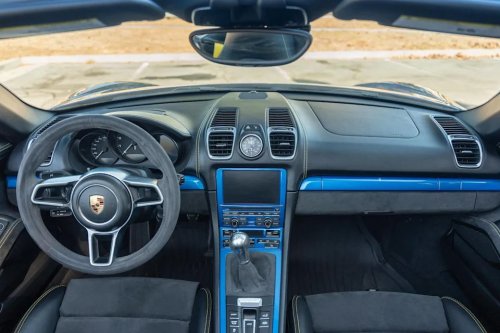
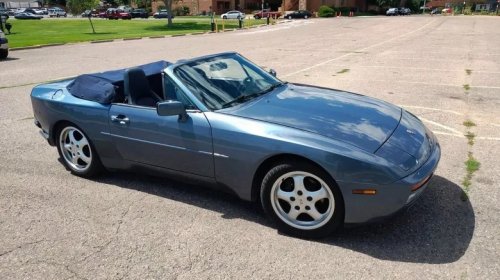
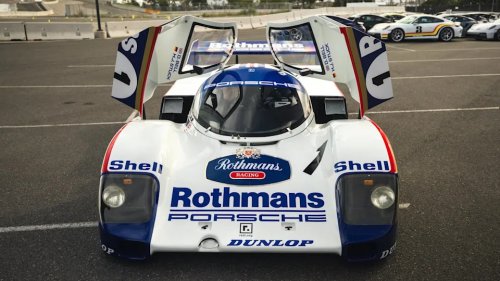
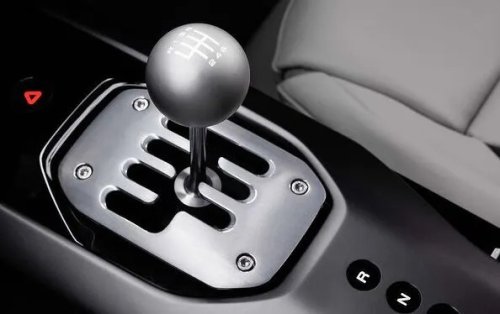
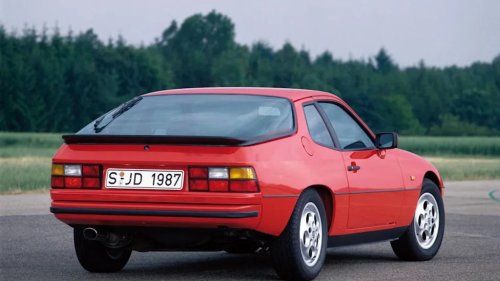
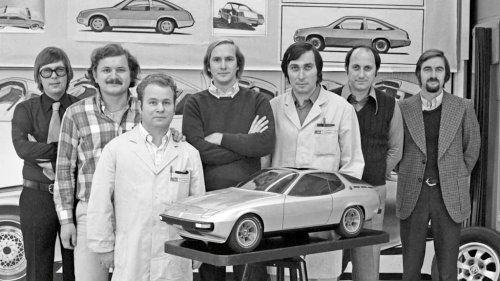
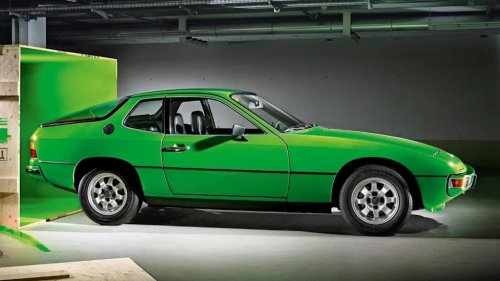
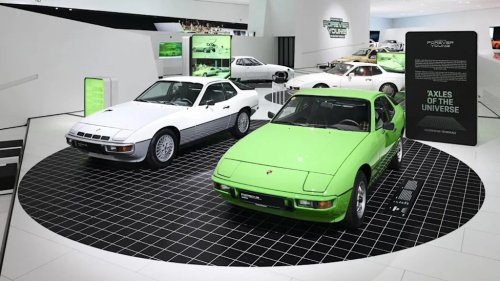
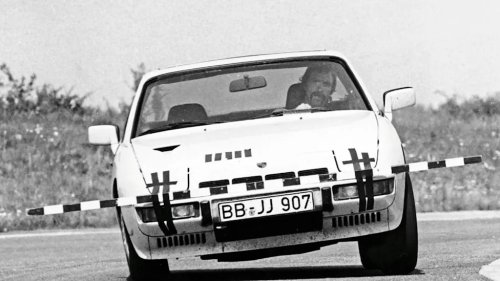
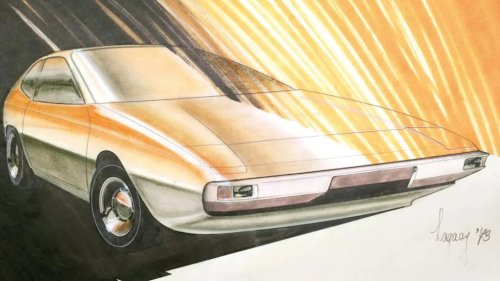
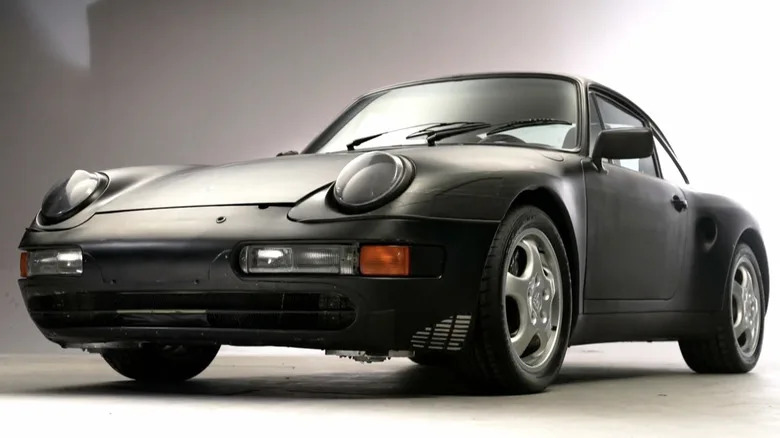
Autoblog and Yahoo may earn commission from links in this article.The First Front-Engined Porsche Turns 50Porsche may be one of the biggest brands in the world these days, but in the '70s, it was at a crossroads. Sure, the 911 was pulling its weight, and the 914 was doing well on its own. However, the lineup was aging, and the oil crisis didn't help matters. Porsche needed a new car that not only could capture volume but also embody the spirit of the brand in a more attainable package.The result was the Porsche 924, and it did more than enough to keep the cash flowing through Porsche and hang on for over a decade. The 924 turns 50 in 2026, and what followed was a series of front-engined models that would keep the company stable for over a decade.PorscheProject 425The story starts with Project 425, a joint project between Volkswagen and Porsche. It was meant to be Volkswagen's flagship sports car and Porsche's entry-level model. Written by Harm Lagaay (in his mid-20s), work on the car began in the early '70s, with Porsche handling a good chunk of the development. That's mainly because VW didn't have much experience building anything remotely sporty.AdvertisementAdvertisementPredictably, the oil crisis threw everything in disarray, and VW abandoned the 425 in favor of building something else. That 'something else' ended up becoming the Scirocco, itself based on the Golf. Porsche actually had to buy the design from VW just so the project wouldn't go to waste. It was allowed to continue for as long as the VW-Audi 2.0-liter engine was to be used in the final product.After a couple more years of development, the 924 made its world premiere in late 1975, and production commenced in 1976.PorscheThe Initial SpecsAt first, just one engine option was offered. For the European market, the 2.0-liter engine made 123 hp, which was actually decent by the standards of the mid-'70s. That's mainly thanks to the engine's use of fuel injection, extracting a good amount of horsepower from its small capacity. However, the North American versions were kneecapped at a middling 92 hp due to emissions regulations.It's a common misconception that the engine came from a VW light truck, but its design originated from NSU and was further developed by Audi. In '76, the 924 was only offered with a four-speed manual. What made the 924 special was its layout. Sure, rear-wheel drive was common in those days, but it used a transaxle layout typically reserved for more expensive cars. It would be another nine years before another relatively accessible car adopted that system, in the form of the Alfa Romeo 75.PorscheModel EvolutionThe 924 was, for its time, a fine-handling car, but the car needed more pull. That was especially true for the North American versions that didn't even break the 100 hp mark. 0 to 60 times took over 10 seconds with a manual, with some estimates at 12.5 seconds. A higher-compression version for the U.S and Canadian markets was introduced in 1977, bumping it up to 110 hp. That same year, a three-speed automatic joined the lineup, and we can't imagine how sluggish those cars were.AdvertisementAdvertisementWhat the 924 needed was even more power, fitting for a vehicle with a Porsche badge. Thankfully, the company's executives had the same sentiments. So, in 1978, the 924 finally came with a turbo option. The European models put out 168 hp, far more than the standard version's 123 hp rating, and can knock 0 to 60 in the low-seven-second range. But, as always, North American models were choked by regulations, but it was still a welcome increase to 143 hp. Also, Porsche produced a limited-run model of the 924 called the Carrera GT, which eventually became the basis of the 944.VW stopped producing the 2.0-liter blocks for Porsche in 1984, as it was agreed that only 100,000 of those engines would be built. But when one door closes, another opens, which allowed the company to install a larger 2.5-liter under the hood of the 924. That block came from 944, albeit detuned to avoid overlap with its more expensive sibling. The U.S. didn't get the 924 for the '84 and '85 model years, only returning for '86. Now called the 928S, power was rated at 148 hp, and in its final model year of 1988, jumped to 158 hp.PorscheThe 924 LegacyTo this day, there are still arguments about whether or not the 924 is a true Porsche model. We'll leave that up to the classic purists to argue amongst themselves, but we can't deny the impact that this model had on the company's history. Granted, the 928's development started a little earlier, but the more affordable 924 came out first, and it was the right car for the right time.Production spanned from 1976 to 1988, with over 150,000 cars produced in 12 years. We reckon that those numbers could've been higher had U.S sales not been paused for two years. Without the 924, there wouldn't be a 944, a model that proved even more successful than the car it was based upon. That model later evolved into the 968, and if we combine the sales of all the 924-based models, we're looking at nearly 340,000 cars in 19 years. Throw in the 928, which was its own thing, and the sales of the transaxle Porsche models went well past the 400,000 mark.AdvertisementAdvertisementIt was more than enough to develop the 986 Boxster and 996 911, ensuring the brand would live on for much longer. Real Porsche or not, the 924 and its derivatives certainly did its part. While the Cayenne and Macan would eventually rake in more money for Stuttgart, those crossovers might not be around today if it weren't for the early front-engined models.PorschePorscheView the 9 images of this gallery on the original articleThis story was originally published by Autoblog on May 24, 2026, where it first appeared in the News section. Add Autoblog as a Preferred Source by clicking here.



















 +26 others
![Porsche, It's finally here: Porsche puts wireless EV charging into production [video]](https://cdn.topcarnews.net/thumb/id/aHR0cHM6Ly9pMC53cC5jb20vZWxlY3Ry-ZWsuY28vd3AtY29udGVudC91cGxvYWRz-L3NpdGVzLzMvMjAyNi8wOS93aXJlbGVz-c19tYWluLmpwZWc_dz0xNTAwJmFtcDtx-dWFsaXR5PTgyJmFtcDtzdHJpcD1hbGwm-YW1wO3NzbD0x/1a04f9f19968e2d3eb15f335c21c92a5.jpeg?t=20260926&post_id=63825)
![Porsche, It's finally here: Porsche puts wireless EV charging into production [video]](https://cdn.topcarnews.net/thumb/id/aHR0cHM6Ly9lbGVjdHJlay5jby93cC1j-b250ZW50L3VwbG9hZHMvc2l0ZXMvMy8y-MDI1LzAzL0RFUy0xMDM4X0VsZWN0cmVr-LUJhbm5lcnNfRVZzXzA3OTdjMi5wbmc/e850e929e3168f8c7ff73cd888e54add.png?t=20260926&post_id=63825)