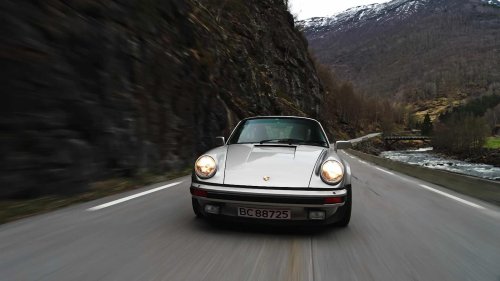
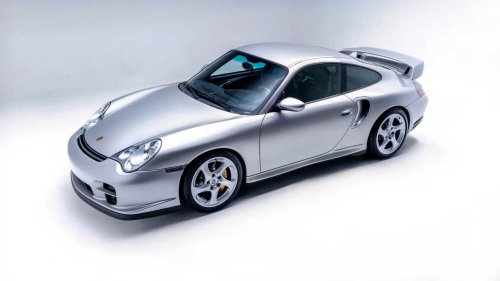
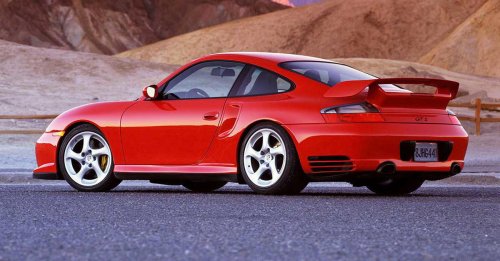
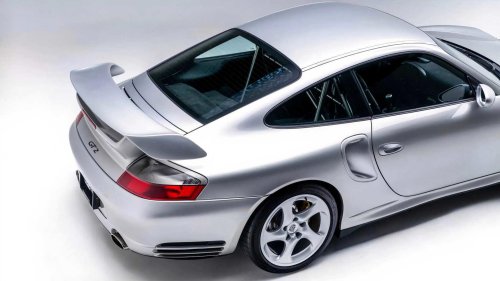
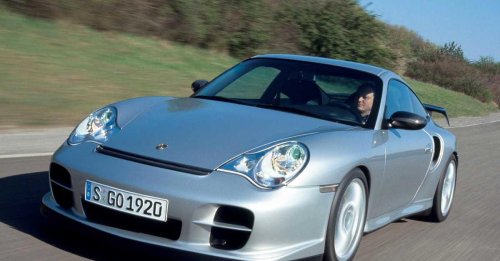
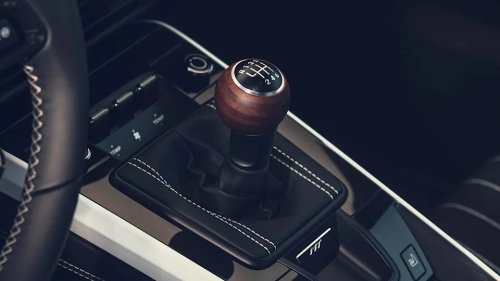
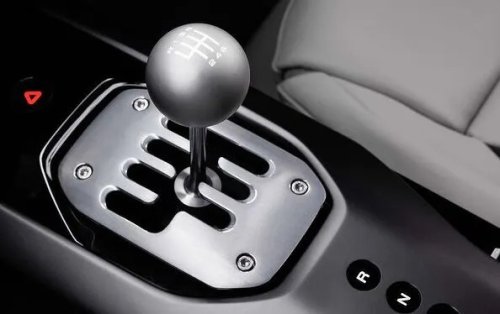
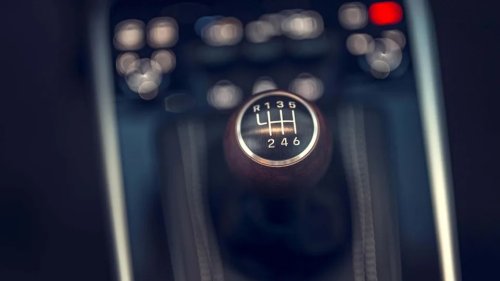
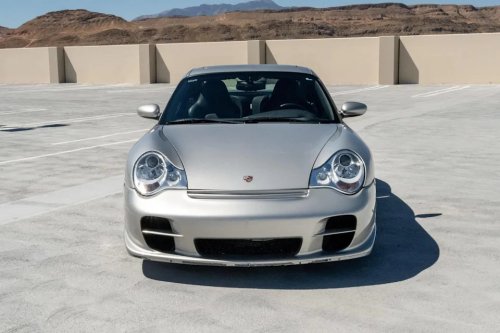
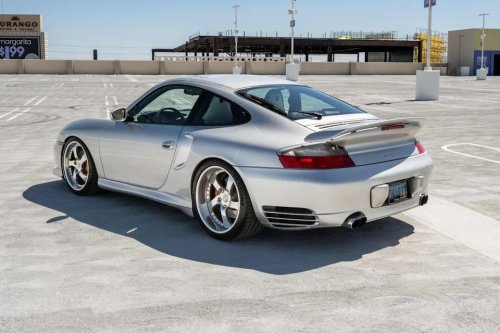
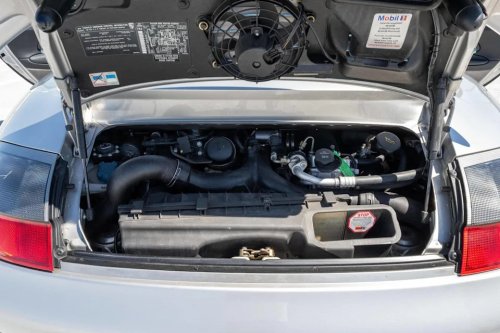
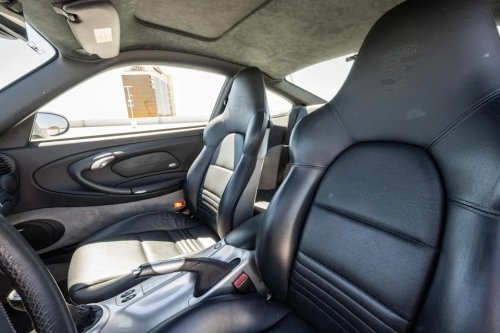
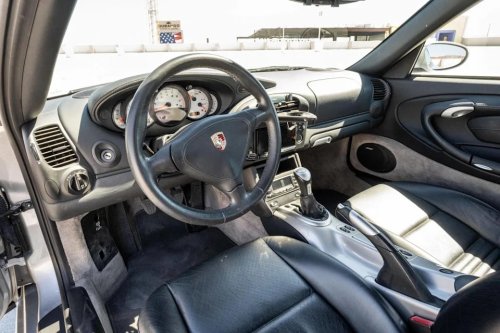
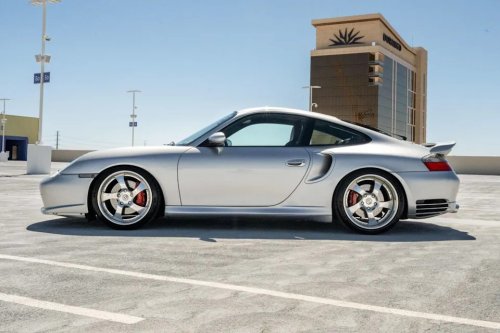
It can be argued that decades of evolving electronics and tightening safety regulations have gradually eroded the risk factor of the sports car. For better or for worse, the modern enthusiast's driving experience has required much less effort due to the wide adoption of power-assisted steering wheels, manual transmissions that blip the throttle automatically, and, in many unfortunate cases, fully automatic transmissions.But before the car industry put safety at the forefront of its efforts, there was a time when sports car manufacturers tasked their engineers with unleashing savage monsters onto dealer lots. Those who could afford one of these feral beasts likely knew more about litigation and surgery than mastering heel-toe downshifts or combatting oversteer. Consequently, attempts at taming these highly analog sports cars occasionally resulted in, well... litigation and surgery. The Driver's Car Used To Threaten You Via - Magnus Walker (YT) Even the simplest and purest of today’s enthusiast cars, such as the Mazda MX-5 Miata or Toyota GR86, are generous enough to lend their drivers a helping hand through nannies such as power steering, auto rev-matching, and pre-collision braking. But such machines were not always so gracious. Thirty years ago, your average sports car would throw a fit over a sloppy downshift, and the steering wheel was hefty enough to replace a gym membership.Porsche in particular is a master of the unforgiving, old-school sports car. Its 930 Turbo was notorious for dramatic turbo lag, which mixed with the rear-mounted engine as nicely as oil and water. The excess weight toward the rear of the car created a high risk of losing traction, and drivers had to face the risk of swinging out the back during the sudden rush of torque. As a result, pairing an inexperienced driver with a corner has resulted in fatal consequences, hence earning the 930 Turbo its iconic “widowmaker” title.The introduction of electronics in recent years has been quite effective in taming Porsche’s lineage of turbocharged monsters, but a short window in the early 2000s did allow the opportunity for one more truly analog wild child from Stuttgart. Porsche's Final "Widowmaker" Bring a Trailer The end of Porsche’s widowmaker days came at the very beginning of its water-cooled era. The early 996-generation 911 GT2, referred to as the 996.1, debuted at the beginning of 2001 as the flagship of the lineup, blending the Turbo’s sheer power with the GT3’s lightweight, track-focused build, while cutting out all driver assists and comfort-oriented features purely in the name of performance. The result was heralded as the most extreme and chaotic road-legal sports car that Porsche could offer at the time.Sending the GT2 through the backroads of your choice will quickly make you realize that this bare-bones, twin-turbocharged, rear-wheel drive concoction is not your friend. The 3.6-liter Mezger flat-six sent 462 horsepower and 457 pound-feet of torque straight to the rear wheels through a six-speed manual transmission. This powertrain was derived almost directly from the 996 Turbo, albeit without the reassurance of the all-wheel drive system. Turbo lag delayed output from the engine to cause a pushy, late-rev surge of power that threatened drivers with snap oversteer, solidifying the GT2 as the 930 Turbo’s water-cooled successor.While most cars of its time had already adopted basic driver assistance features, the year 2001 still left room for some risks, and Porsche took full advantage of the relative lack of regulations. ABS and power steering were the only features in the early GT2 that could be considered safety cushions, because traction control and stability control were completely absent. The six-speed manual similarly lacked electronic assistance, leaving the driver with a clutch heavy enough to remind them to stop skipping leg day. Pair that with the GT2’s infamously violent power delivery and rear-biased weight distribution, and you have a sports car that feels like it’s eager to send you back to your maker.The early GT2 was a very rare beast, as it was sold for just two model years before an updated 996.2 model was revealed in late 2003. The updated GT2 arrived with a slight bump in power, bringing output up from 462 to 476 horsepower, and from 457 to 472 pound-feet of torque. The 996.2 also benefited from a retuned suspension that was designed for improved stability and handling at higher speeds, which made up for the continued lack of stability and traction control. It also compensated for the shortcomings of the 996.1 model, which notoriously struggled with erratic handling towards the limit. Developed By Porsche Motorsport Via; Porsche The creation of the 996.1 GT2 was spearheaded by the Porsche Motorsport team, with the Turbo's widebody chassis and twin-turbocharged, GT1-derived Mezger engine serving as a base. From there, power to the front wheels was cut off to create the lightweight rear-wheel-drive format that the "widowmaker" is known for, and a fixed rear wing and various redesigned exterior panels were added to improve aerodynamics. As if the standard Turbo wasn’t already quick enough, the GT2 boasted a 10% power increase to add to its danger factor.The GT2 was also among the automaker's first production models to flaunt carbon ceramic brakes, or PCCBs in official Porsche jargon. According to Porsche, they weighed half as much as standard brakes while adding stronger braking performance. They came as standard equipment on the GT2, and can be easily spotted with their bright yellow calipers. The GT2 Favored Weight Savings Over Comfort Bring a TrailerPorsche stripped almost everything out of the GT2 to achieve its curb weight of 3,175 lbs (1,440 kg). That meant drivers had to give up modern conveniences such as air conditioning and sound deadening. Moreover, the removal of the sports car's rear seats left room for only one more passenger to witness the sheer lunacy of the GT2. Porsche even went as far as to eliminate the clutch servo, resulting in the six-speed manual’s excessively heavy clutch pedal.With the front end and cabin making up as little weight as possible, this left the rear end representing roughly 60% of the GT2’s weight due to the heft of the 3.6-liter engine sitting behind the rear axle, as well as the exclusively rear-wheel drive format. While the 911's rear-mounted engine has always caused its weight distribution to lean toward the rear, other power-packed 996 models like the Turbo mitigated the risk of losing control by providing power to all four wheels and making use of electronic assists such as traction and stability control. The GT2, meanwhile, skates on thin ice with the risk of snap oversteer due to its aforementioned lack of electronic assists and all-wheel drive. An Exceedingly Rare Modern Classic Via Porsche Porsche only built 963 units of the 996.1 GT2, making it a rather scarce conclusion to the industry’s analog days. Recent listings have consistently been valued within the six figures, and lower-mileage examples are now confidently surpassing the $200,000 mark. That said, with newer sports cars delivering a safer yet watered-down experience due to the adoption of electronic assistance, 996.1 GT2 buyers are investing in a bygone era of danger and madness.Currently, Porsche is preparing to unveil the 992 iteration of the GT2 RS, which is expected to pair a rear-wheel drive format with a variation of the T-Hybrid system that is offered in the latest GTS and Turbo models. While the next flagship for the 911 lineup will undoubtedly deliver otherworldly speed off the line, it is highly unlikely that any future GT2 model will ever quite match the raw, chaotic personality of the 996 GT2.Sources: Porsche, Bring a Trailer