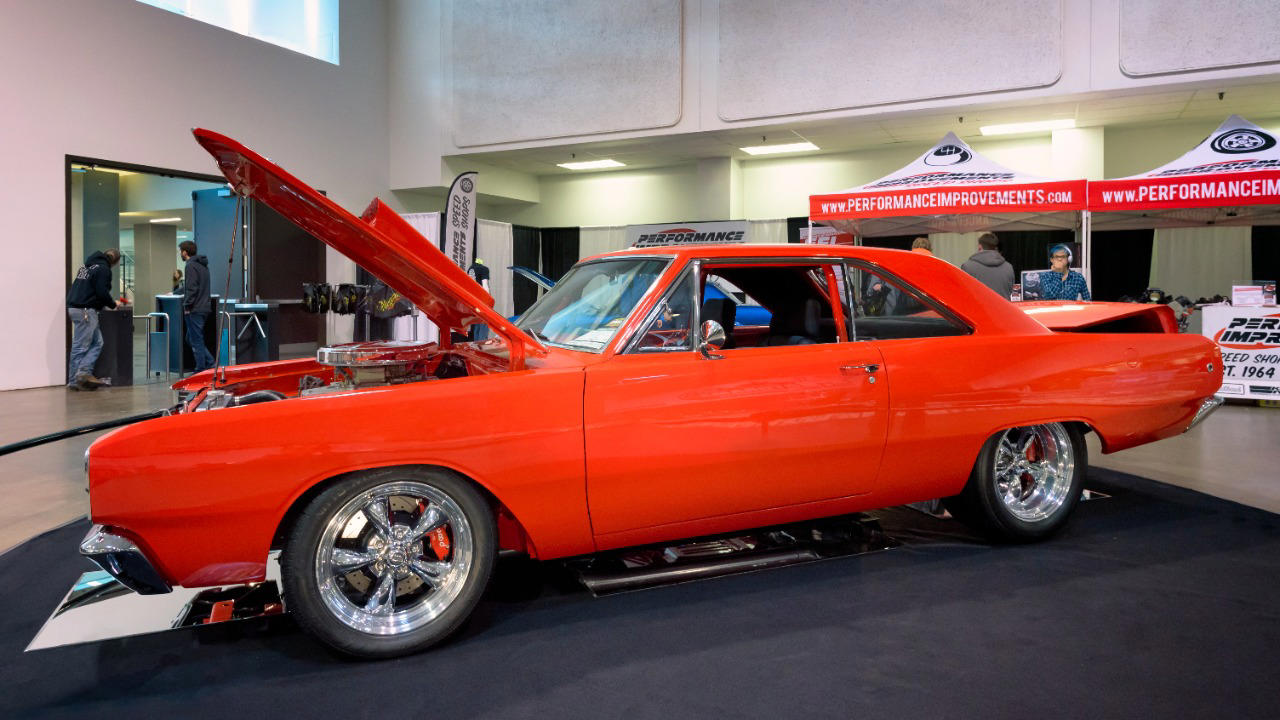
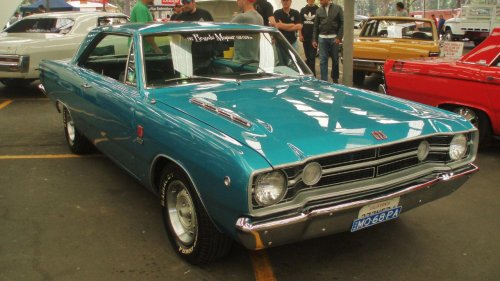
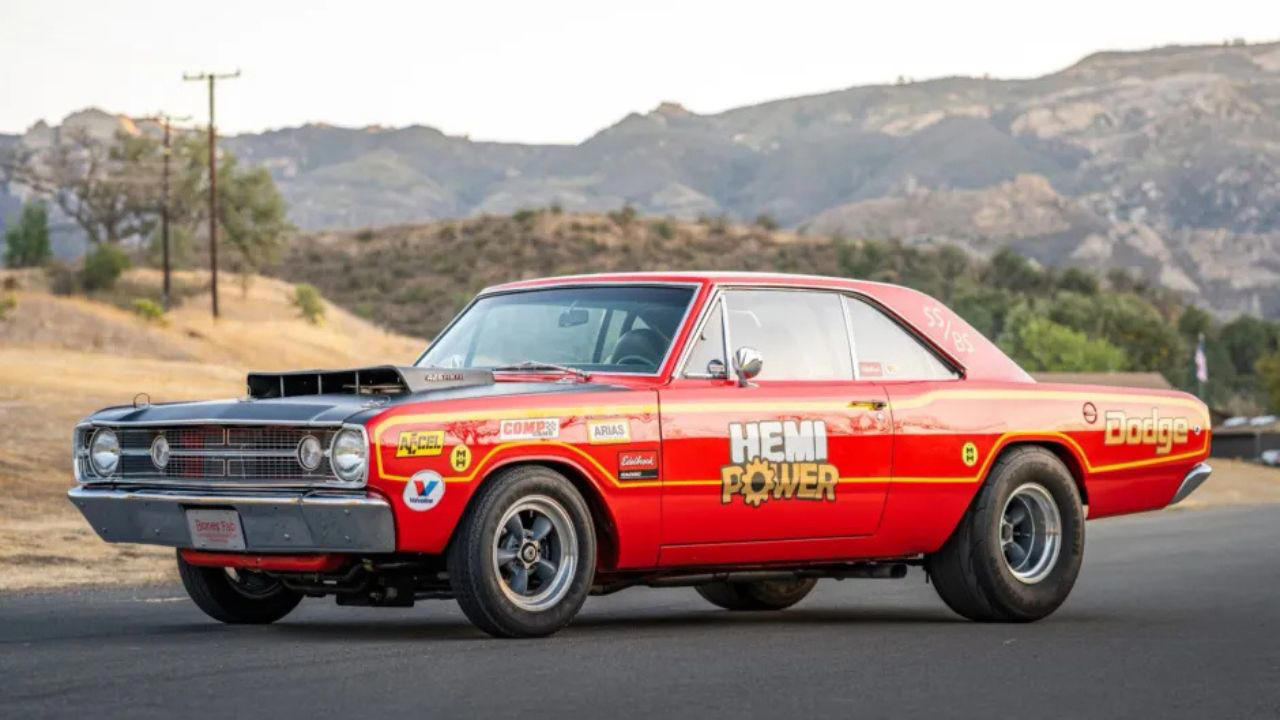
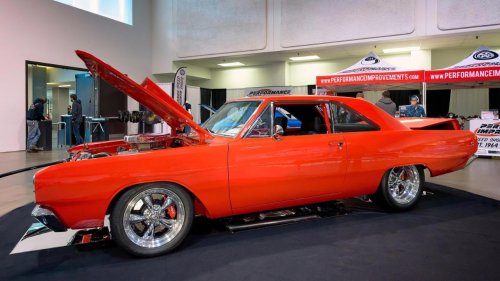
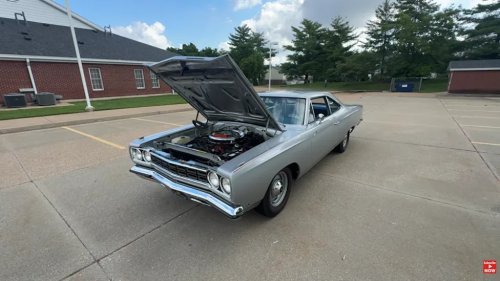
Mechanics warn the 1968 Hemi Dart pushed limits most drivers weren’t ready forThe 1968 Hemi Dart was not built to flatter ordinary drivers. It was a factory experiment in how far Detroit could stretch the definition of “street legal” before physics and common sense pushed back. Mechanics who have lived with these cars for decades say the real story is not just the power, but how brutally that power exposed every weakness in the hands, reflexes, and expectations of the people who tried to tame it. Dodge and Chrysler created a drag-strip tool with license plates, a car that met the bare minimum of regulations yet demanded race car discipline from anyone who turned the key. On paper, it was a Mopar legend. In the shop, it was a machine that punished inexperience and rewarded only the most disciplined drivers and tuners. The factory drag car that barely made sense on the street In 1968, Dodge and Chrysler turned the compact Dart into a purpose-built Super Stock weapon. The result was the Hemi Dart, a short-run car that even contemporary observers described as something that “barely made sense for the street,” a sentiment echoed in accounts of Dodge HEMI Dart as “dangerous” rather than just quick. Engineers took a lightweight A-body shell and installed the legendary 426 HEMI, the same basic powerplant already terrifying drivers in larger Dodge and Plymouth models. Contemporary analysis notes that while the output matched the conventional street HEMI in those Dodge and Plymouth cars, the engine sat in a much lighter body and in a far more focused Super Stock configuration, which pushed the combination into a different league of violence for the street. Specialists who have studied the program describe how they started with the engines and transmissions because those were the hardest pieces to package in the compact shell. The 426 HEMI was never meant to live under a Dart hood, yet the factory insisted, turning the car into a kind of sanctioned hot rod that blurred the line between showroom and staging lane. Hurst, LO23 and the birth of a barely legal legend The Hemi Darts were not ordinary production-line products. Dodge farmed much of the work out to Hurst, a company already known for performance conversions. References to Hurst-built Hemi Darts describe them as legendary among Mopars and “barely street legal,” which captures how thin the veneer of civility really was. Internally, the program carried the LO23 designation. One detailed description of this 1968 Dodge Hemi Dart, identified as LO23, notes that the rear wheel well arches were modified in the same way the front shock towers were reworked, and that the car wore a fiberglass nose and fenders to save weight. These are not the choices of a company chasing comfort. They are the choices of a company chasing elapsed time. Even the basic structure shows how far the builders were willing to go. One account from a drag racing group recalls that the fit between the big HEMI and the engine bay was so tight that assembly line workers literally had to beat the shock towers inward with sledgehammers to make room. That kind of crude but effective solution signaled to mechanics that this car was a compromise between engineering ambition and physical limits, not a carefully balanced street machine. Weight loss at any cost To make the Hemi Dart competitive in Super Stock, Dodge and Chrysler stripped away almost everything that did not help it accelerate. The LO23 cars lacked a rear bench seat, and the front seats were replaced with lighter units borrowed from the Dodge A100 van, as described in coverage of Larry Griffith’s 68 Super Stock Hemi engine. The message was clear: passengers were an afterthought, and comfort was a liability. Fiberglass panels replaced heavier steel wherever possible. The previously mentioned fiberglass nose and fenders, combined with thin side glass and minimal sound deadening, produced a car that felt raw and fragile compared with a normal Dart GTS. That same fragility is exactly what made mechanics nervous. The structure was light, the crash protection primitive, and the speeds it could reach in a short distance were far beyond what the original A-body platform had been designed to handle. Even basic amenities were sacrificed. These cars often lacked standard insulation, full interior trim, and in some cases, even basic weather sealing. On a drag strip, that did not matter. On public roads, it meant owners were driving something closer to a race shell with plates, a combination that magnified every mistake. The 426 HEMI in a compact shell The core of the danger was the 426 HEMI itself. The engine already had a reputation in Dodge and Plymouth muscle cars, but those were heavier platforms with longer wheelbases and more forgiving manners. In the Dart, the same basic HEMI specification sat in a smaller, lighter body that reacted more violently to throttle input. Technical overviews of the factory drag car program describe how engineers prioritized the engine and transmission fitment before anything else, since those components were the hardest to squeeze into the compact bay. The powertrain combination, supported by a factory drag car, used heavy duty transmissions and driveline parts intended for drag racing, not daily commuting. Performance estimates vary, but the consensus among mechanics and historians is that the Hemi Dart was capable of quarter mile times that embarrassed almost anything on the road in 1968. That level of acceleration, delivered through bias-ply tires and a short wheelbase, required a driver with race level focus. For someone used to a regular Dart GTS, the jump in response could feel like a trap. Why do mechanics call it dangerous Modern commentary on the Hemi Dart often emphasizes one theme: Dodge and Chrysler built a car that technically met regulations but practically demanded far more skill than the average buyer possessed. One detailed analysis describes how the company “bothered to make it street legal at all,” noting that it only met the basic requirements and that the result was arguably Dodge’s most dangerous. Mechanics point to several reasons. First, the car was underbraked relative to its acceleration. The lightweight construction and drag race focus meant more attention went to launching than stopping. Second, the suspension geometry and tire technology of the era were not designed for the torque shock delivered by a 426 HEMI on sticky surfaces, much less on unpredictable public roads. They also note that the stripped interior and minimal safety equipment left little margin when things went wrong. There were no modern crumple zones, no airbags, and only the most basic belts. In a car that could reach triple digit speeds in a short burst, any loss of control carried outsized consequences. Mechanics who worked on these cars learned quickly that a misaligned suspension or worn tire could turn a full throttle pass into a spin with very little warning. From Dart GTS to Hemi Dart: two very different animals Some of the confusion among buyers in the period likely came from the existence of the more civilized Dodge Dart GTS. Commentary on how the 1968 Dodge Dart GTS became a performance icon for Chrysler often highlights how that car balanced power with everyday usability. The GTS carried strong engines and sporty trim, but it was still a conventional street car with a full interior and more balanced road manners. The Hemi Dart, by contrast, was a specialized Super Stock machine. Where the GTS aimed to attract performance-minded buyers who still needed to commute, the Hemi Dart targeted racers who needed a factory-backed starting point. Mechanics stress that the two cars should never be confused. The GTS might be quick and entertaining, but it did not demand the same level of discipline or carry the same risk profile as a fiberglass-nosed LO23 car on skinny street tires. That distinction matters because some owners approached the Hemi Dart as if it were just an extreme version of the GTS. They expected the same basic handling and predictability, only with more power. Instead, they found a car that idled roughly, loaded up in traffic, and came alive only when treated like a drag car. For those who lacked the patience or knowledge to tune and respect it, the car quickly reminded them that it was built for the strip first and the street only as a technicality. “Street illegal” attitude and modern myth Enthusiast accounts often describe the 1968 Dodge Hemi Dart as a “Street Illegal Legend That Redefined Drag Racing,” language seen in coverage that invites readers to “Witness the ferocity of the combination. That phrase captures how the car lives today in enthusiast culture. It is celebrated precisely because it feels like something that should not have been sold with plates. Another enthusiast post frames the story in blunt terms, stating that this was not just fast but dangerous, and that Dodge built something that barely made sense for public roads. That sentiment reflects the view of many mechanics who have repaired crashed or abused Hemi Darts over the decades. The car earned its myth not only through trophies but through the number of owners who found themselves overmatched. Within Mopar circles, the Hemi Dart still stands out as perhaps the wildest muscle car the brand ever produced. A detailed breakdown of the 1968 HEMI Dart Super Stock program argues that it remains Mopar’s wildest muscle car, noting that while the engine output matched other HEMI models, the combination of weight reduction, fiberglass parts, and race focused tuning pushed it into a different category. That assessment aligns with the way mechanics talk about the car in the shop: as something that sits at the edge of what a factory should reasonably unleash. Assembly line compromises and service headaches The way the Hemi Dart was built also created long-term service challenges. The earlier description of workers using sledgehammers on shock towers hints at how little margin there was for maintenance access. Mechanics who later had to remove or service the 426 HEMI in these cars often faced tight clearances, awkward fastener locations, and body panels that had been massaged at the factory just enough to make everything fit once. Fiberglass components added another layer of complexity. The fiberglass nose and fenders used on LO23 cars were lighter but also more fragile than steel. Minor contact that would have dented a metal panel could crack or shatter fiberglass, leaving owners with repair bills that required specialist work. Shops that were used to conventional steel bodywork had to adapt, and some owners replaced damaged fiberglass with heavier steel, which changed the car’s weight balance and sometimes its performance. Inside, the use of Dodge A100 van seats and the deletion of the rear bench created an interior that felt unfinished compared with other Mopars and with contemporary muscle cars. From a mechanic’s perspective, that bare-bones cabin made it easier to access some wiring and floorplan areas, but it also meant owners were more likely to attempt amateur modifications that later had to be corrected. The stripped interior invited tinkering, and not all of it was done well. More from Fast Lane Only Unboxing the WWII Jeep in a Crate 15 rare Chevys collectors are quietly buying 10 underrated V8s still worth hunting down Police notice this before you even roll window down The post Mechanics warn the 1968 Hemi Dart pushed limits most drivers weren’t ready for appeared first on FAST LANE ONLY.