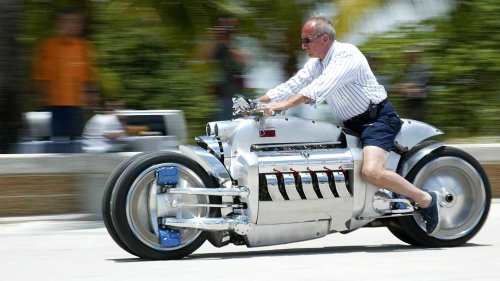
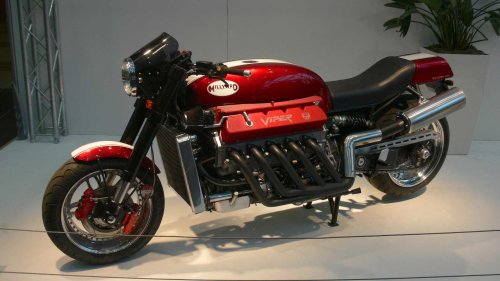
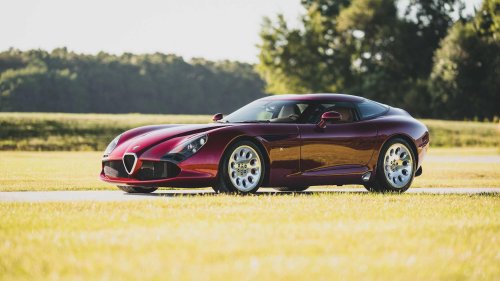
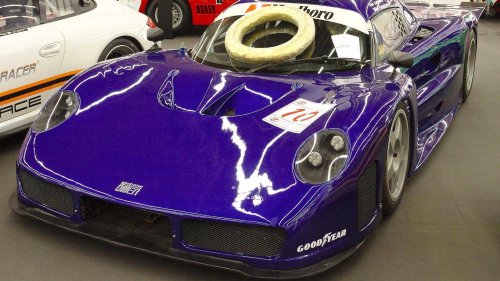
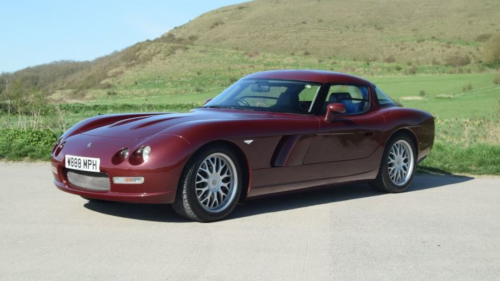
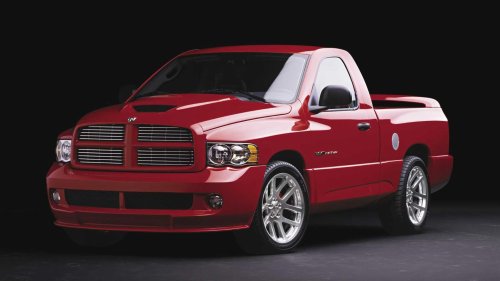
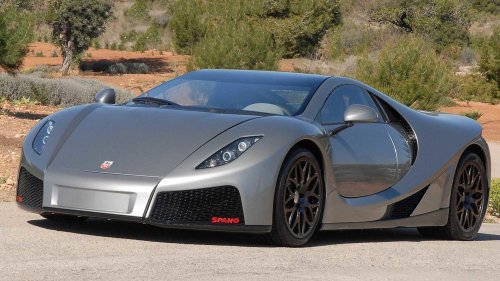
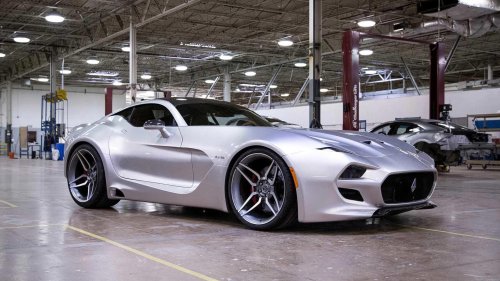
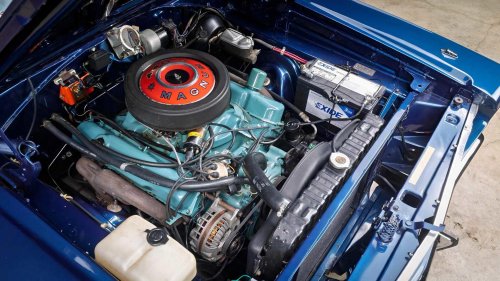
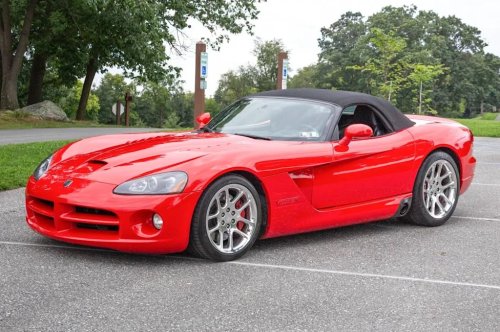
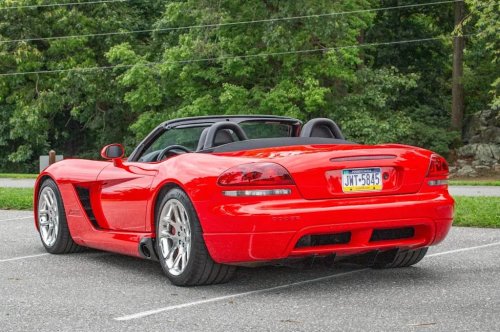
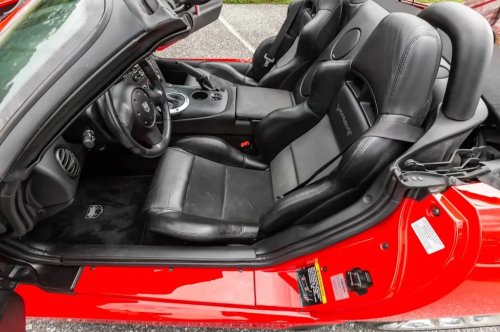
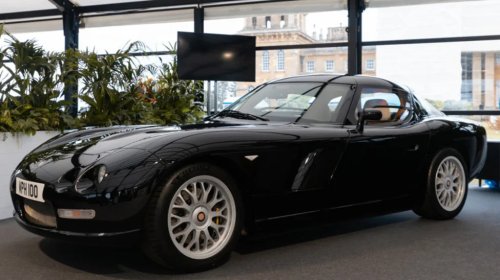
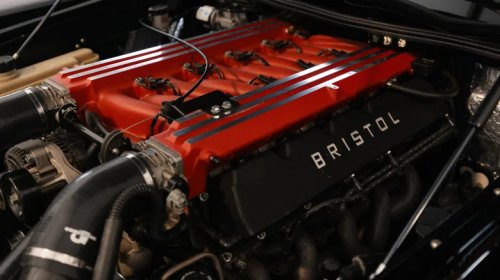
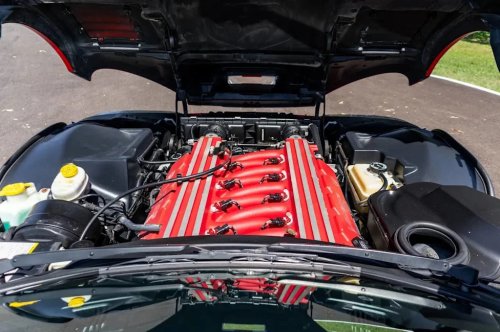
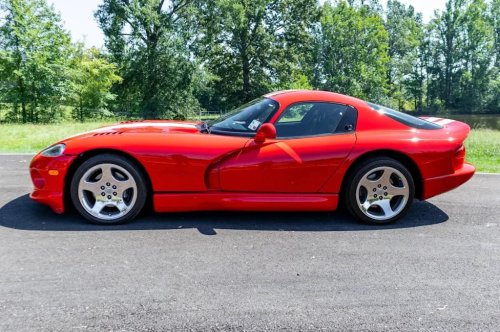
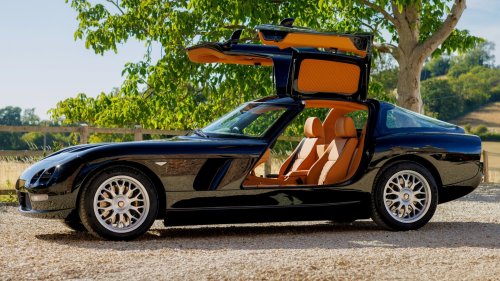
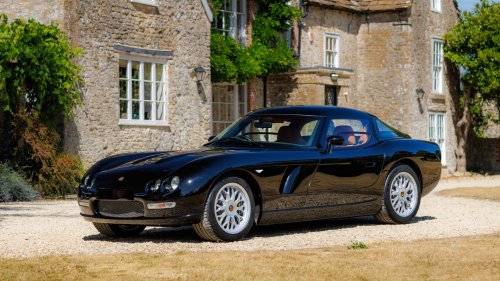
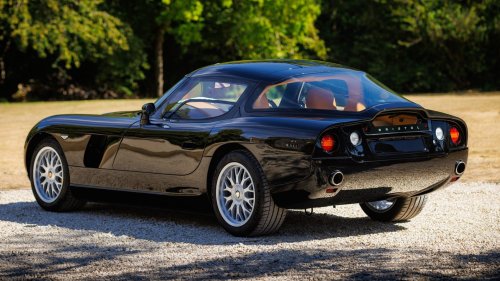
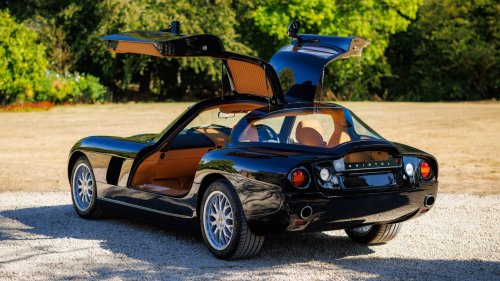
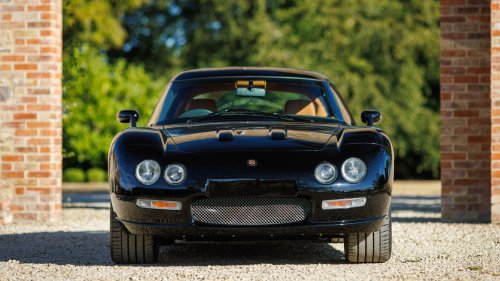
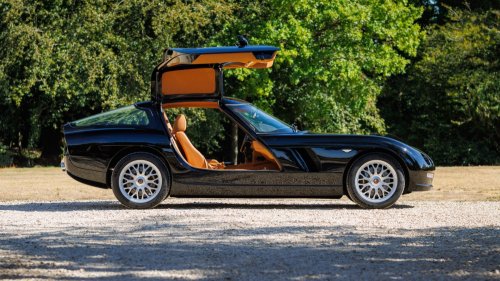
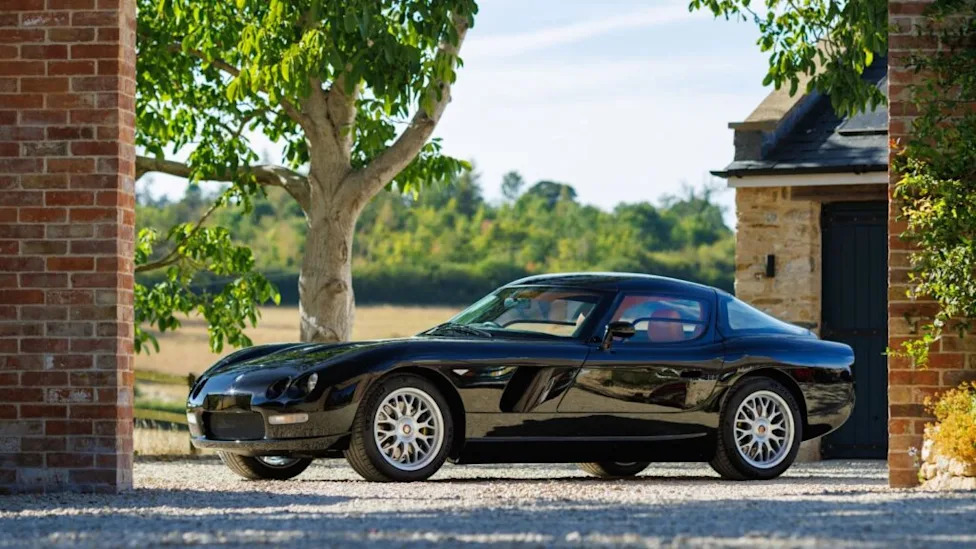
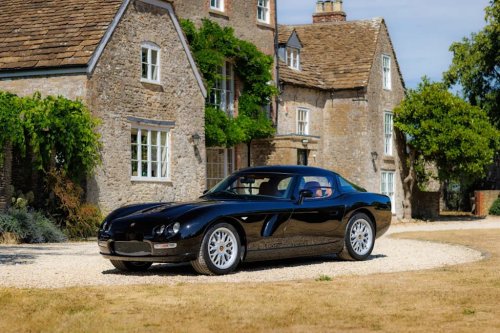
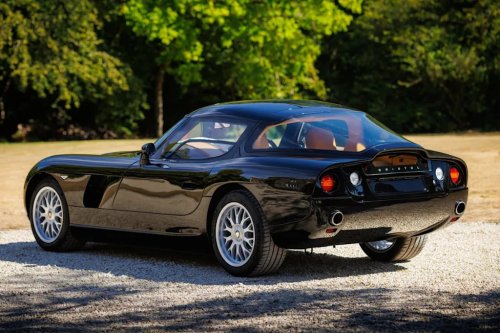
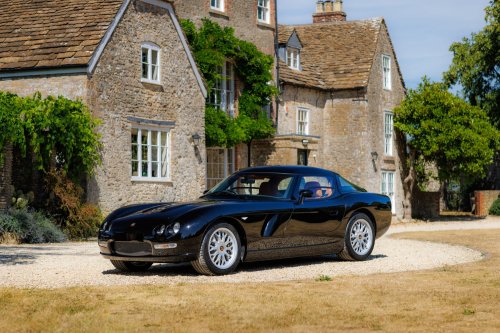
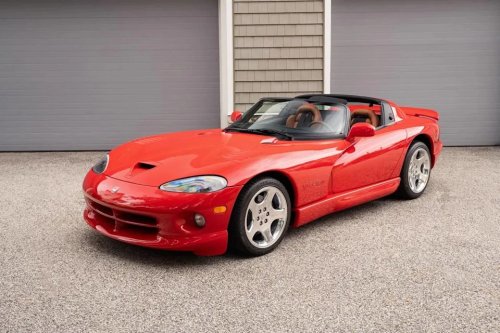
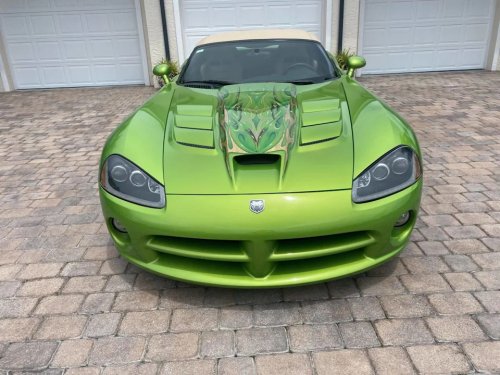
The Dodge Viper's V10 engine is one of the most defining elements of the potent American sports car, and a symbol of a bygone V10 era of American car engineering that some would argue ended too soon. But while it was famous for Dodge's halo sports car, the engine has been used in a variety of other vehicles that weren't Vipers. Some of these garnered praise and notoriety, while others have faded into obscurity. Some didn't even have four wheels.These are the vehicles powered by the Viper V10 engine. Dodge Tomahawk Viper engine generation: 2nd generation Dodge Tomahawk Concept On RoadThe Dodge Tomahawk is one of the coolest motorcycles ever created and also happens to be one of the most expensive motorcycles ever created. It was introduced in 2004 at the North American International Auto Show. Initially intended as a one-off concept, it was later turned into a limited-production vehicle, all hand-built and none street-legal. It reportedly started when two lower-level employees at Chrysler wondered if a motorcycle with a Viper V10 engine could actually work. Ultimately, Dodge would shoehorn a Viper V10 into a motorcycle frame. It would take a significant revision of the V10 engine's design to properly fit and run, like changing its oil and cooling systems.While the Viper V10 engine was the main attraction, it also featured four wheels. It was supported by an independent suspension system that allowed all four wheels to countersteer and still have a contact patch while leaning at 45 degrees. The Dodge Tomahawk's many odd components were fabricated from aluminum billets, with two alloy pieces weighing 750 lbs. They were machined to 25 lbs each and then polished. Millyard Viper V10 Viper engine generation: 1st generation WikimediaWhile the Dodge Tomahawk is a cool motorcycle, some weren't impressed when it debuted. One of the detractors of the Dodge Tomahawk's formula was Allen Millyard, who would build a bike built around a similar V10 engine that could rival the Tomahawk. While the Dodge Tomahawk wasn't road-legal, the Millyard Viper V10 allowed people to enjoy Viper power levels on two wheels.The front subframe, which is connected to the engine, also features the steering and suspension system, while the rear subframe features a suspension system utilizing two mono-shock units from the Yamaha R1. In 2023, the Millyard Viper V10 claimed the world motorcycle speed record for two people on a bike, which Guinness World Records ratified. The speed? 183.5 mph with a passenger riding pillion. With a single person aboard, the Millyard Viper V10 was clocked at 207 mph at the Bruntingthorpe Proving Ground. Alfa Romeo Zagato TZ3 Stradale Viper engine generation: 4th generation 2010 Alfa Romeo TZ3 Stradale front quarterOnly nine road-going examples of the Alfa Romeo TZ3 Stradale were ever created. Unlike the Lancia Hyena, the Alfa Romeo TZ3 Stradale was not based on a model within its manufacturer's catalog. Instead, it was based on the Dodge Viper ACR-X, with an extensive visual makeover courtesy of Zagato.The Viper V10 engine, shrouded by a curvaceous hood punctuated by two pronounced air intakes, produced less power than the track-only Dodge Viper it was based on but was still more than most generations of the Dodge Viper. A suspension system that featured A-arms, coil-over springs, and stabilizer bars supported its heavily revised frame. It was one of the coolest Zagato creations and fetched a hefty sum at auction. Bitter GT1 Viper engine generation: 1st generation Bitter_GT1_at_IAA_2019_IMG_0543Unlike anything else on this list, the Bitter GT1 was a fully-fledged race car. The Bitter GT1 started life as the Lotus Elise GT1 race car, which used a Chrysler V8 engine during its racing career. However, it would not be born until after the Lotus Elise GT1 bowed out of racing and fell into the hands of Mike Hezemans, who believed the Lotus Elise GT1's biggest issues were its power and aerodynamic qualities. The former was solved by adding a Viper V10 engine to its formula, producing more power than the Elise GT1.The Elise GT1's chassis would be significantly overhauled, becoming longer to accommodate the engine and the shapely body featuring a longer front end to improve downforce generation. The V10 engine was paired with a Hewland transmission, and although it was more powerful than the Elise GT1, it never matched the Lotus's performance and would have a turbulent, short-lived, and fruitless racing career. Bristol Fighter Viper engine generation: 2nd generation bristol fighter side frontThe Bristol Fighter is a British sports car produced in limited numbers from 2004 until 2011. Its body was characterized by short overhangs at the front and back, a long hood, a small cabin, and a sloping rear. At the core of its curvy frame was a Viper V10 engine that would be used in all forms of the Bristol Fighter, including the more potent Bristol Fighter SD and the planned Bristol Fighter T.In its most potent planned form, the Bristol Fighter T fed more than 1,000 hp and 1,036 lb-ft of torque exclusively to the rear wheels, with a sprint to 60 mph from a standstill achieved in 3.5 seconds. Sadly, only one prototype was planned and the Bristol Fighter T never made it to the road or racetrack. Dodge Ram SRT-10 Viper engine generation: 3rd generation 2004 - 2005 Dodge Ram SRT-10 (8)The Dodge Ram SRT-10 is one of the few pickup trucks to utilize a V10 engine and arguably the best V10-powered pickup truck. It is a practical performance bargain in 2025, representing a unique take on the Viper engine that powered the third-generation Dodge Viper. In the Dodge Ram SRT-10, this power unit mustered 500 hp, weighed 5,130 lbs in its regular cab form, and could reach a top speed of 154 mph.At one point, it held the record for the fastest production pickup truck, but it would then be usurped by the HSV Maloo, powered by the LS2 V8 engine used in the Chevrolet Corvette. The Dodge Ram SRT-10 was an impressive piece of machinery, surviving in Dodge's ranks for two generations of the Dodge Ram 1500 before manufacturing ceased. Spania GTA Spano Viper engine generation: 1st, 2nd, and 3rd generations 2013 GTA Spano The Spania GTA Spano is one of the lesser-known Dodge Viper V10 engine users. The first appearance of the GTA Spano was in 2010 at the Top Marques Monaco exhibition, where it appeared in prototype form, while the first sighting of the production series GTA Spano appeared in 2013 at the now-defunct Geneva Motor Show. The first generation was produced between 2013 and 2015, utilizing the 8.4-liter Viper V10 engine, albeit with two turbos to enhance power outputs.The second generation debuted in 2015 and was essentially an entirely new car, powered by a more modern version of the Viper V10. Displacement had dropped from 8.4 to 8.0 liters, but power had increased considerably, rated for more than 900 hp and 900 lb-ft of torque. This generation of the GTA Spano was also the first car in the world to use graphene in its design. VLF Force 1 Viper engine generation: 4th generation 2018 vlf force 1 front silverThe VLF Force 1 is a limited-edition American sports car developed by VLF Automotive, one of the automotive businesses in which Henrik Fisker was involved. One of four products created by the company, the VLF Force 1 was a coach-built Dodge Viper of which 50 were planned for production. At the core of each model was an 8.4-liter V10 engine with a significantly higher power output that allowed its 3,395-pound frame to reach 60 mph in three seconds.Henrik Fisker designed the Force 1's carbon fiber body, which shared a few features with the Dodge Viper. The interior was designed to accommodate two people, was adorned extensively in leather, featured in-dash navigation, and had a Wi-Fi hotspot antenna engineered into the rear spoiler. It cost $286,500, and while production plans envisioned a 50-unit production run, only five examples of the American Viper-based sports car would be created.