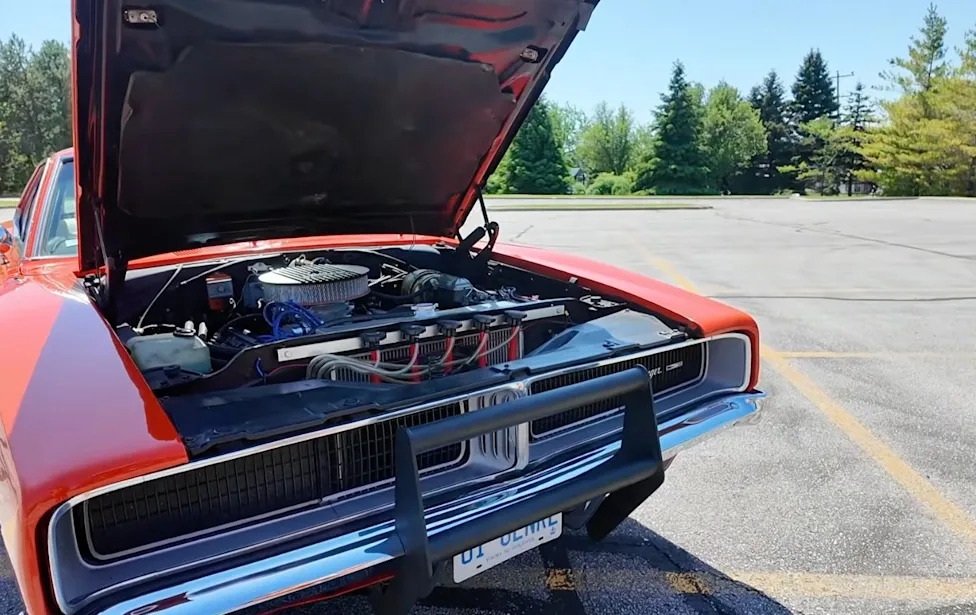
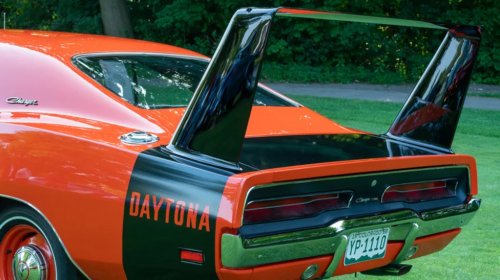
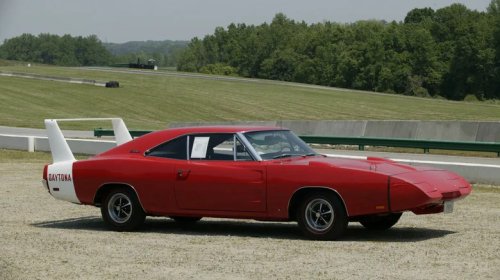
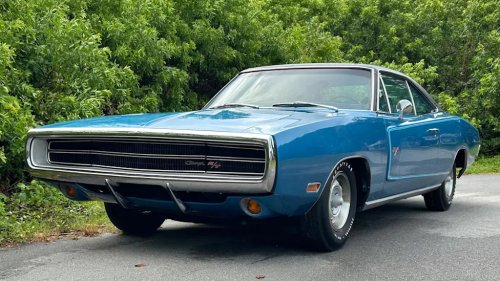
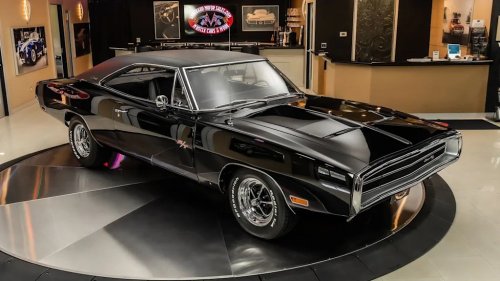
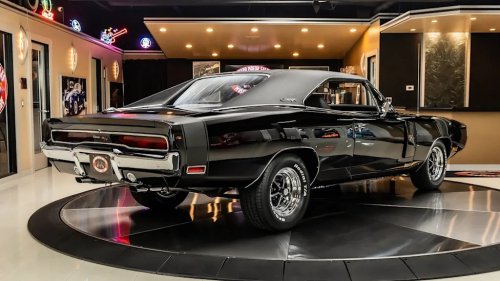
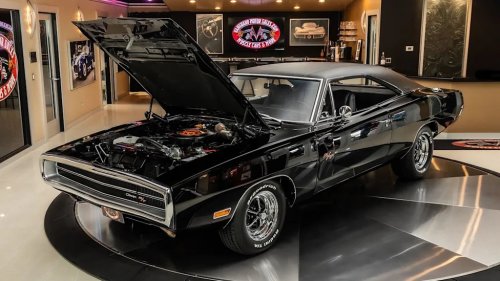
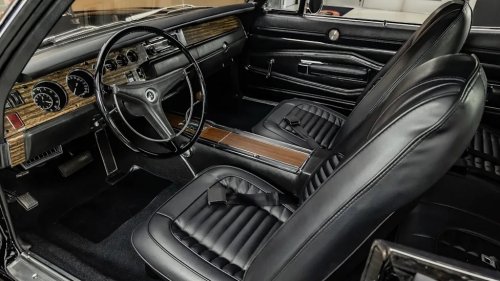
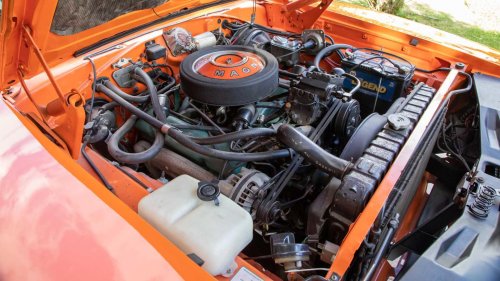
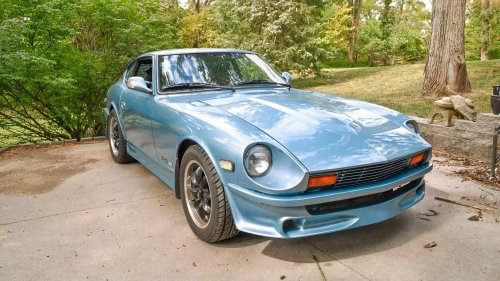
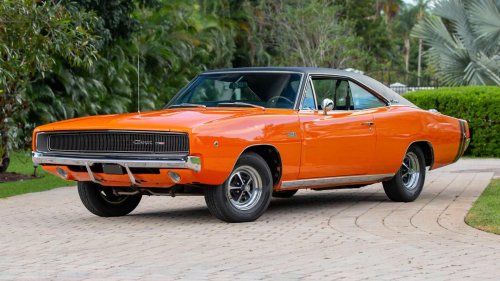
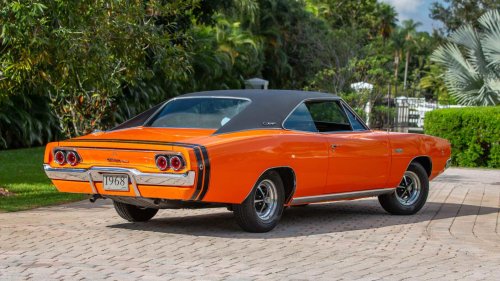
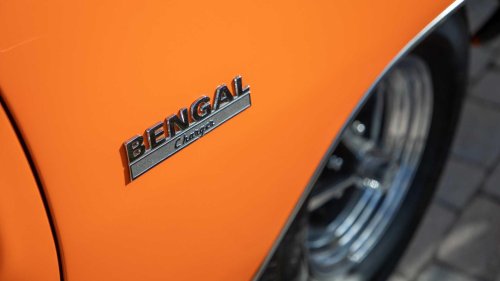
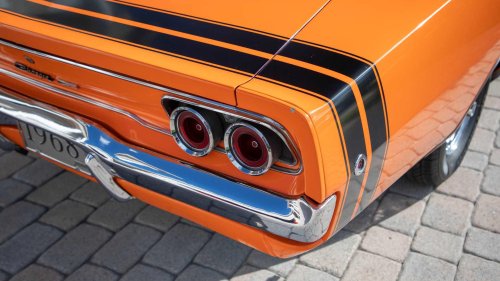
When I say “second-gen Dodge Charger” what color do you imagine? If you said, “bright orange,” you’re like countless muscle car fans. But while Dodge was offering some High Impact colors in the 1960s, it didn’t actually sell the orange made famous by the Dukes of Hazzard. That didn’t stop one dealership from ordering them anyway, for an intriguing reason sports fans will love.The resulting special edition is rarer than hen’s teeth. It’s rarer than Chargers powered by the 426 Hemi. It’s rarer than the legendary Charger Daytona. And someone just bought one for a steal. Dealerships Built The Most Unique Special Editions MecumToday, we’re used to insane factory-built special editions. You can order an “American Expedition Vehicles” Colorado directly from Chevrolet. Ford assembles turbocharged “Ready to Rock”-designed Mustangs in-house. And of course, Mopar slapped superchargers on Chargers and Challengers in the factory for nearly a decade. But things weren’t always this way. If you wanted a truly unique special edition in the 1960s, you needed the help of a dealership.For example, Yenko Chevrolet in Canonsburg, Pennsylvania specialized in high-performance muscle cars. The dealership built some of the most desirable Chevys of the 1960s and 70s. Most notably, the “Yenko Camaro” was specially ordered with 427 cubic-inch performance engines.Over in Chicago, Mr. Norm’s Grand Spaulding Dodge was building similar Mopars, badged as “Grand Spaulding Special” editions. The GSS Dart was an especially gnarly sport compact because of its 440 cubic-inch big block engine shoehorned into the lightweight car for an unbeatable power-to-weight ratio. A Washington Dealership Celebrated Its New NFL Team With The Datsun “Z Hawk” Bring a TrailerDealerships ordered runs of unique vehicles for reasons besides performance, too. The Seattle Seahawks NFL team debuted for the 1976 season, and one local dealership had a brilliant idea to commemorate the occasion.Rumor has it that Ranier Datsun/Nissan ordered a batch of silver 1978 Datsun 280Z sports cars. Then the dealership installed a full body-length strip on each side. The stripe was the same colors and had the same hawk logo as the stripe on the Seahawk players’ helmets.One Seattle resident remembered the cars on SeaHawks.net: "Growing up in Federal Way, I would frequently see a silver Datsun 240 Z that had 'Z Hawk' plates on it, and it had a Seahawks logo that ran the length of the vehicle...I thought it was a player that drove it.” Other forum members claim that the dealership built 100 for players and an additional 100 for fans. Of the cars available publicly, 50 were optioned with A/C and a sunroof. In addition, 50 were more bare bones with neither option.Ranier Datsun/Nissan is not the first dealership to have this idea. And the original NFL special edition may have been the most iconic. It was so well-known among some fans, it may have even inspired fake imitations. 1 Of 50: The Kneer Dodge Bengal Charger Special Edition Mecum AuctionsImagine: You’re standing on a street corner in Cincinnati in 1968 when a bright orange Dodge Charger pulls up to a stoplight. The car’s resplendent with its all-new “coke bottle” styling. But as far as you can remember, Dodge doesn’t offer bright orange cars. The color looks just like that of Cincinnati’s new NFL team. You peer closer, and that’s when you see the “Bengal Charger” badge on the front fender.Two major cultural moments intersected in 1968. The first was the debut of the Dodge Charger’s second generation. The second moment was the debut of Cincinnati’s NFL team. One Cincinnati Dodge dealer saw an opportunity and tried to order a Charger in the same orange as the team. Dodge didn’t offer cars in orange, but Tom Kneer got clever, flipped through Mopar’s full paint catalog, and found a bright orange hue similar to the Bengals’ new jerseys.Mopar indeed kept PPG #60326 on hand for Michigan state highway trucks. But because it was a custom color, Dodge made Kneer order 50 Chargers painted in the eye-catching color. The Dodge Charger special edition nobody remembers was nearly lost to time. Then one popped up for sale. And then another emerged. Here’s the kicker: the rarest of all 1968 Chargers is reselling for bargain prices. Bengal Chargers: What’s Known And What’s Just Rumor MecumA major problem with special editions assembled at dealerships is that they often lack the rigorous documentation of those assembled at the factory. Thankfully, in 2020, a 1968 Dodge Bengal Charger sold at Mecum Auctions and offered some insights into these limited cars.The Bengal Charger in question (VIN XP29HB345572) has a 383 cubic-inch V8 and automatic transmission. Mecum advertised it as one of just 50 finished in the orange fleet truck color by Tom Kneer Dodge to commemorate the Cincinnati Bengals’ first year in the AFL. Rumor has it that Kneer ordered every Bengal Charger with a black vinyl roof to better match the team’s two-tone uniforms.XP29HB345572 also has a black bumblebee stripe, which was normally only available on R/T cars. Mecum claims Chrysler added the sport stripes to every Bengal Charger for free to stick with the two-tone theme. Finally, the Charger has Bengal floor mats and a “Bengal Charger” badge on the front fender. These were almost certainly added outside the factory, likely at Kneer Dodge.MecumIn addition, XP29HB345572 boasts a report from the official Chrysler Registry. Mecum claims only three original Bengal Chargers are known to exist. Two of these documented cars are the desirable R/T performance trim which came with the 440 engine.Other sources claim that few of the original 50 Bengal Chargers boasted the 440 cubic-inch “Magnum” V8 engine. Some say it was 10 total, others say 12. The rest of the Chargers must have come with the 383-inch big block V8, the 318 cubic-inch LA V8, or even the 225 cubic-inch “slant six” base engine. Bengal Charger Values And The Problem Of Verification The car sold by Mecum, the only documented non-R/T Bengal Charger, went for just $80,300. It's interesting to note that the Bengal Charger is ten times rarer than 1968 Chargers powered by the legendary NASCAR homologation 426 Hemi. Dodge built either 475 or 476 of those. It’s also ten times rarer than the 1969 Dodge Charger Daytona, with its iconic nose cone and wing—also a NASCAR homologation vehicle. Dodge sold between 501 and 503 of those.MecumIt’s unsurprising that fans of the Bengals might take later orange Chargers and create Bengals Charger clones. A third-gen 1972 Dodge Charger appeared in Michigan that some claimed was from a second run of Bengal Chargers. In the video above, you can see the Auto Archaeology YouTube channel’s investigation into the 1972 Bengal. But with no further documentation, it is just as likely to be a Bengal fan’s tribute to the original run, as an actual Kneer Dodge car from a previously undocumented second run.















 +80 others