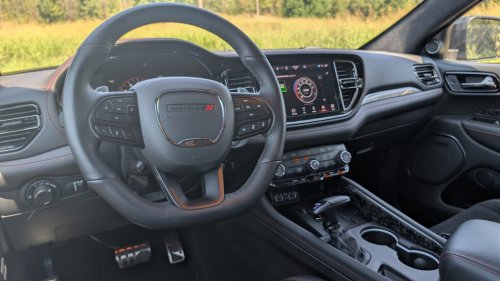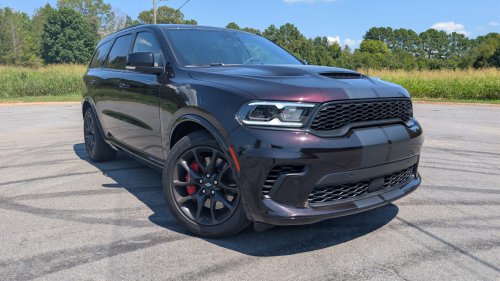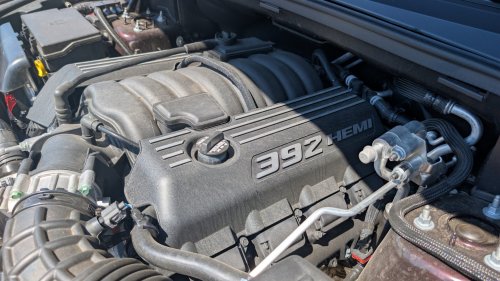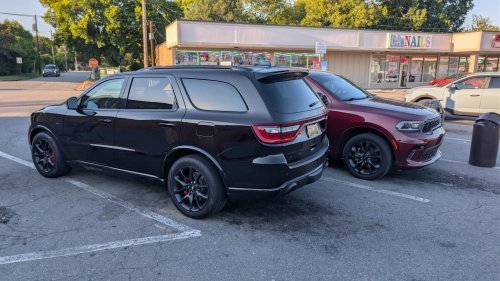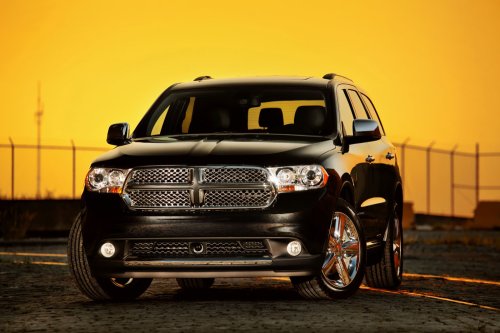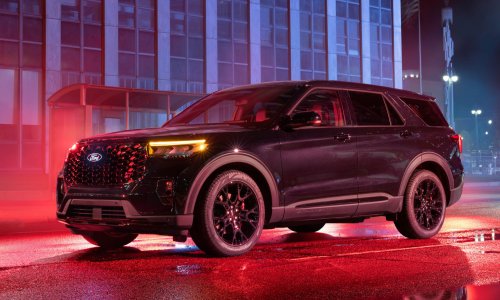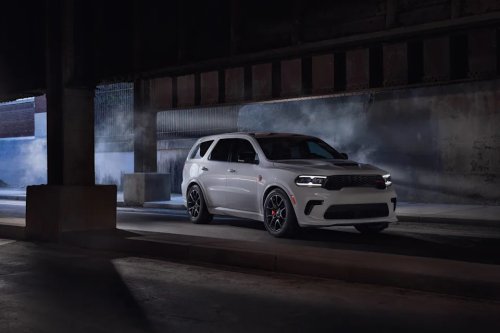
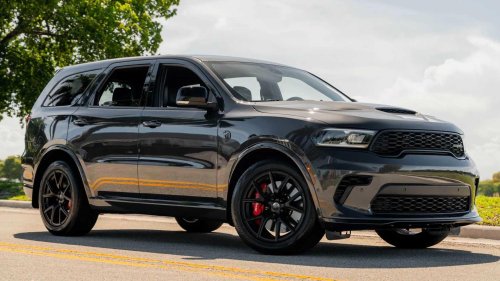
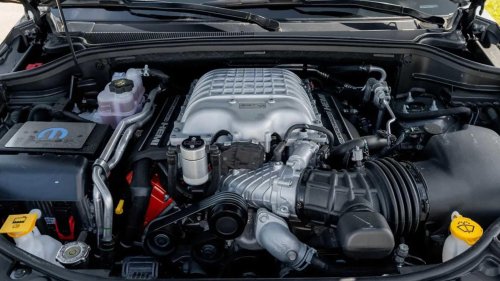
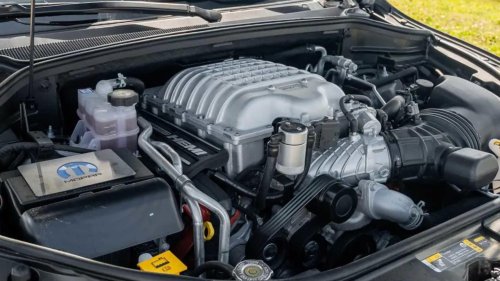
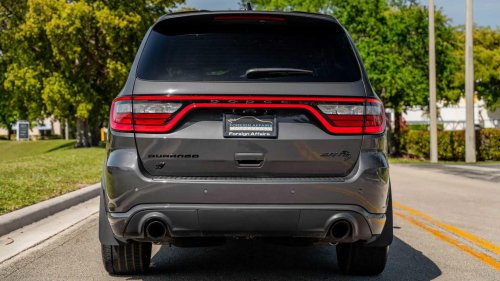
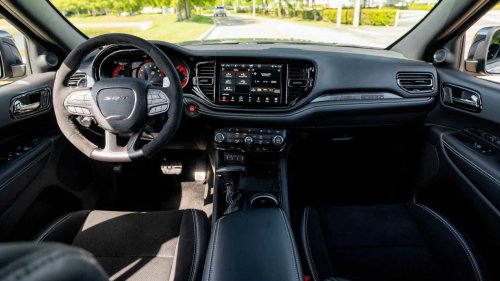
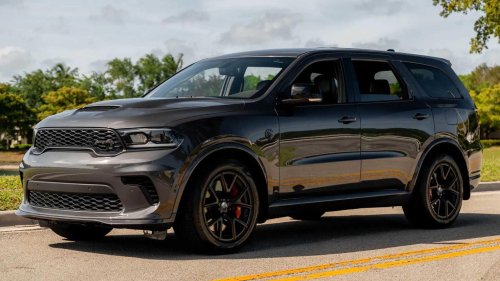
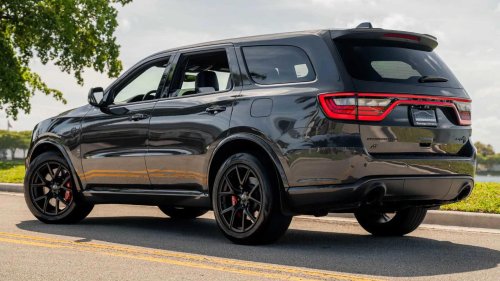
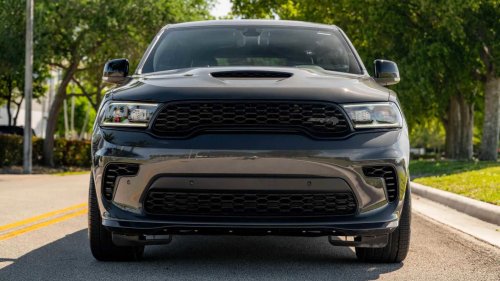
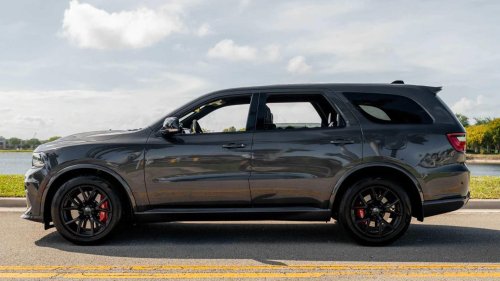



















The year was 2011. Barack Obama was midway through his first term, Instagram had just gone live, and the Green Bay Packers had just won Super Bowl XLV. That same year, one American SUV rolled off the line in Detroit for the first time, and it has not been fundamentally redesigned since.In the 15 years that followed, the auto industry reinvented itself. EVs became the obsession, turbocharged four-cylinders replaced V8s across the spectrum, and touchscreens ate the dashboard. Dodge lost the Challenger, gambled with the Charger, and its lineup shrank to almost nothing with a re-badged Alfa Romeo.Yet, in 2025, Dodge sold 81,168 of this ancient SUV. A 37% jump from the 59,357 units it moved in 2024, and the nameplate's best sales year since 2005. By Q1 2026, nine out of every ten Dodge customers were buying it. The car world's most defiant underdog isn't a niche enthusiast machine. It's a three-row family hauler. The Three-Row SUV Segment Forgot What Buyers Actually Want Toyota Walk into the three-row midsize SUV segment in 2026, and you'll find a lot of turbocharged four-cylinders and hybrid badges. The Ford Explorer runs a 2.3-liter turbo-four. The Chevrolet Traverse gets by on a 1.5-liter, the Toyota Highlander has gone hybrid-first, and while the Kia Telluride and Hyundai Palisade still offer a 3.8-liter V6, neither has a V8 option at any price point.Most rivals in this class max out around 5,000 pounds at towing capacity, and even the Explorer and Traverse — two of the more capable options in the segment — top out at around 5,600 pounds. For buyers who actually need to haul something meaningful, that ceiling can be a dealbreaker.The segment didn't stumble into this position accidentally. It chased fuel economy ratings, infotainment scores, and refinement rankings, and got very good at all of those things. What it gave up in the process was the raw, uncomplicated capability that a certain kind of buyer still wants more than anything else.HyundaiKarl Brauer, executive analyst at iSeeCars, puts it plainly. The buyers gravitating toward old-school SUVs are people who want something engaging to drive without the unnecessary extras layered on top — no over-digitized cabins, no turbocharged compromise, just a vehicle that does what it says on the box. In a segment that has largely moved on from that philosophy, the gap it left behind is real.Into that gap stepped one SUV that did the opposite of everything the segment prescribed and is now outselling its own brand's entire remaining catalog in the process. The 15-Year-Old SUV That Became Dodge's Lifeline Bring a TrailerThe Dodge Durango has been on sale, riding the same fundamental platform, since the 2011 model year. The last time it received a ground-up redesign, most of today's new-car buyers were in middle school. By any conventional measure, it should be fading out gracefully, making room for whatever comes next.Instead, it is carrying an entire brand on its back. In 2025, Dodge sold a total of 101,927 units, and 81,168 were Durangos. The three-row midsize SUV recorded a 37% increase from the 59,357 units it moved in 2024.That surge stands in sharp contrast to the Dodge brand overall, which saw sales fall 28% that same year, largely because the previous-generation Challenger and Charger had been discontinued, and their replacements were only beginning to find their footing.The momentum has only built from there. In Q1 2026, Dodge reported total brand sales of 22,693 vehicles. 20,300 of those were Durangos, up 48% year-over-year. It was the Durango's strongest opening quarter since 2021. For practical purposes, Dodge is a one-model brand right now, and that model is 15 years old.Bring a Trailer Dodge CEO Matt McAlear has been candid about what's driving it. The Durango is the only V8-powered option in its segment, which lets it cross-shop against full-size body-on-frame SUVs on towing capability while remaining easier to drive, easier to park and — crucially — still able to fit in a standard garage. It occupies a space no other vehicle does.Two deliberate decisions made the timing even better: Dodge pulled pricing back after it had crept too high in recent years, and it standardized the5.7-liter HEMI V8across the lineup, making V8 power the entry point rather than an upgrade. Both changes landed at exactly the right moment, and buyers responded in numbers Dodge hadn't seen in two decades. Why Buyers Are Choosing An Old V8 Over Anything New Bring a Trailer The 2026 Durango is the only midsize SUV on the market where every single trim level comes standard with a HEMI V8. The base 5.7-liter produces 360 horsepower and 390 lb-ft of torque, and with the Tow 'n Go package, it pulls up to 8,700 lbs — a number no direct competitor in the class can match.The engine lineup only gets more interesting from there. Step up to the R/T 392 and you get the 6.4-liter HEMI with 475 hp and 470 lb-ft. At the top sits the SRT Hellcat, a supercharged 6.2-liter producing 710 hp and 645 lb-ft of torque, now available in all 50 states after emissions regulations were eased.Bring a Trailer All of that starts at $44,490 for the base V8 trim, making the Durango one of the cheapest V8-powered SUVs anywhere on the market. That price-to-performance ratio is genuinely difficult to argue with. Hellcat Durango Specs Then there's the interior. Where most new SUVs have replaced physical controls with layered touchscreen menus and haptic surfaces, the Durango still runs on buttons and knobs. That used to be considered dated, but in 2026, with buyers increasingly frustrated by over-digitized cabins, it reads more like restraint.Bring a Trailer The design has held up better than it has any right to. Two exterior facelifts and a thorough interior refresh in 2021 have kept it from looking its age, while the underlying character — the wide stance, the muscular lines, the unmistakably Dodge attitude — has stayed exactly the same throughout.That consistency is part of the appeal. Buyers who choose a Durango know precisely what they're getting, and they always have. In a market full of vehicles that reinvent themselves every four years, there's something quietly reassuring about a machine that knows exactly what it is. The Platform That Refuses To Die — And Doesn't Need To Bring a TrailerA replacement isn't coming until 2029 at the earliest. If the current platform makes it to 2030, the Durango will have been in continuous production for 20 years, an almost unthinkable run in an industry where the typical model cycle is six to eight years.To put that in perspective, the only vehicles on sale today with a longer lineage are the Chevrolet Express and GMC Savana vans, which date back to 1996. The Tesla Model S launched in 2012, the Lexus IS in 2013, and the ND Mazda MX-5 Miata in 2015. All long-lived platforms by modern standards, but none of them are having their best sales years at age 15.Bring a Trailer Dodge isn't acting like a brand waiting out the clock on an aging model. Late last year, the company opened orders for a new 6.4-liter R/T 392 Launch Edition, expanding the lineup rather than trimming it. The Durango Pursuit, a law enforcement variant sold to police agencies across the country, continues to add fleet volume on top of retail sales, giving the platform a commercial durability that most consumer SUVs never develop.An all-new Durango, originally planned to offer both gas and electric powertrains, was expected to enter production around this time at the Detroit Assembly Complex-Jefferson. That timeline appears to have slipped. For now, Dodge seems content to let the old formula keep doing what it's doing, which, by any measure, is working. What 81,000 Buyers Are Telling The Auto Industry Bring a Trailer The Durango's resurgence has been building across multiple quarters, through 2025 and accelerating into 2026, without a major redesign, without a marketing push, and without the support of a broader Dodge lineup to drive showroom traffic. It happened because buyers chose it specifically.Dodge CEO Matt McAlear simply explains that there's just nothing else quite like it. No other midsize three-row SUV offers a standard V8, 8,700 lbs of towing, and a 710-hp Hellcat variant under one roof, all at a price like the 2026 Durango.Bring a TrailerThe broader story here is what the Durango's sales tell us about the assumptions the auto industry has been making. Somewhere along the way, the consensus formed that buyers wanted smaller engines, more screens, more efficiency, and more technology. A lot of them did. But a lot of them didn't, and for years, no one was paying much attention to that group.The Durango was. And the numbers show it. Sometimes the best product decision a manufacturer can make is to resist fixing what isn't broken, and let the buyers tell you when they're ready for something new.