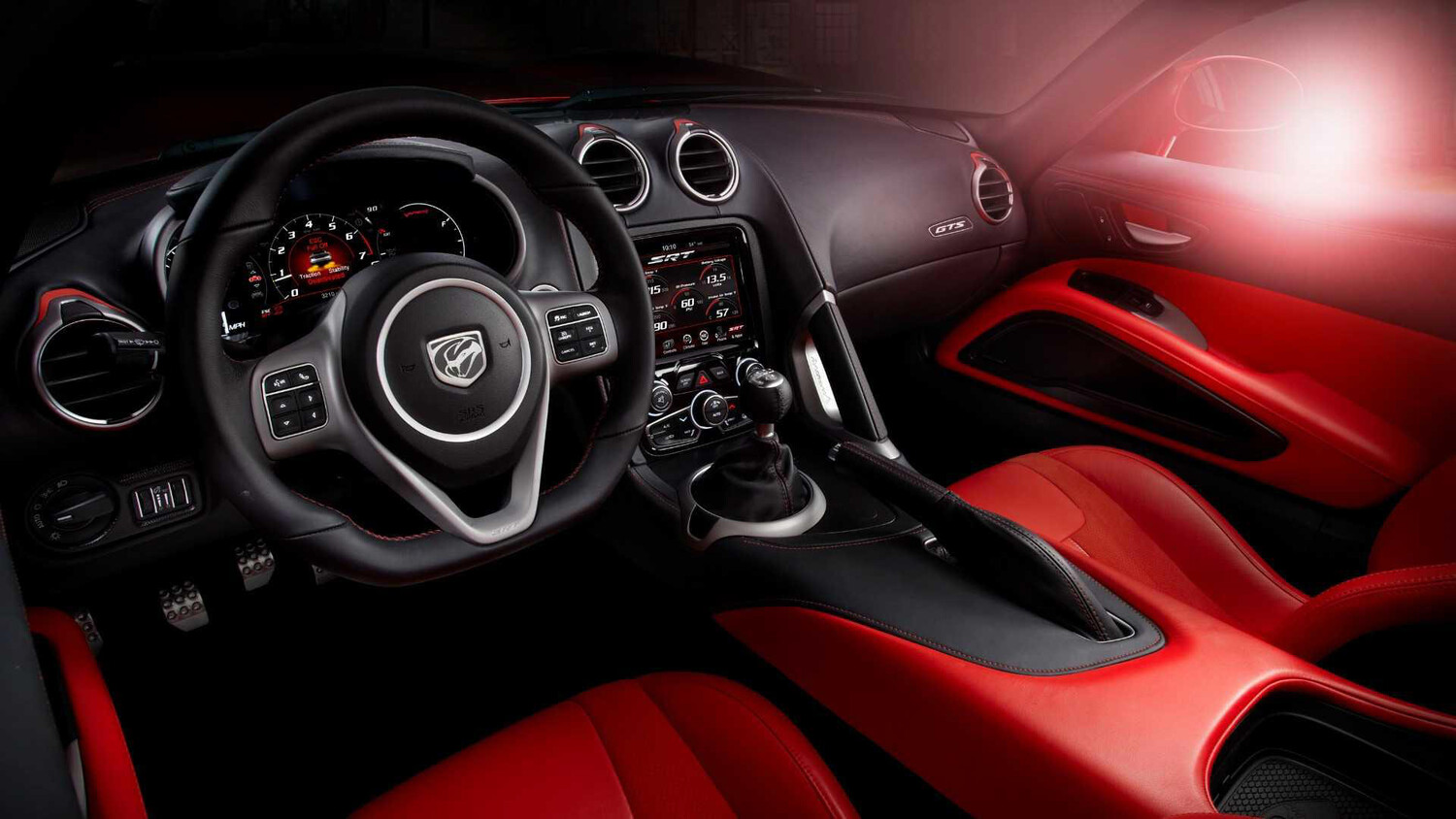
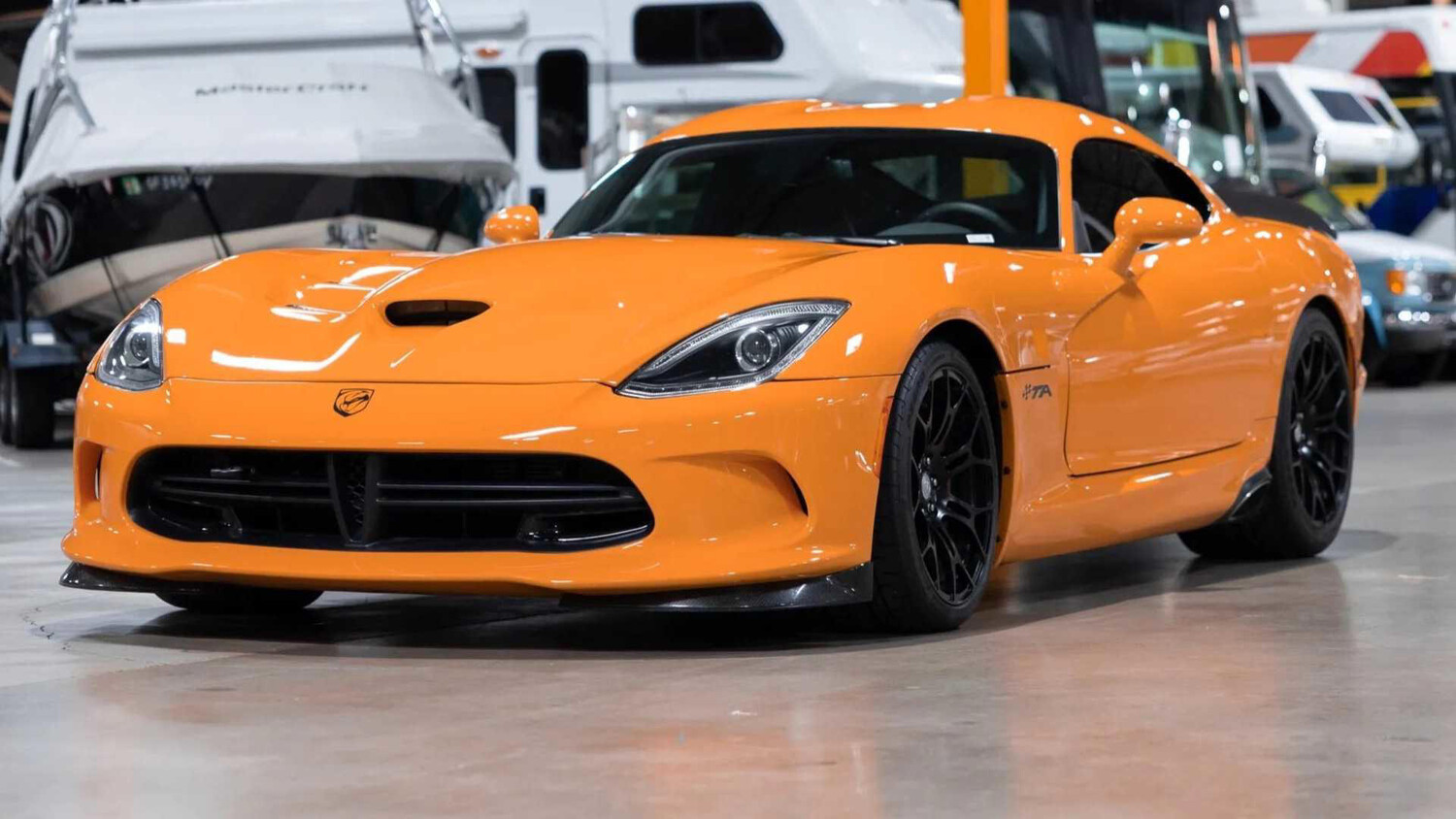
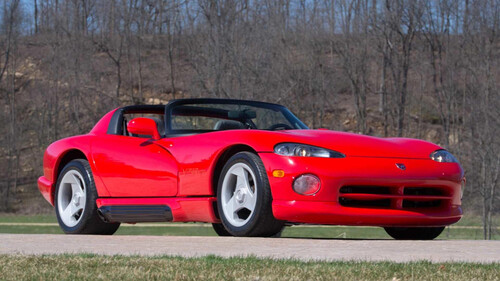
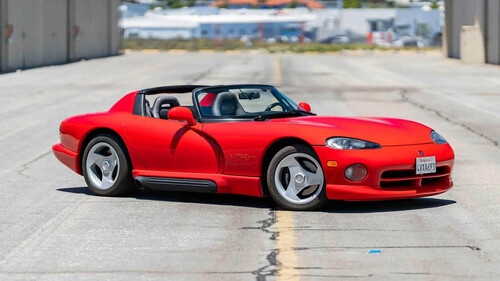
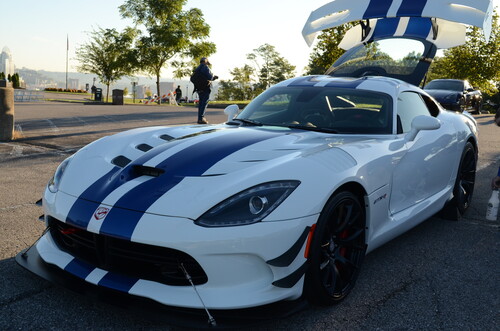
There are few names as iconic as the Dodge Viper in the automotive sphere. Built as a halo project for the entire company, its designers wanted it to be like nothing else - and they succeeded. Over the course of five generations, this powerhouse would take the fight to the established European supercar brands, much to their distaste, and even dismay. While this car is all about how it makes you feel, the numbers, like sprint times and engine outputs, are just as impressive.The last generation of Viper was short-lived, but it doesn't mean it didn't leave a mark on Dodge's history and the wider American sports car market. Did you know it still holds a record at the Nürburgring, or that its values are only going up? Read about that, and more, in this analysis of the Dodge Viper below.All information has been sourced from the manufacturer and reputable sources. We only cover the fifth-generation Viper in this article, and, like all other data, used values are correct at the time of writing. Your mileage may vary. 2013: The Legend Is Revived StellantisWhile the first-generation Dodge Viper was hard to live with, owing to its lack of driver aids, creature comforts, or even a hardtop roof, the last hurrah was something you could easily daily. That famous original came in 1991 when Chrysler CEO Tom Lutz and Tom Gale, the Head of Design, wanted to build a modern-day Shelby Cobra with a speed-above-all-else mentality to show what Chryseler was capable of.That story is similar to the 2013 revival. Dodge wanted to launch SRT as its own performance brand, so it named this supercar the 'SRT Viper' until halfway through production in 2015, where it reverted to Dodge Viper. Yes, some thought this car had gone soft with its extra luxury features, but under the hood, the engine was still a powerhouse. 8.4L V10: Big Engine, Big Performance DodgeThe age of downsizing and turbocharging was under way when this supercar came out, but the Dodge Viper engine stayed true to its first generation. Its 8.4L V10 block is considered one of the biggest displacement engines ever fitted to a production vehicle and was originally co-designed with Lamborghini, which Chrysler owned in the early 90s. It was an all-aluminum block and featured strut bracing in the engine bay.How much horsepower does a Dodge Viper have? This massive powerplant gave the Viper 640 hp at over 6,000 rpm and 600 lb-ft of torque at almost 5,000 revs (although it was later up to 645 hp. That meant you had to work through its gears to make sure you could achieve the Viper's 0–60 mph time of 3.5 seconds. Its top speed was over 200 miles an hour, and the Dodge Viper 1/4 mile time was 11.5 seconds at almost 130 mph. Dodge even added an extra traction control mode for improved performance in the rain as it created so much torque. 6-speed: Analog Performance In A Digital World DodgeWe're all too used to modern supercars being automatic-only, making the last generation a purists' dream. The Dodge Viper V10 is already iconic, but when you are able to experience and control it fully, it puts you more in the driver's seat. All its power is put through the famous Tremec TR6060 six-speed and sent to the rear wheels. That might've made it slower on track or in comparison with rivals from Ferrari or Lamborghini, but they weren't as fun day-to-day. Dodge Viper 0-60, by year, still went down, as these transmissions got easier and quicker with their shifts. 5: Lots Of Models To Satisfy BringATrailerWhen you say Dodge or SRT Viper, you have to be more specific in this generation. There were five distinct models offered over its four-year production run. Here's the full rundown: Dodge Viper Model Variants SRT: The Dodge Viper SRT is the lower-rung of the two main production models. It features fewer creature comforts than other models, and the main way to tell the SRT and GTS versions apart from the exterior is the hood vents. The SRT has six, whereas the GTS has only two. It doesn't get the trick two-mode suspension, although there is a surround sound system, keyless entry, and cruise control. GTS: More upmarket than the SRT, the GTS came with leather upholstery, a different hood, and racier seats. The suspension can be configured in two modes for road and track, and it also adds a fourth mode to the traction control, and unlike the first few generations, you can get on the power without wondering why you're facing backwards. It also has more sound deadening than other models. Iconic AuctioneersGTC: This trim was all about colour - because everyone can buy a Viper, but no one can buy your Viper. For this model, you could choose from 8,000 exterior shades, 24,000 stripe pattern options, 10 wheel options, 16 interior trims, and six different aero trims. That results in 25 million different combinations. Where do you even start? TA: Dodge Viper speed means different things to different people, and the TA (which stands for Time Attack) is a model that helps shave seconds off a lap time. The engine is no different, but weight is saved in a few areas, the suspension has been tuned for the track, and there's an aero package to make it distinct. Under the massive hood, the strut brace was carbon fiber. The 2015 refresh saw even more aggressive aero, but nothing as aggressive as... ACR: ...the ACR. This is perhaps the most famous non-standard version of the Viper, with extreme aerodynamics designed for the track. But let's dive into this one a bit closer: 1,710 lbs: Aero? Oh, We've Got Aero 2016 Dodge Viper ACR Extreme Aero Package Orange Front Angled ViewThe ACR has the same engine and transmission as the base Viper, but there's a glaring difference between those cars. This track-focused weapon has 1,710 lbs of downforce at its top speed, which is 177 miles per hour. The front splitter is adjustable and removable, the Kumho tires are custom-designed for the track, and carbon-ceramic discs are on each corner. Even the Bilstein shock absorbers have ten levels of adjustability.Inside, there's a lot of Alcantara and manually adjustable seats to save some weight. The stereo has also gone on a diet, but Bluetooth and navigation are still present here. ACR stands for American Club Racer, and that's exactly what this car evokes - a weapon on track but with enough tech to take you there and back in comfort. 7:01.67: The Viper Still Holds Records Prefix CorporationEvery automaker wants to hold records at the Nürburgring Nordscheife, and while it may not be an official run, the Dodge Viper still holds the record for the fastest manual American car to take on the course. With a lap time of just over seven minutes, this ACR was a crowdfunded campaign to try to take on the records set by European manufacturers. What makes it even more impressive is that the Ford Mustang GTD, a much newer car with more power and an automatic gearbox, set a similar time of 6:57.Unfortunately, on the second run to try to best their record, the tire blew out at 160 miles per hour and the car was beyond repair. The team believed that with proper backing from Dodge and Chrysler, a larger budget, and more time on track, it could have easily gone faster. Still, it's impressive for a car where you have to shift your own cogs. 2,427: Not A Sales Success StellantisEven if a car is unique, over-engineered, and everything you'd want, it doesn't always translate to sales. That was true of this Viper generation, where not even 2,500 units were shifted. The Dodge Viper engine, the look, and the manual transmission were already rare by that point, so it's almost odd that not many people put their money down. Even though it was much easier than the 90s ancestor, it was still harder to drive than other vehicles, and it couldn't really compete with the latest Corvette.The Viper wasn't only discontinued because of a lack of sales, though, as it also could not comply with FMVSS 226 safety regulations, which demanded that cars have side-impact airbags. Instead of engineering new parts for a car that was already expensive to produce, Dodge simply discontinued it. $113,817: Values Are Super Strong DodgeDid you buy a Dodge Viper when they were new? Good news - it's one of the best investments you've made. With how few Dodge was able to sell in its short production run, the base SRT trim can be sold for over $100k, with Classic.com's benchmark price sitting at $113k. GTS models go for over $160k, and if you want an ACR, be prepared to spend well over $250k for one.More and more people are rejecting the downsized hybrid supercars for something more analog - and the Dodge Viper ticks almost every box in that regard. Values are steady at the moment, but don't be surprised if they start to creep up as people realize that we had it much better back then. We may not see another V10 manual car for a good while.