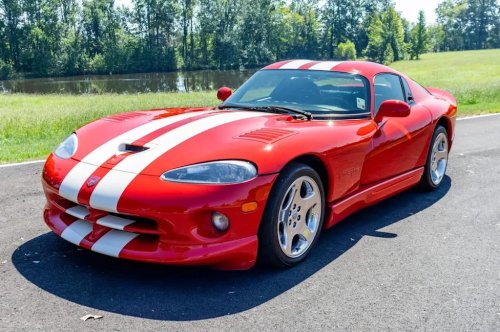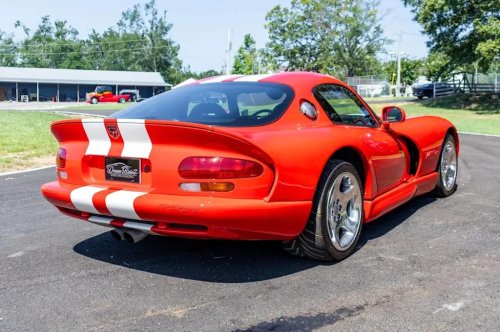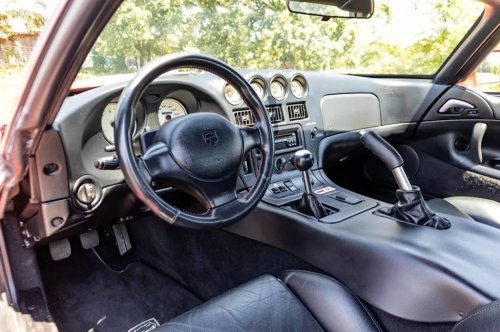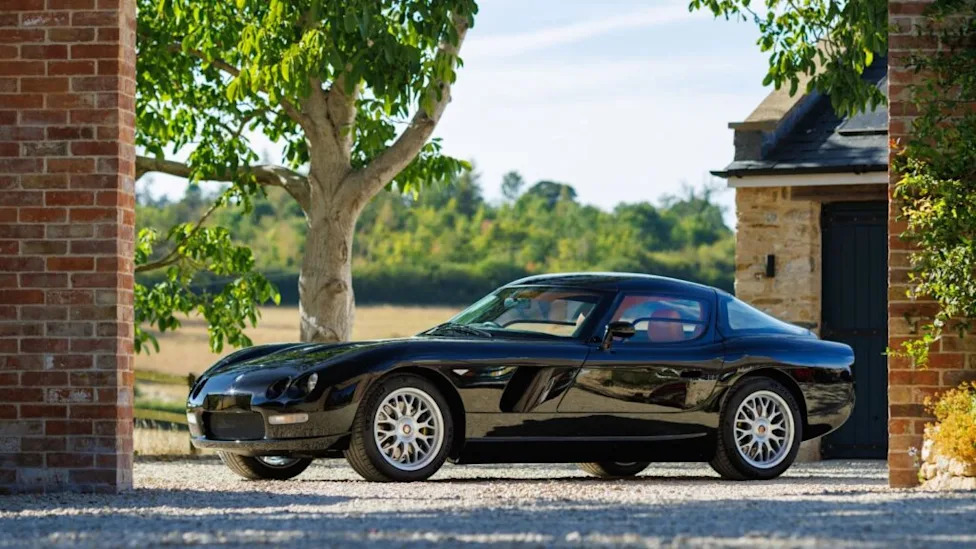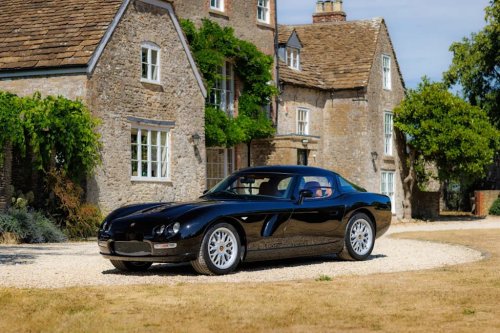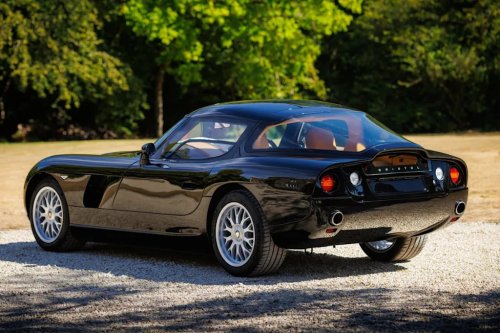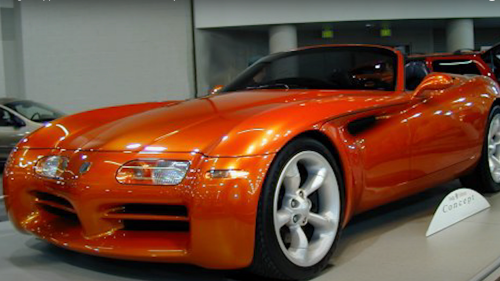
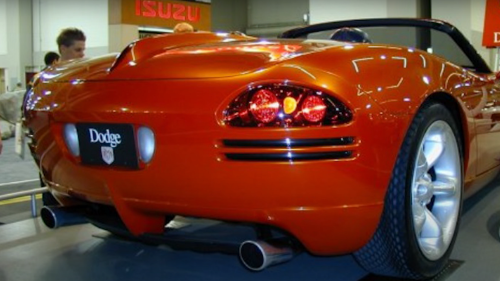
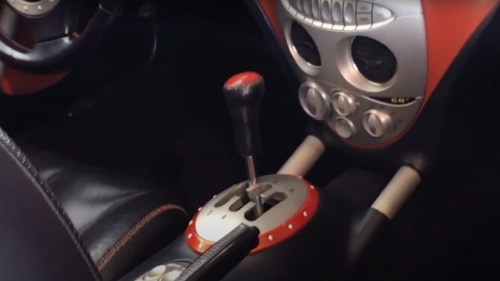
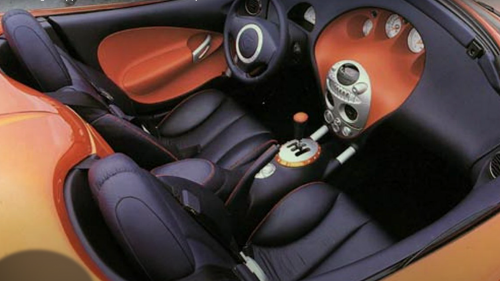
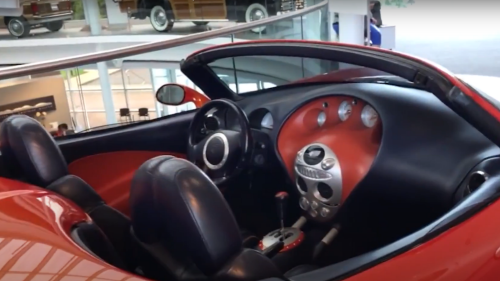
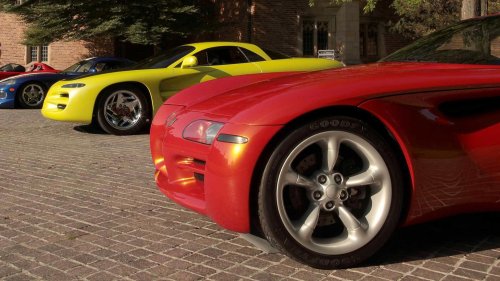
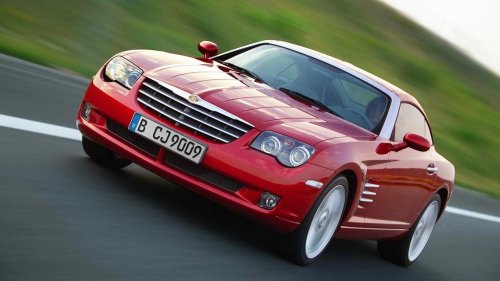



















We've discussed it a lot here at CarBuzz. It can be argued that the 1980s and 1990s were the Golden Age of futuristic concept cars, in both style and technological aspirations. Loads of concept cars that looked like they belonged in some sort of epic space exploration movie were produced at this time, like the 1989 Mitsubishi HSR-II Concept and the 1991 BMW Nazca C2 Concept. Those two just scratched the surface, and there were tons more just like them.By the end of the 1990s, concept cars began to simmer down in terms of out-there styling and technology. However, Dodge decided to create a futuristic, unconventional-looking concept car that would also appeal to those with more modest tastes and budgets. The concept, coined the Copperhead, was meant to do two things at once. The first was to give folks who wanted a Dodge Viper, but couldn't afford it, a way to get themselves into a Dodge-branded sports car. The other aspect the Copperhead needed to tackle was its looks, as Dodge was determined to make their baby Viper good-looking. A Baby Viper With Its Own Edge YT: Marspeed Dodge Copperhead Concept Key Points Introduced in 1997 Unveiled at the Detroit Auto Show Packs a 2.7-liter V6 Slated to have boasted a starting price of around $30,000 By 1997, the Dodge Viper had fully held America's sports car enthusiasts in its grip for about five years. While it was an exceedingly desirable model, the Viper lay out of reach for many hopeful buyers due to a high starting price, roughly $66,000. Many prospective Viper buyers without deep pockets were defecting to other American brands, like Chevrolet and Ford, where folks would instead buy Corvettes or Mustangs to satisfy their need for speed.The mid-1990s saw a resurgence in interest in sports cars. The Corvette had graduated from a tired, old muscle car-sports car hybrid and began to show its set of lean, track-focused muscles with the introduction of the C5 generation in 1997. Other sports cars from around the world, like the Nissan 300ZX, Toyota Supra, and upscale Jaguar XK8 were all beginning to shed their former selves and come into a much more refined and sporty future. In other words, the stage was set for more sporty models in the late 1990s, and Dodge saw a possible opportunity.YT: Marspeed The Dodge Copperhead's first public appearance took place at the 1997 Detroit Auto Show. Initially, due to this surge of public interest, Dodge set a tentative mass-production start date of 2000, three years after the Copperhead's first public appearance. Its low starting price was also a promise, as the $30k pricetag undercut the 1997 Chevrolet Corvette's by over $7,000, albeit the Copperhead wouldn't come with a good ol' American V8. While at its debut, public opinion was reportedly extremely positive, with many auto show-goers inquiring about the starting price and when the Copperhead would be available for purchase. The Copperhead's Development In order to address the issue of losing potential business, Dodge set to work creating something that would allow those buyers who were deciding to go with a different brand to stay loyal. Following a short development period headed up by chief designer John Herlitz, the Copperhead was ready for its unveiling by 1997. The model offered quite a bit regarding promises, as the Copperhead was developed to put a lot of emphasis on road feel, something Dodge felt that the Viper lacked, designed as it was for pure, unadulterated power. Copperhead: Detailed Specs & Features YT: MarspeedDespite the Copperhead's puffy, snake-like looks and muscular haunches, its powerplant was a rather small 2.7-liter naturally-aspirated V6 belonging to Chrysler's LH engine family. The LH motor itself can trace its roots back to 1998, and the Copperhead acted as one of its first testbeds. However, while a 2.7-liter V6 sounds boring as heck, the Copperhead's iteration received a dual-overhead camshaft configuration, along with an all-aluminum construction.YT: Marspeed The Copperhead's chassis is loosely based on the Dodge Viper's, although it had been extensively modified to suit a lighter-weight car with much less power. The transmission featured within the Copperhead is a specially made five-speed manual boasting a close gear ratio. In order to keep things as lively as possible, the Copperhead sports rear-wheel drive. Due to its less-than-aerodynamic shape, the Copperhead's drag coefficient measures in at 0.364, which is much greater than the C5 Corvette's 0.29. Features In order to further convey the Copperhead's sporty countenance, Dodge supplemented its interior with lively trims and tech features that were meant to attract the sort of sports car buyer the American brand was targeting. The Copperhead's leather seats and center console sport red-orange trim, and its five-speed shifter is gated, much like what you'd see on higher-end sports cars. The entirety of the Copperhead's center console was designed to look like a copperhead snake. The Copperhead Was Never Meant To Be YT: Marspeed Despite the large amount of public interest garnered at its unveiling in Detroit, the Dodge Copperhead never made it into production. Shortly after its North American Internation Auto Show reveal, Dodge announced they'd be mass-producing the Copperhead by the year 2000. Preliminary production studies and other research began to be carried out, as well. However, by 1999, the Copperhead's production was halted, and any plans of building the model were shelved indefinitely.There were a couple of reasons for the reversal, but the main driving force behind the decision was Chrysler's merger with Mercedes-Benz. Because of this merger, Chrysler suddenly found itself in partial possession of an open-topped sports car, the Mercedes-Benz SLK-Class. The SLK-Class would soon end up as the basis for the Chrysler Crossfire, a two-door sports car that was offered as both a hard and soft top, and even offered a high-performance model called the SRT6.Another nail in the Dodge Copperhead's coffin was the sharply rising interest in SUVs taking place in the United States automotive market at the time. While the Copperhead isn't related to an SUV by any stretch, the popular segment was stealing business from virtually every other offered in the United States. With Chrysler's financial situation being a bit precarious at the time, Chrysler's top brass were reluctant to continue green-lighting the Copperhead's production.YT: Marspeed After everything was said and done, the Dodge Copperhead, while promising, ultimately amounted to nothing regarding mass production. The Stealth, another Dodge sports car, ended production just before the Copperhead's concept introduction, leaving the company without an entry-level "baby Viper." But, as we all know, cash is king, and with things like a bad financial situation and access to the Mercedes-Benz SLK-Class, it made much more financial sense for Chrysler to stick with what already existed than try and produce an entirely-new model.Dodge did end up toying with creating a no-frills sports car a few years later. The Dodge Razor, unveiled in 2002, was meant to spiritually succeed the Copperhead. But, like the Copperhead, the Razor never saw production. What You'll Pay For The Copperhead's Replacement Today Chrysler Buying a Dodge Copperhead is pretty much out of the question, unless Stellantis suddenly decides to auction off part of its heritage collection, but you can easily head out and buy the V6-powered, Chrysler-badged sports car which effectively took its place — the Crossfire.Just like the Copperhead, it was designed to be less of a hard-edged performance car than the Viper, and far more affordable too, and those traits remain true today. The CarBuzz Marketplace tells us that the average price paid for a late Crossfire is around $5,000 to $6,000, although current listings and recent auction results show that particularly smart and low-mileage examples trade hands for closer to $10,000.It doesn't cost all that much more to get your hands on the supercharged SRT-6 version either, just $2,000 to $3,000 more than the base model would set you back, although top examples again command a significant premium. It might not be a Viper, but it's a fraction of the price and still offers a great soundtrack and top-down thrills.