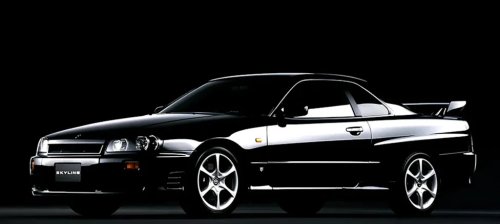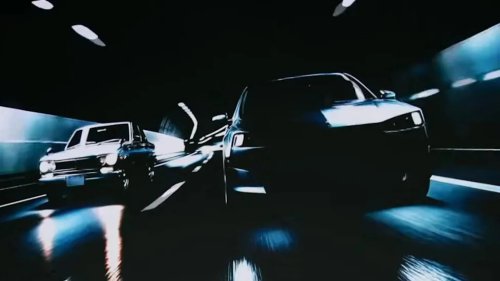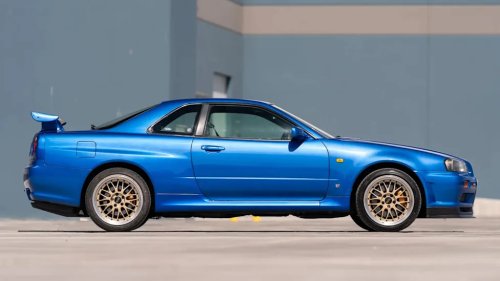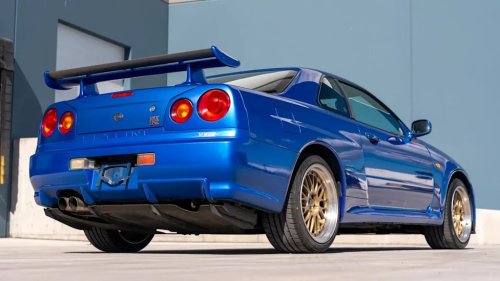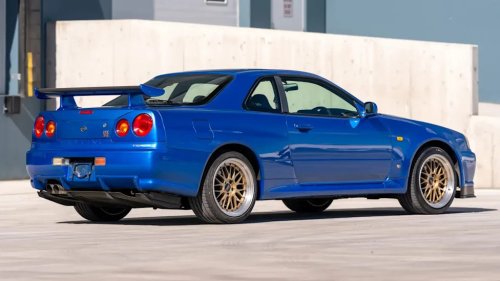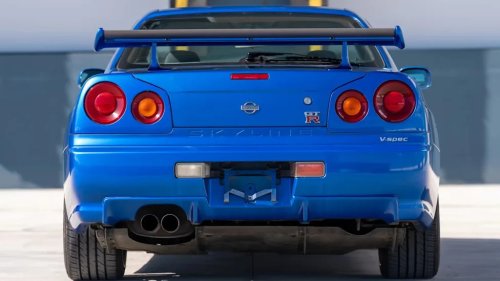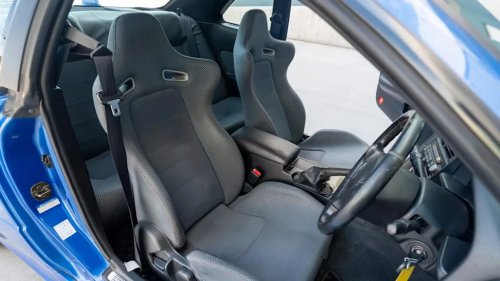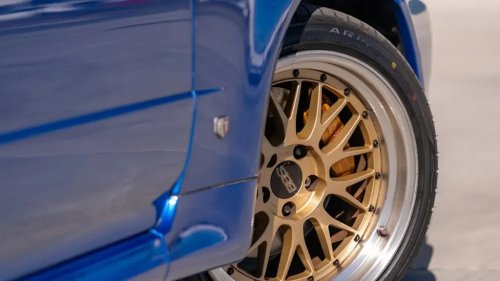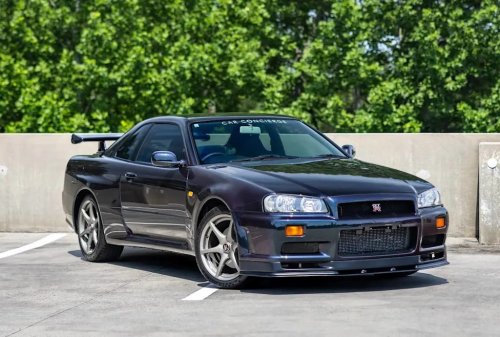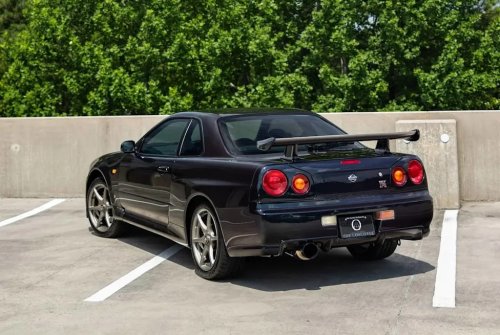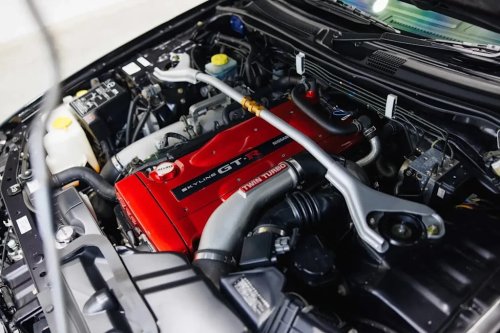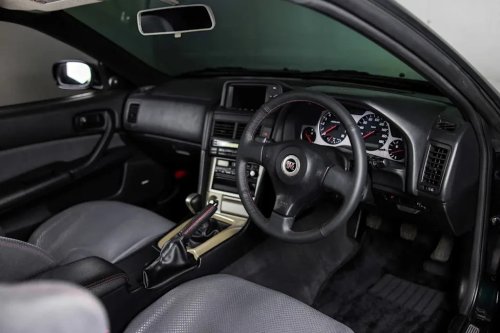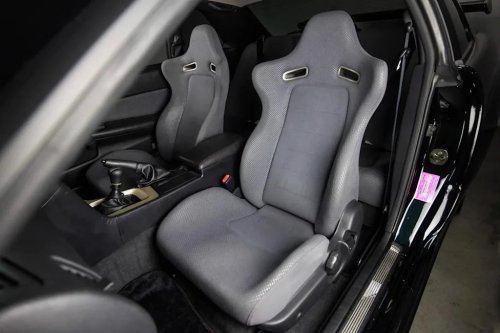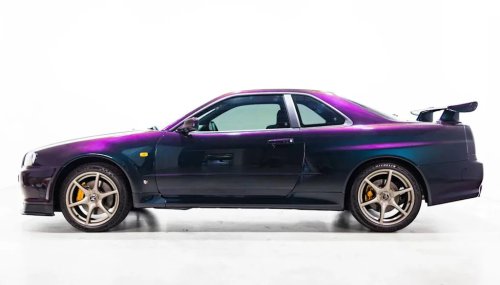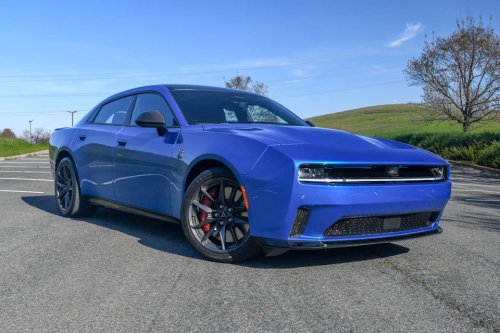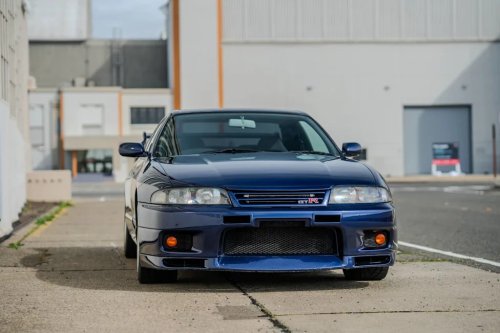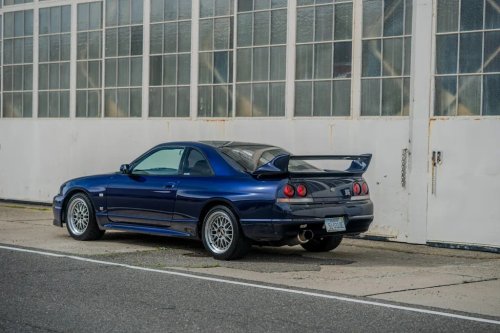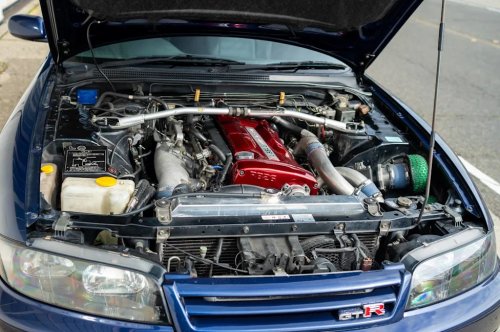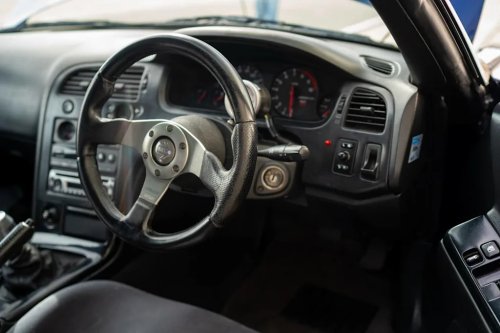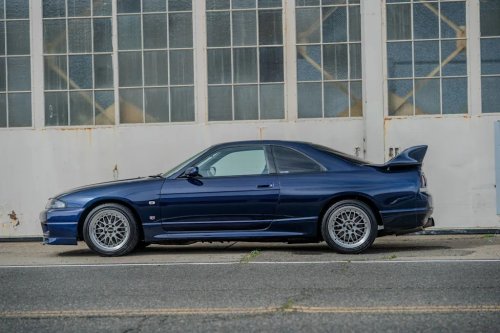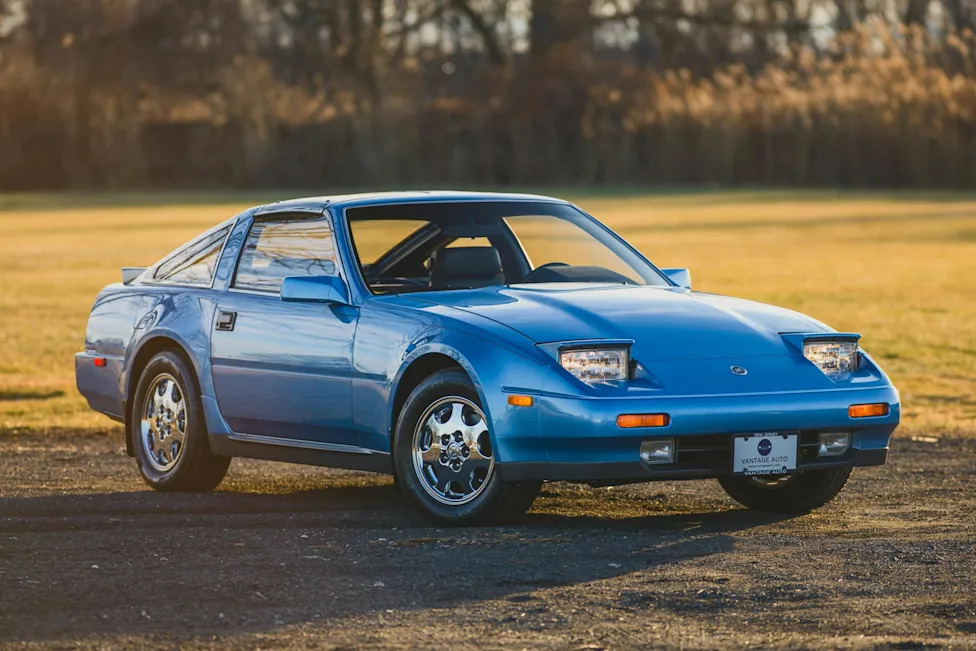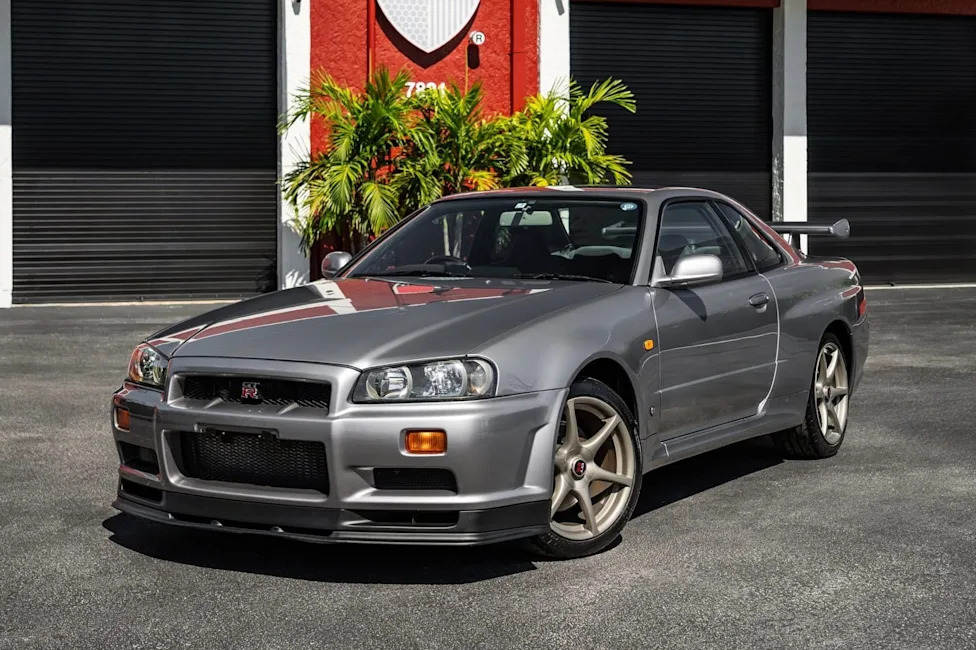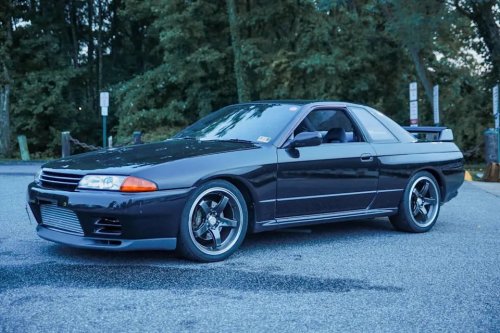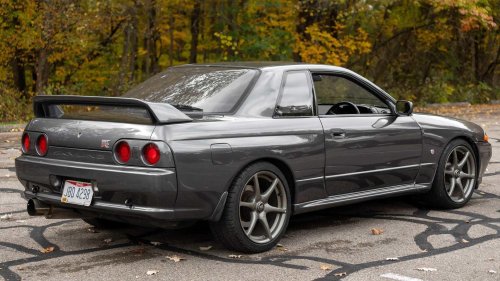
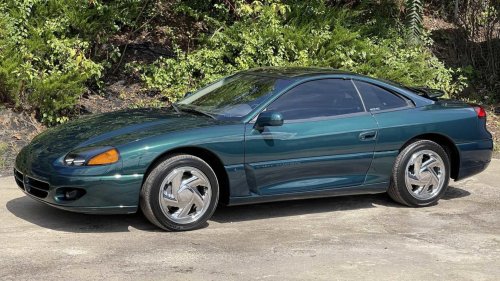
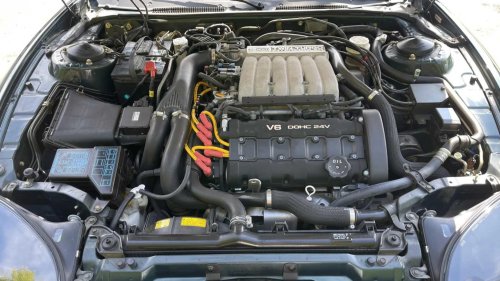
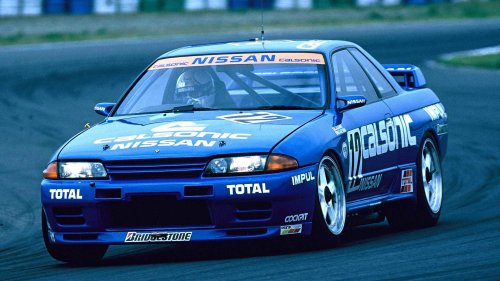
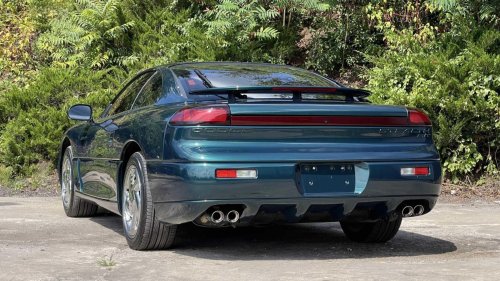
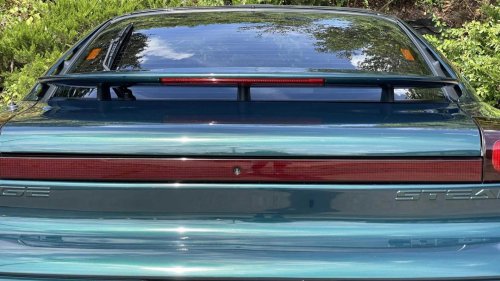



















The headline is going to annoy a lot of people, but let me explain. In the early 1990s, one car sat at the top of the performance hierarchy and the surrounding argument was considered closed. The Skyline GT-R had a racing pedigree, a fearsome reputation, and a cult following that grew with every year that passed. What that conversation consistently skipped over was a car wearing an American badge, sold at a Dodge dealership in the United States, running a twin-turbocharged Japanese drivetrain with full-time all-wheel drive, four-wheel steering, and active aerodynamics. A car that, in documented independent testing, reached 60 mph faster than the GT-R it is apparently not allowed to be mentioned alongside. If that claim makes you want to close this tab, you should probably keep reading. The Skyline GT-R Was Supposed To Be Untouchable Bring A Trailer The R32 Skyline GT-R arrived in 1989 and was immediately unlike anything Japan had produced for road use in the preceding decade. The ATTESA-ETS all-wheel-drive system could send up to 50% of torque to the front wheels under hard acceleration while maintaining rear-wheel-drive behavior in normal conditions. The RB26DETT twin-turbocharged 2.6-liter inline-six was officially rated at 276 hp, a number that the performance community understood as a product of the voluntary agreement among Japanese manufacturers to cap published output rather than an honest reflection of what the engine produced. Real-world figures were consistently measured higher by independent sources. The car's true output is widely estimated at approximately 313 hp, with torque figures to match.The GT-R's Group A touring car racing program added everything the road car's reputation needed. The R32 GT-R won the Japanese Touring Car Championship in every race it entered across four consecutive seasons from 1990 to 1993, a total of 29 consecutive race victories. It also won the Australian Touring Car Championship in 1991 and 1992, with the car sharing the 1990 championship win alongside the GTS-R that preceded it in the Nissan lineup. It won at Spa. It dominated wherever it was allowed to compete. The nickname Godzilla, coined by Australian publication Wheels in 1989, summarized the consensus view. The R32 GT-R covered a quarter of a mile in 13.9 seconds in period testing, and hit 60 mph in approximately 5.6 seconds. These were the benchmark figures against which everything else in the segment was measured. The car behind in question here was about to run closer to those figures than anyone expected, from a Dodge showroom in suburban America. A Dodge With A Secret Bring a Trailer The Diamond Star Motors joint venture between Chrysler and Mitsubishi produced several shared vehicles during the late 1980s and 1990s, but none of them carried the specification of the car this article is about. What that partnership produced at the top of its range was a car with a twin-turbocharged Mitsubishi V6, a full-time all-wheel-drive system, passive rear four-wheel steering, electronically adjustable suspension, and active aerodynamics that automatically deployed spoilers and air dams with speed. This package was available at a Dodge dealership to any buyer in the United States who could write a check for approximately $29,000 to $32,000. The GT-R, during the same period, was not sold in the United States at all. It was a gray-market import available only to buyers willing to navigate international shipping, compliance, and registration. Meet The 1991-1996 Dodge Stealth R/T Twin Turbo Bring a TrailerCar and Driver tested the original 300 hp Series 1 Stealth R/T Twin Turbo in 1991 and recorded a 0-60 time of 5.2 seconds and a quarter mile of 14.0 seconds at 98 mph. The R32 GT-R ran 0-60 in approximately 5.6 seconds across multiple independent tests, and its quarter mile was approximately 13.9 seconds. The Stealth was faster to 60 mph by a measured margin. The GT-R was marginally quicker through the quarter mile. That distinction matters and the article is not hiding it. But the 0-60 comparison is legitimate and it stands on tested figures from a credible source.The Series 2 upgrade for 1994 brought 320 hp, 315 lb-ft of torque, and a six-speed Getrag manual gearbox. Period reporting and contemporary analysis placed the updated car's quarter-mile time in the low 13-second range, consistent with the additional power and the improved transmission. Dodge's own factory claim for the Series 1 was a 4.89-second 0-60 and a 13.6-second quarter mile, which suggests the factory considered the Car and Driver result conservative. The top speed was 155 mph. The weight was approximately 3,800 lbs, which the twin-turbo AWD system managed effectively on a drag strip but which made its presence felt through fast corners in a way the lighter GT-R did not. That is the honest picture. A Mitsubishi Engine In A Dodge Badge Bring a Trailer The engine in the Stealth R/T Twin Turbo is not a Chrysler or Dodge unit. It is Mitsubishi's 6G72TT, a twin-turbocharged DOHC 3.0-liter V6 with twin intercoolers, producing 300 hp in the Series 1 and 320 hp in the Series 2. The platform is Mitsubishi. The full-time AWD system is Mitsubishi. The passive rear four-wheel steering is Mitsubishi. The electronically adjustable suspension is Mitsubishi. The active aerodynamics are Mitsubishi. The factory that built the car was in Japan.Chrysler's contribution to the R/T Twin Turbo was the exterior styling and the badge on the trunk lid. Every component that made the car fast, every active system that made it technically extraordinary for a production road car in 1991, came from the Japanese side of the partnership. The Stealth was almost totally identical underneath to its Mitsubishi counterpart, the 3000GT, and the high-performance version was packed with the same cutting-edge technology. The Dodge name on the door was the least interesting thing about it. This is not a criticism of the car. It is the argument for why it deserved the same conversation as the car from Japan that did not even have a name on American showroom doors. Why The GT-R Still Wins The Argument Nissan The Stealth weighed approximately 3,800 lbs. The R32 GT-R weighed approximately 3,042 lbs. That 750-lb difference does not disappear when you move from a drag strip to a circuit, and nobody who drove both cars at a track would have described the experience as equivalent. The GT-R's chassis was designed around performance with a precision the Stealth did not match. The Stealth was tuned as a grand touring car, which meant the suspension prioritized comfort and composure over outright dynamic response. The GT-R was tuned for the Group A racing program, which meant everything in the chassis was oriented toward performance. The four-wheel steering on the Stealth was a passive system responding to rear axle loads, not the active system in the GT-R. The difference in on-circuit behavior was significant and any claim that the Stealth was the GT-R's equal on a track would simply not hold up. The straight-line numbers are real and documented, but the overall performance case is far more complicated. What A Dodge Stealth R/T Twin Turbo Is Worth Today Bring a TrailerCurrent valuations show the Stealth R/T Twin Turbo in excellent condition at approximately $35,000. Market data shows the R32 GT-R averaging $56,968 across all recorded sales, with clean examples regularly trading above $45,000. The car that beat the GT-R to 60 mph in a documented independent test costs roughly half as much as the car it beat. That gap exists because one car has a racing pedigree and a cultural legacy built over three decades, and the other wore a Dodge badge at a time when nobody was paying attention to what was underneath it. The Stealth was not a better car than the GT-R in every sense. But it was a faster car in most aspects in a straight line, and was available at an American dealership when the GT-R was not. Today, that fact is only every growing, with GT-R values only moving in one direction, while the Dodge remains mostly unknown and a fraction of the cost. The Dodge That Deserved The Same Conversation Bring a Trailer The GT-R became a legend for reasons that are legitimate and well-documented. The racing wins were real, the engineering was genuine, and the RB26DETT became one of the defining engines of the era. None of that is being disputed here. What is being disputed is the assumption that nothing else in the early 1990s was operating in the same performance territory. A car with a Japanese twin-turbocharged engine, AWD, four-wheel steering, active aerodynamics, and a documented 5.2-second 0-60 time was sitting in Dodge showrooms while the GT-R was a gray-import fantasy for most American buyers. It reached 60 mph faster than the car that has been called untouchable for thirty years. The straight-line numbers do not support the footnote status the Stealth has occupied since it left production in 1996. The GT-R got the credit. The evidence suggests the Stealth deserved to share at least some of it.Sources: Car and Driver, Hagerty, Classic.com, Bring a Trailer.