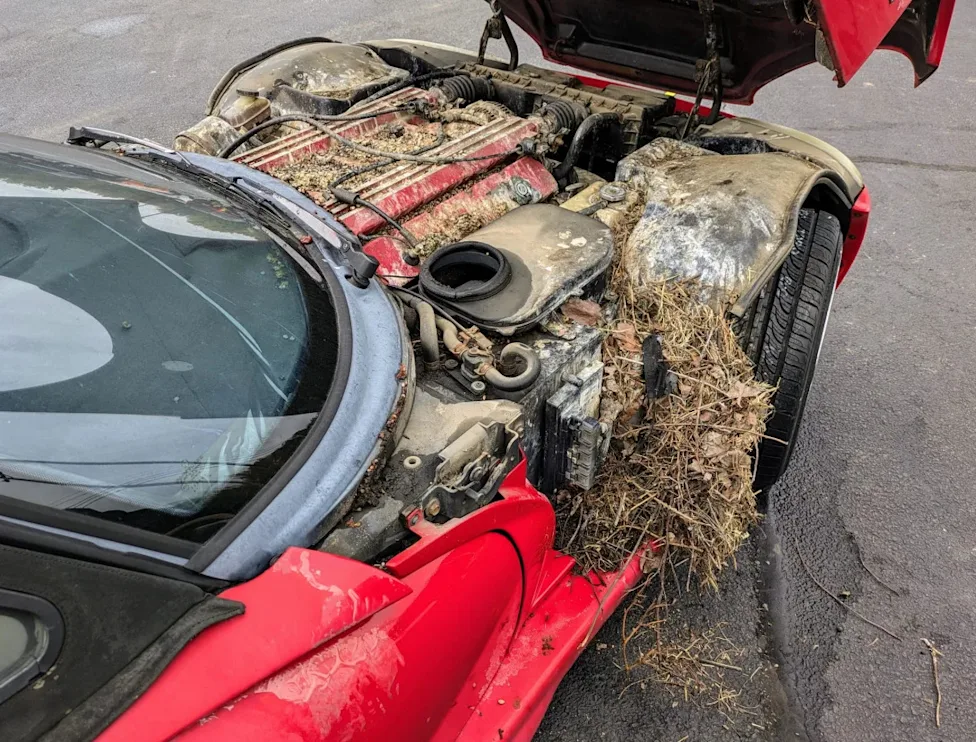
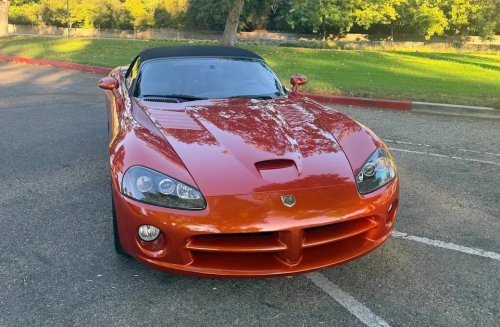
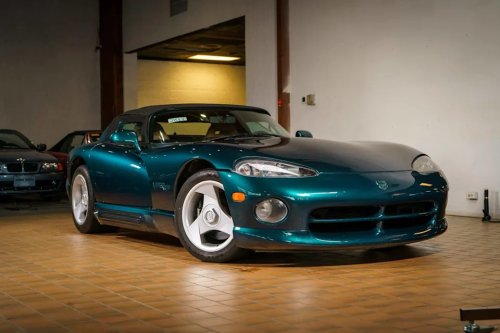
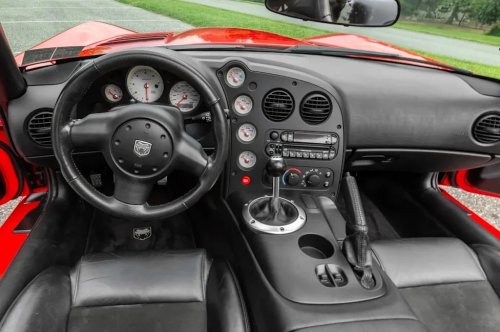
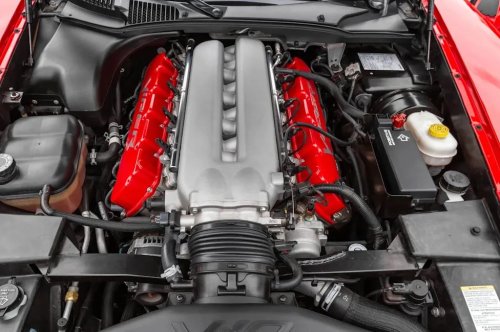
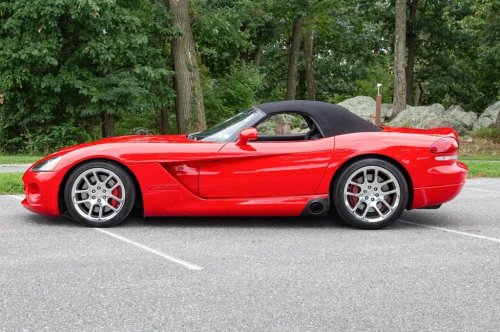
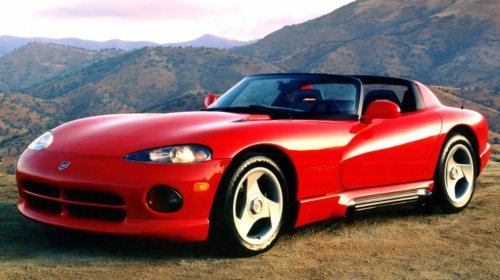
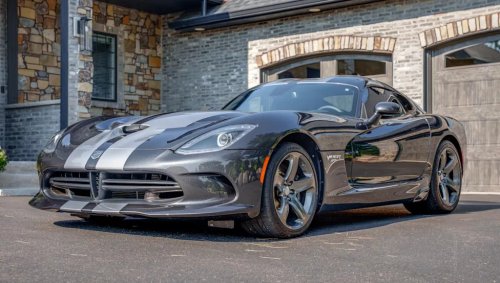
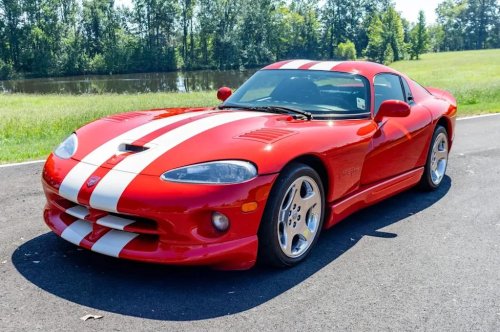
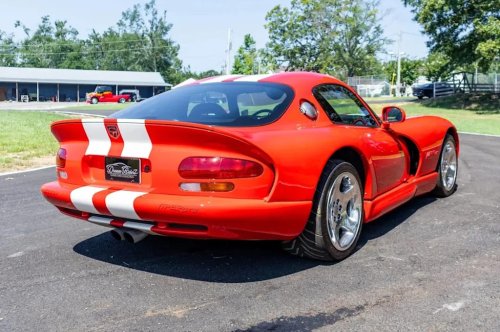
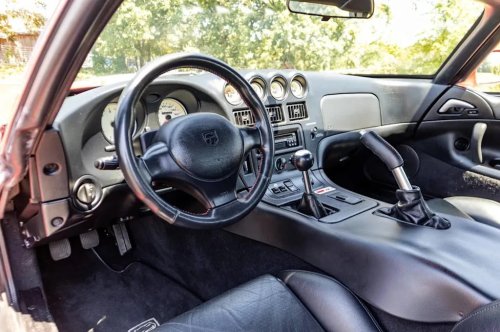
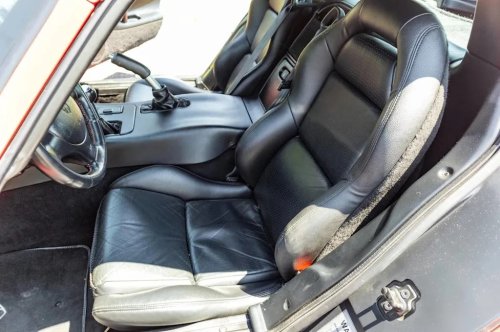
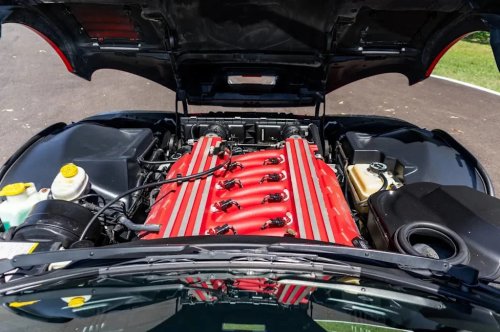
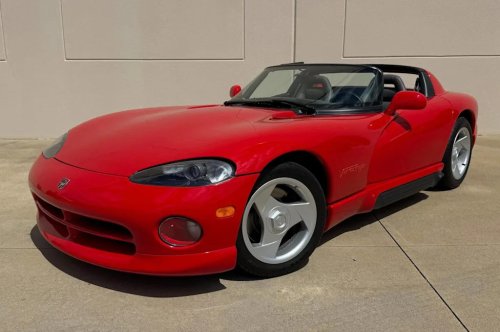
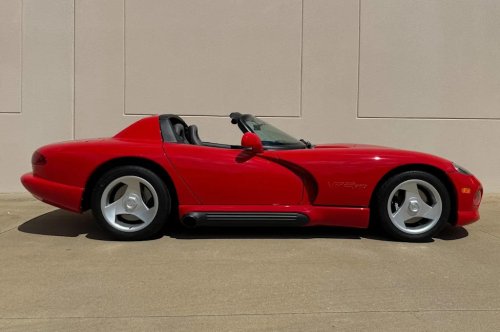
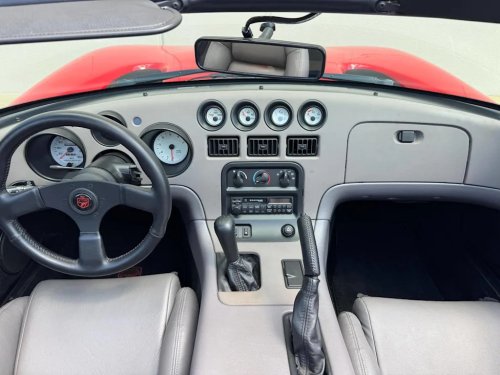
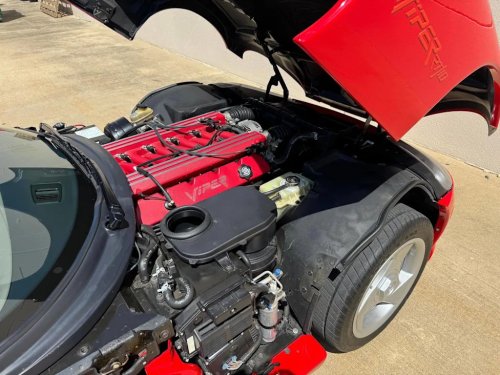
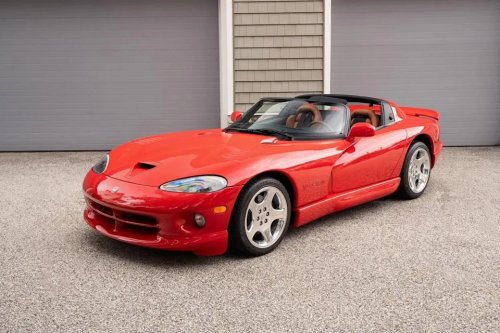
Dodge Viper Spent 28 Years Mounted on a Pole — Here's What They Discovered When It Finally Came DownFor almost three decades, a bright red Dodge Viper sat perched thirty feet in the air above a Kentucky car dealership, bolted to a pole and left largely to the mercy of the weather. Drivers passed beneath it on a daily basis and, with time, most stopped giving it a second glance. It had become part of the scenery — a permanent roadside fixture that people noticed once and then simply accepted as part of the landscape. That all changed when someone finally decided it was time to bring the car back down to earth. What followed turned into far more than a routine removal, because the closer people looked, the clearer it became that time had not been kind to the Viper in ways anyone standing on the ground could have ever known.Related ArticlesDodge Viper Pulled Down After 28 Years on a Pole — What They Found Inside Was Worse Than ExpectedAfter 28 Years in the Sky, This Dodge Viper Came Down… What They Found Inside Wasn't PrettyThe History of the Dodge Viper8.4-Liter Dodge Viper SRT-10 Crate Engine Sells for $18,000 in Wisconsin1979 Pontiac Trans Am Anniversary Edition Emerges After Years in StorageThe story goes back to 1996, when Audubon Chrysler in Henderson, Kentucky came up with a marketing idea that was unusual even by dealership standards. Rather than placing a new Dodge Viper RT/10 in the showroom or out on the lot, they decided to hoist one high into the air and mount it to a pole above the property. The thinking was straightforward — visibility. A Viper up in the sky would get people talking, and in the early days, it absolutely did. The car became a local landmark almost immediately, drawing attention from passersby and generating conversation in a way that a car sitting on a lot never could. What nobody predicted was how long it would stay up there. What started as a clever promotional stunt turned into a nearly thirty-year fixture. Aside from a brief removal in 2009 for minor cosmetic work, the Viper never came down. No real weatherproofing, no consistent maintenance, no protection from whatever the seasons decided to throw at it.AdvertisementAdvertisementFor years, people who knew about the car assumed it was something of a hidden gem waiting to be discovered. The odometer reportedly showed just 12 miles, meaning the car had barely been touched since it rolled off the assembly line. That kind of mileage typically signals a preserved, valuable collector's piece — something that was garaged, cherished, and carefully kept away from the elements. There was also a long-running debate about whether the car was even real. Some people figured it had to be a hollow display shell, a fake designed to look like a Viper from a distance but not much more than that. The dealership eventually put that question to rest, confirming it was a complete, authentic vehicle. That confirmation changed the conversation. A real Viper with 12 miles on the clock sounds like a dream find. But the odometer only tells you how far a car has been driven — it says nothing about what the environment has been doing to it in the meantime.When crews brought the car down again in late 2024, expectations were already tempered. Most people assumed it would need cosmetic attention — paint fading, surface rust, cracked trim, that kind of thing. Standard wear from years of exposure to sun, rain, and temperature swings. What they actually found when they got up close was considerably worse. The deterioration wasn't confined to the exterior. It had worked its way deeper into the car than most people had anticipated. The interior had developed mold — not just light discoloration or musty odor, but genuine mold growth that had taken hold after years of trapped moisture cycling through an enclosed space with no climate control and no ventilation. On top of that, the engine bay told its own story: a bird had built a full nest inside it at some point, and whatever that space had become over the years, it no longer looked like something out of a car magazine. The Viper had stopped resembling a preserved automotive relic and started looking a lot more like something nature had quietly moved into.The scale of the damage made one thing clear quickly: this wasn't going to be a simple detail job. The car was sent to Keen's Auto Body and Paint for a proper restoration effort. The approach was deliberate — address the serious damage without turning the car into something unrecognizable. The dealership wasn't interested in a full ground-up restoration that erased everything the Viper had been through. The car's unusual history, including the years of weather exposure and the condition it came down in, had become part of its identity. The goal was to bring it back to a presentable state while keeping that character intact. Stripping it down and building it back up as if none of it had happened would have missed the point entirely.Once the work was completed, Audubon Chrysler made a decision that says a lot about how they view the car today. They didn't put it up for sale, list it with a collector car auction house, or tuck it into storage somewhere. They put it back on display. After nearly thirty years in the air, the Viper had become something more than a car — it had become part of the dealership's identity and a genuine piece of local history. Selling it off or moving it along would have severed something that had grown far beyond a marketing stunt. So it went back. Not necessarily back up the pole, but back where it belongs, tied to the place where its story played out.What makes the whole story so compelling is the contradiction sitting at the center of it. Low mileage is usually the ultimate signal of preservation. It means the car was spared from the wear and tear that comes with actually being used. In this case, that logic completely broke down. The Viper didn't deteriorate from hard miles or track days or years of daily commuting. It fell apart from neglect — from being left in place, unprotected and largely forgotten, while the world moved on around it. And unlike most barn finds or forgotten garage discoveries, this car wasn't hidden at all. It was in plain sight the entire time, visible to anyone who happened to drive past. The damage accumulated slowly, quietly, and completely out of view despite being thirty feet off the ground in a public location. That's the part that sticks with you. Sometimes the most surprising stories aren't about what was tucked away and hidden — they're about what was right in front of everyone the whole time, just waiting for someone to finally take a closer look.Join our Newsletter, follow our Instagram page, and connect with us on Facebook.