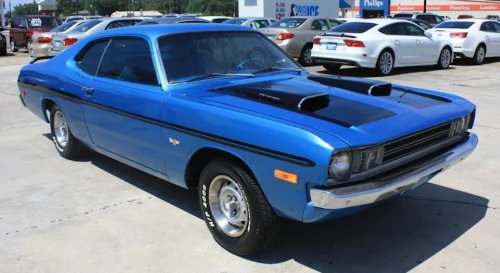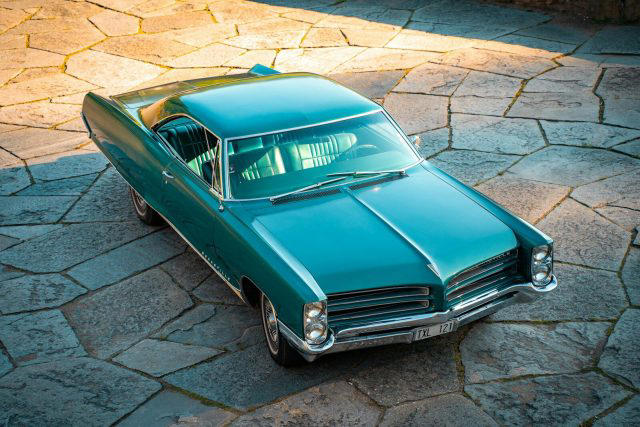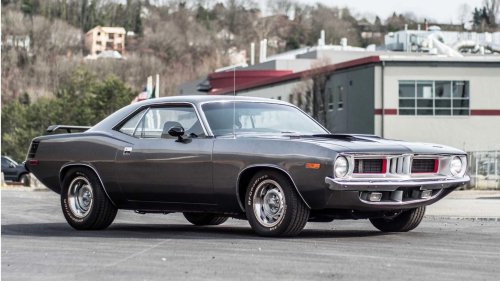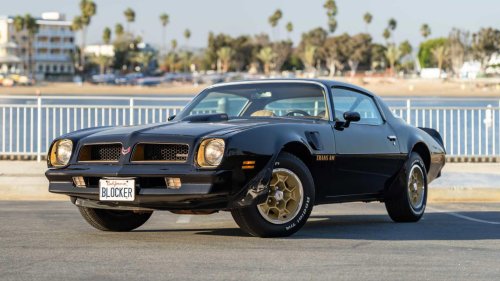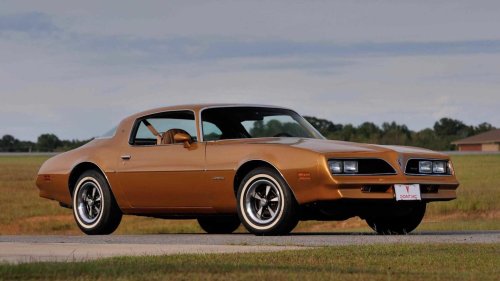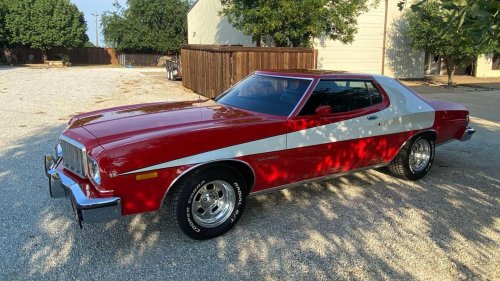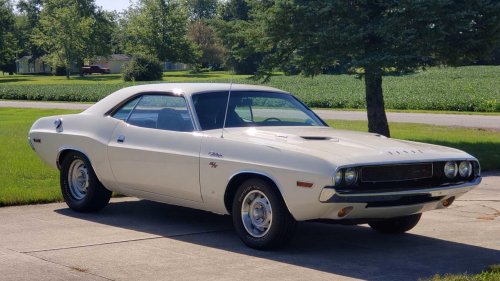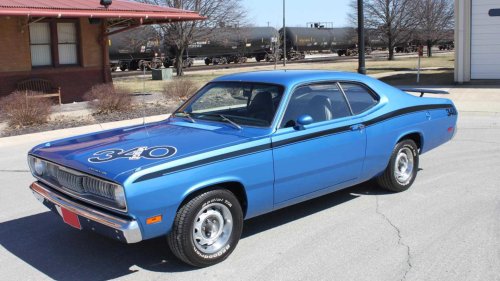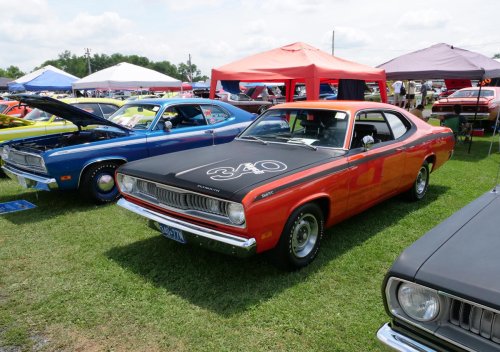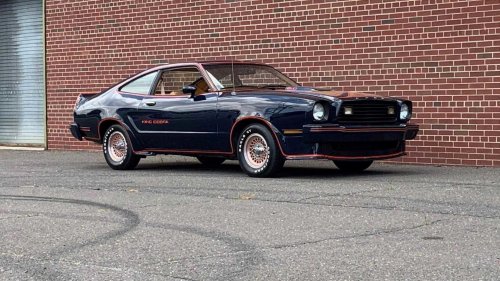
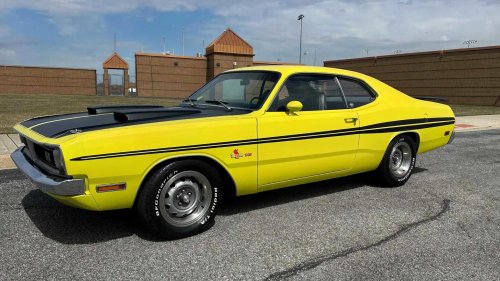
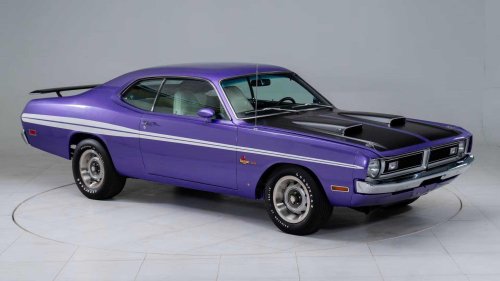
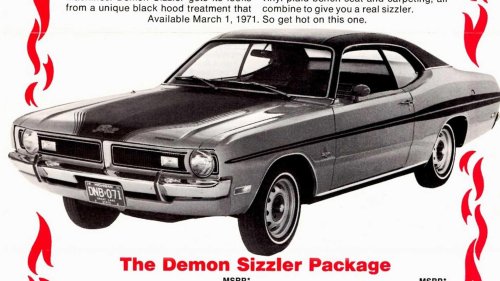
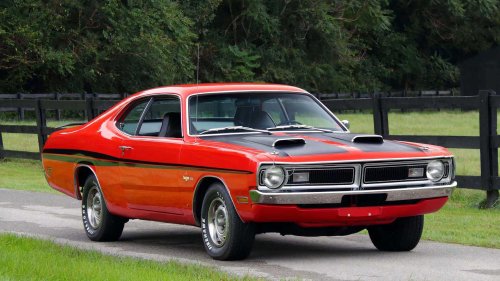



















We’ve all seen them. The stock BMW 1 Series with an aftermarket M badge sneakily stuck on. The Mercedes with an AMG logo it didn’t earn. The Honda Type-R emblem that sits slightly too crooked to have been there out of the factory. Or, perhaps worst of all, the “Ferrari”, which is really just a Toyota MR2 or a BMW Z3 underneath. All attempts to convince the uninitiated that a car is worth more than it really is.Usually these are done after the fact, as people stick badges on to fool the unsuspecting. They’re free to do so, of course, but these mods aren’t exactly manufacturer-approved. One car broke that rule, though. It was made to deliberately imitate an already-popular muscle car — and it only lasted a year. Some Muscle Cars Look Faster Than They Are Bring a Trailer In the bravado-fueled world of muscle cars, nobody wants to look slow. You might be slow, or at least slow by muscle car standards, but you don’t want to look it. Take the 1978 Ford Mustang II King Cobra, for example. A staple of the muscle and pony car market, the Mustang is typically a big-displacement, high-power car. And while it did have the looks, with Pontiac Trans Am styling and a hood scoop, and it had the displacement (it had a 5.0-liter V8 engine), it didn't have the power—making just 140 horsepower. It had a 106 mph top speed and would hit 62 mph in roughly the same time as a 1978 Ford Pinto. Not exactly muscle car performance.Speaking of the Pontiac Trans Am, it’s not entirely innocent of looking faster than it was. The base model between 1973 and ‘76 made a measly 100 hp, despite the screaming eagle sticker and aggressive styling. These cars wanted to look fast, even if they weren’t. But one car that had both the looks and the power was the Dodge Demon 340. The Dodge Demon 340 Was A Performance Powerhouse via Bring A TrailerIn addition to the engine, the car had “optional” dual hood scoops (who’s not going to opt for twin scoops, though?), a different grille, stripes, and a spoiler. It was a budget muscle car, sure, but it was a popular one for its high performance and affordability (it was $2,721 in 1971, making it around $300 cheaper than the Dodge Challenger 383). Importantly, it offered a way to get into muscle cars for more than just looks. But while it was a car that looked fast and was fast, there’s another version that came out of the factory that looked fast but wasn’t. The Dodge Demon Sizzler Was A Sheep In Wolf’s Clothing MecumAutomakers rarely have just one option for a car. They’ll release the “main” version, then provide packages for people to customize their purchase. The 340 was one such example, giving roughly 10,000 of the Demon’s 69,000 cars with a 340-cubic-inch engine. Another option was the aforementioned spoiler and hood scoops. And then there was the infamous Sizzler package.To the layperson, the Sizzler could pass as the much more powerful Demon 340. It had the same side stripes and rear deck panel tape from the Demon 340 itself, as well as Rallye wheels, sport mirrors, a blacked-out hood, plaid cloth seats, and a Tuff steering wheel. For all intents and purposes, it looked aggressive and could definitely pass for a much faster car. But pop that hood and you wouldn't find that 340-cu-in 5.6-liter V8 engine—at the lower end you'd find a 198.3 cu-in 3.2-liter engine with 125 horsepower and 180 pound-feet of torque.That’s because the Sizzler was never meant to be fast, nor was it meant to be powerful. It also wasn’t a car that the aftermarket scene tried to jazz up to impress people who didn’t know. It came out of the factory like that. And it was for good reason.While some will see the Sizzler as a Plymouth Duster wearing a Demon costume (which, to some degree, it was), it was actually a smart move on Dodge’s part. The Demon 340 was already an entry-level muscle car, but that large displacement meant that insurance premiums, emissions laws, and rising fuel costs were all working against it.The end of the classic muscle car era was already in motion and, as much as the Demon 340 was trying to offer people a way into it, it was going to struggle regardless. In offering the Sizzler option, Dodge hoped that it would attract a new market of younger buyers who wanted the same aggressive, fast aesthetic of the 340 but with less of the expense associated. Larger-displacement options were available but, at its core, the Sizzler was an entry-level to the entry-level. The Sizzler Fizzles Dodge GarageThe Dodge Demon lived a short life, lasting from 1971 all the way to 1972. The declining muscle car market played its part in the car’s demise, as did regulations curtailing performance improvements. The car’s name played a part in its demise, too, as it drew considerable ire from religious groups who were unhappy that a car would dare feature a cartoon devil logo. The Demon’s name would be changed to the “Dodge Dart Sport” from 1973, though it would actually make a return in 2018 and 2023 for the Dodge Challenger SRT Demon (albeit with no cartoon devil).The Sizzler would die out even quicker, lasting only seven months. Sales figures are hard to come by, possibly because few people wanted to admit that they had the “poor man’s” version, but that seven-month run means there weren’t many made. Estimates put it around 3,500 maximum, but these are loose estimates so take them with a pinch of salt. Prices are similarly difficult to obtain, but one in need of a little bit of repair was listed on Facebook Marketplace for $10,500 five years ago. The Sizzler Was A True Beginner’s Muscle Car Mecum Beginner cars are meant to offer you a taste of what’s to come. A peek into the future at what awaits if you work hard and save up. And, by that standard, the Demon Sizzler was a perfect beginner muscle car. Enough design to make it look quick. Enough of a name for people to recognize it. Not enough of an engine to get into trouble, or to push it beyond the realm of affordability.It’s understandable why the car was forgotten; it was an optional package that ran for seven months, so we’re not exactly talking Porsche 911 or Ford Mustang levels of longevity here. But what it represented was affordable muscle, and an entry point for people further down the automotive food chain. It proved that first cars didn’t have to be bland, boring affairs, but that they can be just as exciting to look at as their most powerful models. And that’s quite the legacy.