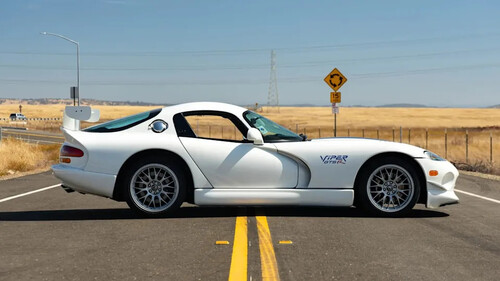
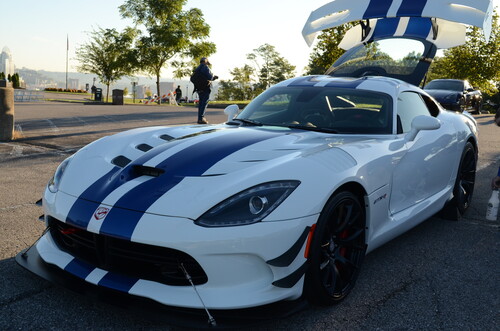
Before Dodge built its craziest sports car, it had to solve a problem Detroit usually tried to avoid. The engine was huge, the exhaust ran along the doors, and the incredible sound was part of the whole point. Then federal noise rules stepped in and forced Dodge to quiet down a car that worked best when it sounded highly illegal.That tension around this whole saga really was something. It was loud, hot, wide, simple, and faintly ridiculous in all the right ways. The funny part is that the problem was also the product. Quiet it down too much, and the car would lose the very thing that made people stare (and hear). Leave it alone, and the rulebook would swat it before buyers ever got the keys. Why New Sports Cars Started Sounding Too Sensible Bring a TrailerBy the early ’90s, Performance Cars had to do more than look fast and scare the neighbors. They had to clear safety rules, emissions requirements, crash standards, bumper regulations, lighting rules, and noise limits before anyone could turn a fantasy into something with a window sticker. Understandably, that changed the way sports cars felt. The raw stuff was still possible, but it had to pass through enough committees to make a muscle car start sweating.That created a familiar problem for anyone trying to build something raw. The crazier the car felt, the harder it became to make it legal for public roads. Big engines made heat, short exhaust paths made noise, and lightweight bodies had to meet real-world standards. Even the details that made a car feel special could become headaches once federal regulations got involved.Dodge wanted to build a modern Cobra-style sports car, which meant it was chasing a feeling more than a segment. The original idea needed a long hood, rear-wheel drive, a huge engine, and a personality that didn’t come from a focus group. The trouble was that a bare-knuckle roadster with side pipes also had to survive the early ’90s rulebook. Romance had to shake hands with compliance, and compliance is rarely the fun guy at the party. Dodge Wanted A Cobra With License Plates Bring a TrailerThe project started as a back-to-basics antidote to over-polished performance cars. At a time when many sports cars were becoming more technical, insulated, and careful, Dodge went in the other direction. The brief felt pretty simple: huge engine up front, power sent to the rear tires, manual gearbox in the middle, and as little pampering as possible between the driver and the machinery.The car used an all-aluminum V10, a tube frame, a lightweight composite body, rear-wheel drive, and a six-speed manual. It was a two-seat roadster with very little interest in making life easy. There were no outside door handles in the traditional sense, no roll-up windows, no automatic transmission, and no factory air conditioning in the earliest version. Dodge was going all out. Alive Even When Parked Bring a TrailerThe side-exit exhaust became one of its defining features because it looked mad and made the car feel alive even when parked. The pipes ran right along the doors, giving the whole thing a competition-car vibe that most production cars only pretend to have. They also came with an obvious downside: hot metal lived exactly where your legs wanted to go. That's why the first cars carried a warning near the door opening reminding people to avoid the hot exhaust area. Bye bye, subtlety.That same exhaust setup also put heat, sound, and federal rulebooks right next to each other. Side pipes gave the car the look Dodge wanted, but they made noise control far more complicated. If a normal rear-exit exhaust is a hallway, this setup was more like shouting through the wall. Dodge wanted the sound, but it still had to keep the car within the federal 80-dBA threshold. That meant the engineering team had to quiet the beast without turning it into a house pet. The Dodge Viper’s V10 Made Far Too Much Noise Bring a TrailerIn case it wasn't abundantly clear yet, the car was the Dodge Viper RT/10, the 1992 roadster that gave Detroit one of its most wonderfully unreasonable modern heroes. Its 8.0-liter all-aluminum V10 made 400 horsepower and 450 lb-ft of torque, which gave the car the kind of low-speed shove that made downshifts feel optional. The engine shared its basic roots with Dodge’s truck V10 architecture, but the Viper version was reworked into something far stranger, lighter, and more dramatic.The sound wasn't a traditional American V8 rumble, and that was cool. The V10’s uneven firing pulses gave it a chugging, staccato rhythm that felt mechanical, raw, and faintly mad. It didn't sing like a Ferrari, bark like a small-block, or thunder like an old Street Hemi. It had its own voice, and that voice sounded like someone had taught heavy equipment to sprint.Getting that voice through federal noise regulations took real work. The first Viper used mini-catalysts, carefully managed side pipes, and enough tuning to keep the exhaust din below the federal 80-dBA mark. The important nuance here is that the production car didn't simply blast past the rule and get waved through. Dodge had to engineer around the problem until the car could pass, which is such a cool footnote. Legal chaos, you might call it. The First Viper Was A Crazy Drive Bring a TrailerThe first Viper backed up all that noise with serious numbers. Dodge claimed a 0-60 mph time of 4.5 seconds and a quarter-mile run of 12.9 seconds at 113 mph, which was properly quick in 1992 and still reads pretty tasty today. Independent driving impressions from the era supported the idea that the car’s performance had the legs, the torque, and the sheer theater to make the claims feel believable.It also had a Borg-Warner T56 six-speed manual transmission, no automatic option, and a 6000-rpm redline. That combination suited the car beautifully because the V10 didn't need to be wrung out like a small, peaky exotic engine. It pulled hard across a broad torque curve, which meant the driver could surf the engine’s muscle instead of chasing every last rpm. Convenience Is Overrated Bring a TrailerThe chassis added more seriousness than the styling suggested. The car used a rigid tubular steel backbone frame, independent suspension, massive 13.0-inch vented disc brakes, and huge rear tires that looked like they had wandered in from a different tax bracket. The Viper was crude in some ways, but you couldn't confuse it for lazy. Dodge wanted it to match or beat the spirit of the 427 Cobra, and that meant straight-line speed alone wouldn't be enough.The cabin kept the same philosophy. Simple gauges, minimal comfort features, a tall driveline tunnel, and those hot side pipes made every trip feel like a small event. Getting in and out required a little awareness, especially if the car had been running. This was the rare sports car where the owner’s manual could've included both driving tips and basic reptile-handling advice. It rewarded attention, punished carelessness, and made modern convenience seem overrated for about 20 minutes at a time. The Viper's Still Got It Bring a TrailerOver the years, the Viper kept chugging along, even as later generations became faster, sharper, and more advanced. The second generation brought the coupe body style and eventually ABS. Later cars added more power, better handling, and more refinement, but the basic idea stayed stubbornly intact. Big V10, manual gearbox, rear-wheel drive, and a personality that still felt allergic to compromise.Its final evolution pushed the formula to 645 hp in ACR form, with a 0-60 mph time of 3.3 seconds and the kind of track focus that made the original RT/10 look almost innocent. That's the strange beauty of the Viper. It began as a modern Cobra revival with side pipes and almost no comfort padding, then ended as one of the most serious American track weapons ever sold with license plates. No Price Too High Bring a TrailerKeen on one today? The average sale price is a touch above $94,000. That's a whole load of cheddar for a pretty old car. What's mad is that the top sale recorded is a whopping $1.2 million. But given what the car is and how it's been enthralling enthusiasts since, we daresay it's a well-earned and understandable valuation.Sources: American Supercars, Road & Track, Classic.com