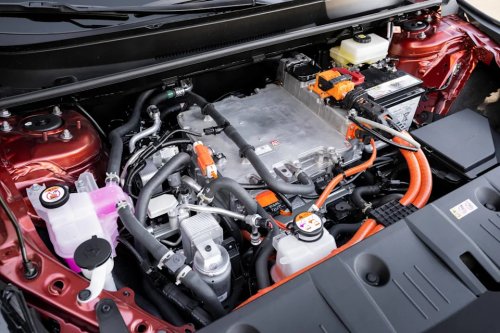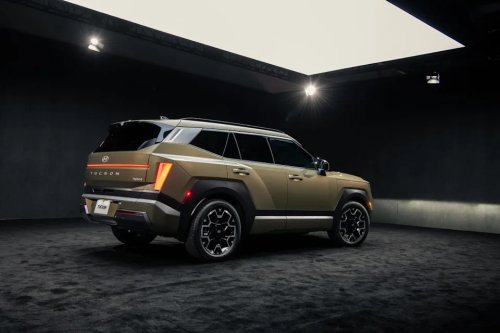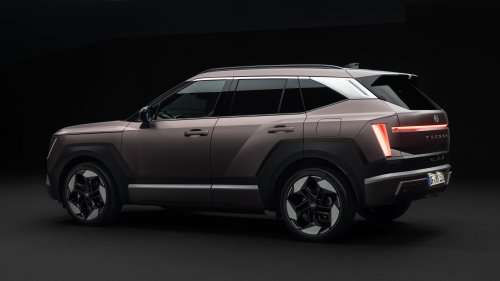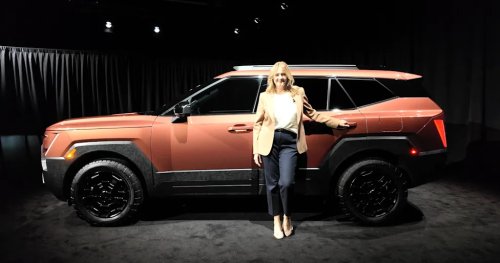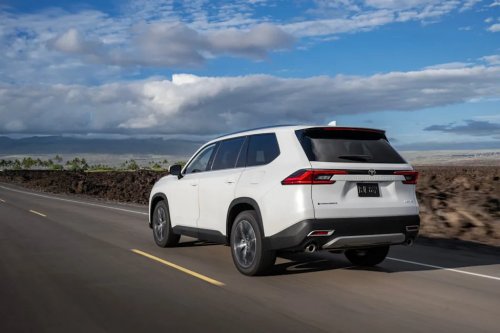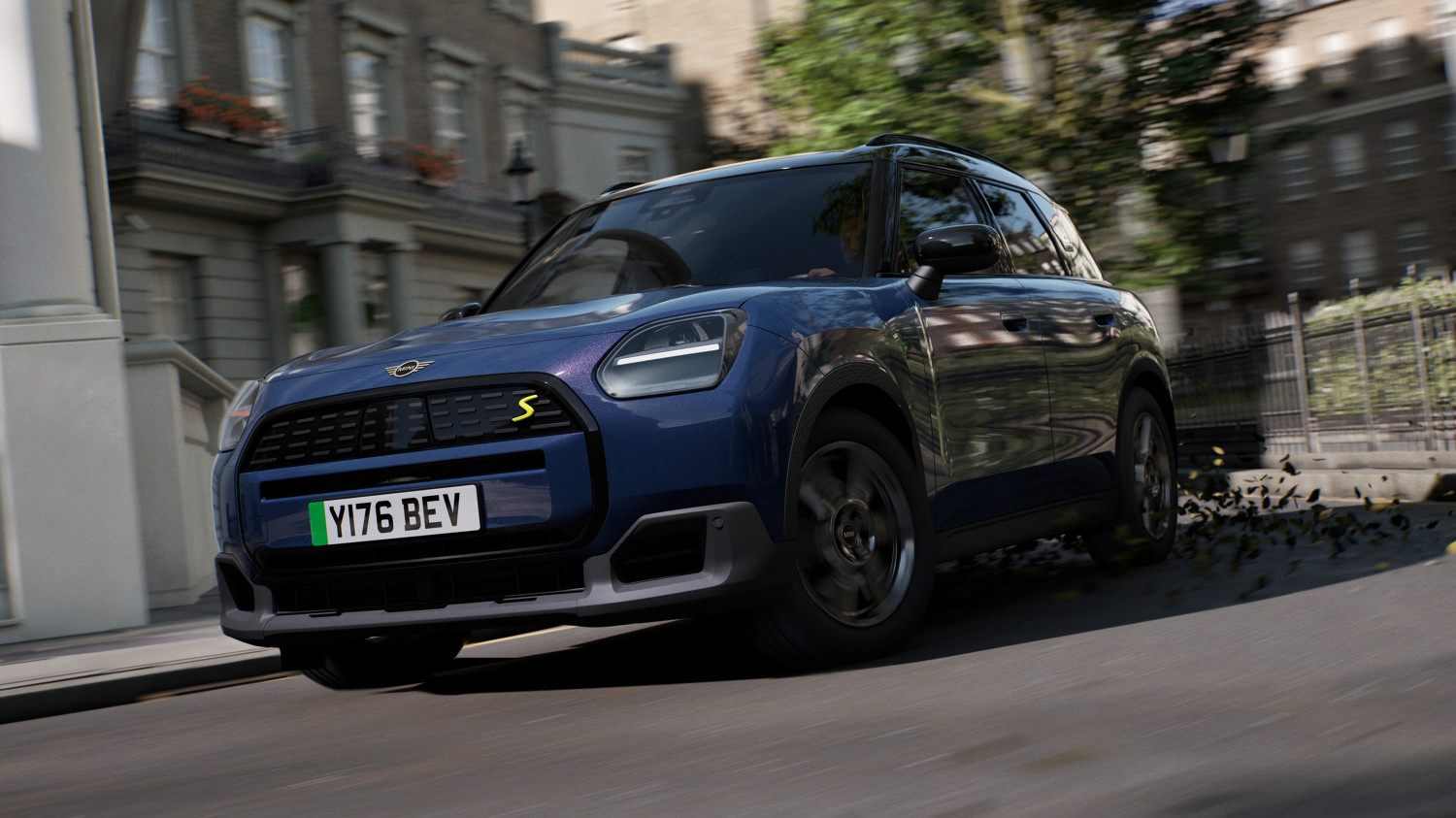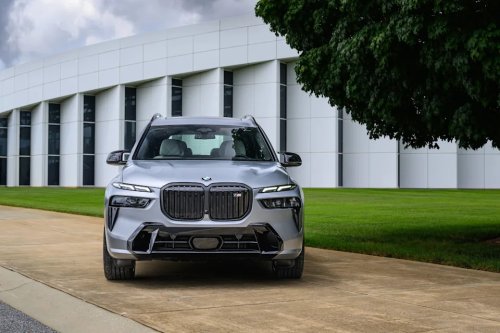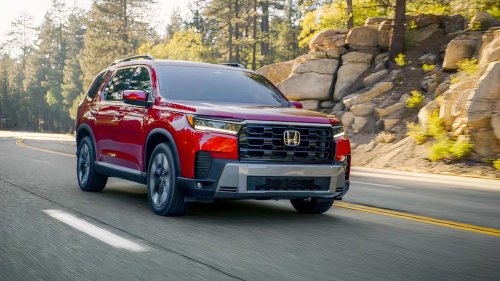
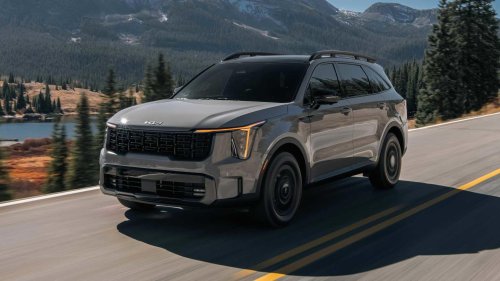
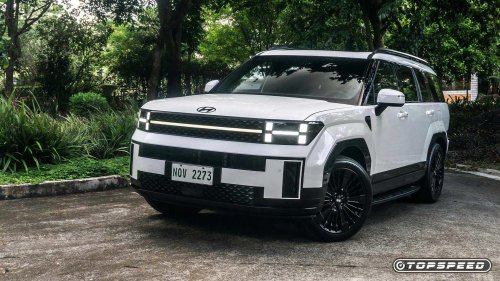
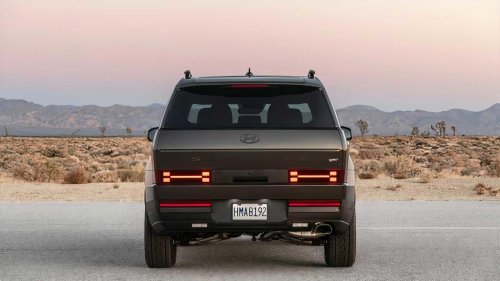
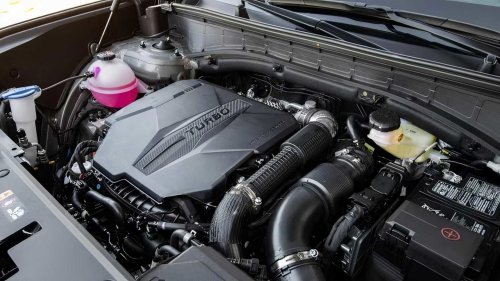
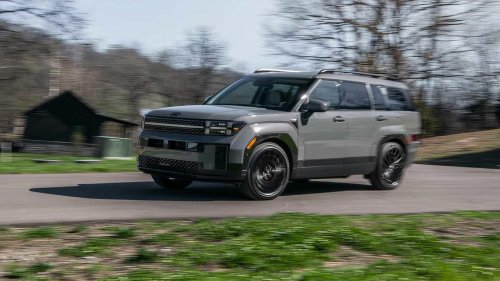
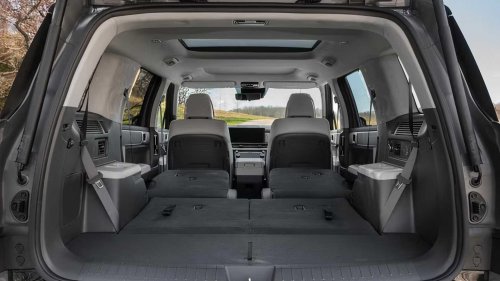
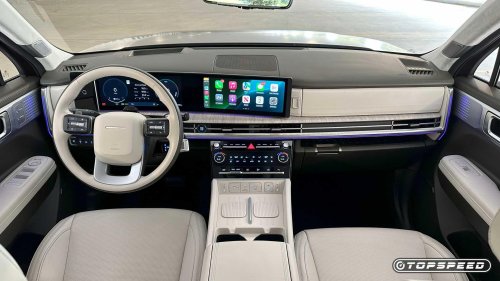
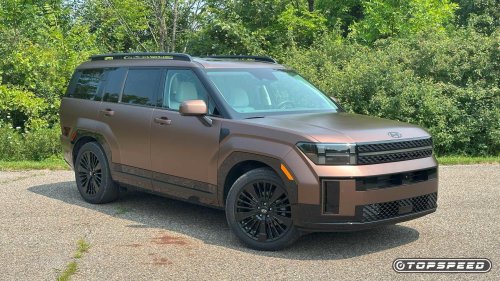
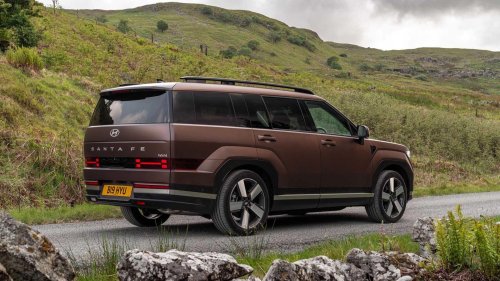



















Family SUVs are entering a new era, and buyers in 2026 are becoming far more selective about what truly matters in a daily driver. For years, the formula was straightforward: bigger engines, more horsepower, and as much space as possible. But rising fuel prices, increasing ownership costs, and changing family priorities are reshaping the segment in real time.Today's buyers are no longer impressed by size alone. Instead, they want efficiency without sacrificing practicality, technology that actually improves everyday life, and long-term value that makes financial sense well beyond the showroom floor. That shift has created massive demand for hybrid SUVs that can deliver genuine three-row versatility while dramatically reducing fuel consumption.The smartest family vehicles are now the ones that balance comfort, drivability, fuel economy, and usability in a way traditional gas-powered SUVs simply cannot. And as automakers race to meet those expectations, one hybrid SUV has quietly emerged as the perfect middle ground between affordability, efficiency, and modern family practicality, without feeling like a compromise in any area. Why Families Are Rethinking What Makes A Smart SUV Purchase In 2026 Honda There’s a quiet shift happening in the family SUV market, and it’s not being driven by horsepower wars or badge prestige. Instead, buyers in 2026 are recalibrating what “smart” actually means. For years, the benchmark was simple: buy the biggest SUV you can afford, preferably with a V6 or V8, and call it a day. That logic no longer holds.Rising fuel costs, urban congestion, and evolving family needs are forcing buyers to think more holistically. Today’s smart SUV purchase balances efficiency, usable space, long-term ownership costs, and technology that genuinely improves daily life. The result is a growing rejection of traditional gas-only three-row SUVs that struggle to justify their running costs.Kia Hybridization has become the sweet spot. Unlike fully electric SUVs, hybrids don’t require lifestyle compromises or charging infrastructure. At the same time, they deliver meaningful fuel savings and smoother drivability compared to conventional internal combustion engine vehicles.This shift is also being driven by real-world economics. Families are no longer just looking at purchase price; they are factoring in total cost of ownership, including fuel, maintenance, and depreciation. Vehicles that can consistently deliver over 30 mpg while still offering three-row practicality are suddenly far more compelling than larger, thirstier alternatives. How The Hyundai Santa Fe Hybrid Hits The Sweet Spot Between Efficiency And Space Isaac Atienza | TopSpeed The biggest challenge for family SUVs has always been balancing interior space with efficiency. Historically, the moment you needed three rows, fuel economy took a significant hit. The 2026 Hyundai Santa Fe Hybrid flips that narrative. Despite offering standard three-row seating for up to six or seven passengers, depending on configuration, it still delivers fuel economy in the low-to-mid 30 mpg range. That places it firmly ahead of traditional midsize SUVs, many of which struggle to exceed 25 miles per gallon combined.This efficiency doesn’t come at the expense of practicality. The Santa Fe Hybrid features a 17.7-gallon fuel tank, translating to a real-world driving range that can exceed 600 miles under ideal conditions. For families, that means fewer fuel stops on long trips and greater day-to-day convenience.Hyundai Hyundai’s latest design approach also plays a critical role. The Santa Fe adopts a more upright, boxy silhouette compared to its predecessor, which directly improves interior packaging. A longer wheelbase and squared-off rear end translate into better third-row accessibility and more usable cargo space. Cargo capacity behind the third row sits at approximately 14.6 cubic feet, but more importantly, the layout is practical and flexible. Fold-flat seating allows the Santa Fe to transition seamlessly between passenger-hauling and cargo duty, which is essential for busy households. Turbo-Hybrid Performance, Real-World MPG, And Everyday Drivability Hyundai Under the hood, the Hyundai Santa Fe Hybrid is powered by a 1.6-liter turbocharged inline-four engine paired with an electric motor. Together, they produce a combined 231 horsepower and 271 pound-feet of torque. While those figures may seem modest compared to larger V6-powered rivals, the hybrid system fundamentally changes how the vehicle feels on the road. The electric motor provides immediate torque, improving low-speed responsiveness and making the SUV feel more energetic in city driving.Unlike many hybrid competitors that rely on continuously variable transmissions, Hyundai uses a conventional six-speed automatic transmission. This gives the Santa Fe Hybrid a more natural and familiar driving experience, with defined gear shifts and better driver engagement.Hyundai The hybrid system is supported by a 270-volt lithium-ion battery pack, which allows for short bursts of electric-only driving and assists the engine under load. This is particularly effective in stop-and-go traffic, where fuel savings are most noticeable. In real-world conditions, fuel economy typically lands in the low-to-mid 30 mpg range, depending on driving style and environment. That consistency is important, as it means owners can realistically achieve the efficiency figures advertised.Acceleration is adequate rather than exciting, with 0-60 mph times in the high nine-second range. However, performance is not the primary focus here. Instead, the Santa Fe Hybrid prioritizes smoothness, refinement, and efficiency, qualities that matter far more in daily family use. The overall driving experience is quiet and composed. The transition between electric and gasoline power is seamless, and the suspension is tuned for comfort, absorbing road imperfections with ease. For families, this translates into a more relaxed and less fatiguing drive. Three-Row Practicality, Tech-Forward Cabin, and Comfort Hyundai Inside, the Santa Fe Hybrid demonstrates Hyundai’s focus on modern usability. This is not just a three-row SUV on paper; it's one that has been carefully designed to accommodate real-world family needs. Seating configurations include both six- and seven-passenger layouts, with available second-row captain’s chairs that enhance comfort and accessibility. The third row, while best suited for children or shorter trips, is more usable than many competitors in this segment.The cabin is anchored by a dual 12.3-inch display setup, combining the digital instrument cluster and infotainment system into a single, cohesive interface. The system supports wireless smartphone integration and over-the-air updates, ensuring long-term relevance. Craig Cole | TopSpeed Material quality has also seen a noticeable improvement. Soft-touch surfaces, thoughtful trim options, and a clean, modern design give the interior a premium feel without pushing the price into luxury territory. Practicality is further enhanced by clever storage solutions and a versatile center console design. Hyundai has clearly prioritized functionality, making it easier for families to manage everyday items like devices, bags, and drinks.Comfort is another strong point. The hybrid system contributes to a quieter cabin, especially at lower speeds where the vehicle can operate on electric power alone. Combined with supportive seating and a compliant suspension, the Santa Fe Hybrid excels as a long-distance cruiser. Safety is comprehensive, with a full suite of advanced driver assistance features. Adaptive cruise control, lane-keeping assist, blind-spot monitoring, and forward collision avoidance are either standard or widely available, reinforcing the vehicle’s family-friendly credentials. The Value-Focused Hybrid SUV That Makes Rivals Feel Overpriced Craig Cole | TopSpeed One of the Santa Fe Hybrid’s strongest selling points is its value. Pricing starts at $36,150 and extends to $50,250 for fully equipped models. When compared to similarly sized hybrid SUVs, it consistently offers more features for the money. Competitors often require stepping up to higher trims to access comparable technology and comfort features, which quickly drives up the price. Fuel efficiency also plays a major role in overall value. With real-world fuel economy in the 30 mpg range, owners can expect significantly lower fuel costs over time compared to traditional gasoline SUVs.Hyundai Hyundai further strengthens its value proposition with an industry-leading warranty package. A 5-year/60,000-mile basic warranty provides added peace of mind, particularly for families planning to keep their vehicle long-term. What makes the Santa Fe Hybrid particularly compelling is how it balances all these factors. It doesn't just undercut competitors on price; it delivers a more complete package.Rivals like the Toyota Highlander Hybrid and Kia Sorento Hybrid remain strong contenders, but they often fall short in one key area, whether it’s interior space, feature availability, or pricing. The Santa Fe Hybrid, by contrast, feels like a more cohesive and thoughtfully engineered solution.Sources: Hyundai U.S. & MotorTrend