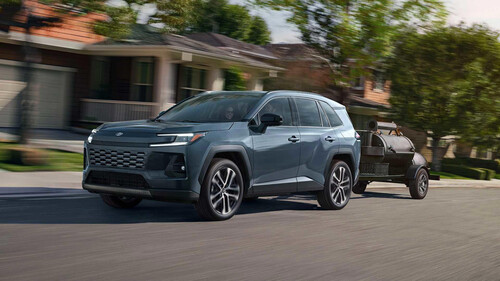
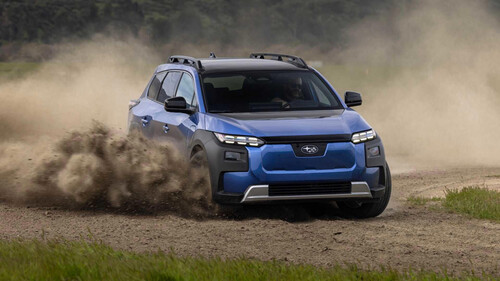
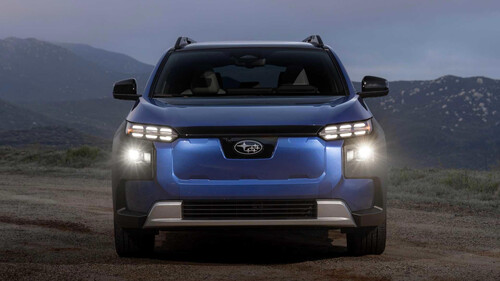
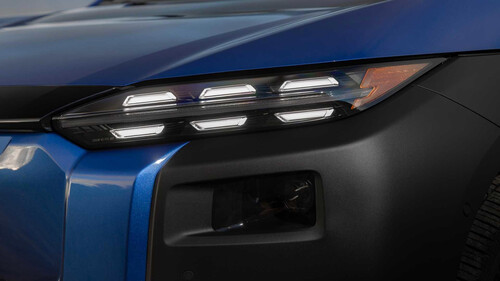
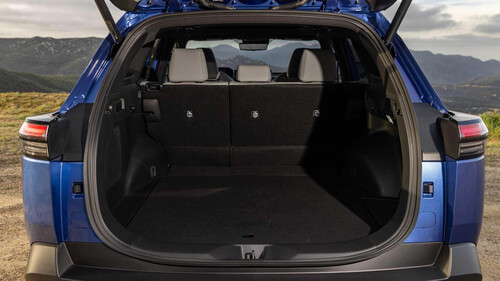
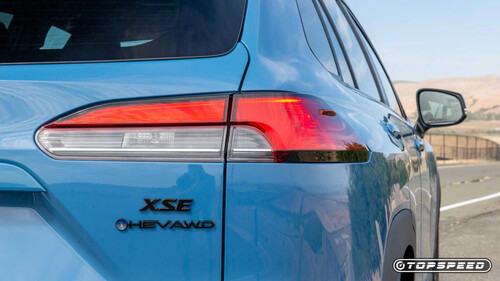
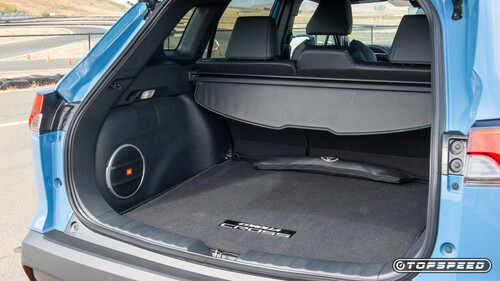
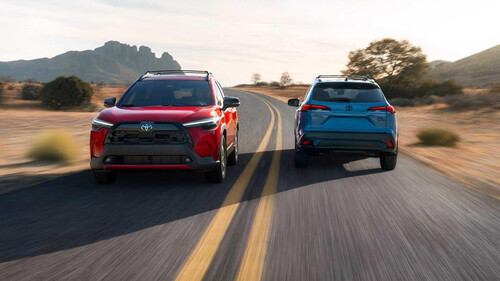
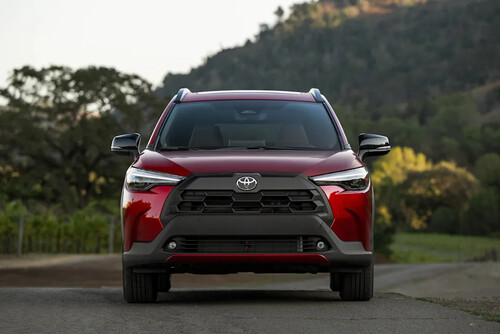
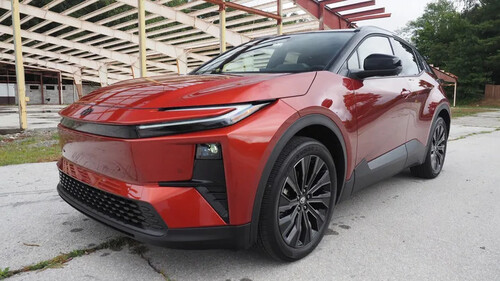
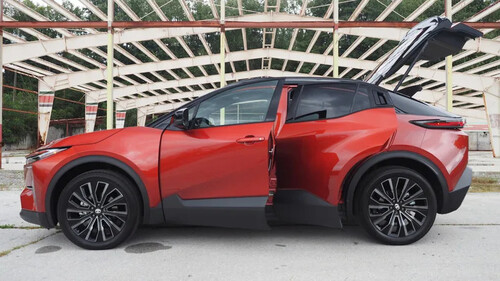
Many years ago, I drove the original Toyota C-HR at its debut. Its styling was unusual, and I appreciated Toyota's willingness to make a little crossover that didn't look like every other little crossover. It even handled rather well. Unfortunately, every time I began to enjoy it, the powertrain reminded me that fun was apparently optional. The engine felt anemic, the continuously variable transmission drained what enthusiasm remained, and it lacked all-wheel drive. The rear seat was tight, too. It was a crossover that seemed reluctant to do several of the things people buy crossovers to do.The new C-HR is quite a different animal. It's electric, larger and equipped with all-wheel drive as standard. It has 338 horsepower, which is a number I never imagined associating with this nameplate. Toyota offers it in two trims: the $37,000 SE and the $39,000 XSE, before delivery and other charges. Both have the same dual-motor powertrain. So, at last, buying the less expensive C-HR doesn't mean accepting the automotive equivalent of a stern lecture about patience.ToyotaPowertrain and performanceBoth versions use a 74.7-kWh battery and produce a combined 338 horsepower. Toyota estimates a 4.9-second run from zero to 60 mph. That puts the new C-HR's acceleration in a completely different universe from the old one. It also makes the starting price interesting: you're getting a quick, dual-motor electric crossover for less than $40,000. The original C-HR asked me to celebrate its handling while overlooking its engine. This one has enough power to let the chassis join the conversation.I don't want to declare it a sports car because the number on a stopwatch looks exciting. Plenty of EVs launch hard and become less interesting once the road bends. Toyota says it tuned the C-HR's springs, dampers and anti-roll bars, while the battery sits low in the vehicle. The original showed that Toyota could make a C-HR handle; the question for this one is whether the steering and suspension make use of all that newfound power. Either way, I'm glad the accelerator finally has a meaningful relationship with the styling.Range is where the two trims separate. The SE wears 18-inch wheels and has an EPA-estimated range of 287 miles. The XSE gets 20-inch wheels and a 273-mile rating. That's a 14-mile penalty for the dressier version, with no additional horsepower in return. I understand wanting the larger wheels. I also understand looking at them every time you plan a longer drive and asking whether they were worth it.Charging equipment is competitive. The C-HR has a native NACS port, an 11-kW onboard AC charger and battery preconditioning, which can prepare the pack for a DC fast-charging stop. Toyota says a 10% to 80% charge takes around 30 minutes under ideal conditions. The company also includes a dual-voltage charging cable and a NACS-to-CCS adapter. Those are useful details for a buyer who wants to charge at home and have more options on the road. Naturally, "under ideal conditions" is doing some work in that charging estimate; the weather, battery temperature and charger itself still get a vote.Exterior and interior designThe first C-HR looked as though its designers had been told to make absolutely sure nobody mistook it for a Corolla. The new one is more restrained. There are enough angles and curves to give it an identity, but I find it less distinctive than the original. Perhaps that's the price of growing up. Fortunately, the familiar Toyota face and coupe-like roofline give it some presence without making it look like it escaped from a science-fiction movie set.Related: I Drove the 2027 Chevy Bolt RS and This is Everything I Hated About ItInside, the C-HR is attractive and appears solidly put together, but I don't find it especially playful. The 14-inch central touchscreen dominates the dashboard, joined by a slim driver display and two wireless phone chargers. Wireless Apple CarPlay and Android Auto are included. The XSE adds synthetic suede and SofTex-trimmed seating, a power passenger seat with driver-seat memory, and an available panoramic glass roof. It also gets a panoramic-view camera, Lane Change Assist and Traffic Jam Assist, although some connected features depend on a trial or subscription. Not cool, Toyota.ToyotaThere's a lot of equipment for the price, even if the cabin's personality is closer to "very competent commuter" than "weekend troublemaker." Seat comfort is quite good, and back seat space is vastly improved over the last model. That is to say, average-sized adults can fit back there.My main complaint is Toyota's reliance on the screen for controls I'd rather operate by feel. Climate functions are much easier to use when a button or slider is waiting exactly where you left it. Looking through a display to make a simple adjustment takes attention away from the road. At least there's still a physical volume knob. I'm tempted to send it a thank-you card for being true to its anachronistic self.Related: 2026 Dodge Charger SIXPACK vs. EV: Which Powertrain is Best?The new C-HR is more useful than its predecessor. Toyota lists 25.3 cubic feet of cargo space behind the rear seats and 59.5 cubic feet when the 60/40-split rear seatbacks are folded. That gives this small crossover a legitimate argument when someone asks whether it can do more than look sharp and leave a traffic light quickly. Its overall length is 177.9 inches, so it remains manageable around town while offering considerably more everyday flexibility than I remember from the original.SE or XSE?This is an unusually easy decision to frame. The SE has the same motors, 338 horsepower, all-wheel drive, battery and 14-inch touchscreen as the XSE. It also has heated front seats and a heated steering wheel, a power liftgate, rain-sensing wipers and Toyota Safety Sense 3.0. Most importantly, it starts $2,000 lower and carries the longer EPA range estimate. For someone shopping primarily on performance and value, the SE is the one I'd point to first.The XSE makes sense if you want its 20-inch wheels, upgraded upholstery, extra seat adjustments and additional camera and assistance features. Those are real upgrades. Just be honest with yourself about whether they matter more than the SE's lower price and 14 extra rated miles. There's no secret performance bonus hiding behind the XSE badge. Toyota has already given the good stuff to both versions.CompetitorsThe C-HR enters a crowded part of the EV market. I'd look at the Chevrolet Equinox EV, Hyundai Kona Electric, Hyundai Ioniq 5, Kia EV6, and Nissan Leaf, depending on local pricing and how much space I need. While I like the Nissan Leaf quite a bit, it does not offer all-wheel drive.Toyota's own bZ deserves a look as well. These vehicles differ in size and equipment, so I wouldn't treat them as interchangeable simply because they all plug in. The Equinox EV presents a particularly clear value challenge: its 2026 front-wheel-drive version starts at $34,995 and has an EPA-estimated 319-mile range. Plus: I'm seeing some serious deals with the Equinox EV, it's a worthy competitor. The C-HR counters with standard all-wheel drive and considerably more power.Final ThoughtsThe original C-HR was memorable, but I spent too much time explaining away what it lacked. This electric one gives me far fewer excuses to make. It has useful cargo space, credible range, practical charging equipment and enough acceleration to make the old car seem like it belonged to a different family. Its interior could use more character, and I would happily trade some screen controls for proper buttons. The XSE also gives up range for its larger wheels.Still, the value is hard to dismiss. The XSE is an appealing quick EV for $39,000, but the SE is my pick: same power, more rated range and a lower starting price. The new C-HR may be less eccentric than the old one, but it finally delivers the all-wheel-drive performance that the original styling promised. That seems like a trade I can live with.Related: 2026 Hyundai Kona Limited Review: Lots of Goodies, a Little Less Aloha