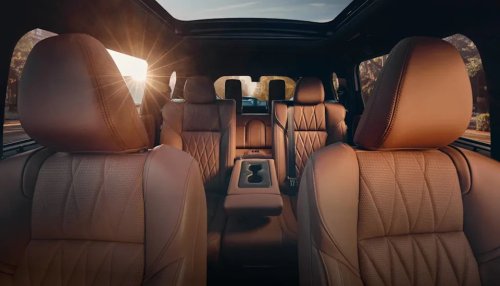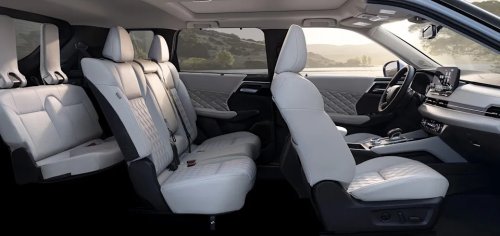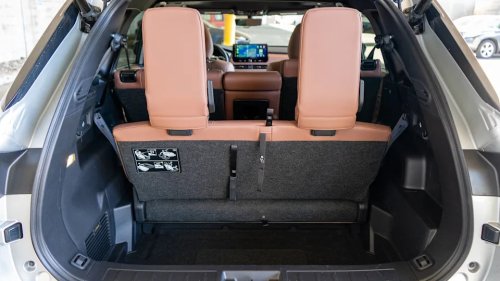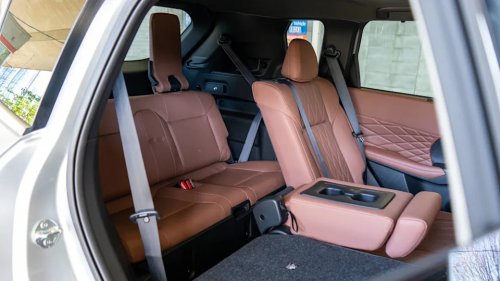
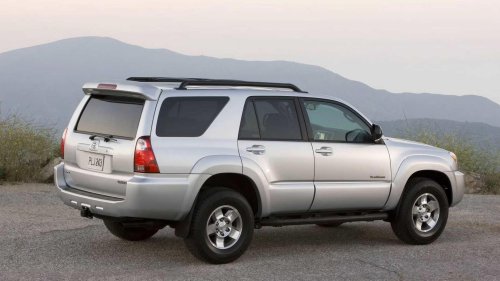
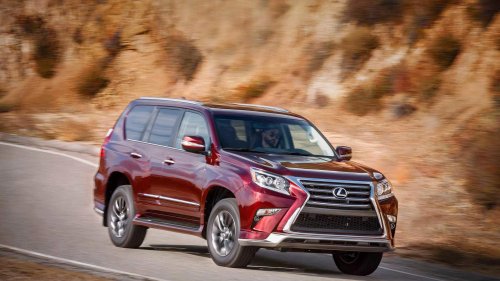
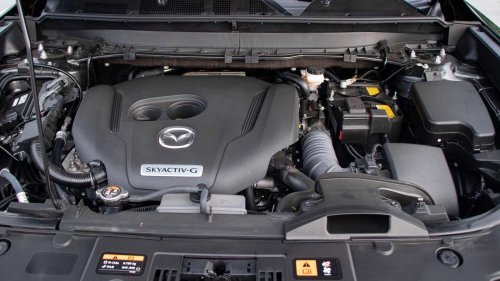
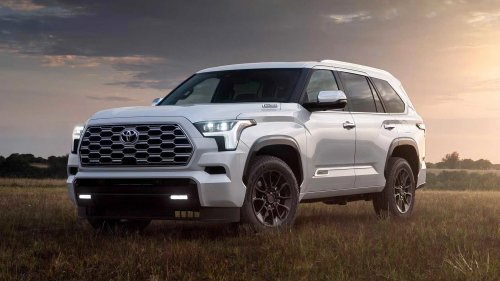
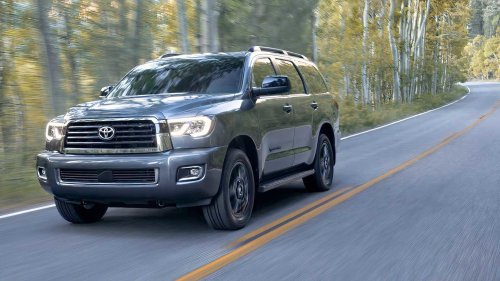
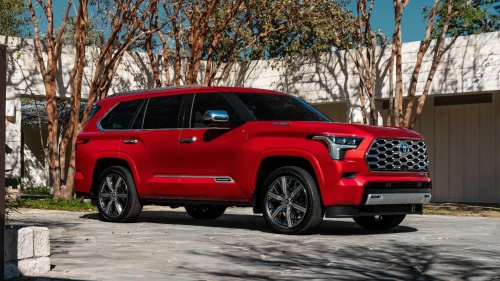
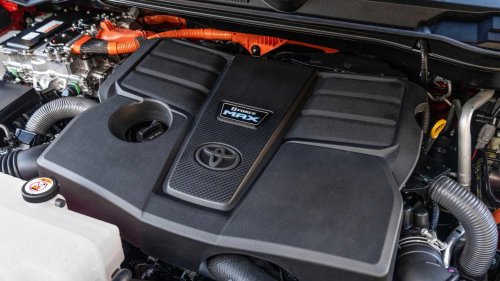
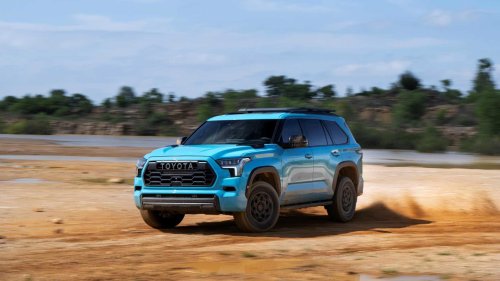
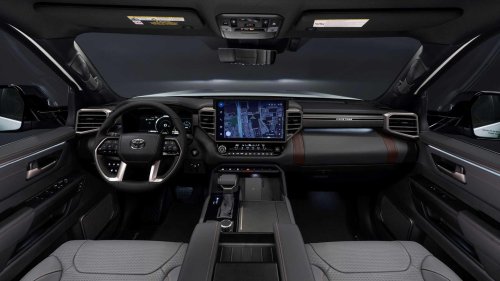
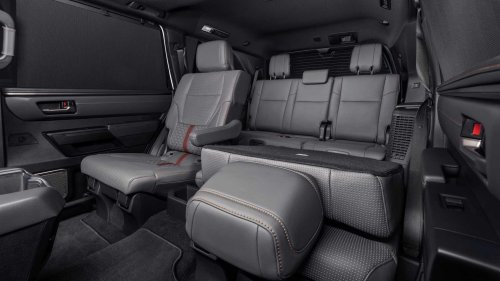
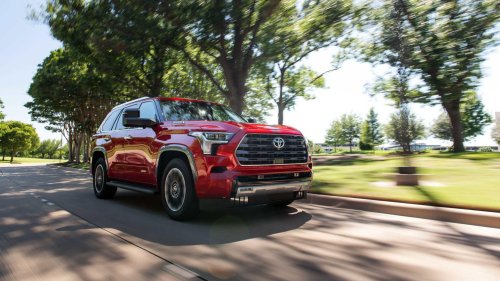



















The Japanese brands have a solid reputation for reliability, so, unsurprisingly, most American buyers gravitate towards these brands if they want hassle-free long-term ownership. Cars are expensive, and unless you manage to find a way to make money grow on trees, you likely want your car to last a long time.It is worth noting, however, that the reliability status quo is being disrupted these days. Turbocharging and hybridization have made vehicles more mechanically complex, but you'll be surprised to learn that the longest-lasting Japanese SUV that quietly avoids expensive problems is a hybrid. Thanks to decades of hybrid drivetrain experience, this SUV has already perfected the hybrid durability recipe for 2026. What Makes A Vehicle Last Long Toyota Understanding what makes a vehicle reliable will be key to analyzing why the Japanese SUV in today's article is the reliability king that quietly avoids expensive repairs. Most of the Japanese automakers have mastered one art that other automakers simply don't prefer to tackle. Simplification Builds Reliability Lexus Take a look at the engine bays of most Japanese cars, and you'll immediately see what makes their cars last long—simplicity. There are no spaghetti wires and cables, or numerous electronic features complicating the drivetrain. Take a look at our list of the most reliable SUVs of 2026, which includes just one non-Japanese entrant, and what's common in all of them is how simple their engine bays are. Simplicity means fewer moving parts and therefore fewer items to go wrong.And don't go thinking that the Japanese hybrids are very complex. Most of them, particularly the series-parallel hybrids of Toyota and Honda, are much more mechanically simple than you think. With one of its two motor-generators (MG) already strong enough to power the electronics, as well as crank the engine to life in a snap, you no longer have a starter motor and the usual belt-driven alternator.Toyota This also means your hybrid's air conditioning is a simpler electrically driven unit. The eCVTs of these two hybrid systems are also far simpler and more durable than you think, as they are not the belt-and-pulley CVTs you're probably thinking of. These are just some of the aspects of how the Japanese have simplified hybrids, even compared to their pure internal combustion engine (ICE) offerings, leading to these vehicles being extremely reliable. Long Production Life Means Fewer Bugs To Iron Out Lexus What you'll also notice about the Japanese brands is how they keep their drivetrains in production for such a long time. Even when a new generation of a powertrain debuts, it is often (but not always) an incremental improvement to an already proven ICE or hybrid drivetrain. Nissan's award-winning VQ family of V-6 engines, for instance, has been in production since 1994. Numerous improvements have been made since then, but by using a proven recipe, the fundamental engine just kept getting more reliable as they learned about the engine's shortcomings.That's also the case with Toyota's robust UR V-8 engine, which is one of the most reliable engines ever made. Even the latest sixth-generation Toyota Hybrid System (THS VI) in the newly-redesigned Lexus ES is still more of a refinement of past hybrid system generations, so we won't be surprised if the new ES will be reliable, too.Mazda Lastly, another upside of having a long production life is the sheer abundance of spare parts. Mazda's 2.5-liter Skyactiv-G (PY-VPS) four-cylinder has been in production since 2013, and being fitted to countless Mazda models also means that any of its models with this engine from the past 13 years will still have strong spare parts support in 2026. Even when passed on to the second or third owner, a Mazda with the PY-VPS engine will still be well-supported by mechanics and service centers and will still be kept alive on the road. All of this explains why long-running Japanese drivetrains are so dependable — but the Toyota SUV takes this further than any other vehicle on the road. The numbers are almost unbelievable. The Toyota Sequoia Holds The Title For Longest-Lasting Vehicle On The Road Toyota Reliability often equates to a long useful life, and the Toyota Sequoia is the longest-lasting vehicle you can buy, according to iSeeCars. This data aggregates the entire Sequoia lineage, which includes the current all-hybrid model and the older model with the ultra-robust UR V-8 engine. Near 50 Percent Chance To Last More Than 250,000 Miles Toyota The Toyota Sequoia, particularly the previous generation model, is often cited as one of the longest-lasting vehicles you can ever own. The 4.6-liter 1UR-FE or 5.7-liter 3UR-FE are some of the most reliable engines ever built, easily exceeding 300,000 miles with just routine maintenance. The 3UR-FE, in particular, went through 1.3 million miles of testing, which means that in the real world, this engine is performing beyond expectations.iSeeCars says that the Sequoia has a whopping 42.3 percent chance of going past 250,000 miles, which is 7.9 times higher than the industry average of 5.4 percent. With abundant spare parts being fitted to numerous Toyota and Lexus models, the UR family of engines will be supported for a long time, even with the engine already being replaced by a new 3.5-liter twin-turbo V-6 engine called the V35A. But There's A Huge Question Mark Toyota Speaking of the V35A, the Toyota Sequoia was fully redesigned in 2022 for the 2023 model year. It rides on the TNGA-F platform, and it switched to a silid rear axle while featuring a 3.5-liter twin-turbo V-6 hybrid powerplant as standard. The hybrid system is called i-Force Max, and unlike past series-parallel hybrids that Toyota has done, this is a pure parallel hybrid setup, mating a 10-speed automatic with an integrated electric motor. Twin turbos and a smaller displacement mean it is more mechanically complex than the V-8 it replaces.ToyotaThe V35A is also used in the recently discontinued Lexus LS 500 flagship luxury sedan, and it didn't have any widespread issues. That's also the case in the current Toyota Land Cruiser 300. Oddly enough, this engine in non-hybrid form was the subject of an engine failure recall due to machining debris left from the engine's manufacturing process. Some owners aren't buying into Toyota's narrative, unfortunately, as independent mechanics have revealed something is a bit off with this engine. On the upside, the hybrid version of this powertrain that's standard in the Sequoia has fared far better, as it suffered little to none of the issues that its non-hybrid counterpart faced. What You Can Expect From A New Sequoia 2026 Toyota Sequoia front shot Driving If you've decided to take the Sequoia plunge and are enamored by its capabilities, here's what you need to know about Toyota's largest SUV offering. Six Trim Levels From Trail-Ready To Near-Luxury Toyota As Toyota's largest SUV, the Sequoia immediately has road presence. The wide hexagonal grille is flanked by L-shaped LED headlights and is matched with chunky bodywork. With six variants, the Sequoia can go from understated to aggressive like the TRD Pro or even elegant with the range-topping Capstone model. Wheel sizes range from 18 to 22 inches, while the wide paint options perfectly complement the variant that you prefer.Once you hop aboard the 2026 Sequoia, you'll be greeted by an interior that mixes both modern and rugged. Or perhaps you can go full luxury when opting for higher trims like the 1794 Edition or the Capstone, with their lovely wooden trims and other luxurious touches. A 12.3-inch digital gauge cluster is standard, while the infotainment touchscreen ranges from eight inches in the base SR5 to 14 inches in every other variant.Toyota Seating for eight is also standard, while premium features such as second-row captain's chairs, a panoramic glass roof, a JBL sound system, and ventilated seats are available as standard or as an optional extra on higher variants. Take note, however, that due to the lithium-ion batteries of the hybrid system, its cargo area shape is a bit awkward. 437 Horsepower And 9,500-Pound Tow Capacity — With A Trade-Off Toyota Our team has reviewed a Sequoia in range-topping Capstone trim, and they discovered a rugged family SUV with near-Lexus levels of appointments. Producing 437 horsepower and 583 pound-feet of torque, the Sequoia's V-6 hybrid drivetrain sounds good while having a smooth demeanor. The engine is filled with torque that's not just enough to haul the Sequoia's body, but also to pull up to 9,500 pounds. Thankfully, Toyota's decision to switch to a hybrid has paid off in terms of fuel efficiency, since the Sequoia achieves a combined 22 MPG with RWD and 20 MPG with 4WD—an improvement of seven MPG and six MPG, respectively.Unfortunately, spoiling that near-Lexus experience is its ride quality. The new model switched to a (theoretically) more comfortable multi-link suspension, but this may have been compromised by its switch to a solid rear axle, which is great for off-roading. The result is a ride quality that is less settled than the previous Sequoia with an independent rear axle with double-wishbone suspension. Other than that, the Sequoia is refined and quiet, and handling-wise, this large SUV remains stable and composed, even through bends.Sources: Toyota, iSeeCars