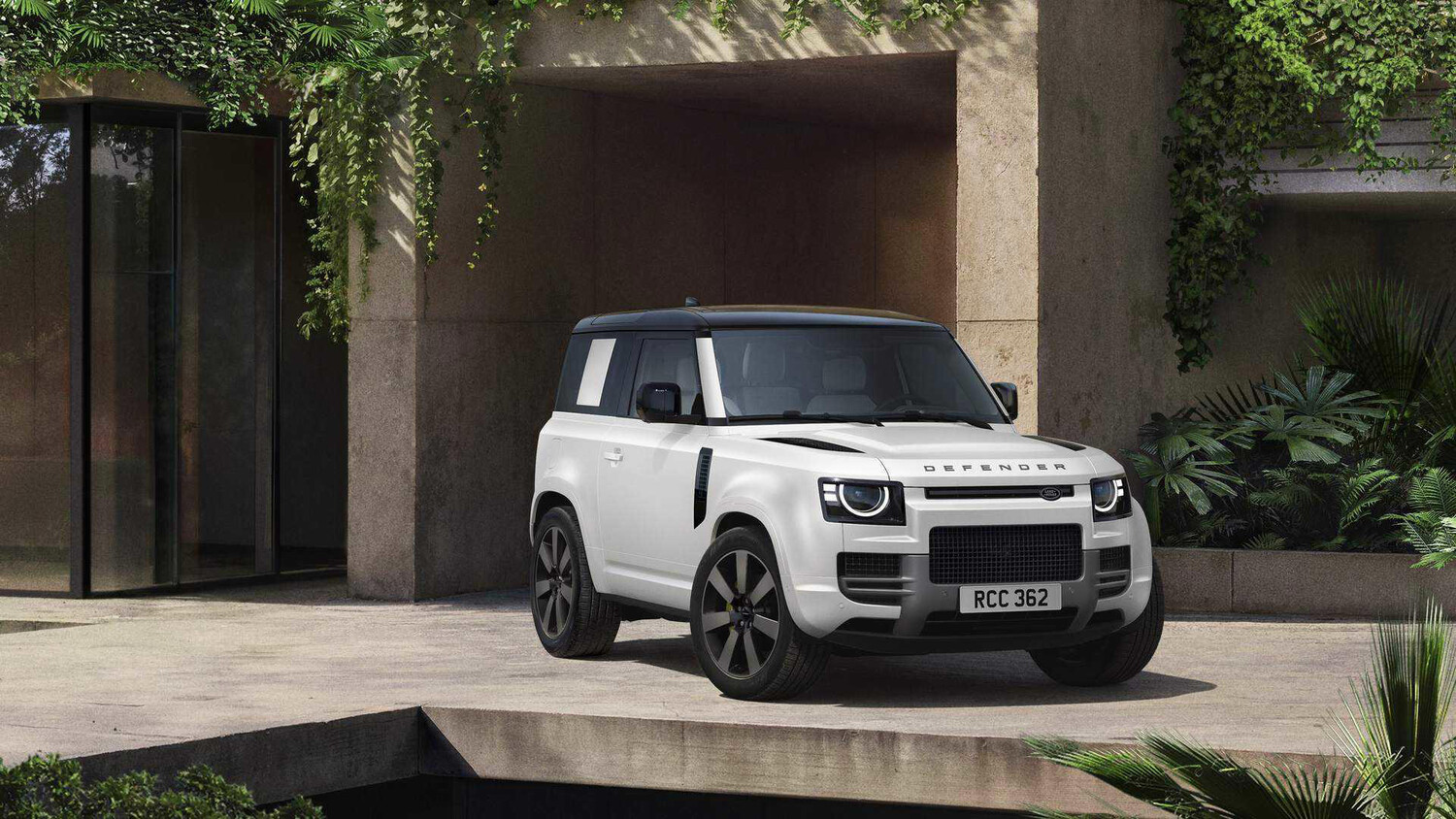
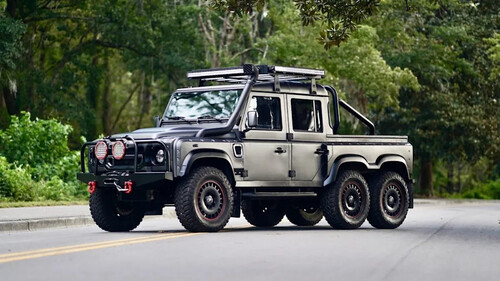
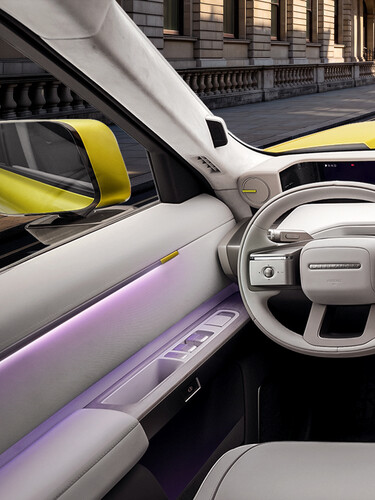
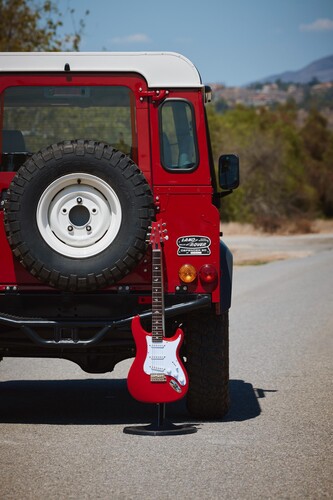
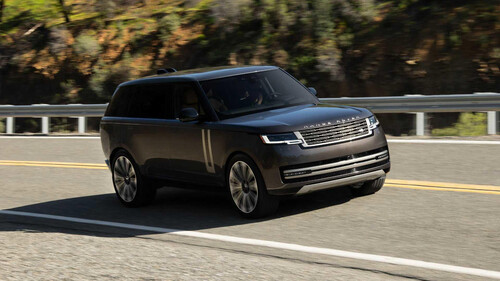
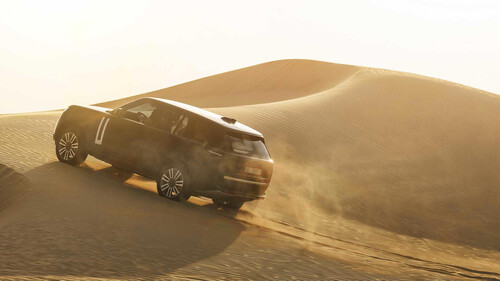
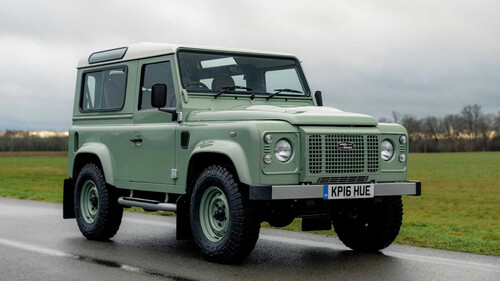
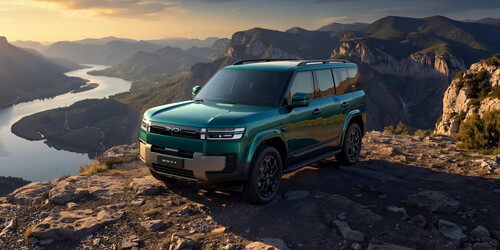
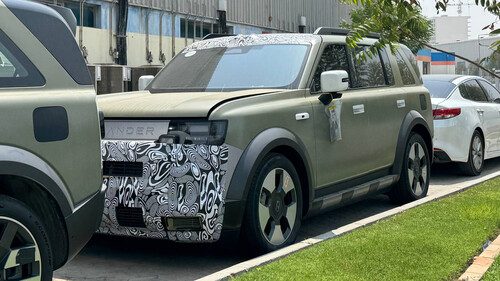
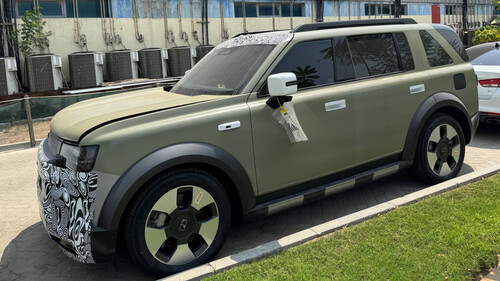
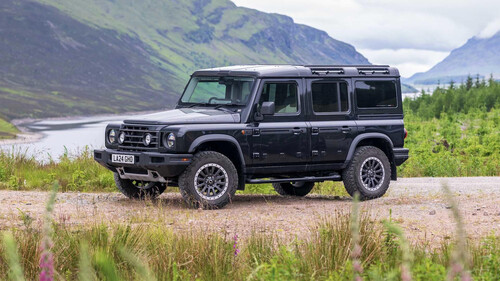
Jump LinksSixth-Generation Land Rover Defender ReviewsThe Land Rover Defender is one of the most legendary automotive shapes in history. It began as a post-war agricultural utility vehicle in 1948 and has undergone six different generations of development, evolving from simple leaf-sprung equipment to a worldwide luxury-adventure SUV with supercharged V8 and hybrid powertrains. It is a car that transcends class or wealth, being driven by people of all backgrounds and all professions. It is just as likely to be seen parked outside a cattle market as it is a trendy café, and there are not many cars you can say that about.The Land Rover Series I was intended to serve as a temporary agricultural solution for post-war Britain when it made its debut at the Amsterdam Motor Show in 1948. The simple, aluminum-bodied workhorse changed over the course of seven decades to become the world standard for expedition travel before evolving into a luxurious off-road vehicle with cutting-edge technology. It is that change from the plucky off-roader to the all-singing, all-dancing super SUV that we will be looking at today. Join us as we look back on all the Land Rover Defender generations and see what made each so impressive, and how the model has improved over time. 2020–Present Land Rover Defender 6th-Gen (L663) 2027 Land Rover Defender (16)The all-new L663 Defender was reintroduced after a four-year break, using a lightweight, ultra-stiff aluminum unibody construction in place of the traditional body-on-frame ladder chassis. It is available in three body lengths: the two-door 90, four-door 110, and later an extended three-row 130. The L663 was a massive deal when it launched in 2020, being one of the most anticipated cars that year. Initially, there was some controversy around the new design, but as time has gone on, and more off-road and performance variants launched, the public perception has shifted to a positive one.It has Terrain Response software, contemporary air suspension, and extreme approach/departure angles. Engines range from a mild-hybrid turbocharged inline-four or inline-six, to a supercharged 5.0L V8, and even a high-performance OCTA model with a twin-turbo 4.4L V8 generating 626 hp. The current Defender can back up its looks with pedigree, having won its class in the 2026 Dakar rally. Sixth-Generation Land Rover Defender Production Years 1990–2016 Land Rover Defender 5th-Gen (L316) 2016 Land Rover Defender 90 HeritageTo avoid confusion with the then-new Discovery, Land Rover formally rebranded its "Ninety" and "One Ten" models as the Defender in 1990. Built on a heavy-duty box section ladder chassis with front and rear live axles, the L316 kept its recognizable exposed rivet appearance and boxy aluminum body panels. It is one of the most iconic shapes of all time, and is most likely what comes to mind when someone is asked to think of what a Defender is. Between 1993 and 1997, it came across the pond with the now highly sought-after North American Specification (NAS). These were powered by Rover V8 engines and complete roll cages were formally imported in small quantities. These NAS spec Defenders experienced a huge rise in value after the COVID pandemic, and still cost a lot today. Overseas, the Defender was offered in a ridiculous number of engines, as Land Rover bounced from one owner to the next. Wild to say, but over the years you could get it with an inline-five, a BMW six-cylinder, a Buick-derived V8, a Ford four-cylinder, and even a Jaguar supercharged V8.The 5th-generation Defender was eventually killed in 2016, as emission and safety regulations made it impossible to sell. 1983–1990 Land Rover 90 and 110 4th-Gen 300Tdi-Powered 1988 Land Rover 90 5-SpeedThe Land Rover underwent another evolution in 1983, although with a few modest visual changes. Despite the fact that the four-door variant had a 110-inch gap between the axles and the ordinary version had a 92.9-inch measurement, and was named after those numbers. For commercial buyers, there was also an extended chassis version for converting it into whatever was required. However, a coil sprung system took the place of the leaf spring suspension underneath. It was the largest modification to the entry-level Land Rover vehicles since the original Series I, and it enhanced both the amount of axle movement possible and the road ride quality. It was initially offered as just a four-door 110 variant, with the 90 coming a year later, and also adding the option of a larger 3.5L V8 from the full-size Range Rover of the time. 1971–1985 Land Rover Series III 3rd-Gen Land Rover Series III frontLand Rover kept the IIA chassis for the Series III generation, but they made it more noticeable by moving the headlamps to the front of the fenders. In order to comply with international lighting requirements, including those necessary to enter the United States, that modification was made. An attempt was made to make the ol' landie a nicer experience with the luxury of a molded plastic dashboard instead of jagged metal everywhere. It also got synchromesh on all four gears, ultimately eliminating the need for double-declutching. Problems from the previous generation were also addressed, such as stronger rear axle half-shafts to stop them breaking under prolonged, high strain. Improvements were also made to the drivetrain. For export markets, Land Rover shoved that 3.5-liter V8 in the Series III, although to call it a stout motor would be a stretch, as it produced less than 100 hp. People still loved it though, as the Land Rover Series III was the model that pushed the brand over the one million sales mark in 1976. 1958–1971 Land Rover Series II 2nd-Gen 1969 Land Rover series iia (santana 88) front quarterThe second generation kept the same 88- and 109-inch lengths, but Rover's design team gave the body a new look. Buyers could pick between gasoline and diesel engines, including a new 2.25-liter motor that remained the standard choice until the mid-1980s. The 109-inch model still offered the 10-seat layout, alongside a new 12-seat version that was officially classified as a bus in the UK. For some markets, you could even get a cab over engine variant, although this was short-lived. For North America, we got a 110 variant with a larger 2.6L inline-six that made 123 hp. It was more of the luxury variety, and came with a double-skin 'Safari Roof' with roof vents to reduce cabin temperatures in sunnier climates. 1948–1958 Land Rover Series I 1st-Gen Land Rover Series I State Review Debuting at the 1948 Amsterdam Motor Show, the original Land Rover featured an aluminum body on a box frame, powered by a 1.6-liter four-cylinder engine paired with a four-speed transmission from the Rover P3. It also included a two-speed transfer case and full-time four-wheel drive. The early Land Rover was very much a utility vehicle, with a PTO for farm machinery. It was a very simple design, being born from a tight post-war economy. Throughout the Series I production, the engine was upgraded to 2.0 liters, and the standard wheelbase expanded from 80 inches to 86 inches, followed by the addition of a 107-inch pickup truck model. A five-door station wagon seating ten people debuted in 1955, and toward the end of the generation, the wheelbases grew slightly further to 88 and 109 inches.Source: Land Rover