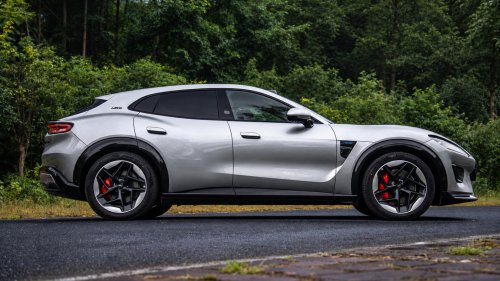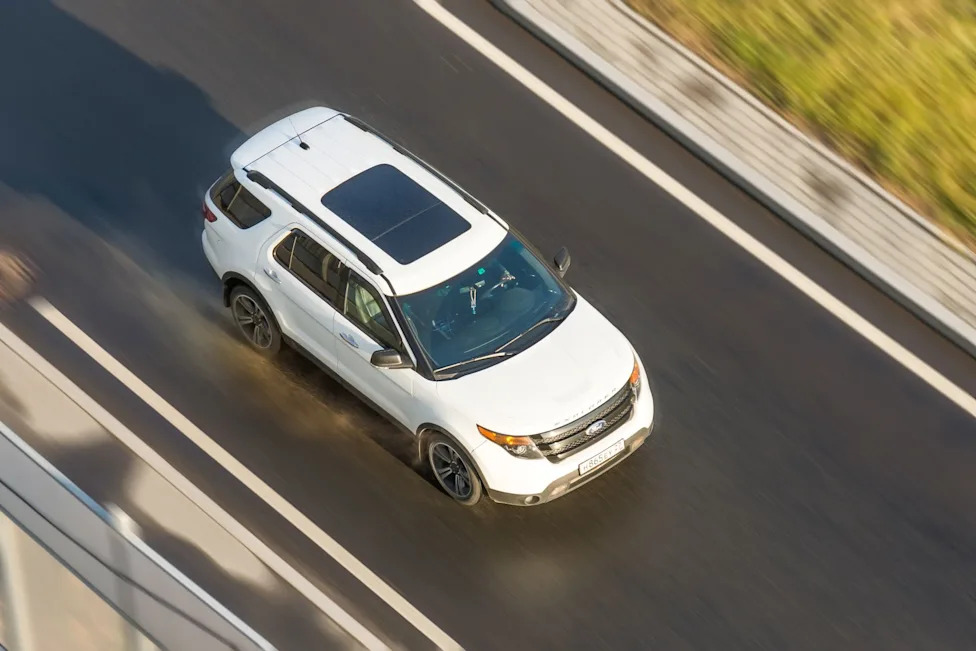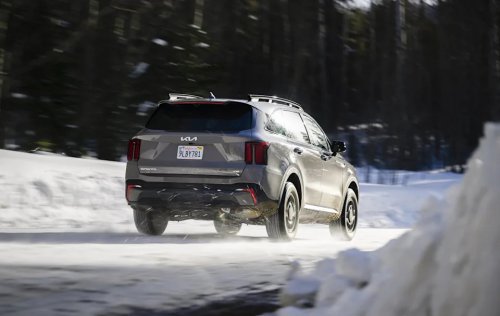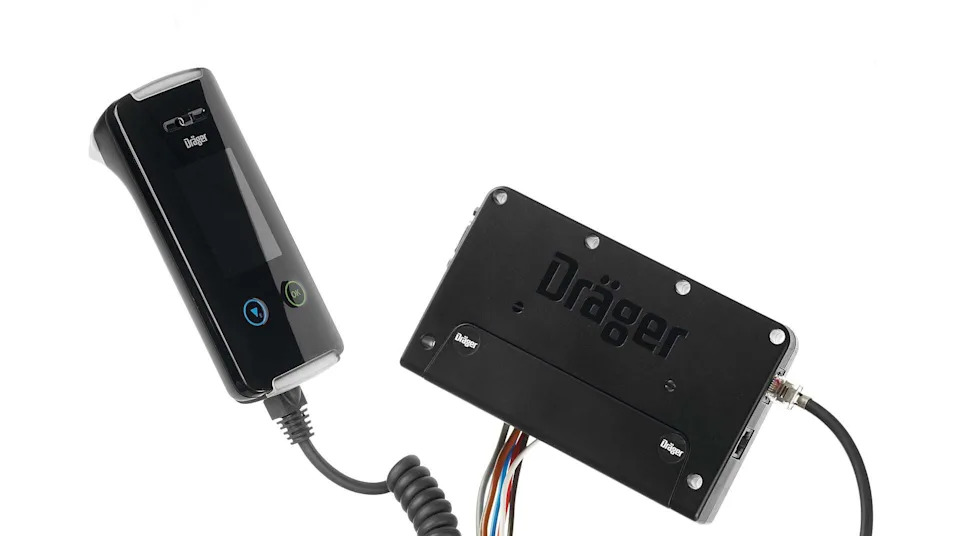
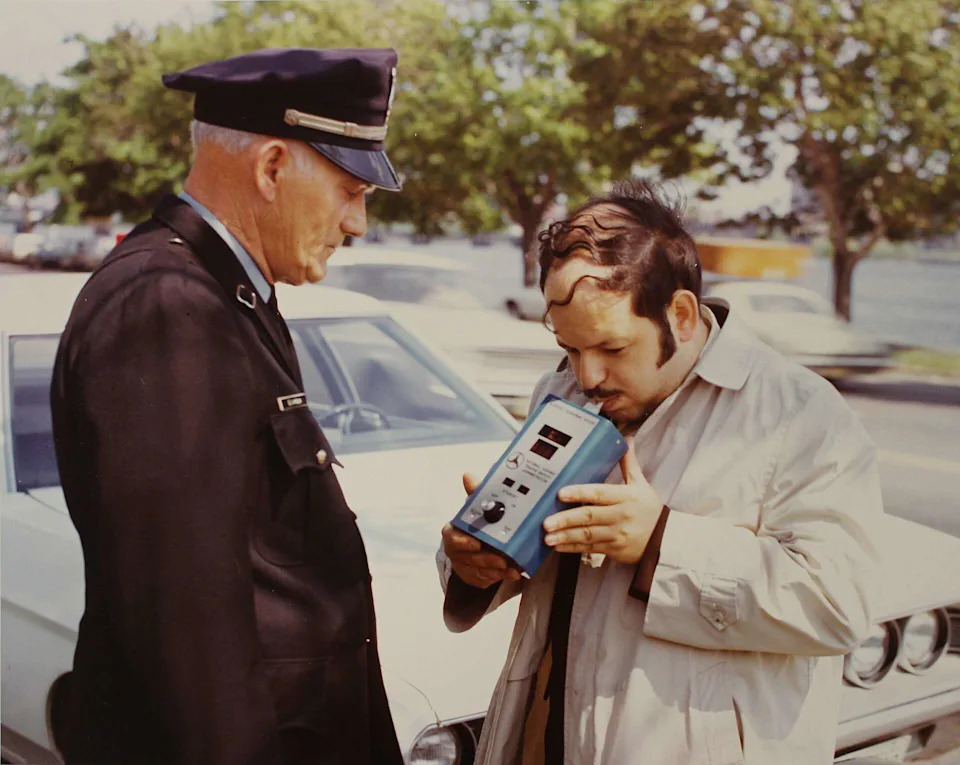



















The gray SUV was sitting at the stop sign at Judge Avenue and Lydia Street in Waukegan, Ill., at about 1:21 a.m. on Sept. 14, angled so that anyone coming the other way would have had to swing into the oncoming lane to get around it. The man behind the wheel, prosecutors say, was Jose A. Torres-Campos, 36, of Ingleside: no valid license, eight prior DUI arrests in court records, and six months out of prison on parole from a nine-year aggravated DUI sentence, according to the Lake and McHenry County Scanner's account of his detention hearing.Nothing in that SUV was built to stop him. Illinois can revoke a license, stack felony classes and send a driver to prison, and it has done all three to Torres-Campos. The one device the state uses to keep a repeat drunk driver's car from starting, the ignition interlock, comes only with a restricted permit, and his record puts a permit years out of reach. The federal rule meant to put alcohol detection in every new car is nearly two years past its deadline, and NHTSA has told Congress the technology isn't ready.What prosecutors told a Lake County judgePolice were called for a report of a driver slumped behind the wheel. Assistant State's Attorney Garrett Miller told the court that as officers watched, the SUV pulled away from the stop sign, swerved left, turned until it sat crosswise on the north-south street, then backed into a handicapped parking space without a permit displayed.Prosecutors said officers saw two open Modelo beers in the center cupholders, both about half full and still cold, and that the driver had bloodshot, watery eyes, mumbled speech and a strong odor of alcohol. Through a Spanish-speaking officer, Torres-Campos allegedly said he had a few beers earlier in the day and one before driving, and rated himself a 3 on a 1-to-10 intoxication scale. He declined field sobriety tests, saying he was tired, and refused a breath test after his arrest, Miller said.He is charged with aggravated DUI as a sixth or subsequent violation, aggravated DUI with a suspended or revoked license, driving on a revoked license, improper lane usage and illegal transportation of alcohol. Assistant Public Defender Gregg Wolpoff told the court his client works three jobs, about 13 hours a day on weekdays and about eight hours a day on weekends, and had dozed off from exhaustion. Wolpoff said the beers belonged to a passenger Torres-Campos had dropped off, that his drinking was around 1 p.m., 12 to 13 hours before the stop, and that Torres-Campos disputes a Spanish-speaking officer was at the scene.Lake County Judge Michael Nerheim ordered him held until trial, citing the vehicle's position in the road, the driving described in the petition and the cold, half-full beers. Nerheim said it "astonishes me" that someone with his history would still drink and drive. Torres-Campos has not been convicted on the new charges, and a preliminary hearing is set for Oct. 5.Three prison terms on Illinois' felony DUI ladderIllinois prices repeat DUI by count. Section 11-501(d)(2) of the Illinois Vehicle Code makes a fourth violation a Class 2 felony and a fifth a Class 1 felony, with probation barred for both. A sixth or subsequent violation is a Class X felony, carrying a prison term of 6 to 30 years with no probation available.Torres-Campos has been up most of that ladder. Assistant State's Attorney Colleen McConnell cited Illinois Department of Corrections records showing a six-year sentence in a 2013 case for a fourth aggravated DUI, an eight-year sentence in a 2016 case for a fifth, and a 2022 conviction, a Class X aggravated DUI that drew nine years when he was sentenced in 2023. In that case, McConnell said, he caused a crash that sent him and two other people to the hospital, and a blood test taken during his medical treatment came back at 0.206, more than two and a half times the 0.08 limit.A nine-year sentence handed down in 2023 ending in parole this March looks fast until you read the state's sentence-credit law. Under 730 ILCS 5/3-6-3(a)(2.1), most Illinois prisoners earn one day of credit for each day served. The legislature carved out aggravated DUI only where the crash caused a death or great bodily harm. A conviction that is aggravated because of the number of prior offenses stays on day-for-day credit, which puts a nine-year term near four and a half years. The hearing account doesn't say which count he was sentenced on or how long he was held before sentencing, so this is my reading of the statute against the dates, but a March 2026 parole fits it.Why no ignition interlock was ever going to be in his carA Dräger Interlock 7000 ignition interlock unit. Photo: Ninapayan / Wikimedia Commons, CC BY-SA 4.0The breath-alcohol ignition interlock is the one tool in Illinois law that physically stops a drunk driver's car from starting. It is also attached to a permit, and a permit is what a driver with his record can't get. Section 6-208(b)(4) says a person convicted of four or more DUI violations may not apply for a license at all. The only exception, in Section 6-205(c)(1.5), lets that person ask the Secretary of State for a restricted driving permit five years after the latest revocation or five years after release from prison for the latest offense, whichever comes later. The applicant has to show by clear and convincing evidence at least three years of abstinence and completed treatment, the permit allows only interlock-equipped vehicles, and any later DUI conviction revokes it with a permanent bar on reapplying.By that clock, someone paroled in March 2026 could not have stood in front of a hearing officer before 2031. In September 2026 the licensing system had no interlock attached to him or to any vehicle he might drive. The interlock is installed in specific vehicles and governs a driver who has chosen to stay inside the licensing system. Anyone else's car in the driveway starts normally. Lake County prosecutors did charge him with driving on a revoked license, which is all a revocation can do once someone is behind the wheel: add a count after the stop.Illinois is building more of the same model. Public Act 104-507, effective Jan. 1, 2028, adds an intelligent speed assistance device requirement to the restricted permits of drivers revoked after a conviction for driving 26 mph or more over the limit, with longer device periods for repeat enrollees. Like the interlock, it rides on a permit. It reaches drivers who want their privileges back and does nothing about the ones who drive without them.Forfeiture depends on who owns the gray SUVIllinois does have a tool aimed at the vehicle. 720 ILCS 5/36-1(a)(6) makes a vehicle subject to forfeiture when it is used in a DUI committed while the driver's privileges are revoked for DUI, on a third or subsequent violation, or without a valid license. On the facts prosecutors described, each of those would apply. The statute's opening clause, though, covers only a vehicle used "with the knowledge and consent of the owner."Nothing in the hearing account says who owns the SUV. If it is titled to him, the state has a route to take it. If it belongs to a friend, relative or employer, the question becomes what that person knew. The same section lets a spouse or family member who is properly licensed and depends on the vehicle for work or family transportation ask to keep it once per vehicle when forfeiture would cause hardship. For anyone who has ever been asked to lend a car to a relative with a revoked license, that clause and the knowledge requirement are the part of this statute that applies to them.The federal rule meant for every new car is still missingThe 2021 Infrastructure Investment and Jobs Act tried to solve the problem from the other end. Section 24220 directed NHTSA to issue a safety standard requiring advanced impaired-driving prevention technology in new passenger motor vehicles by Nov. 15, 2024, if a rule could meet the Vehicle Safety Act's tests of being practicable, objective and meeting the need for motor vehicle safety. The law defines that technology as a system that passively monitors a driver's performance to identify possible impairment, or passively and accurately detects whether the driver's blood alcohol concentration is at or above the legal limit, or both, and then prevents or limits operation of the vehicle.A U.S. DOT Transportation Systems Center staff member demonstrates a portable breath analyzer for roadside police use, 1972. Photo: U.S. National Archives and Records Administration (public domain)NHTSA published an advance notice of proposed rulemaking on Jan. 5, 2024, under docket NHTSA-2022-0079, and has not proposed a rule since. In its February 2026 report to Congress, the agency said the technical reviews it relied on had found no commercially available technology that detects a driver's alcohol impairment both accurately and passively. Its accuracy problem is one of scale: NHTSA wrote that even 99.9 percent accuracy, applied across the number of trips Americans take each year, could produce millions to tens of millions of errors, either a sober driver blocked or an impaired one missed. The agency reported more than 3,000 unique comments on the 2024 notice and gave no date for a proposal. Auto Wire looked at that missed deadline last month. Europe already requires driver-monitoring cameras in new cars, though they watch for distraction and drowsiness, not alcohol.Congress has had a chance to kill the mandate and passed on it. On Jan. 22, 2026, the House voted 164 to 268 against an amendment from Rep. Thomas Massie of Kentucky that would have barred funds in the 2026 appropriations bill from being used to implement Section 24220, according to the House clerk's record of roll call 43. Republicans voted 160 to 57 for the amendment, and Democrats voted 211 to 4 against it. The requirement remains law with no rule behind it.NHTSA's own crash data explains why the mandate was aimed at every new car instead of known offenders. In its 2024 alcohol-impaired driving report, the agency counted 11,904 deaths in crashes involving an alcohol-impaired driver, 30 percent of U.S. traffic deaths, including 338 in Illinois. Only 6 percent of alcohol-impaired drivers in fatal crashes had a DWI conviction in their previous five years of driving records, compared with 2 percent of drivers with no alcohol. Most alcohol-impaired drivers in fatal crashes have no recent DWI conviction for a court to act on. Torres-Campos is the reverse case: his record is about as complete as one gets, and it still gave the state no way into the car.Even a finished federal rule would apply to vehicles as they are built. It would not retrofit the gray SUV, or any other used vehicle that a revoked driver borrows, buys for cash or keeps registered in someone else's name.The Oct. 5 hearing, the SUV's title and NHTSA's next reportThe near-term record to watch is Lake County's: the Oct. 5 preliminary hearing, how the state handles his parole, and whether prosecutors file to forfeit the SUV, which would put its ownership on paper. On the federal side, NHTSA told Congress it will keep filing annual reports and posting status updates in the Unified Agenda, and those documents are where a proposed rule would first show up.Illinois law already says this man should not drive, and prosecutors say he was behind the wheel anyway. Should the next safeguard against drivers like him be built into every new car, even with false alarms for sober drivers, or should it stay with courts, prisons and the people who hand over their keys?The post Ninth DUI Arrest, No License, No Interlock: Nothing in the SUV Was Built to Stop Him appeared first on The Auto Wire.