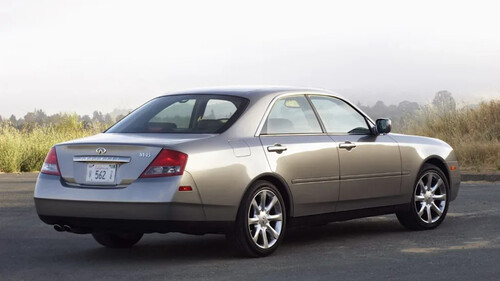
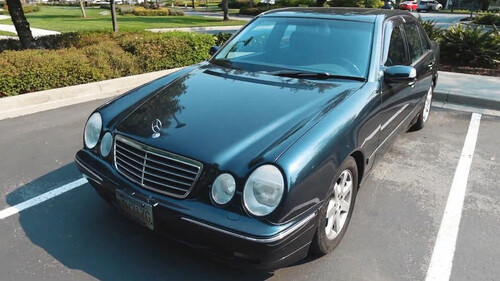
Typically, when you see a car with flashy wings, giant hood scoops, or bright paint, you expect it to have huge power under the hood. However, the best sleeper cars don’t come like that. They usually blend into traffic like every other car on the highway, while hiding serious performance beneath ordinary sheet metal, the kind that would embarrass sports cars at a stoplight. From forgotten American sedans to understated luxury cruisers, these hidden V8 performance machines turned anonymity into an advantage.Between the 1980s and early 2000s, family sedans, wagons, and executive cars came stuffed with powerful engines that most people barely noticed, with some borrowing police hardware, while others shared DNA with pure performance-based vehicles like the Corvettes, Mustangs, or even Porsche-built projects. One thing they all had in common was the art of stealth speed. Today, enthusiasts consider these classic sleeper sedans and wagons as cult favorites, whether it’s a conservative German sedan capable of supercar acceleration or a station wagon hiding a Corvette V8, appreciating their understated performance more than those with attention-grabbing styling. 1969 Oldsmobile Vista Cruiser Bring a TrailerThe Oldsmobile Vista Cruiser may deceive you into believing it’s an ordinary suburban family hauler, but it’s anything but. This family hauler shares drivetrain DNA with the legendary Oldsmobile 442, powered by a 400 cubic-inch V8, which was pretty much just a detuned version of the 442’s engine. It delivered as much as 325 horsepower, making it one of the most overlooked muscle-era sleeper cars ever built. Imagine a 4,100-pound station wagon in 1969 hauling kids, luggage, and groceries during the week with 8-second 0–60 mph acceleration, and surprising unsuspecting muscle cars at stoplights on the weekend. When it appeared again in That ’70s Show, the show reignited the desire for the classic. 1984–1985 Ford LTD LX HemmingsUsually, when the Fox-body platform is discussed, the Mustang comes to mind, but the Ford LTD LX quietly borrowed much of the same hardware. Under its hood was a 5.0-liter HO V8 producing 165 horsepower. The LTD LX was one of the blandest sedan bodies Ford ever sold, where the company paired Mustang-derived components with rear-wheel drive, producing a genuine hidden sleeper sedan with Mustang DNA. Unlike other vehicles on this list, its nine-second 0–60 mph acceleration won’t pin you to the back of the seat, but the formula showed American V8 performance could still be affordable during the mid-1980s muscle revival. Many buyers didn’t understand what the LTD LX actually was and overlooked it, making enthusiasts who love Fox-body sleeper sedans appreciate surviving examples. 1994–1996 Buick Roadmaster Estate Wagon Bring a TrailerBuick delivered stealth performance with the Roadmaster Estate Wagon while hauling entire families in comfort long before fast SUVs became mainstream. The same 5.7-liter LT1 V8 in the Impala SS and contemporary Corvette is used in the Buick Roadmaster Estate Wagon, making it one of the greatest sleeper wagons ever built. Buick hid a car that could do 0–60 mph acceleration in 7.8–8.6 seconds, despite weighing more than 4,500 pounds, under woodgrain trim, suburban styling, and absurd practicality. This wagon produces 260 horsepower, helping it tow over 5,000 pounds, although that rises to 7,000 pounds when properly equipped with the factory towing package. 1994–1996 Chevrolet Impala SS MecumChevrolet revived its legendary SS badge with the Impala SS, with the Corvette's 5.7-liter LT1 V8 producing 260 horsepower and 330 lb-ft of torque under the hood, transforming the conservative Caprice into one of the defining sleeper cars of the 1990s. Chevy used a setup heavily influenced by the Caprice 9C1 police package to send power to the rear wheels. Compared to the Corvette’s LT1 engine, the Impala’s LT1 used cast-iron heads and milder cam profiles, which had been tuned for low-end torque and durability, and produced 0–60 mph acceleration in roughly 6.5 to 7.5 seconds. With 69,768 Impala SS units sold during its three-year production, the Chevrolet Impala SS is a cult classic four-door sedan with muscle-car attitude. 1996–1999 Ford Taurus SHO (Gen 3) Bring a TrailerThe rounded “bubble Taurus” third-generation Ford Taurus SHO remains one of the strangest V8 sleepers of the 1990s. At the heart of the Taurus was a 3.4-liter, Yamaha-developed V8 that produced 235 horsepower and loved to rev. Paired exclusively with a four-speed automatic transmission, it could deliver a distinctly exotic character compared to traditional American sedans, sprinting to 60 mph in roughly 7.3 to 7.7 seconds. Years after Ford ended production of the Taurus SHO, with the styling dividing opinions, the Yamaha-built engine became the defining feature that gave it a loyal cult following. Many enthusiasts show appreciation for the uniquely weird blend of Ford practicality and Japanese engineering precision because of the SHO. 1992–1995 Mercedes-Benz E 500 Bring a TrailerThe Mercedes-Benz E 500’s stealth-performance formula was powered by its hand-built 5.0-liter M119 V8 producing 322 horsepower and 354 pound-feet of torque. To produce this car, Mercedes had a development partnership with Porsche, outsourcing portions of assembly to Porsche during production. The result was one of the most famous hidden German V8 projects ever built. The E 500 came with conservative styling, but that didn't stop it from rocketing to 60 mph in 6.0 seconds. At the time, this was the kind of performance only expected from contemporary sports cars. It was sometimes stylized as the “500E” and eventually became the spiritual predecessor to today’s AMG E-Class performance dynasty. 1991–2000 Lexus LS 400 Cars & BidsLexus completely changed the luxury-car world when it released the LS 400. The LS was mostly refined and reliable, but that didn’t stop it from housing the legendary 4.0-liter 1UZ-FE V8, known for being smooth, durable, and remarkably refined, one of the greatest Japanese V8 engines ever built. Upon release, it produced 250 horsepower, and by 2000, it had eventually climbed to 290 horsepower with VVT-i updates. While remaining whisper-quiet, the engine helped the LS 400 outperform many German rivals. Succeeding because Lexus didn't try to make it look aggressive, beneath conservative luxury styling, the Lexus LS 400 sleeper delivered engineering excellence, stealth, and hidden performance. Today, tuners and enthusiasts love the Toyota 1UZ V8, safely pushing the engine to 350 or even over 400 horsepower. 2003–2004 Mercury Marauder MercuryThe blacked-out police cruiser-looking Mercury Marauder was built on Ford’s body-on-frame Panther platform. A 4.6-liter DOHC Modular V8 transformed the normally soft Grand Marquis platform into a genuine performance car by unleashing 302 horsepower and 318 pound-feet of torque, perfectly paired with rear-wheel drive and a muscular exhaust note. The Marauder had intimidating road presence and low-key styling, which, together with its 6.7–7.5 second 0–60 mph time, gave it instant sleeper status. For enthusiasts, its muscle-sedan personality, combined with its full-size comfort and old-school American V8 character, makes it the spiritual successor to the Impala SS. Today, this early 2000s muscle car may be forgotten, but the Mercury Marauder sleeper sedan remains one of the most beloved. 2003–2004 Infiniti M45 Bring a TrailerBefore Japanese luxury performance sedans became mainstream, the first-generation Infiniti M45 arrived, its 4.5-liter VK45DE V8 hidden by its anonymous styling, everyday comfort, and reliability. While most buyers were looking elsewhere, the M45 generated 340 horsepower and 333 pound-feet of torque, paired with rear-wheel drive to provide strong 0–60 mph acceleration in as little as 5.8 seconds, something many German rivals of the era couldn't achieve. The Infiniti M45’s understated appearance helped maintain its sleeper status, with buyers driven to more exotic models. Today, enthusiasts have started turning to the M45’s V8 power to compete with European performance. 2004–2005 Cadillac CTS-V (First Gen) CadillacCadillac borrowed the heart of a Corvette, the 5.7-liter LS6 V8, to power its first-generation CTS-V, marking the company’s return to serious performance. This Corvette Z06’s engine produced 400 horsepower and 395 pound-feet of torque, and when paired with rear-wheel drive and a six-speed manual transmission, could launch the CTS-V to 60 mph in just 4.6 seconds. This Caddy maintained relatively restrained styling, unlike European rivals loaded with flashy body kits, giving it its sleeper status. However, that wasn’t everything. Cadillac laid the foundation for its modern V-Series lineup with this first-generation CTS-V, competing directly with Mercedes-AMG and BMW M performance icons.