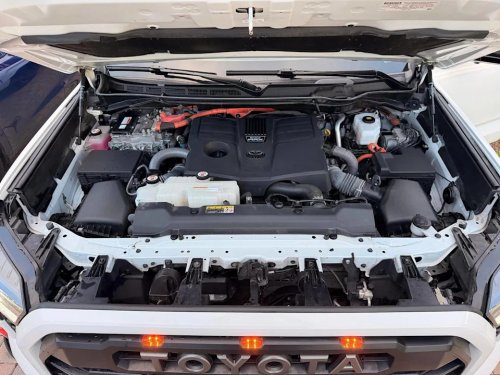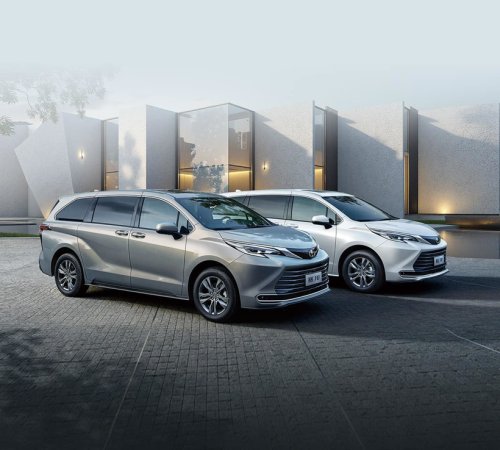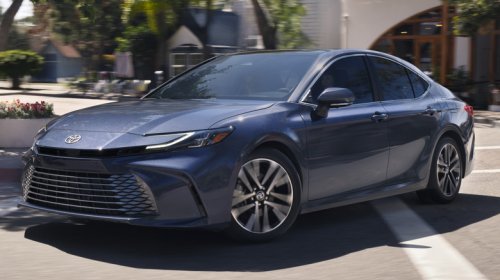

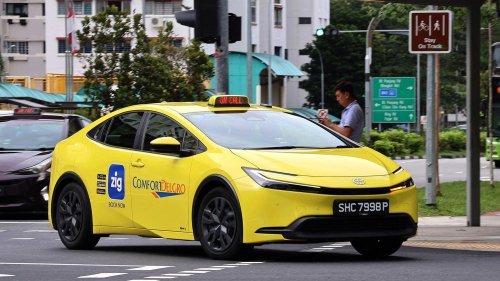



















Toyota took a unique approach to fuel-saving when the first Prius arrived in 1997, before its 2001 launch in the US. At the time, it was anybody's guess how durable and long-lasting the yet-unproven hybrid car, with its hybrid engine, would be. Today, with 25 years of hybrid expertise behind them, modern Toyota hybrids have time and again proven their worth as trusty powerplants widely known to do 300,000 miles or more without much trouble. Below, we'll take a look at some interesting reasons why. The eCVT Transmission Is The Hybrid Engine's Personal Assistant Toyota The transmission, an eCVT, goes hand-in-hand with the Toyota Hybrid engine. This is one of the most durable mainstream automatic transmissions on the road, thanks in part to its unique construction with integrated electric motors replacing much of the internal workings of a conventional automatic. The result is a transmission with less friction that runs cooler and has fewer moving parts to wear out. Unlike a regular CVT, this unit has no belts or pulleys. Toyota models running this transmission are commonly used as taxi cabs, and are widely known to achieve 300,000 to 500,000 miles on the original gearbox.Toyota Here's the thing: the eCVT transmission does most of the heavy lifting for the engine, which takes away a ton of stress. When your Toyota Hybrid pulls away from a stop, the engine avoids the shock loads, abrupt clutch engagements, and low‑RPM strain that traditional powertrains experience with conventional automatics. Instead, the electric motor's instant torque gets the vehicle moving with minimal effort, allowing the gas engine to start a moment later under a lighter load, at a more optimal RPM, and with less mechanical load. In a regular car, the engine needs to deliver a big blast of torque from the get-go, which is one of the harshest moments for bearings, rods, transmission clutches, and the like. In a Toyota hybrid, this is dramatically reduced as the electric motor handles the launch.Even with a highly-durable transmission and electric motor(s) working to ease the workload and stress levels of the gas engine, we've only covered part of the equation when it comes to long-term reliability. For the rest, we need to go inside the engine itself. Toyota's Dynamic Force Hybrid Engines Are Built To Relax ToyotaStressed-out, high-output modern engines are generally no good for longevity. Fortunately, that's just one approach to squeezing more torque out of less fuel. Another method takes the opposite approach: instead lowering the engine's effective compression and workload at times, in the name of efficiency, and adding back power and torque with an electric motor. That's the modern Toyota hybrid in a nutshell.Instead of cranking up the compression ratio and turbocharging a smaller engine, Toyota hybrid engines are expert at optimizing energy. Most versions, like the 2.5-liter units, aren't turbocharged or particularly small, and each uses one or more electric motors to assist the gas engine directly. The electric motor in question is powered by its own special battery, which recharges automatically while you drive around. Instead of a stressed-out four-cylinder engine bent on maximum power per liter, a Toyota hybrid engine is instead built for maximum efficiency at all times, but covers the need for extra power and response with its electric power boost, ready to fill in at the touch of the throttle.A high-efficiency gas engine capable of a lower-load operating mode with electric assist unlocks some particularly impressive superpowers for long-term durability. First, this type of hybrid engine is the most fuel efficient during the sort of stop-and-go driving where regular gas engines run at their thirstiest. That's because the electric side of the hybrid system is more active in this type of driving, which means the gas-powered side of the powertrain is offline more often.Toyota Stop-and-go driving puts a lot of stress on your vehicle: it's hard on your brakes, hard on your driveline, hard on your engine, and can make things run hot. The Toyota hybrid uses electric motors that provide plenty of reduced-wear stopping power via regenerative braking which recharges the battery. The motors also smooth out engagement of all driveline components, and allow the gas engine to spend plenty of time napping in traffic, rather than chugging away at fuel. If you're regularly commuting in situations like this, a hybrid is a near no-brainer: you'll not only get more miles per gallon than driving on the highway, but you can expect a much longer life from your brakes and fuel tank, a smoother and more responsive drive, and a major reduction in strain and stress on the driveline. Understanding Toyota's D4-S Fuel Injection System There's also the D4-S injection system. This allows the Toyota hybrid engine to draw fuel from a high-pressure fuel injector within the combustion chamber, a low-pressure injector upstream in the intake system, or some combination of the two. Importantly, the use of both fuel injection types helps keep the engine clean by mitigating the buildup of valve gunk common in GDI engines that can cause problems and cost money in the long-term.Toyota The current Toyota hybrid engines come from the Dynamic Force engine range, inspired by decades of development, beginning when Toyota introduced chain-driven DOHC valvetrains and early variable valve timing technologies to the mix. After decades powering its most popular models and proving its dependability, a hybrid-ready version called the AR Series arrived in the mid-2000s with improved valve timing systems, cooling, and hybrid-ready Atkinson cycle capability for hybrid use. In 2018, Toyota improved the concept further, and brought the official 'Dynamic Force' nameplate to the scene. Chief among the updates was a thermal efficiency as high as 41 percent. The Compression Ratio Challenge ToyotaFinally, there's that compression ratio. In most engines, this is a fixed figure, with engineers chasing higher-and-higher compression ratios in pursuit of increasing efficiency. Increasing an engine's compression ratio comes with challenges, especially if that engine needs to run on regular-grade gasoline, like a Toyota Hybrid. An innovative solution is Toyota's take on the Atkinson cycle, a means of altering the engine's effective compression ratio on the fly. By manipulating valve timing, the engine can close the intake valves after the compression stroke has started. In this way, some of the air previously drawn into the combustion chamber is actually pumped back out before the valves close. The piston travels the same distance, but there's less air volume to compress.This effective lowering of the compression ratio makes the efficiency-minded, dramatically dropping power output in favor of a major fuel efficiency boost, with the electric motor filling in the gap. This is all invisible and automatic from the driver's seat, but it means a Toyota Hybrid's gas engine can switch its operating mode between higher-load and more Atkinson-focused operation on the fly, if it's running at all. Ultimately, it's all about working the gas engine only as hard as it needs to, with no waste. Owners Report 300k Miles Without Major Repairs If you're a skeptic, you might buy into the idea that a hybrid's battery is a sort of financial ticking time-bomb waiting to decimate its driver's wallet when it dies an early death and writes off the car. Meanwhile, in reality, most hybrid owners don't report battery trouble at all, and most of the few who do get well over 200,000 miles of use from their original units. Many owners replace their Toyota Hybrid batteries with refurbished units for between $1,500 and $3,000, and continue driving for years.Does buying a Toyota Hybrid guarantee you a trouble-free, 300,000-mile car? No, but by numerous accounts, it's a great place to start. At high mileage levels, the prospects of a healthy late-life experience have more to do with the maintenance and care delivered by previous owner(s) than the Toyota badge on the hood. A religiously maintained high-mileage Toyota Hybrid can easily exceed 300,000 miles of use, precisely why so many are chosen for taxi cabs.Today, you'll find Toyota's 2.5-liter Dynamic Force hybrid engine under the hood of the Toyota RAV4 Hybrid, Highlander Hybrid, Camry Hybrid, Sienna Hybrid, and Crown Hybrid.Wikimedia Commons: ANCreviews95 Though Toyota is far from the only automaker known for building long-lasting engines, there are a few particularly special attributes of the modern Toyota Hybrid engine and powertrain that set drivers up quite nicely for a particularly long life. Case in point? Electric motors absorb the stress of the harshest driving conditions otherwise faced by the gas engine and transmission, which dramatically reduces internal wear to the benefit of reliability.Sources: Toyota