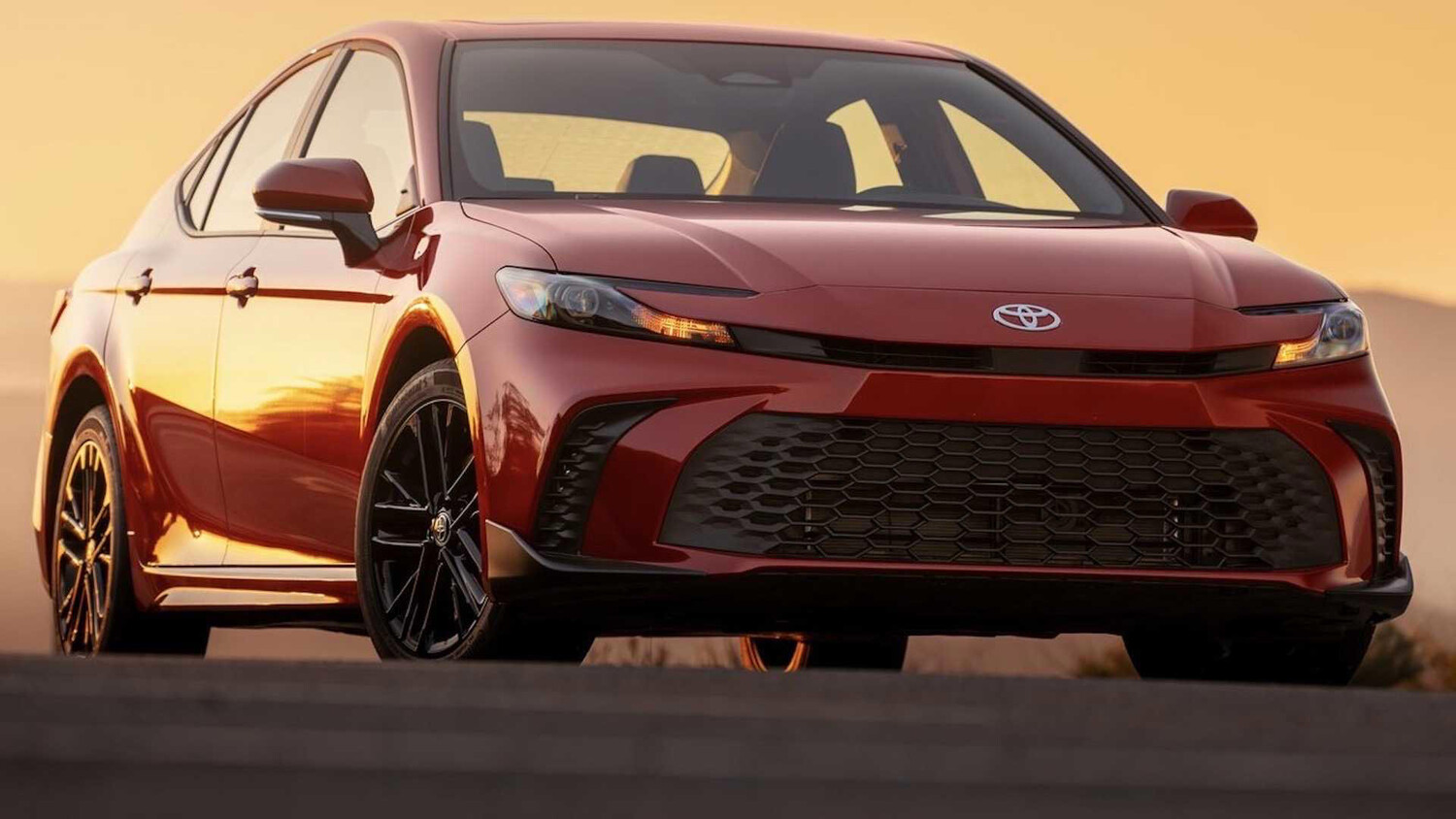
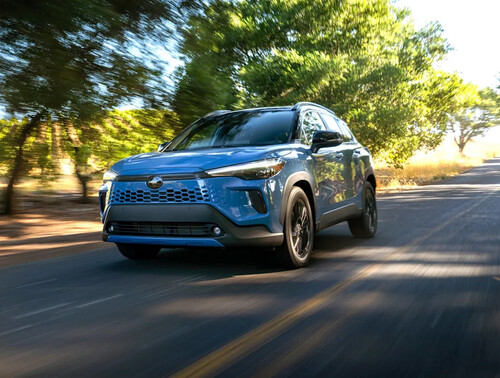
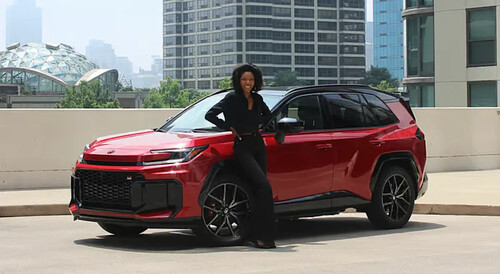
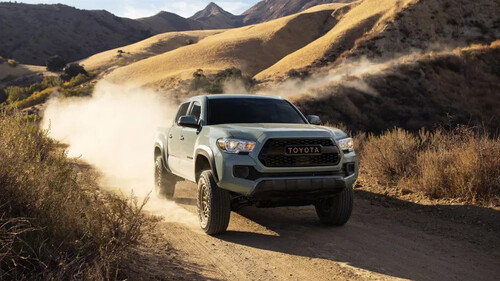
Adam Jonas,Head of Global Auto & Shared Mobility Research at Morgan Stanley, felt that he owed Toyota an apology and, with that admission, clearly suggesting that Toyota may have been right all along about electrification. For the longest time, Jonas wasn't a fan of Toyota's hedging hybrid strategy, with the Morgan Stanley analyst better known for his close attention to Tesla and his bullish views on full electrification. But while that apology wasn't an assessment that EVs had effectively failed, it recognized that Toyota had judged the pace of any transition more accurately than others.Toyota hadn't refused electrification at all, but it had industrialized its approach carefully. The company clearly felt that customers, pricing, infrastructure, regulation, and regional markets would all muddy the waters of progress, and that argument looks a lot more defensible now than it did before. The Apology Landed Because Buyers Had Already Moved ToyotaMany leading automotive figures couldn’t quite understand why Toyota was so hesitant in its approach to electrification. After all, the Japanese company had already scored a historical hit with its hybrid Prius, and many thought it would continue to lead the pack into full electrification. Others in the industry were investing billions in EV platforms, and governments were setting aggressive targets. And at the same time, many people thought hybrids would simply be a bridge technology which would eventually near the end of its usefulness.As the age of electrification started to unfold, it became clear that progress might not be as straightforward as many had foreseen. Buyers were not in lockstep with manufacturer enthusiasm and were starting to ask plenty of probing questions before they bought into the concept. They wanted to know if a public charging network would be convenient based on where they lived, or if they could even charge one of these vehicles at home. They also wanted to know if the car could manage their commute and family trips, and how it would perform in wintry weather.Some shoppers wanted to know if they could sell such a vehicle to a willing owner when it came time for something else, and as those shoppers were not necessarily getting the answers they sought, hybrids appeared to be the solution with less drama. In this scenario, Toyota had plenty of hybrids, and they were linked to names that were already familiar. At a Toyota dealership, you could get hybrid versions of the RAV4, Corolla, Camry, Highlander, Prius, and even hybridized minivans in the Sienna, and those started to seem like solid choices while the full electrification story sorted itself out. The EV Slowdown Changed The Pace Of The Argument Toyota There's nothing really ideological about Toyota's approach to electrification. Instead, it's rooted in behavioral analysis and an approach that's backed up by some industry statistics. Cox Automotive reported that US EV sales fell 27% year-on-year during the first quarter of 2026, and EVs accounted for just 5.8% of total new vehicle sales. That share was unchanged from the fourth quarter of 2025 and well below the 10.6% peak that EV sales reached in Q3 2025. The slowdown may be largely attributable to the removal of any federal incentives and may not signify a long-term negative trend, but it certainly suggests that any electrification timeline has shifted.Broadly speaking, the market seems to be showing more interest in practical stepping-stones along the road to full electrification. Full EVs may not be dead, and hybrids may never be a permanent replacement for the full-fat version, but the speed of the handover has certainly slowed.Buyers may still be chasing efficiency, but they are hesitant when it comes to charging dependency. In its 2026 US Electric Vehicle Consideration Study, JD Power highlighted that charging station availability was the leading reason for EV rejection at 46%, with charging time at 44%, and purchase price another obstacle at 42%. It also suggested that EV interest seemed to rise with fuel cost pressures. The Data Supports A Longer Hybrid Runway Toyota In September 2025, Goldman Sachs research reduced its global 2030 EV sales share forecast to 25%, down from 28%. It also lowered its 2040 forecast from 59% to 52%, raising expectations for hybrids and plug-in hybrids along the way. Its analysts wrote that global BEV penetration rates might start to decline outside of China, suggesting that traditional OEMs might benefit from a more profitable mix of hybrid and combustion models.The U.S. Energy Information Administration also reported that hybrids, BEVs, and plug-in hybrids together accounted for around 22% of US light-duty vehicle sales in 2025, up from 2% the previous year. But within that electrified category, conventional hybrids were gaining share at the expense of battery electric and plug-in hybrid vehicles.Toyota’s approach to hybrid electrification looks particularly shrewd in the current environment. After all, Toyota Motor North America sold 1,183,248 electrified vehicles in the US in 2025, up 17.6%, and that represented a full 47% of the company’s total volume. The Toyota division alone had a 49% electrified mix and had its best-ever years for primary models like the Corolla Hybrid and Camry Hybrid. Toyota’s Advantage Is Strongest In The US And Europe, But Not Everywhere Toyota It’s interesting to look at electrification through a geographic lens. In the US, factors like home charging access, road trip habits, and even regional climate differences remain key considerations for buyers. In all these cases, hybrids give those consumers a clearer path into electrified driving without requiring a major change in behavior. In Europe, the ACEA reported that hybrid-electric vehicles represented 38.6% of the market for Q1 2026, and battery-electric vehicles reached 19.4%. While BEVs gained share year over year in the EU, it’s clear that hybrids are still the preferred power type.China is not just another regional data point, but the world’s most aggressive EV battleground. Domestic automakers are scaling quickly and fighting to remain ahead when it comes to technology, price, or supply chain strength. Analysts at Goldman expect EV performance to remain buoyant in places like China and India, even while they reduce expectations for the US, Europe, and Japan.As far as Toyota is concerned, it still needs to recognize the level of support for BEVs in significant markets. Its hybrid logic may be commercially powerful in Europe and North America, but in places where plug-in adoption is more advanced, it may need to up the ante. And here, David Christ, Toyota's head of sales and marketing in North America, emphasized that Toyota will not stick to any rigid path.Christ said the company would evaluate “car line by car line” to determine whether an all-hybrid approach still made sense. That suggests Toyota will continue to develop BEVs for markets that clearly accept them while using hybrids where they fit more effectively. It may continue to build on its existing models like the bZ, C-HR, and bZ Woodland. The Best Toyota Hybrids Make The Case By Themselves Toyota Toyota can lean confidently on its actual sales figures to make a convincing argument for its strategy, and nowhere is this more evident than with the Camry, America's best-known mid-size sedan. The Camry became hybrid-only in the US in 2025, using the company's fifth-generation hybrid system paired to a 2.5-liter four-cylinder engine. It produces 225 net combined hp in front-wheel-drive form and 232 hp with available electronic on-demand AWD. The LE FWD version returns a manufacturer-estimated 51 mpg combined and sells for an attractive $28,400 before delivery, processing, and handling fees.Toyota believes that the Camry and RAV4 are where the broader hybrid market lesson lands. In the shape of the hybrid Camry, you've got a normal sedan that happens to use dramatically less fuel than a conventional one, and that explains almost the entire Toyota argument. The logic also applies to the most important mainstream body style in America in the shape of the RAV4 compact crossover. The fact that Toyota decided to move more of its RAV4 lineup into hybrid territory is surely a bet that the biggest pool of practical buyers want better fuel efficiency but don't want to deal with charging frictions.Back in the early days, Toyota's hybrid stubbornness looked short-sighted, but it's turned out to be the opposite. That hybrid strategy looks particularly smart now that the market is sorting itself out, and while EVs still have momentum, hybrids are scoring heavily in most of the key segments. Toyota may not have won any abstract war, but it may have decidedly won the first battle. It recognized that consumers may not be searching for new vehicles from an ideological point of view, but more from a practical and sensible perspective. And for many American households in 2026, hybrids just seem to represent the more honest middle ground.#