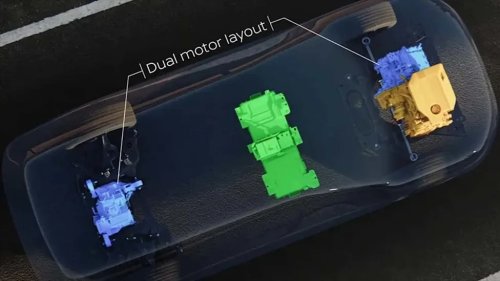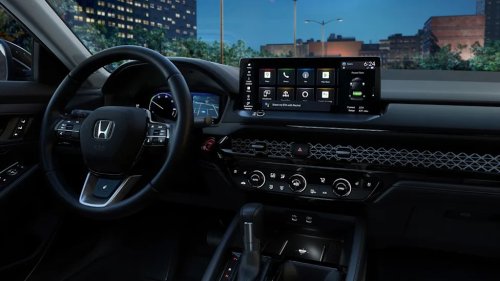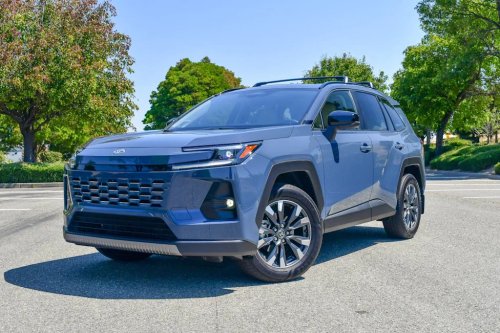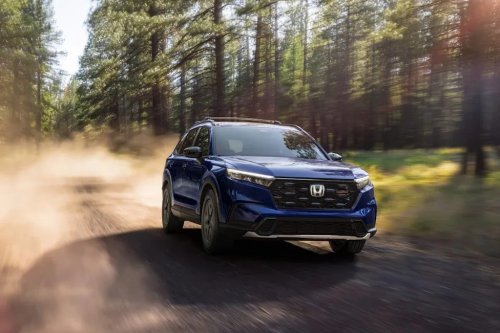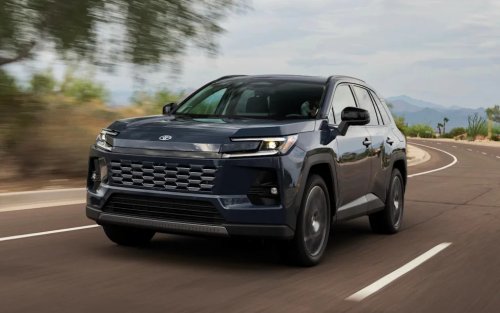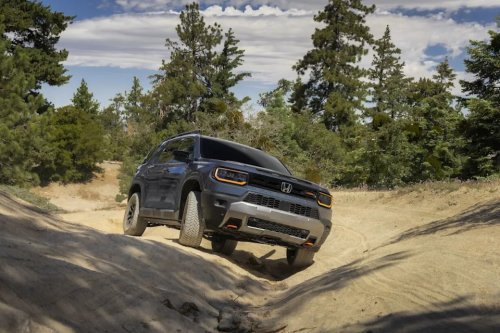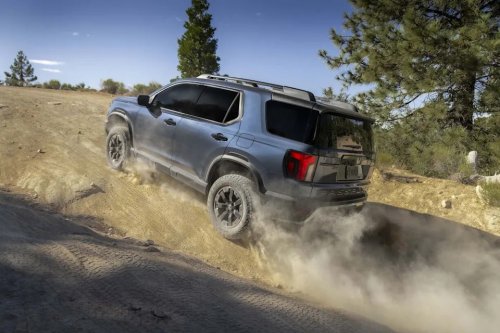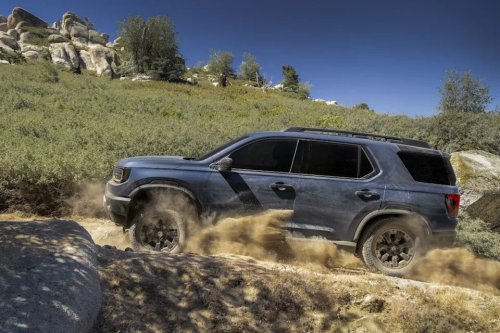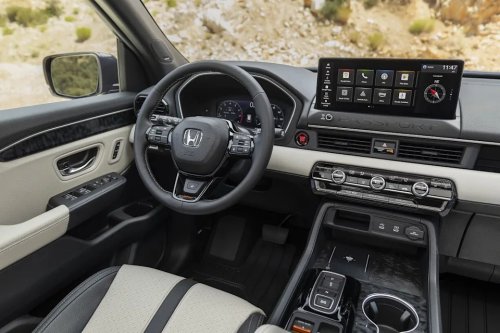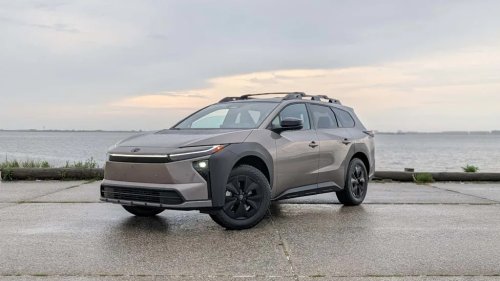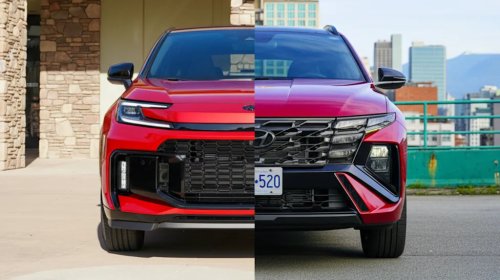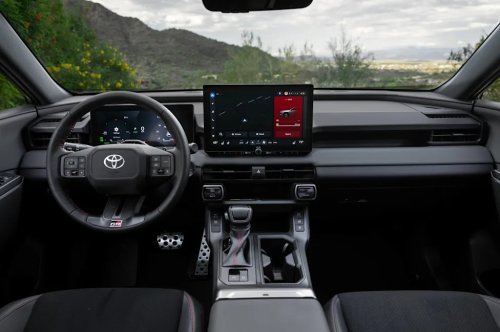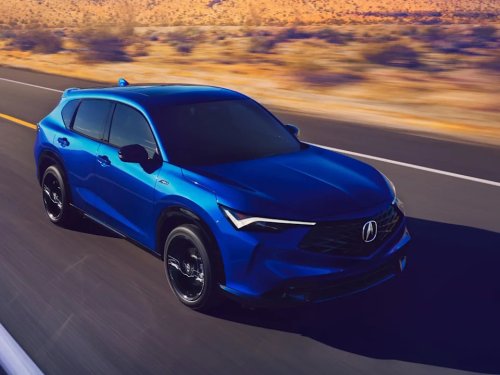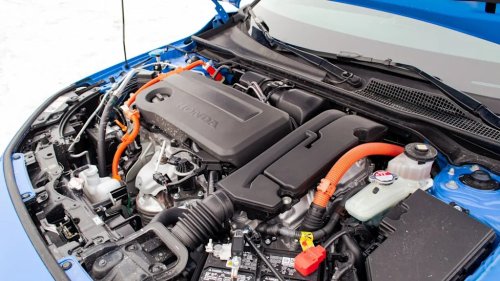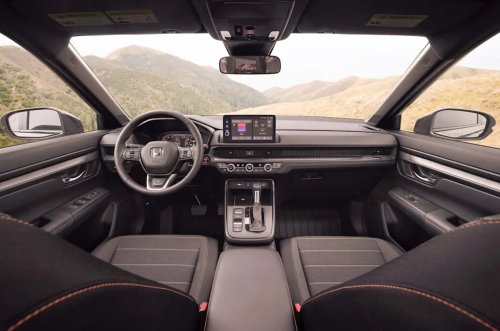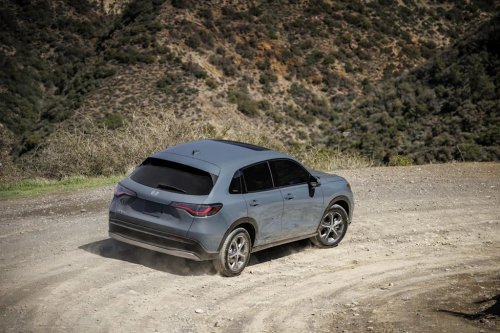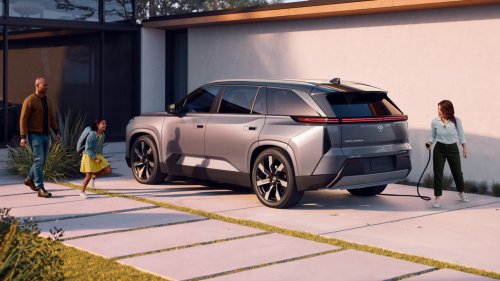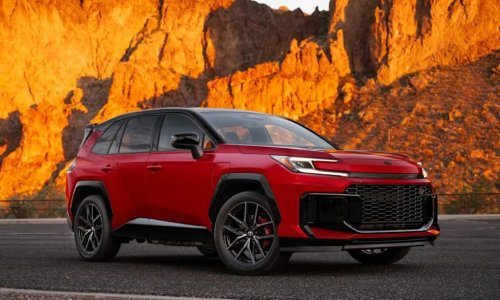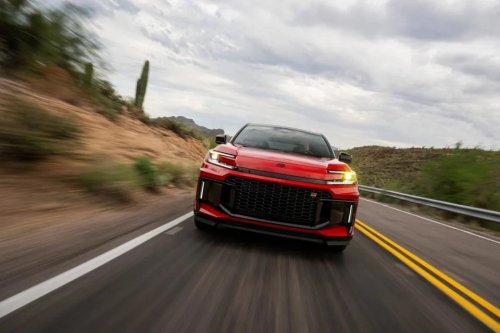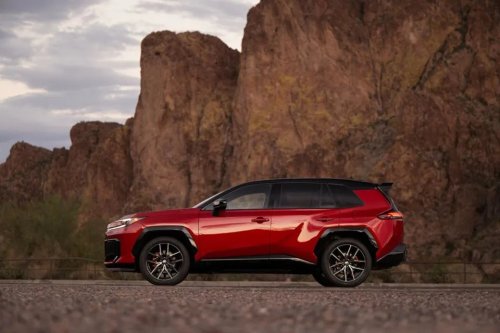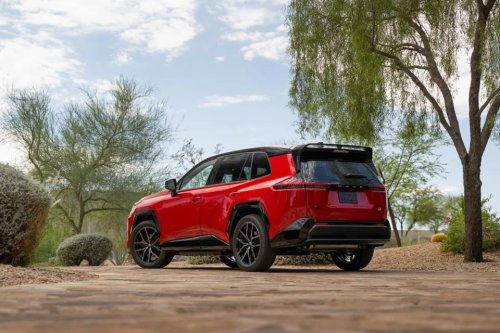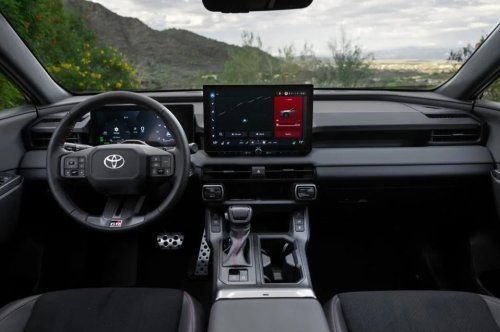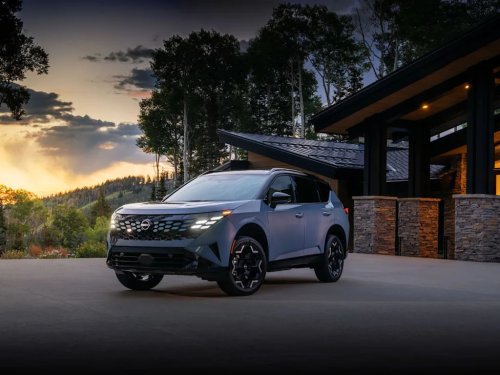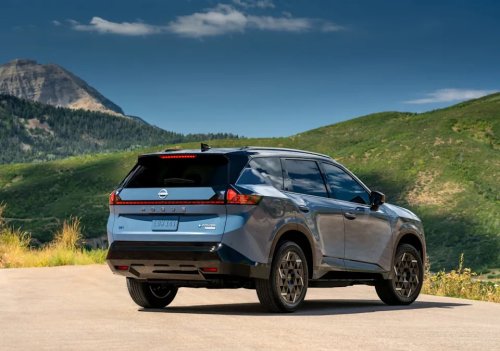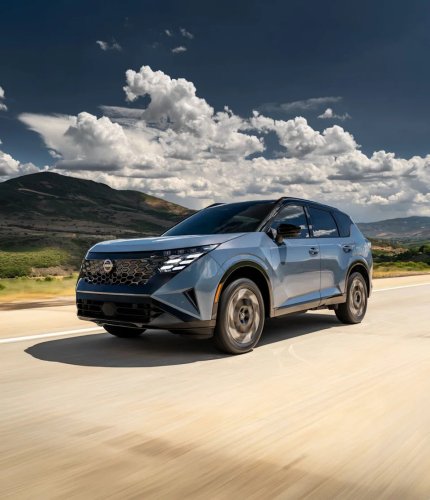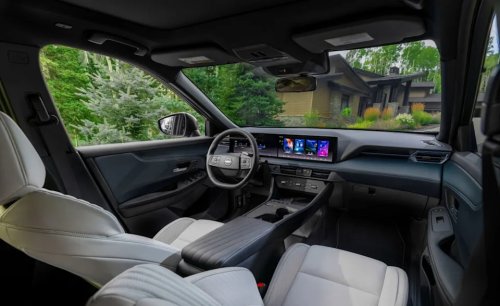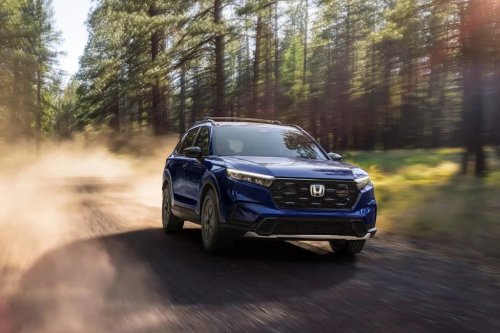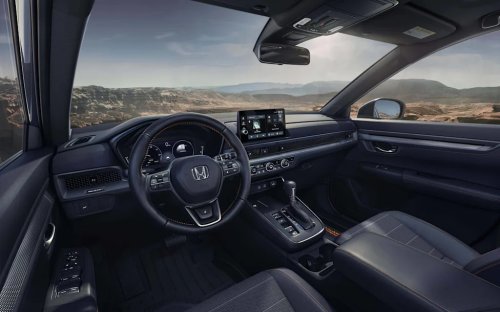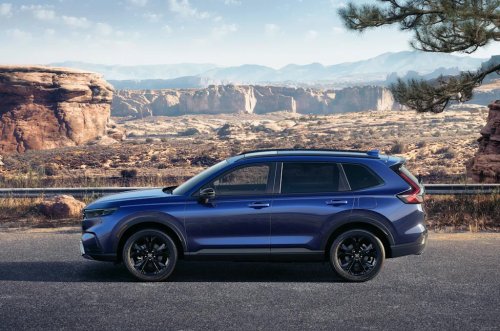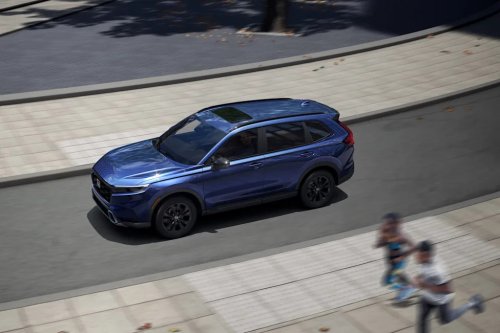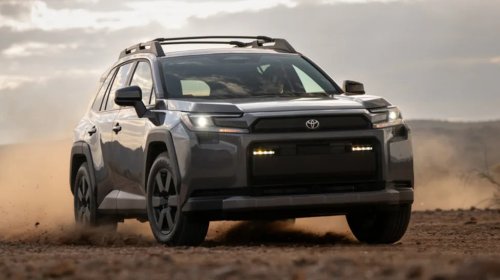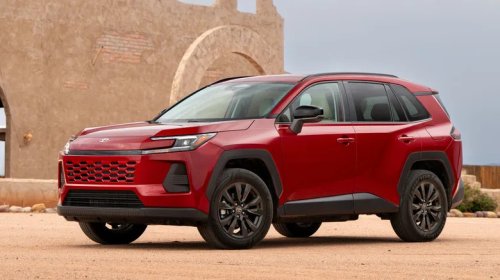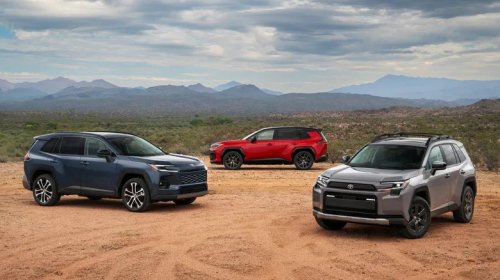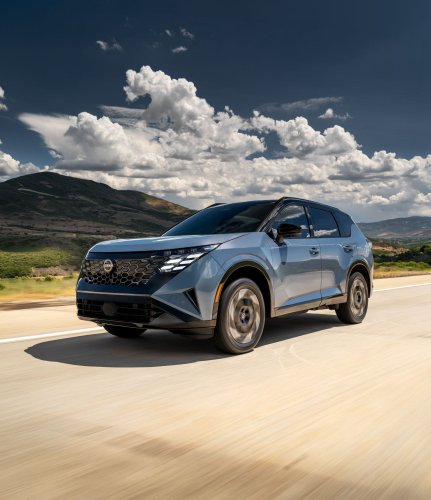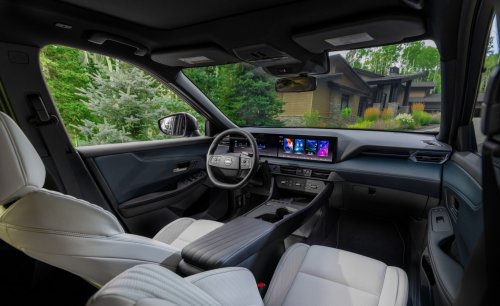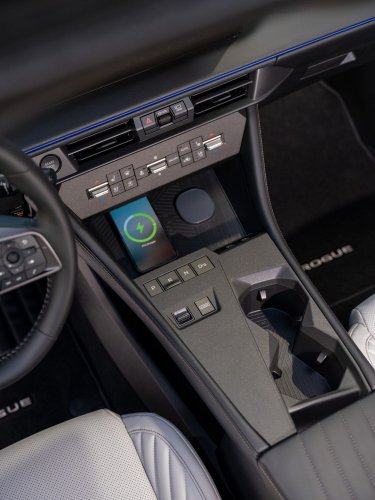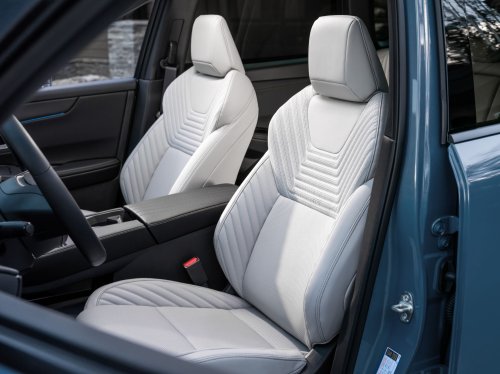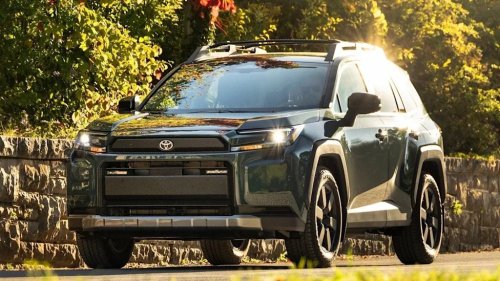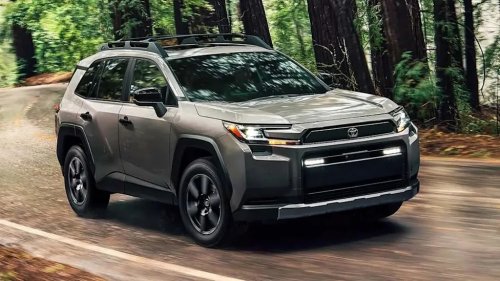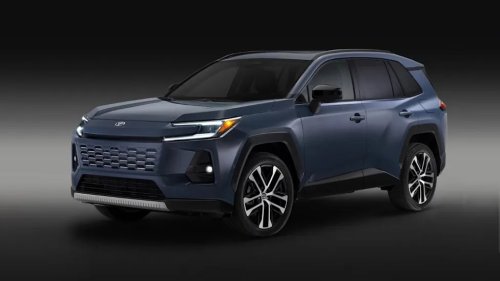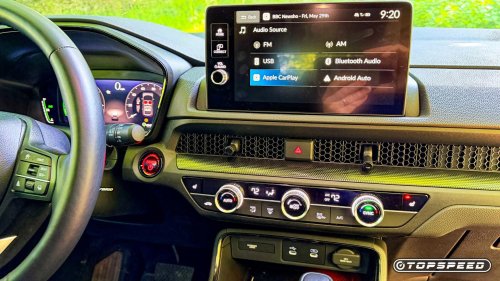
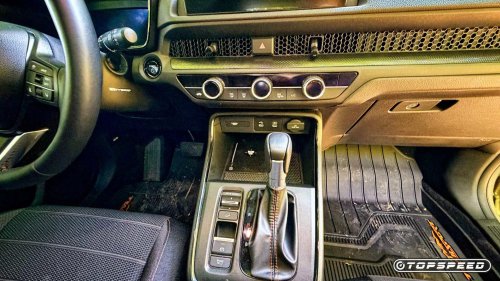
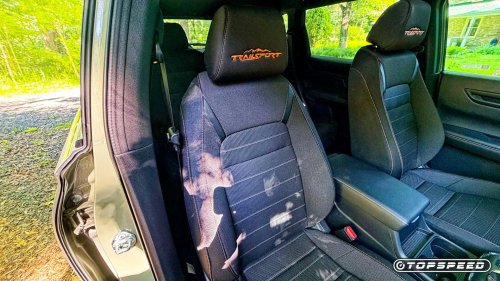
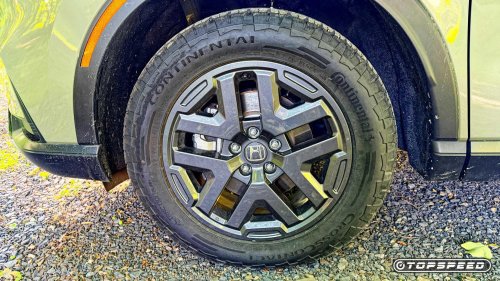
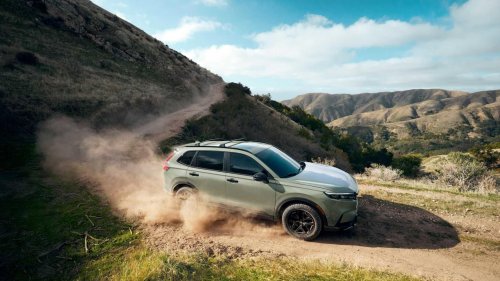
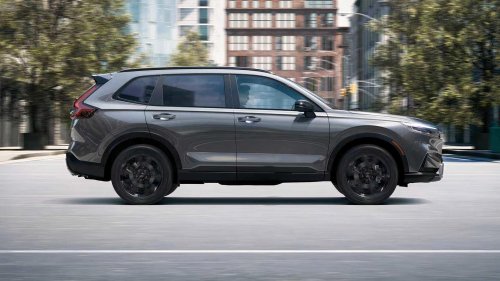
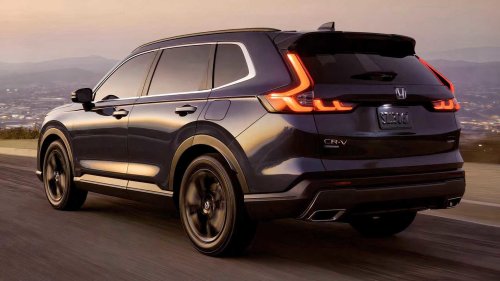
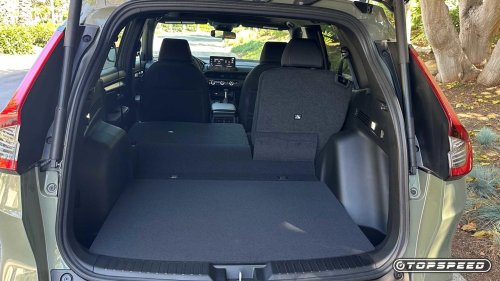
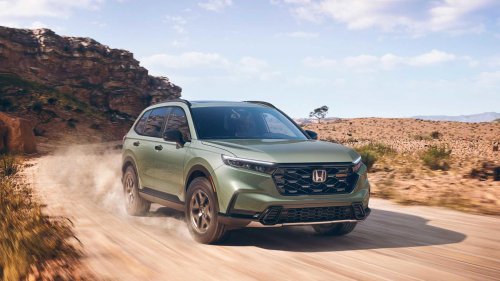



















Last year the Honda CR-V and Toyota RAV4—just those two cars—outsold the entirety of all Mercedes-Benz and BMW cars. Together, we're talking about nearly 900,000 vehicles, which is kinda nuts. It might even be crazier to think that one out of every 18 cars sold in 2025 was either a RAV4 or a Honda CR-V. So either a big chunk of American car buyers last year were clueless and just doing what their neighbors were up to, or more likely, both Honda and Toyota have captured the precise formula for pleasing a very large swath of buyers.Having recently spent a week in both the Toyota RAV4 and the Honda CR-V, I'm pretty convinced you can't go wrong with either car. But I do have a few specific reasons why some buyers will be happier with a Honda than a Toyota. Snappier Tech 2026 Honda CR-V 25Remember, I wrote some buyers.I'll get back to why Toyota still leads this race further down. But here, I think Honda has an edge with in-car tech and especially how it's executed. Until recently, both Honda and Toyota were pretty slow to adopt new instrumentation and in-car technology. But both carmakers have advanced considerably, even if each's approach is less flashy than you see from some rivals, especially Korea's trio of Genesis, Hyundai, and Kia. Still, Honda's system works a hair faster than Toyota's, with quicker phone pairing at startup and menu execution within the home screen that's about as boiled down and easy to follow as any carmaker in the industry. Climate Quickness TopSpeed | Michael FrankLikewise, basic hard buttons and dials for climate functions simply work. There's zero need to menu dive, and dividing what obviously requires a tech-forward system, like showing me my latest podcasts, from what absolutely does not, like adjustment of the cabin's HVAC, is boringly helpful. If it ain't broke, don't gum it up by burying it in a menu. A Slicker Cockpit TopSpeed | Michael FrankWhile I tested the CR-V Trailsport AWD ($40,250), this isn't some ultra-premium model. It's a hybrid that comes in at about the same price as the Woodland edition ($41,350) of the RAV4. Both get kinda ruggedized mats and beefier tires, and I'll dig into the mildly uprated 4x4 bona fides below. But the CR-V's cloth seats and the tactility of controls all speak to a slightly less commercial feeling execution in the Honda. Call it quirky, but there's something in the Honda DNA that veers toward a less mainstream vibe and that comes through with the touchpoints. Think: Subaru. Their cars also have their own personality, love them or don't. There's zero "wrong" with the interior of the RAV4. I like it fine, but I think the CR-V's is more distinctive. Off-Road-ish TopSpeed | Michael FrankHonda made a few changes to the Trailsport, though they're mostly around badging and cladding. Hey, I think this version looks pretty sharp, and the Continental CrossContact ATRs spice up the CR-V as well. However, ground clearance remains 8.2 inches, which is just shy of Toyota's Woodland RAV4, with 8.5 inches—and way shy of the 9.3 inches offered on the Subaru Forester Wilderness.But if you're not going for that Subie because you don't need that much capability, at least the CR-V gets an updated Real Time 4WD system. Honda added up to a 50:50 power split, for genuine power distribution between front and rear axles, and off-road hill-descent control (HDC) operates in a greater speed range, from 2-12 MPH. A lot of these cruise-control-based systems operate only at very low speeds, and what happens is you're stuck either choosing to use the off-road descent system and snail your way down the road, even when that pace is unnecessary, or switch it off, and find yourself with less moment-to-moment precision. Beyond the updated HDC, when you want to go a bit faster, Honda added another clever hack—keep reading. EV-like One-Pedal Driving HondaBecause this is a hybrid with a battery, Honda opted to add a unique function to the powertrain. Shift to "B," and the transmission lets you use the paddles that halo the steering wheel to increase off-throttle braking. Essentially, as with an EV, you're getting one-pedal driving, with a lot of brake force applied when you lift off the gas. Flip the right paddle for less braking, and the left one for more. You probably won't do this during your average commute, but on slippery roads and especially during long, steep-hill descents, it's very handy. Likewise, it'd be great if you're plying trickier off-road terrain. Again, this isn't a "real" 4x4, but you might find yourself marching toward a backpacking trailhead, and for that kind of fire road, this added transmission control is a nifty feature. Fuel Economy Wins For Toyota HondaHonda likes to tout its twin-motor hybrid system. This is a unique formula where you can roll on only electric power; a pairing of both gas and the electric motor; or just the gas engine. Neat! But where the rubber meets the road is fuel economy, and the RAV4 Woodland crushes in this regard, delivering 41 city/35 highway, and 38 MPG combined. The Trailsport CR-V is no slouch, but 38 city/33 highway and 35 combined is just a little less thrifty. With gas at $5 a gallon, that'd amount to $1,950 annually for fueling the Toyota and $2,150 for the Honda. That's not massive, but it's not nickels, either. Honda's Steering Is Better HondaI recently test-drove the new RAV4, which was thoroughly revamped for its fifth generation. It's an excellent car, but I wish that Toyota offered it with a GR suspension and steering package. They'll sell you a $48,500 GR Sport version with a whole slew of sport tuning, including revised power steering mapping and 20-inch wheels with summer tires, plus a lowered ride height and revised dampers and springs, as well as swapped lower control arms and other suspension bits. All of which is pretty sweet—and a pretty penny. It's also beyond overkill for the average RAV4 customer.Meanwhile, the default steering feel in the CR-V is better, and I'll say the same for the Mazda CX-50. On-center in the Honda is still a little vague, but overall, the car wants to track true. That precision isn't something all buyers will care about, but it's one feather in Honda's cap. TopSpeed's Take Nicole Wakelin | TopSpeedAny RAV4 buyer would be wise to take the CR-V for a spin, too. They're priced at near parity across their grades, and if there's a kicker in Honda's favor, it's that rear seat legroom is markedly superior: 41 inches in the CR-V vs. 37.8 for the Toyota. And the CR-V's cargo capacity is also better: 39.3 cubic feet with the rear seats up and 76.5 cubic feet with them folded. The RAV4's 37.8 seats up/70.4 seats folded, trails the Honda. A Better Flavor of Vanilla HondaI'll add that I think the CR-V is more attractive. Toyota's folded-metal appearance has grown on me, but it's still not as straightforwardly handsome as Honda's making their ubiquitous crossover. Again, the RAV4 is one of the best-selling vehicles of all time! Clearly, the looks are fine for most buyers. But even if these are just "appliance" cars, you might still want the easier-on-the-eyes variety.