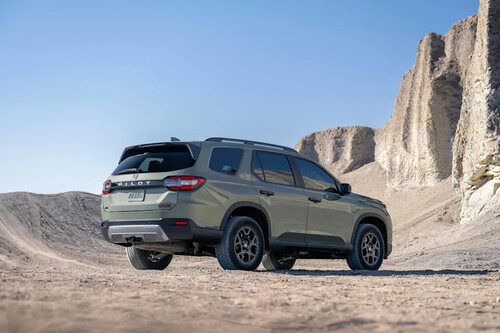
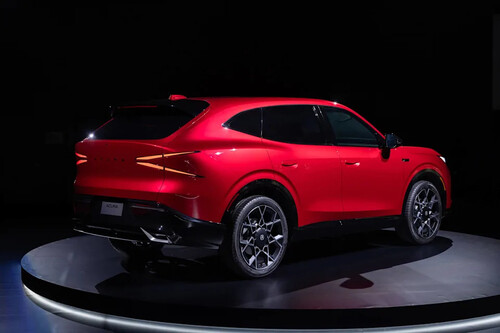
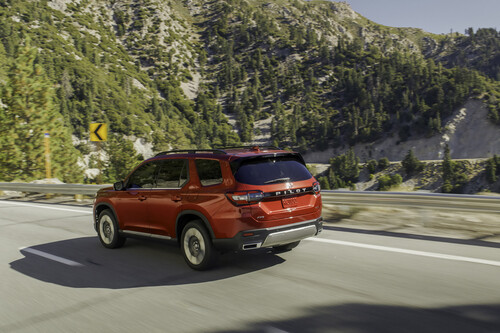
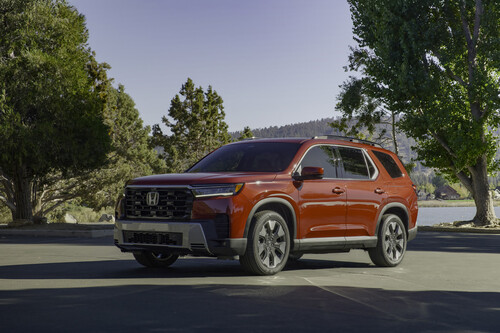
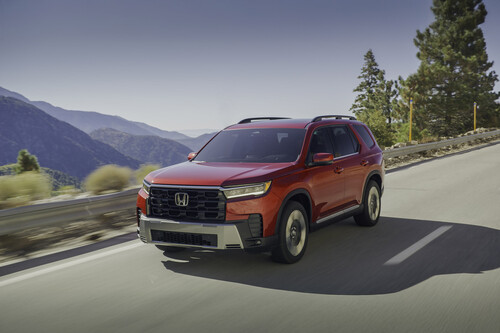
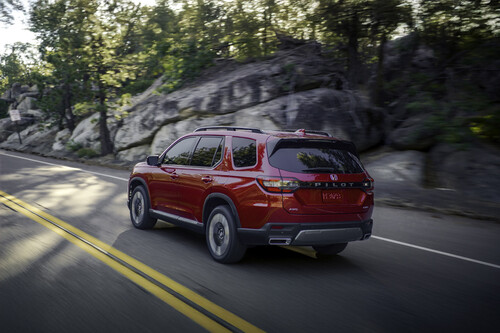
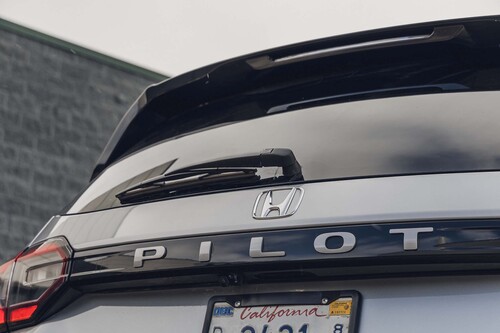
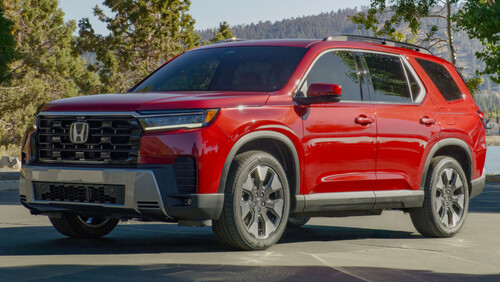
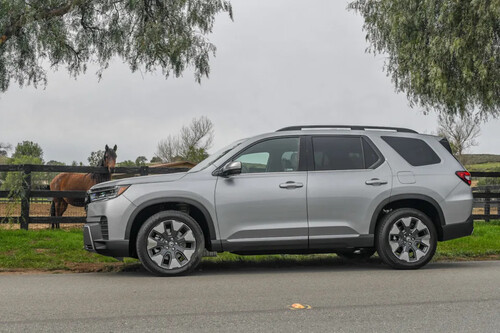
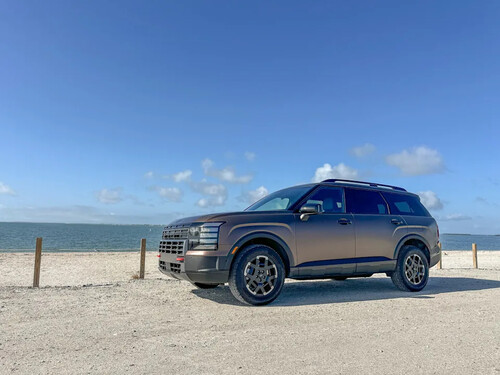
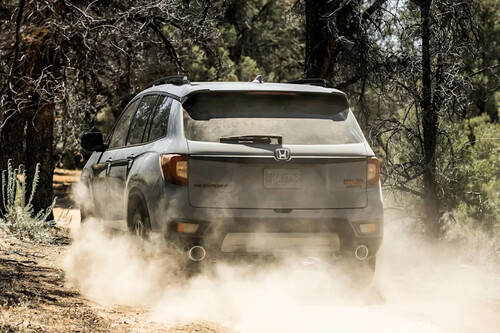
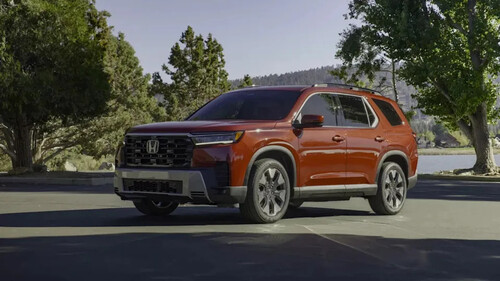
Used Honda Pilot Years to Buy and AvoidDarren Martin - MotorTrendIf you're looking for a large, three-row, family SUV on the used-car market, it's hard to go wrong with the Honda Pilot. First introduced more than 20 years ago now, the Pilot has always benefited from Honda's "man-maximum, machine-minimum" philosophy, offering lots of passenger space while keeping the mechanical bits compact.While all Pilots are strong contenders for your used-SUV dollars, it has had its good years and its not so good years. Here's our guide that outlines the best used Honda Pilots you can buy and the ones to—well, if not avoid completely, at least shuttle to the bottom of your list.1) 2023–2025 Honda Pilot: Best Overall BuyPhoto credit: MotorTrendBuying a used SUV is a smart way to avoid the huge financial hit of depreciation. With the Honda Pilot, as with most vehicles, the best buy is almost always a newer model that's past the steepest point in its depreciation curve. The reasoning should be obvious: A newer vehicle with lower mileage will have the most life ahead of it and will also have newer safety technology. Even better, if you buy a Pilot from a dealer under Honda's Certified Pre-Owned (CPO) program, you'll get an extended factory-backed powertrain warranty.AdvertisementAdvertisementThat said, when it comes to the Pilot, there are other, more specific reasons why the 2023–2025 models are so desirable. The 2023 model year marked the debut of the fourth-generation Pilot, which offered a raft of improvements, including a new powertrain and a TrailSport model that had real off-road chops (as opposed to the previous-generation TrailSport, which was primarily an appearance package). On the downside, this generation of the Pilot is too new to know if there are any real long-term quality bugaboos that haven't had time to show up. There were several recalls on early models, as expected with a redesigned model, so make sure those have been taken care of before buying. You can type in the vehicle identification number (VIN) at the NHTSA recall lookup page to see if your prospective purchase has outstanding recalls (a good idea no matter what vehicle you buy).2) 2021–2022 Honda Pilot: Buy, Because This Is the Sweet SpotPhoto credit: MotorTrendThe last two years of the third-generation Pilot were, as you'd expect, the most mature, with issues from earlier third-gens (see below) largely sorted out. The 2021–2022 model Pilots are new enough to have a long service life ahead of them yet old enough that they're well behind that huge wave of initial depreciation. Nearly all vehicles are subject to recalls, but this era of Pilot has a small number compared to other Pilots (as well as other contemporary SUVs). While dealers tend to stock newer models, you still may also find some 2021–22 models under Honda's CPO program, which extends the manufacturer's powertrain warranty. (Be cautious of third-party warranties, which often have exclusions and co-pays.)Downsides to this era of the Honda Pilot? The design is forgettable, inside and out. The infotainment system was out of date when new and hasn't improved with age. And while the TrailSport models look rugged, they're mechanically identical to other Pilots, so what you're seeing is little more than off-roading cosplay. The nine-speed ZF automatic transmission, which Honda would finally ditch in 2023, is known for its rough shifts—annoying but not necessarily a sign that anything is amiss.3) 2016–2019 (and Maybe 2020) Honda Pilot: Avoid Due to Engine, Drivetrain IssuesPhoto credit: MotorTrendHonda introduced the third-generation Pilot for the 2016 model year, and it didn't get off to a smooth start. The 2016 model generated the highest number of owner complaints to NHTSA of any Pilot, and it was the subject of several recalls and investigations. The biggest worry surrounds defective connecting-rod bearings for 2016, 2018 and '19 Pilots, which could lead to catastrophic engine damage or failure. The problem was severe enough to trigger not just a recall but a stop-sale order from Honda on affected Pilots.AdvertisementAdvertisementOther reported problems included with the auto idle stop/start system, which shut off the engine at stoplights but sometimes failed to restart. As with later Pilots, the nine-speed automatic transmission drew complaints for rough shifting, though not for outright failure. The 2020 Pilot escaped these issues, and even won a MotorTrend comparison test, but it still has a high number of complaints and recalls compared to the 2021s and '22s.If you're looking at a Pilot in this age range, a complete set of service records is a must-have (frankly, service records are a good idea for any vehicle you buy). It's important to check that all recalls were completed, particularly those relating to the engine—check the VIN on NHTSA's recall lookup site—and you'll want documentation of regular maintenance. Remember that these Pilots are now past their original five-year/60,000-mile powertrain warranty, so any major engine failure will result in expensive repairs.4) 2014–2015 Honda Pilot: Approach With CautionPhoto credit: HondaThe 2014 and 2015 model years represent the last two years of the second-generation Pilot, and Honda largely had the kinks ironed out by then. There is one caveat, and it's a problem that carries over from earlier models: Some (not all) Pilots have a piston-ring issue that can be expensive to fix (see below). In 2025, Honda, which had addressed this issue on older Pilots, acknowledged that it affected some 2014 and 2015 models, too. The company extended the powertrain warranty through January 2026, largely to ensure customers who had paid for the repairs were reimbursed. It used to be easy to tell which cars had the issue; the dealer could look up the VIN and see if a warranty extension had been issued. That's tougher now that the extension has expired, but a friendly dealer or Honda's customer service phone line might be able to offer guidance.Owners have also cited problems with the VCM (variable cylinder management) system, which allows the six-cylinder engine to run fewer cylinders to save fuel. (You can purchase inexpensive "VCM muzzler" devices that will prevent the system from operating.) Both issues have a common symptom: fouled spark plugs. A full service history, important for any used car, is vital here; have your mechanic review it for hints. Aside from that, recalls and NHTSA customer complaints for the 2014 and 2015 Pilot are very low compared to other years, and these Pilots were not subject to the Takata airbag recall.5) 2009–2013 Honda Pilot: Avoid, or at Least Be Very, Very, Very CarefulPhoto credit: HondaHonda introduced the second-generation Pilot for the 2009 model year. At the time, we loved the new Pilot; it was engaging to drive and was amazingly space-efficient, offering lots of interior room at a time when competitors were still trying to dial in the large-crossover formula. However, a major engine problem soon popped up: The piston rings could rotate, leading to leaking oil and fouling of the spark plugs. The symptoms were high oil consumption, misfiring, and a check engine light (which, in many states that require emissions testing, is an automatic fail). Honda's fix was to reprogram the engine management computer, replace the plugs, and (in some cases) check the cylinders for damage. If the problem reoccurred, Honda would replace the piston rings, which is major engine surgery. (Note that not all Pilots were affected by this problem.)AdvertisementAdvertisementHonda later settled a class-action lawsuit and extended the powertrain warranty to eight years as a result, but for Pilots of this age range, that coverage has long since expired. If you're buying a Pilot of this vintage like the 2013 Touring 4WD model we tested, only buy one with a complete, documented service history and check it (or have your mechanic check it) very carefully. If the engine has had the rings replaced, it's probably good to go, but if not, be cautious; you're relying on the seller to tell you if the engine consumes oil (though service receipts for spark plug replacement are also a bad sign).These Pilots are also prone to the VCM issues outlined above in the 2014–2015 section. If you're dead set on a Pilot of this vintage, earlier (2009–2010) models generated fewer NHTSA customer complaints. Bear in mind, however, that 2009–2011 Pilots were affected by the Takata airbag recall, so be sure to plug the VIN into the NHTSA recall lookup page to see if these repairs have been done6) 2006–2008 Honda Pilot: Buy Only if You're on a Really Tight BudgetPhoto credit: HondaIf you're looking for an ultra-low-cost option, the last of the first-generation Pilots are a decent bet. By this time, Honda had worked out most of the bugs, particularly the transmission issue (see below). Although these are among the oldest Pilots, they were pioneers in their segment, one of the first SUVs to offer the interior space of a jumbo-size big-rig in a smaller, easy-to-park package. Honda's secret: It based the Pilot on the Odyssey minivan. While way behind on the technology front, these old Pilots are still great people-movers. Prices will be very low, and a well-cared-for Pilot can still offer many years of reliable service.Of course, we're still talking about a 20-ish-year-old SUV, the overwhelming majority of which will likely be well into six figures on the odometer. Honda makes long-lasting vehicles, but an inspection by a mechanic is a wise investment here. Be sure to have the vehicle thoroughly checked for rust, as well, as a weakened structure can affect the vehicle's ability to protect occupants in a crash. Speaking of which, Pilots in this age range were affected by the Takata airbag recall, so be sure to run the VIN through the NHTSA recall lookup page.7) 2003–2005 Honda Pilot: Avoid Due to Transmission IssuesPhoto credit: HondaWe don't shy away from older Hondas; check out the MotorTrend parking lot, and you'll find a few privately owned veteran Hondas as commuter cars. But 2003 was the Pilot's first year, and it had some teething troubles—quite literally, in the case of the early Pilot's major issue, an overheating transmission that could lead to chipped or broken gear teeth. Some affected Pilots had their transmissions replaced under warranty, while others received a patch in the form of a rerouted oil cooler line, but the effect on transmission longevity is unknown.AdvertisementAdvertisementThis recall primarily affected 2003 and early 2004 model year Pilots, so late 2004s and '05s should be OK, but these cars still generated far more consumer complaints than 2006–2008 models, which have slightly different styling (and more features, and more airbags) than the earliest Pilots. Speaking of airbags, these Pilots are also subject to the Takata airbag recall, so if you do buy one, ensure that work has been done.