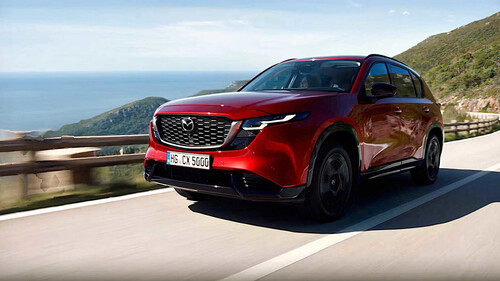
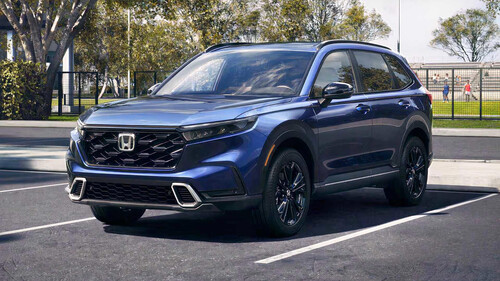
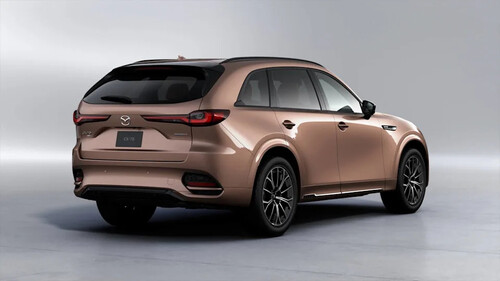
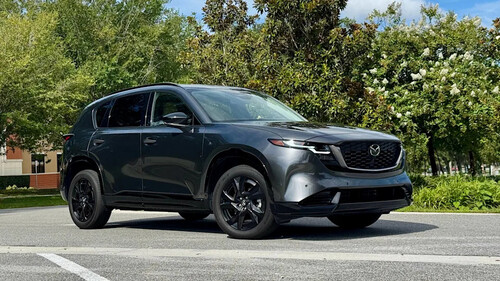
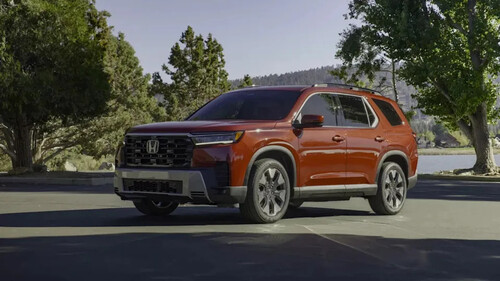
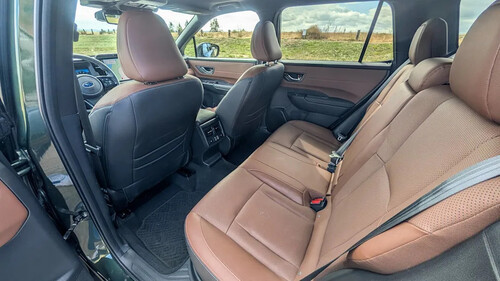
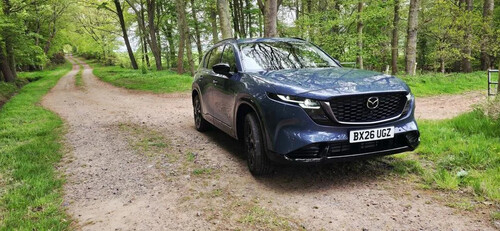
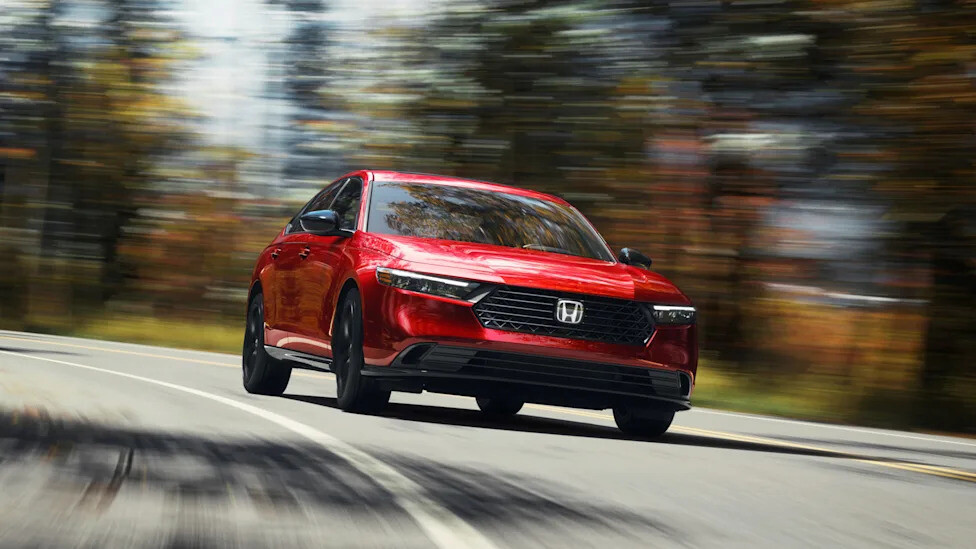
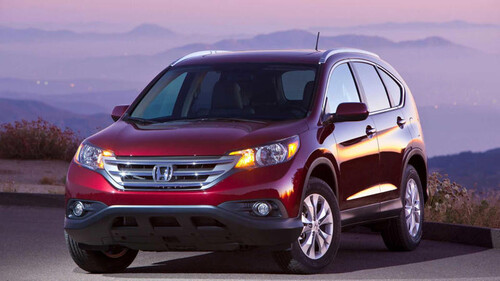
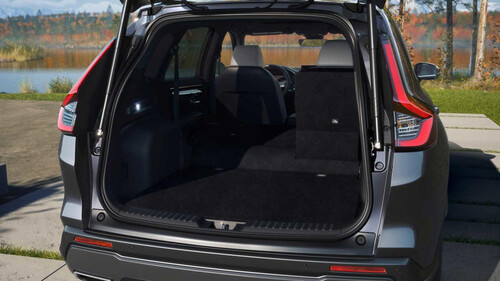
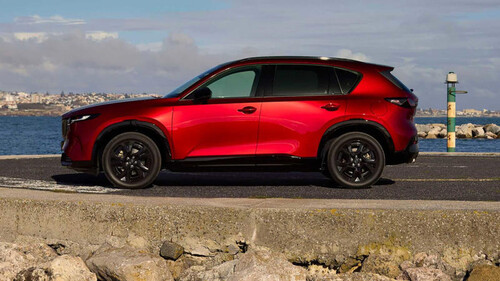
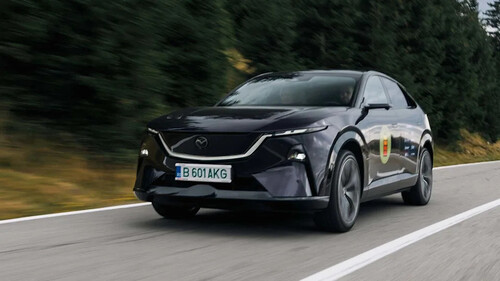
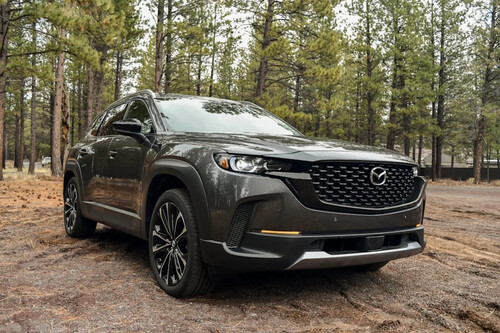
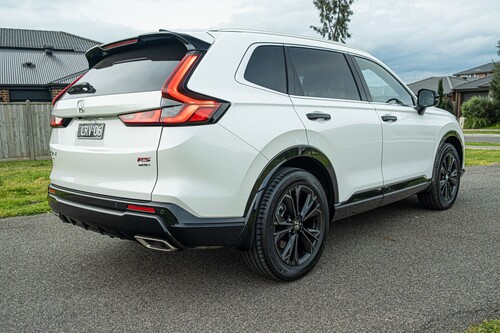
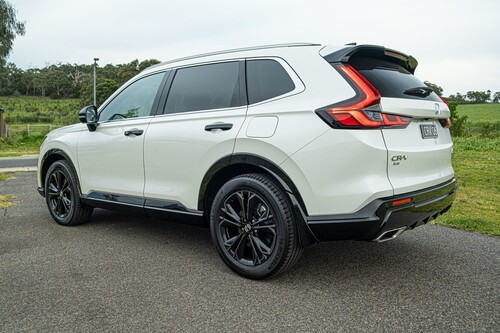
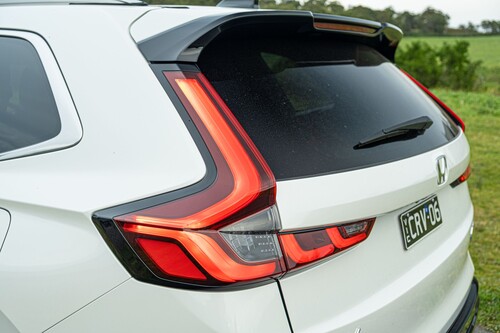
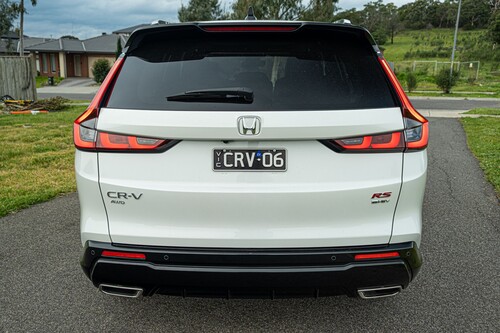
2026 Honda CR-V EX-L vs. Mazda CX-5 Premium PlusMichael Simari - Car and DriverLet's make a bet. Head over to your well-lit display case (or back closet) stacked full of old Car and Driver issues, dust off any 10Best issue from the last decade or so, and we'd wager that either the Honda CR-V or Mazda CX-5 is on that list. With nine of the 10 most recent 10Best lists containing either the Honda or the Mazda, it's clear that the two models are perennial favorites around our office—and, according to sales figures, around the country. Since Mazda gave the CX-5 a full redesign for 2026, we figured it was a good time to get these two longtime favorites together for a bit of friendly competition.What We TestedMuch like a Burger King order, the 2026 Honda CR-V can be had your way. The lineup starts with the LX at $32,370, which is powered by a 190-hp turbocharged 1.5-liter inline-four, and is available in front- or all-wheel drive. If you're looking for a bit more power, a few more features, or better fuel economy, the CR-V's got you covered with an entire lineup of hybrids. We tested a 2026 EX-L, the top trim for nonhybrid CR-Vs, starting at $36,850; the all-wheel drive and optional Radiant Red Metallic paint push its as-tested price to $38,805.Car and DriverCurrently, Mazda's CX-5 stable contains just one powertrain, although a hybrid model is slated to arrive for 2027. Every 2026 CX-5, including our Premium Plus test model, comes equipped with a 187-hp 2.5-liter inline-four, and all-wheel drive is standard. The CX-5's price band is a bit broader than the Honda's, starting at $31,485 and rising all the way to $40,485, with our test example coming in at $41,080 with its extra-cost Aero Gray Metallic paint.Exterior and InteriorWhether you see Honda's interior design as a positive or a negative is up to you, but the fact is, the design works. The CR-V's interior is roomy and easy to see out of. The materials—at least in our EX-L—are high-quality and comfortable to the touch even if they don't impress much beyond that. The layout is simple, with 9.0 inches of infotainment screen acreage to provide you with what you need, but not enough to overwhelm. Climate controls are fuss-free. Want it warmer? Turn that obviously placed dial on the dashboard to the right. Is your butt a little cold? Don't worry, the heated seat button is placed well within arm's reach. Can't quite hear the music over the sound of your own singing? You've got physical controls on the steering wheel and infotainment screen ready to pump up the volume.Michael Simari - Car and DriverHonda CR-V EX-LHIGHS: Smart interior layout, hugely practical, confidence-inspiring dynamics.LOWS: Noisy cabin, lacks any premium feel, could be quicker.VERDICT: Easy to love, hard to hate.AdvertisementAdvertisementMazda's interior, on the other hand, goes all in on digital controls. The new-generation CX-5 places just about every non-driving function, from volume to vehicle settings, on the 15.6-inch dash-mounted do-it-all touchscreen. So long as you're cool with this approach, the CX-5's interior impresses. The seats, doors, and dashboard all sport leather wrappings, and the new "Mazda" script on the steering wheel evokes thoughts of luxury goods. Sitting in the CX-5, you're met with a cozy space that feels more premium than what's in the Honda, but we can't help noticing that the refreshed car doesn't seem quite as upscale as the older version.Michael Simari - Car and DriverThe CR-V's airy cabin puts a premium on passenger space and narrowly edges the CX-5 in rear-seat room—this despite the Honda having a shorter wheelbase: 106.3 inches to the Mazda's 110.8. In compact SUVs, storage space is as important as passenger comfort, and the CR-V wins there as well, offering 39 cubic feet behind the rear seats and 77 cubic feet with the seats folded. The CX-5 has 34 cubic feet behind the rear seats and only improves to 67 cubic feet with the rear seats laid flat.From an exterior-design perspective, we prefer the CX-5. Both models are reasonably handsome, but the Mazda's muscular lines and swoopy roofline evoke a bit more emotion, while the CR-V's aging design feels a tad more mundane.Michael Simari - Car and DriverPowertrain and PerformanceShould the two ever enter a drag race together, the result would be close. Despite the CX-5's extra 262 pounds, its 8.3-second run to 60 mph matches that of the lighter CR-V. The Mazda noses ahead in the quarter-mile, beating the Honda by 0.1 second, although the CR-V's 3-mph-higher trap speed shows the Honda is pulling harder by the end. That continues beyond the quarter-mile, where the CR-V reaches 100 mph 2.4 seconds sooner than the CX-5. Champagne for the winner, even if it is by the slimmest of margins.Mazda CX-5 Premium PlusHIGHS: Superior ride quality, quieter cruising, more stylish looks.LOWS: "Everything's computer," ho-hum fuel economy, higher price.VERDICT: Still great but slips a little with this redesign.Michael Simari - Car and DriverHonda did an admirable job tuning the CR-V's continuously variable automatic transmission to reduce that tech's worst attributes, but nothing beats the real thing, which is what you get in the Mazda. Urge the CX-5 to accelerate for a pass on the highway, and the six-speed automatic transmission kicks down to provide extra power for the task. And against the stopwatch, the Mazda beat the Honda in our 50-to-70-mph highway passing test by two-tenths.AdvertisementAdvertisementDespite that, the CR-V feels reasonably peppy. Give the throttle a good stab, and the Honda responds. Tell the CX-5 to accelerate, and it's got a hair more urgency than the CR-V, although the engine feels and sounds a bit less refined in doing so.The CR-V's small-displacement engine is efficient, earning EPA estimates of 27 mpg in the city and 31 mpg on the highway. That beats the CX-5's numbers, which are 24 mpg in the city and 30 mpg on the highway. Our test CR-V's observed fuel economy came in at 25 mpg; we don't yet have results for the CX-5 in that same test.Michael Simari - Car and DriverDriving ExperienceAt a steady 70 mph, the Mazda is noticeably quieter than the Honda. The former measures at just 23 sones, while the latter lets in more wind and road noise at 26 sones, or some 13 percent louder. However, the Mazda's coarse powertrain is more vocal under acceleration, measuring at 77 decibels to the Honda's 74 at wide-open throttle. Still, settle into a cruise on the highway, and either cabin becomes a quiet enough place to happily spend your commute.Leave your daily drive behind, and both cars are considerably more athletic than they need to be. The CR-V drives like most Hondas, with nicely weighted steering that has a solid on-center feel. The Honda has a touch more body roll than the Mazda, but unless you're driving them back to back, you'd be hard-pressed to notice the difference.Michael Simari - Car and DriverThe CX-5 is similarly dynamic. The steering has more of an artificial feel than the Honda's, but it provides confidence-inspiring feedback and a clear sense of on-center. We prefer the CX-5's softer ride to the CR-V's slightly stiffer one. Neither beats you up over bumps, but the Honda jolts you a bit more, especially over sharp impacts.Michael Simari - Car and DriverAnd the Winner Is . . .The CR-V takes the crown thanks mostly to its easier-to-use interior, additional usable space, and its lower price. That's not to say the CX-5 isn't a contender. It's got solid dynamics, and it looks great—as long as you don't mind the screen-centric interior design. Furthermore, the Honda's more efficient powertrain and lower starting price make the CR-V the thriftier option up front and going forward. And in this segment, practicality counts.AdvertisementAdvertisement➡️ Skip the lot. Let Car and Driver help you find your next car.Shop New Cars Shop Used CarsYou Might Also LikeGift Guide: Best Ride-On Electric Cars for KidsFuture Cars Worth Waiting For: 2025–2029