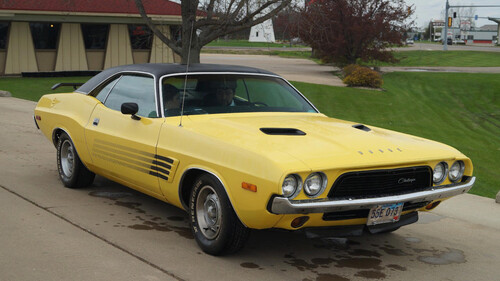
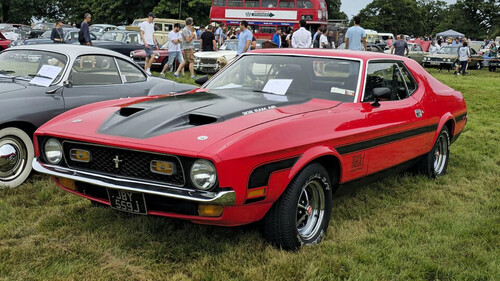
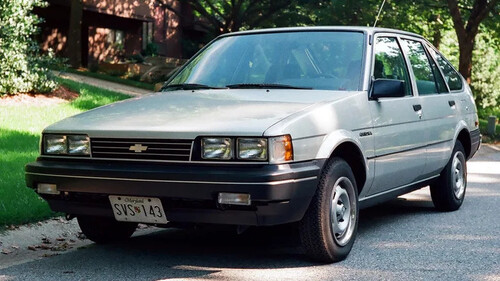
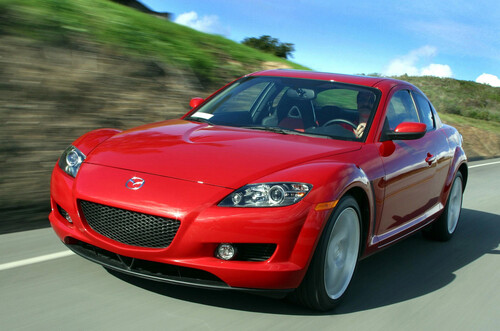
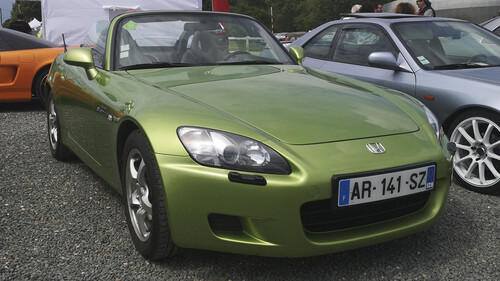
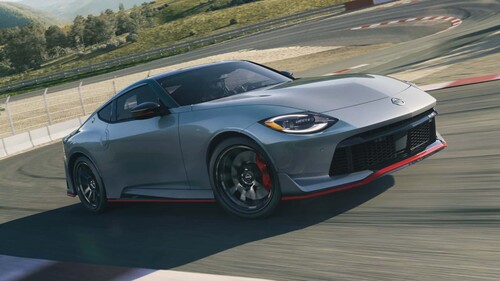
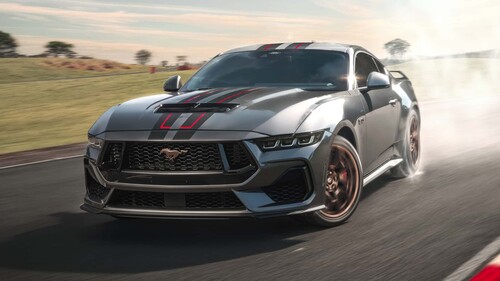
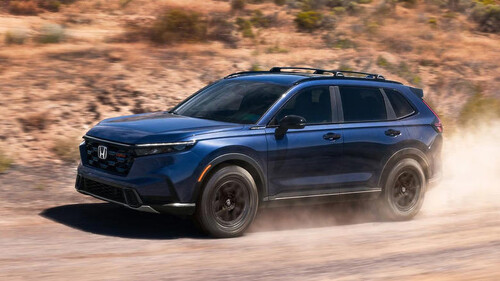
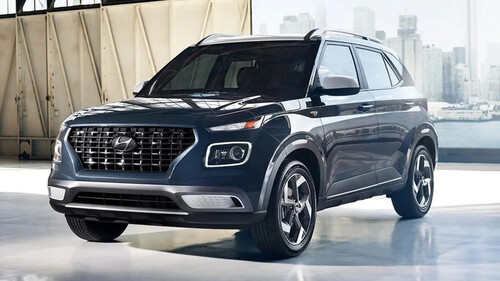
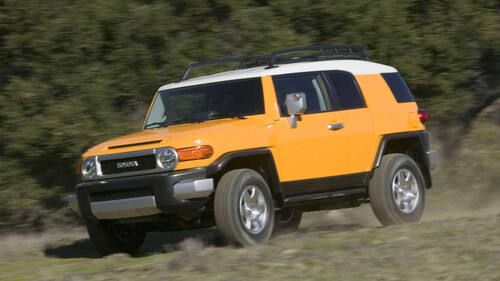
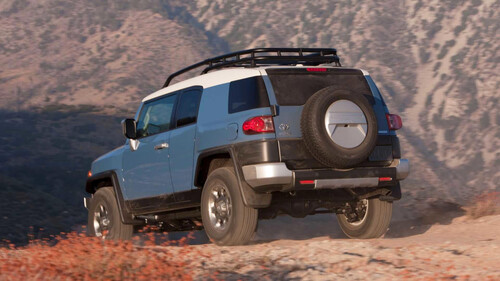
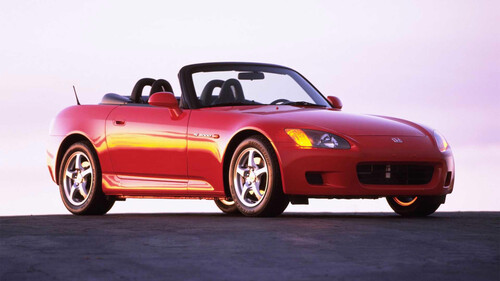
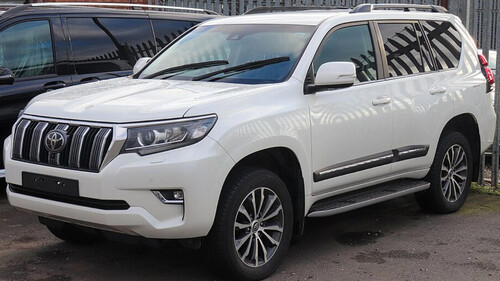
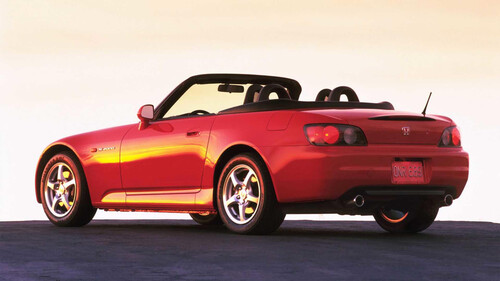
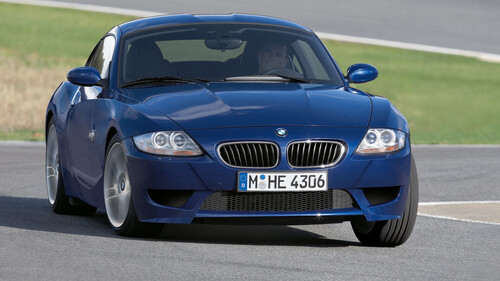
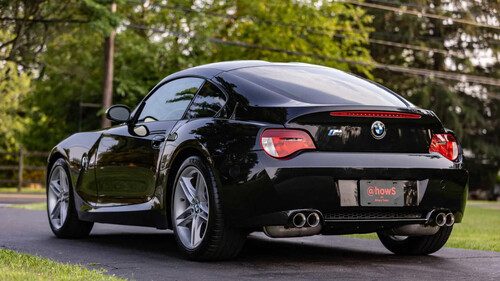
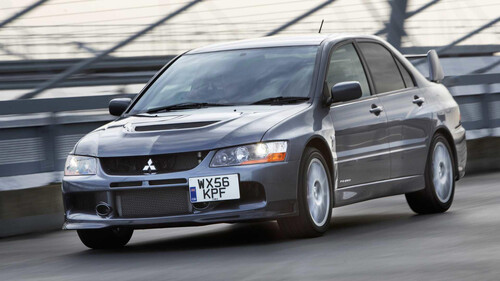
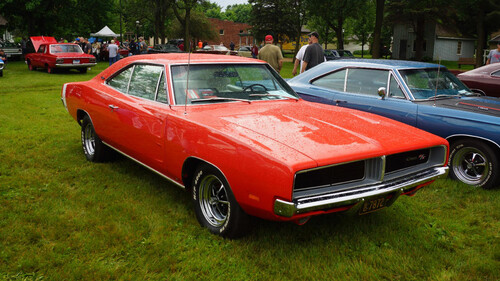
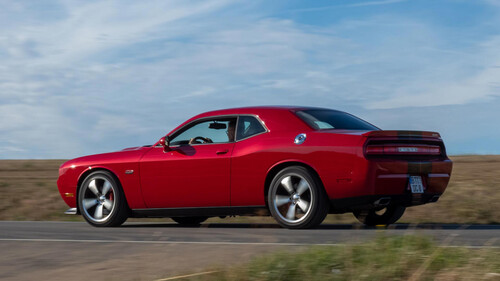
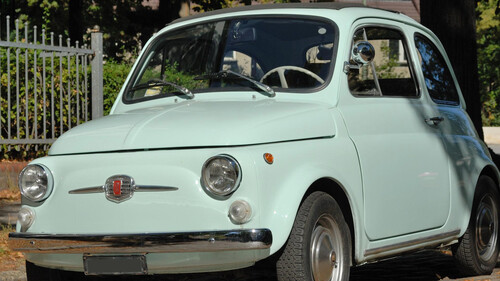
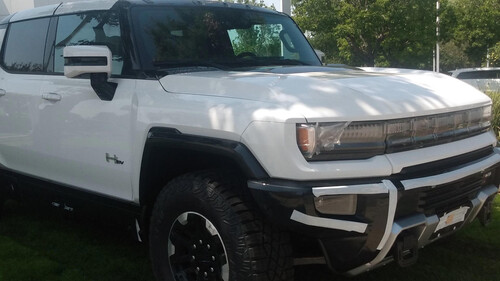
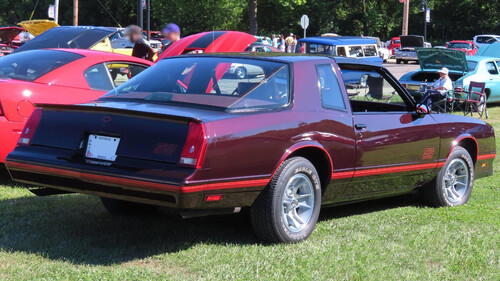
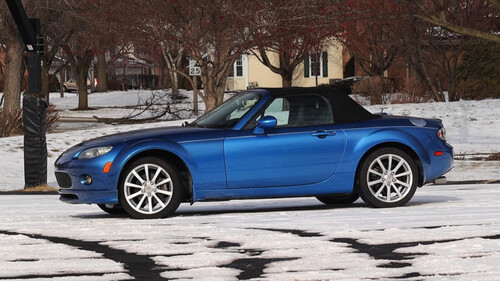
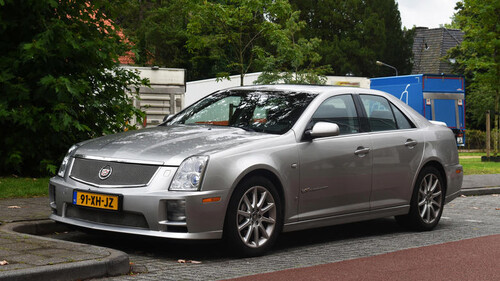
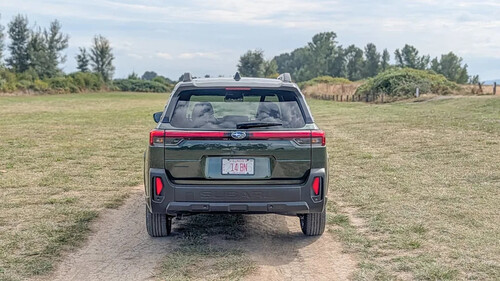
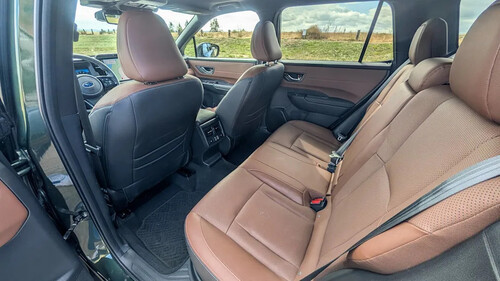
10 Discontinued Cars That Deserve a ComebackRyan Lugo - MotorTrendThe proverbial automotive graveyard is filled with the headstones of vehicles that deserved better. Some were victims of shifting consumer tastes. Others fell prey to changing regulatory demands, corporate restructuring, or product planners that were chasing the next big thing. Whatever the reason, their departures often left holes in the market that remained unfilled years later.And as it turns out, we might not be the only ones who think so. Rumors continue to swirl around the possible return of several of the beloved nameplates listed below, while a handful of recently revived models have proven automakers are increasingly willing to revisit old ideas when the business case makes sense. Nostalgia helps, but so does recognizing when a genuinely good vehicle still has something to offer modern buyers.With that in mind, we rounded up 10 of the vehicles we think should still be in production today. Some are practical, some are performance-focused, and a few are enthusiast favorites that never got the chance they deserved.1) Toyota FJ CruiserPhoto credit: MotorTrend - MotorTrendBuilt on a modified version of the body-on-frame platform that underpinned the fifth-generation Toyota 4Runner, the FJ Cruiser sought to carve out a niche as a retro off-roader. It matched that rugged foundation with head-turning style and the modern civility of an independent front suspension, arriving more than a decade before Ford brought a similar concept to market with the revived Bronco.AdvertisementAdvertisementAlthough Toyota sold more than 56,000 FJs in the U.S. in 2007, its first full year on sale, those numbers steadily declined over subsequent years, and the FJ Cruiser bowed out of the U.S. market after the 2014 model year.Many cited the V6's thirst for fuel and the outward visibility compromises that were made for the sake of its throwback design as key pain points. But those reasons seem a lot less convincing today, considering how successful the Bronco has been over the past few years and how well the Jeep Wrangler continues to sell. It could be argued that the FJ Cruiser was simply ahead of its time, and its strong cult following seems to reinforce that.2) Mazda RX-8Photo credit: MotorTrend - MotorTrendAlthough Mazda already had a bona fide sports car icon in its stable when the RX-8 launched in 2003 in the form of the Miata, the RX-8 offered several things the MX-5 did not: a fixed-roof coupe configuration (the limited-production, Japan-only MX-5 Roadster Coupe doesn't count), four doors and, perhaps most important, the character of a rotary engine.That Wankel engine—dubbed the Renesis 13B-MSP—was both the RX-8's main attraction and a key factor in the car's eventual demise. A naturally aspirated 1.3-liter that revved to a searing 9,000 rpm, the oddball powerplant won over enthusiasts in the know and likely confounded those who weren't. It was notoriously inefficient in terms of both fuel economy and emissions, while the rotary design's unique service and maintenance requirements led to some reliability concerns, as well.AdvertisementAdvertisementWith gas prices rising and the global economy still recovering from a full-bore financial crisis, the RX-8 was put out to pasture after the 2012 model year. But a small yet vocal contingent of enthusiasts has been begging for a rotary-powered Mazda performance car ever since, and it looks like they might (eventually) get it.3) Nissan XterraPhoto credit: MotorTrend - MotorTrendThe Nissan Xterra earned its cult following the old-fashioned way: by being a bit out of step with the status quo. Introduced in 2000, it was a compact body-on-frame SUV with style and surprisingly impressive capability.Marketed with the slogan, "Everything you need, nothing you don't," the Xterra evolved into a charming budget off-roader that offered a dose of personality as well as the option to row your own gears with its available manual transmission. But as the years wore on, buyers increasingly shifted away from smaller truck-based SUVs toward crossovers, and upcoming changes in safety and emissions standards, as well as declining sales, convinced Nissan to cut the Xterra from the lineup after 2015. The good news is that it looks like the Xterra's story won't end there.4) Honda ElementPhoto credit: MotorTrend - MotorTrendThe Honda Element is one of those rare vehicles that got away with being quirky because it was usefully weird. Introduced for the 2003 model year, the Element's flat floor, squared-off cargo area, and wide door openings made it feel like a rolling storage unit that was designed by people who actually moved pets and gear on a regular basis. Rubberized flooring and water-resistant surfaces also meant you could easily clean it out after a weekend adventure, while its modified CR-V underpinnings provided confidence in the Element's long-term reliability.AdvertisementAdvertisementBut while interest was initially strong, sales steadily declined throughout the rest of the decade. Eventually too few of them were rolling off of dealer lots to justify the cost of updating the crossover SUV to meet the stricter corporate average fuel economy (CAFE) standards that loomed in the years ahead, so Honda axed the Element after the 2011 model year. We still miss it, though, and we can't help but wonder if the current CR-V's available hybrid powertrain would enable Honda to bring this charming utilitarian brick back into the fold.5) Dodge ChallengerPhoto credit: MotorTrend - MotorTrendWe'll preface this by noting that your author is a two-time Challenger owner, so he might be a little biased, but there's also quite a bit of evidence supporting his position. While the LX platform that underpinned the modern Challenger was undoubtedly overdue for replacement by the time it went out of production, and the two-door version of the current Dodge Charger effectively serves as the Challenger's replacement, Dodge's decision to mothball this revered nameplate after 2023 still baffles us.Consider for a moment that despite the Challenger's comparatively archaic design, Dodge's two-door muscle car outsold the Ford Mustang for the first time in history in 2021, and then it did so again in 2022. It's also worth noting that Dodge sold more Challengers in its final year of production than all the versions of the new Charger that have been sold since 2024 up to today, combined.While they were closely related, the Challenger's shorter wheelbase, killer retro styling, manual transmission availability, and unique tuning offered something distinctively different from the LX-based Charger. Two-door coupes may not be as popular as they once were, but it doesn't take much imagination to see how the Challenger could have evolved along a similar philosophical path to the 911—a performance icon that has evolved throughout the decades but continues to be guided by its original design template.6) Toyota MR2Photo credit: Bring a TrailerA true mid-engine, lightweight, rear-drive sports car that didn't come with an outlandish price tag, the MR2 was produced by Toyota from 1984 to 2007. Although it proved popular enough to warrant three distinct generations, changing consumer tastes, stricter modern safety standards and Toyota's shift toward prioritizing high-volume models like the Corolla and RAV4 ultimately spelled its demise.AdvertisementAdvertisementThe irony is that one could argue the MR2 was discontinued not because it failed at being a sports car, but because it succeeded at being a specialized one in a market that increasingly preferred versatility. Fortunately for us, it looks like Toyota might be reviving the nameplate for a new GR model in the not-to-distant future.7) Subaru BajaPhoto credit: MotorTrend - MotorTrendLike the Honda Element, the Subaru Baja was weird, but in a purposeful way. Introduced in 2003 and canceled by the end of 2006, the Outback-based Baja blended the utility of a pickup with the driving manners of a crossover long before compact trucks became cool again.All-wheel drive was standard across the board, and clever design elements like the pass-through that ran from the rear seat into the bed gave the Baja surprisingly versatile packaging. But its sales never came close to meeting Subaru's expectations.The Baja is another one of those models that might just have been too far ahead of its time, as the Ford Maverick has proven that there's a market for crossover-based compact pickups today. Rumor has it that this one could get a second chance, as well.8) Honda S2000Photo credit: MotorTrend - MotorTrendThis is one of those rare cars whose mystique has only grown since it went out of production. Introduced in 1999, the Honda S2000 was an open-top, rear-wheel-drive sports car that greatly benefited from Honda's single-minded engineering approach.AdvertisementAdvertisementBeyond the S2000's impeccably balanced chassis, 50/50 weight distribution, and its naturally aspirated 240-hp four-cylinder engine (which revved to a blistering 8,900 rpm in first-generation models), Honda sweated the details when it came to things like the feel of the six-speed shifter and the feedback from the steering rack. The S2000 made no attempt to cater to buyers looking for a plush grander tourer; this was a purpose-built performance machine. If you wanted creature comforts like, say, an automatic transmission, your Honda dealer probably would have pointed you toward a Prelude.But that lack of compromise also ensured that the S2000 would be a niche product. With automakers the world over reeling from the 2008 financial crisis, Honda determined it would be too costly to bring the low-volume sports car up to date with newer crash and emissions standards, making 2009 the last model year for the legendary two-seater.9) Dodge ViperPhoto credit: MotorTrend - MotorTrendIn early 1989, Chrysler president Bob Lutz came to Tom Gale at the Chrysler Design Center with an idea to build a modern interpretation of the AC Cobra. Presented in concept form at that year's North American International Auto Show, the roofless, low-slung sports car was greeted with so much enthusiasm at the event that Chrysler brass green-lit a production version.Motivated by a 400-horsepower, naturally aspirated V-10 developed by then-Chrysler subsidiary Lamborghini, the first-generation Viper was unapologetically raw and famously lacked extravagances like an automatic transmission, side windows, and stability control. Although the Viper became more civilized over the years, the foundational elements that defined the original's character remained intact throughout its 25-year production run: V-10 power up front, rear-wheel drive, and a six-speed manual gearbox as the sole transmission on offer.AdvertisementAdvertisementEven as other automakers increasingly looked to turbocharging, all-wheel drive, and dual-clutch gearboxes to gain a competitive edge, Dodge proved its formula still had legs by setting no less than 13 production car lap records at U.S. road courses with a 2016 Viper ACR. Sadly, it wasn't enough to keep enthusiasts from straying to more livable alternatives (including the then-new Dodge Challenger and Charger SRT Hellcat models), and with a looming side curtain airbag regulation that would have required a costly design rework, Dodge decided to end production of the Viper in the summer of 2017.Thanks to a recent shift in priorities—which includes an array of new SRT models in the coming years—many have wondered if the Viper might make a return, as well. But Tim Kuniskis, SRT chief and head of Stellantis' North American brands, recently threw cold water on that possibility. Although definitely a bummer, Dodge is presently developing something for sports car enthusiasts to get excited about in the form of its coming new Copperhead supercar.10) Buick Regal TourXPhoto credit: MotorTrend - MotorTrendBased on the Opel Insignia Sport Tourer, the Buick Regal TourX served as another reminder that wagons are a tough sell in modern America.Introduced in 2018, the Regal TourX was Buick's first station wagon in more than two decades, and the automaker's unlikely entry came out swinging. The TourX's German bones gave it more European driving manners than its Buick badge might've suggested, while standard all-wheel drive, a low load floor, and a generously sized cargo area provided admirable versatility. That combination helped the TourX claim victory over the Subaru Outback 3.6R and Volkswagen Golf Alltrack in our comparison test that same year. Unfortunately, none of it was enough to convert many would-be SUV buyers into wagon owners, and the Regal TourX was dropped from the Buick lineup in 2020.